

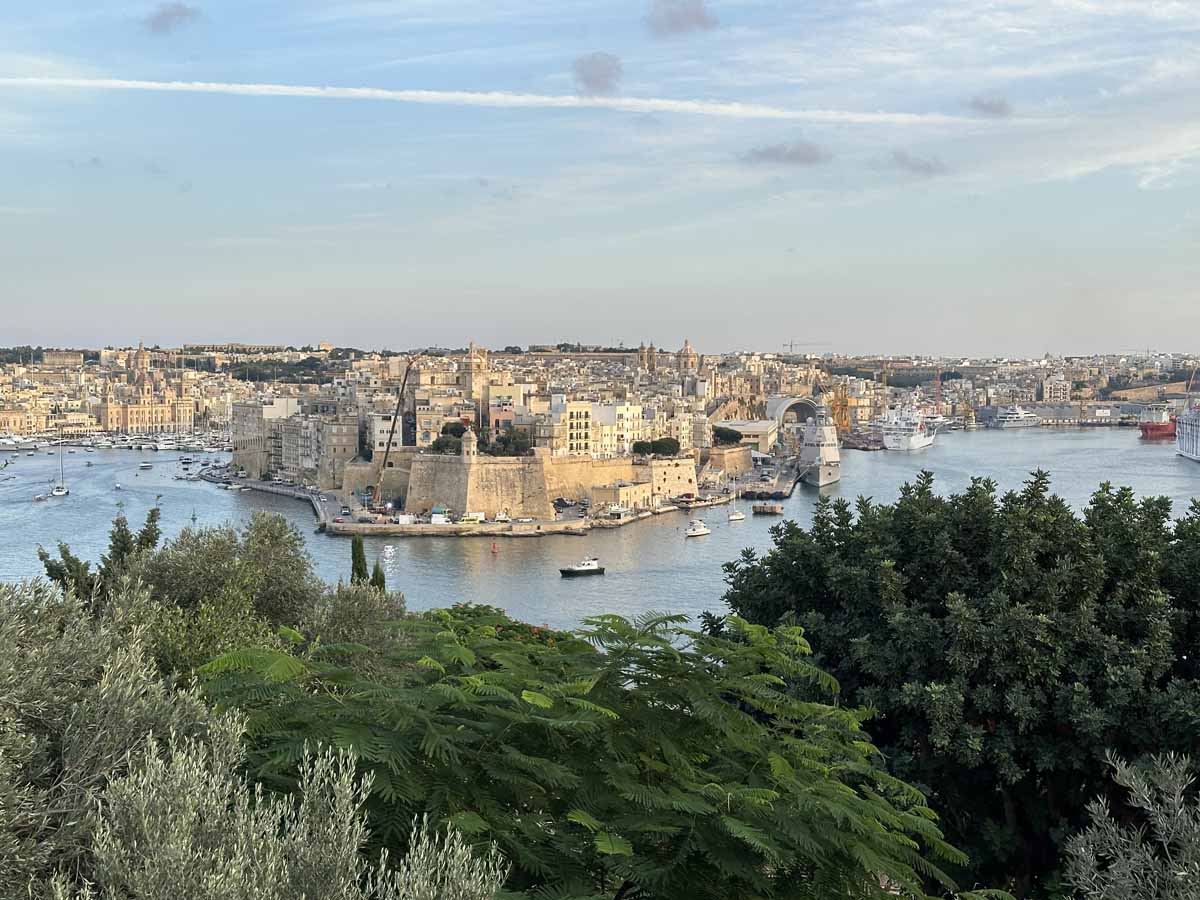
When I told friends I was going to visit Malta after touring Sicily, they all looked at me with a puzzled expression and asked “Where’s Malta?” I answered it was a small island in the Mediterranean about 50 miles (81 km) south of Sicily – and around 200 miles above the North African coast (Libya & Tunisia).
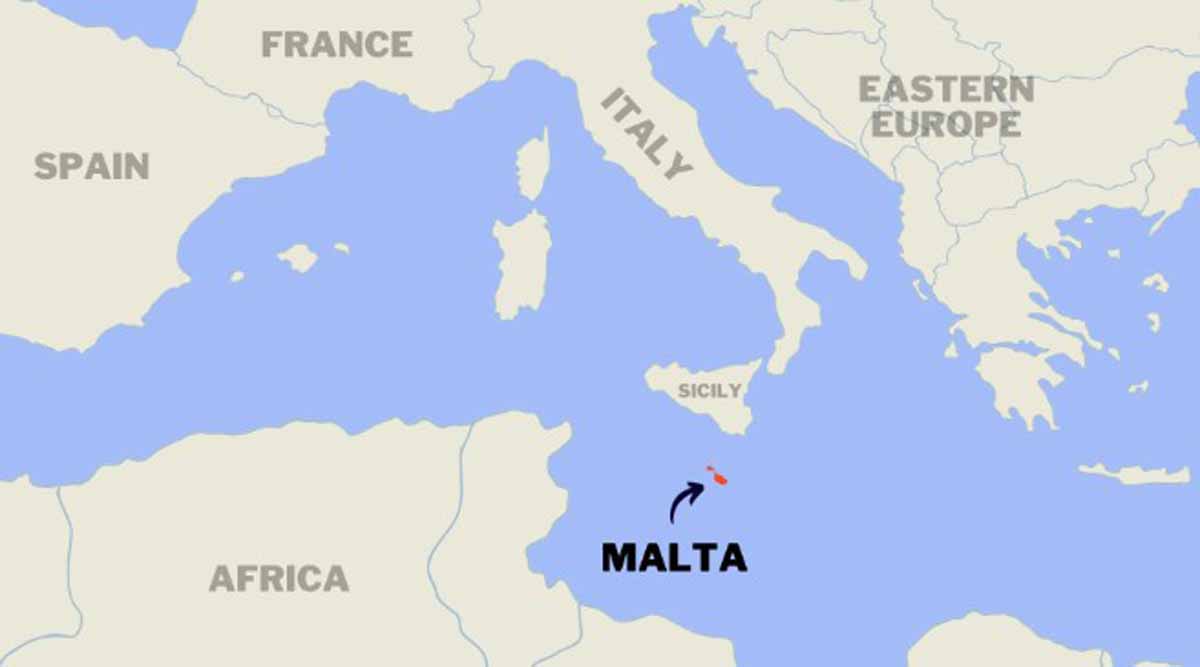
Map Credit: Malta Info Guide / Click to enlarge
I reassured them that this previously “hidden gem” is rapidly gaining popularity as a destination for American travelers. Like me, they are attracted by Malta’s 7,000 years of fascinating history, its charming capital city of Valletta (a UNESCO World Heritage site), and its English-speaking environment!
I will emphatically say that Malta did not disappoint! My boyfriend Jack & I spent a delightful week on Malta in mid-October 2025 after our 2-week Overseas Adventure Travel (OAT) tour of Sicily. We arrived in Valletta by ferry from Sicily – an easy journey of less than 2 hours!
Purpose of the Blog Post
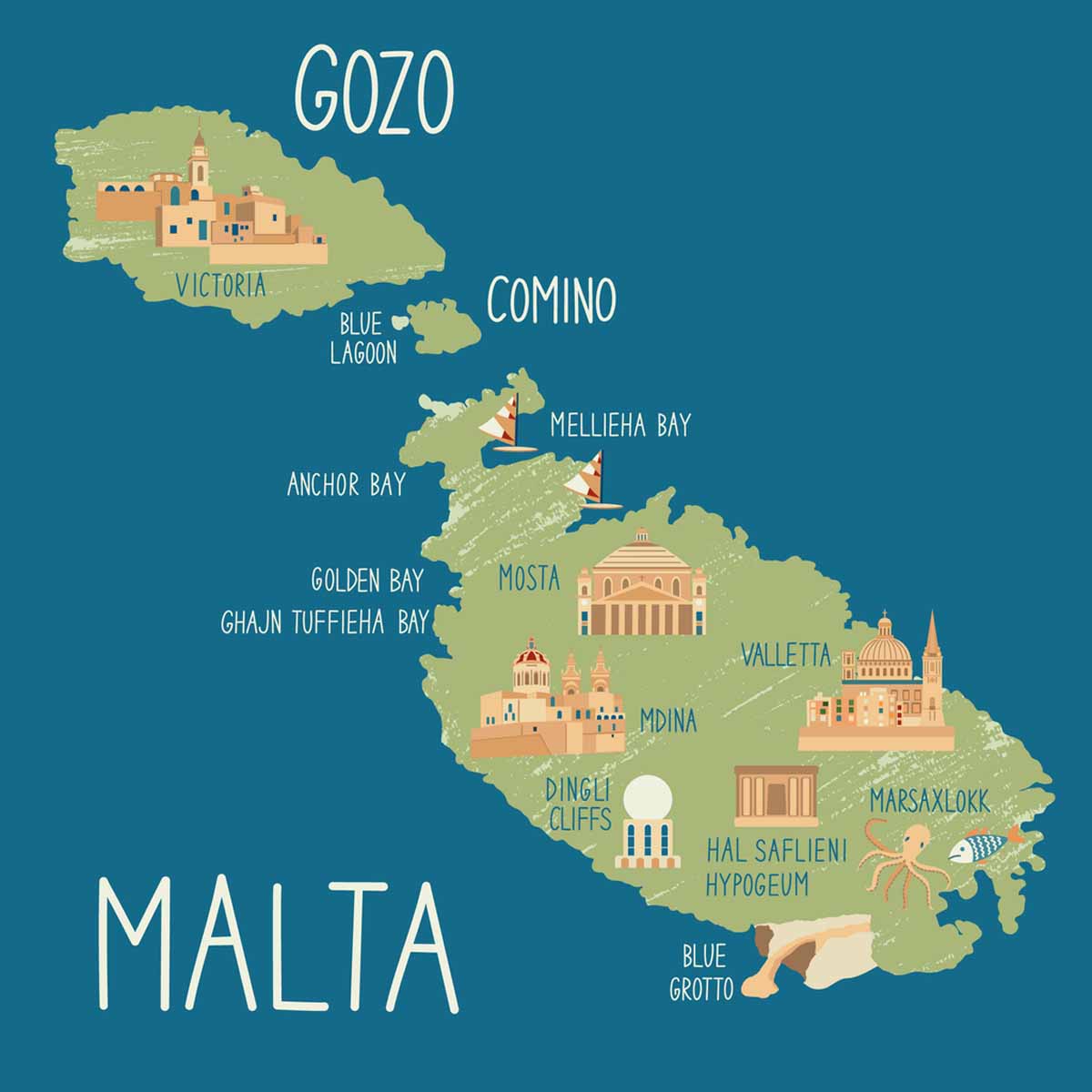
Map of Maltese Islands / Click to enlarge
I will share the fun & interesting things we did during our 7 night/6 day stay in Valletta – all of which I highly recommend for your future visit. We explored Valletta, as well as took day trips (by bus & ferry) to other places on Malta & Gozo. I could easily have spent a few more days in Malta – there’s that much to see & do!
Malta is the largest island of the Maltese archipelago. However, it’s still very small, measuring only about 17 miles (27 km) long & 9 miles (14.5 km) wide. The other two inhabited islands are Gozo and Comino. (see map) These densely populated Maltese islands are home to approximately 575,000 people.
This blog post will focus on Valletta & a visit to the “Three Cities,” located just across the Grand Harbour. In a second blog post, I will highlight the other interesting places we visited, including the towns of Mdina & Marsaxlokk on the island of Malta and Victoria on the island of Gozo.
Valletta – Prepare to Fall in Love
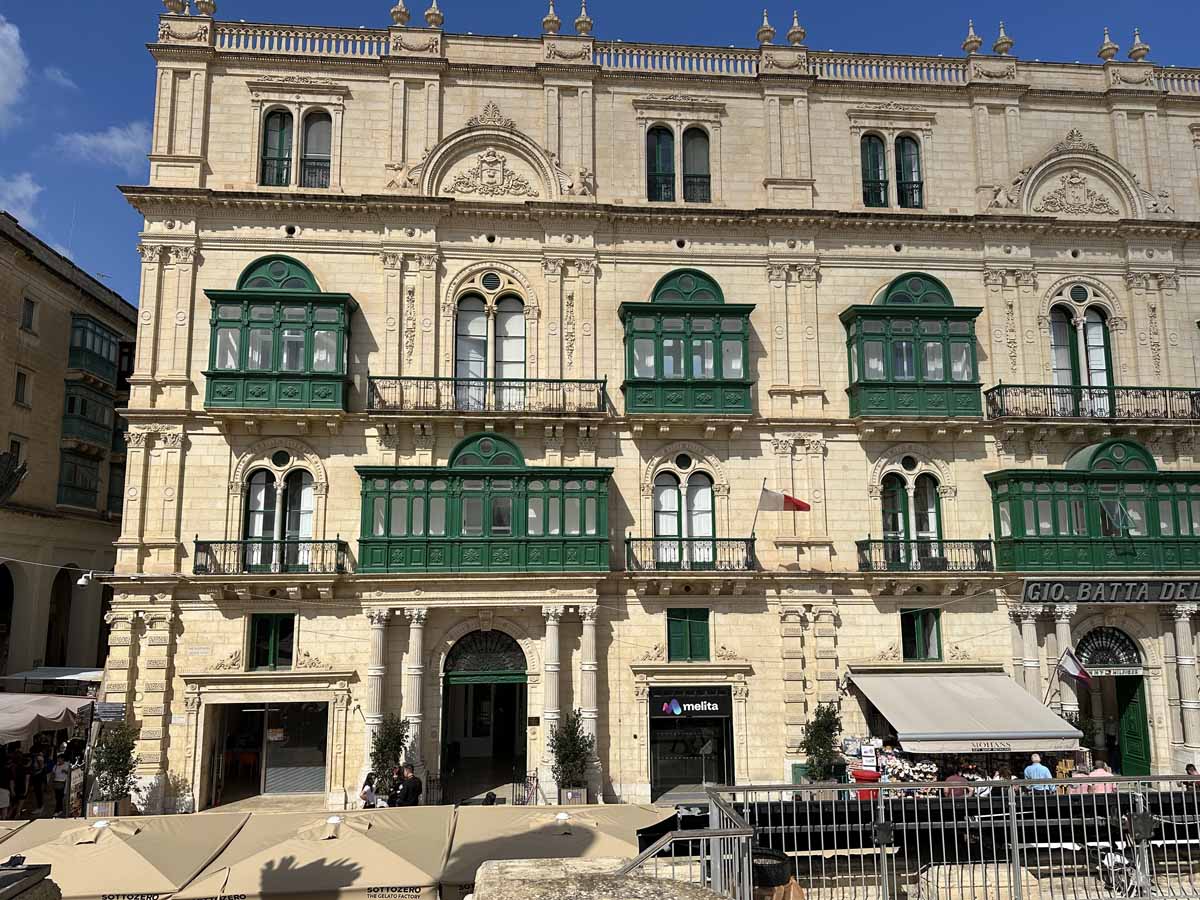
So, why did Malta – particularly charming Valletta – steal both my & Jack’s heart? First, this historic capital city with beautiful Baroque architecture sits on a narrow hilly peninsula with gorgeous views of the two harbors below (on both sides). Plus, Valletta is ringed by immense golden limestone fortifications which greatly add to its allure.
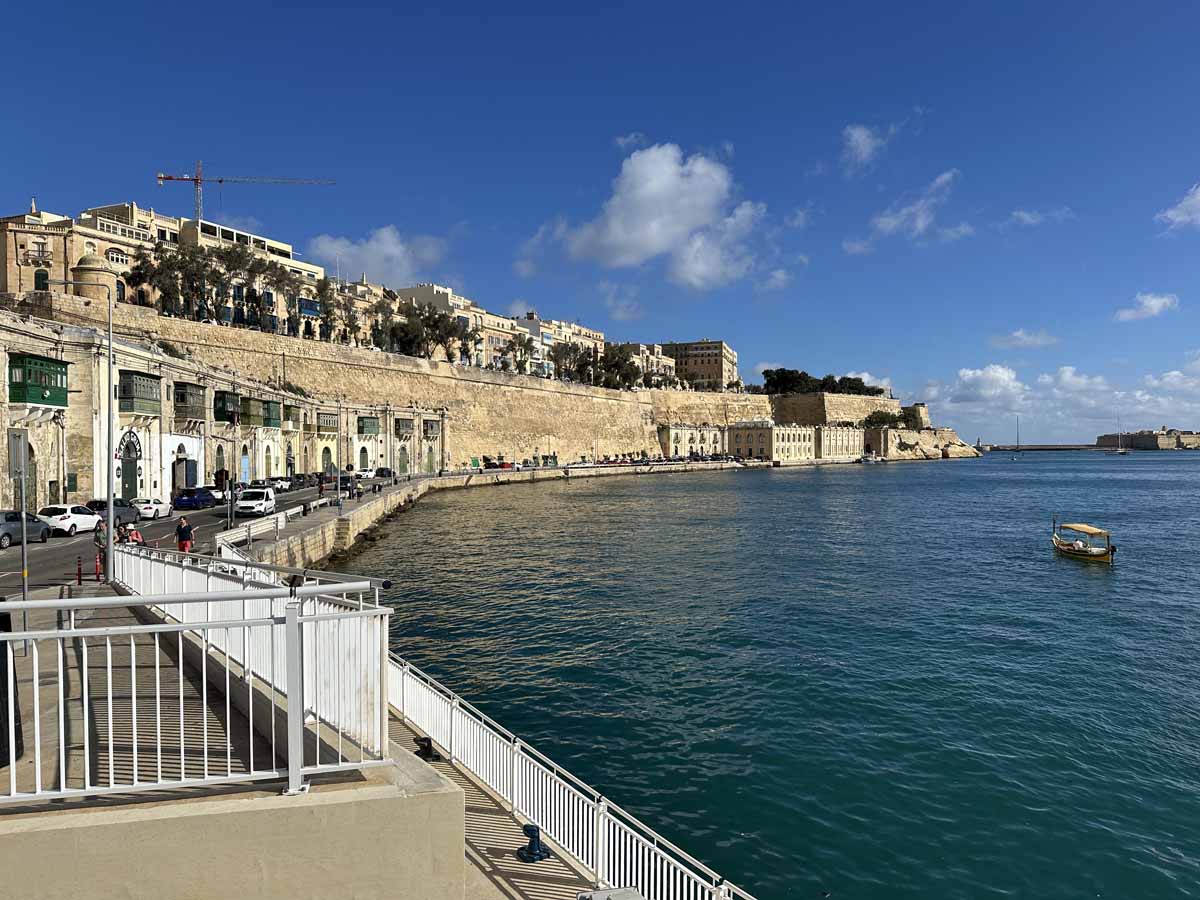
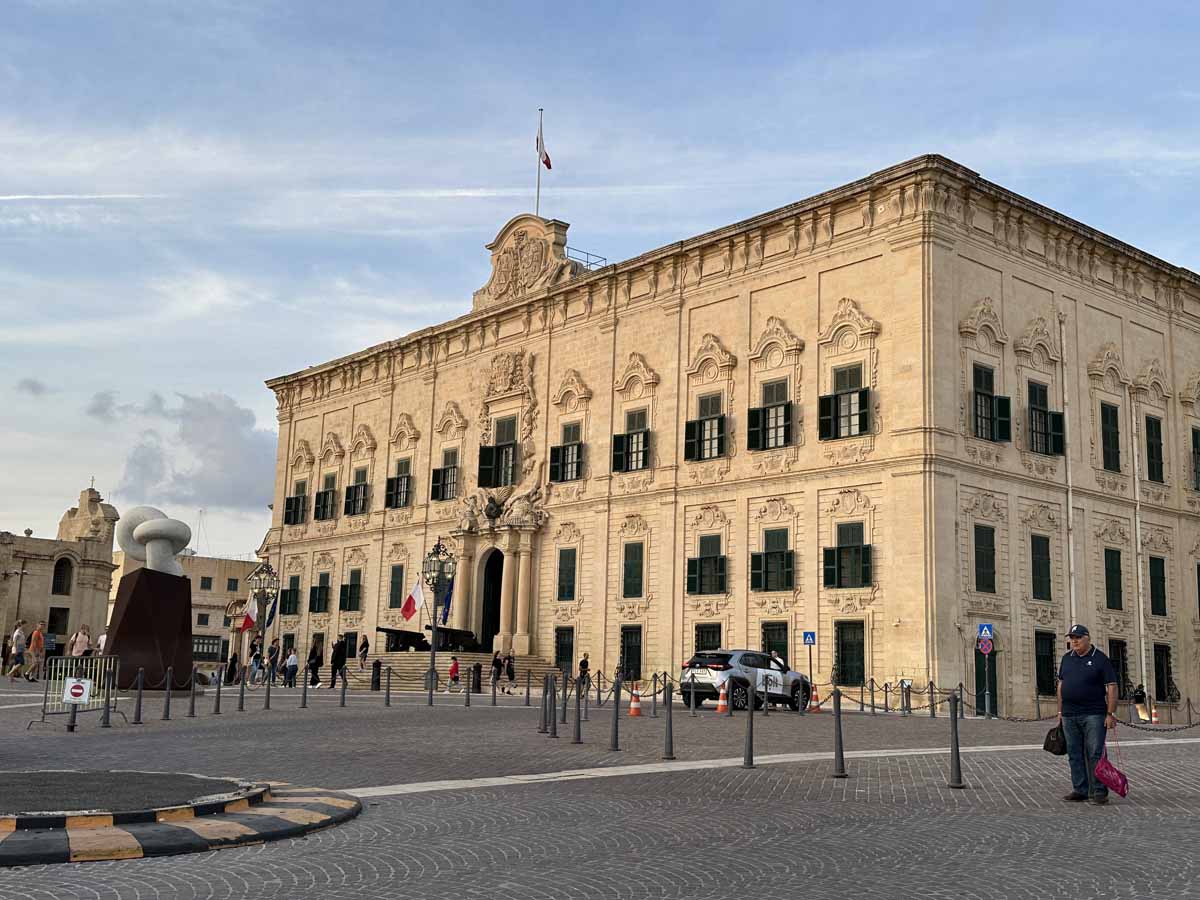
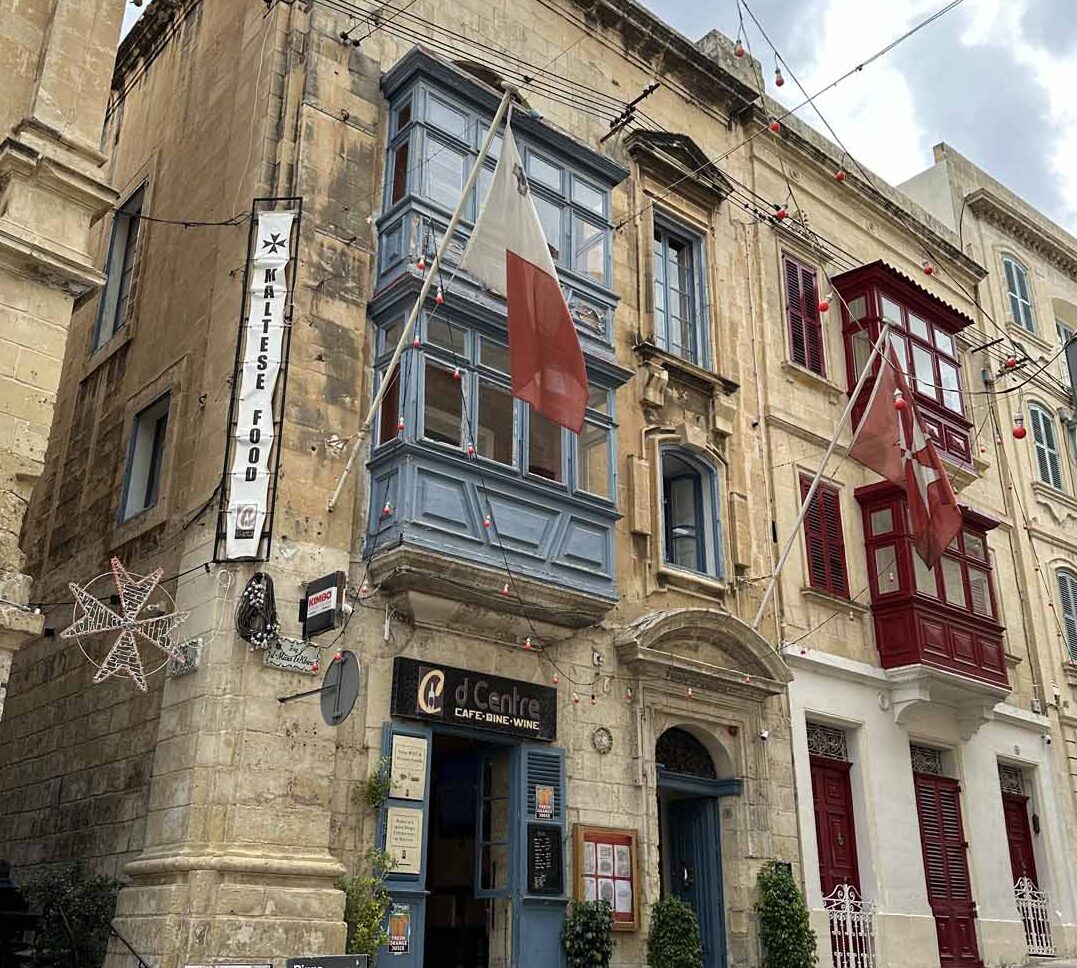
Valletta has many beautiful churches, palaces, and grand public buildings that have remained largely unchanged since their construction more than 450 years ago. Because of this, the entire city of Valletta has been designated as a UNESCO World Heritage site!
-
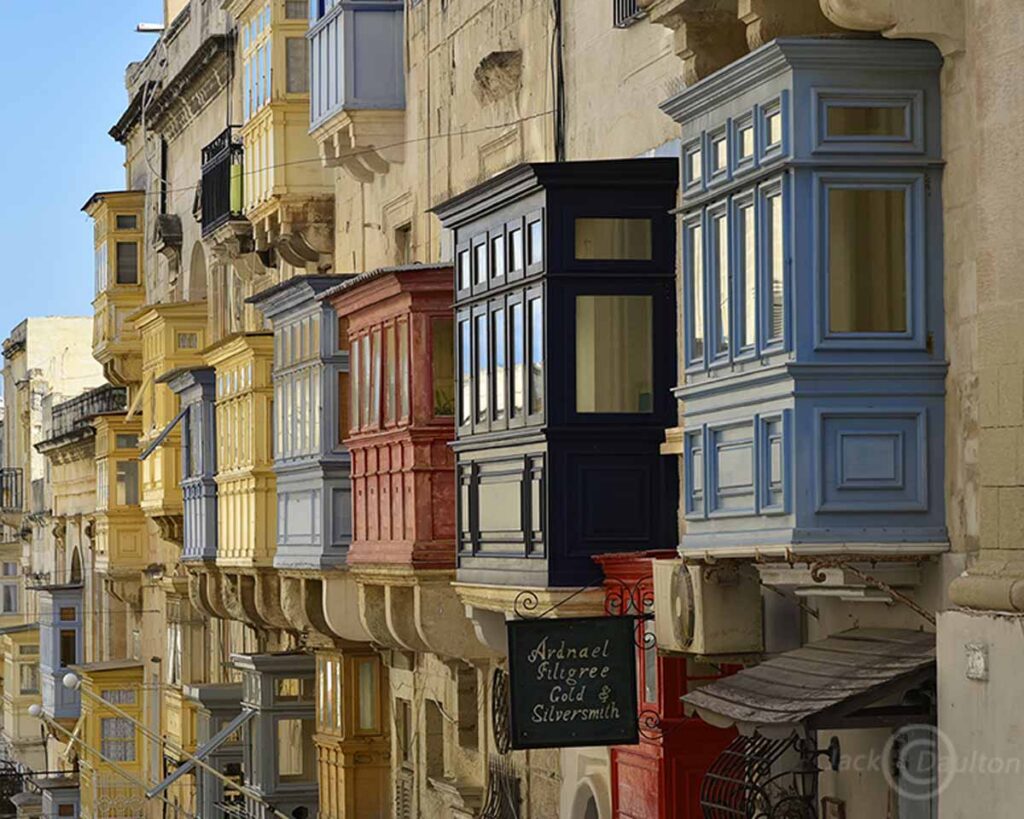
- Photo Credit: Jack Daulton / Click on all photos to enlarge
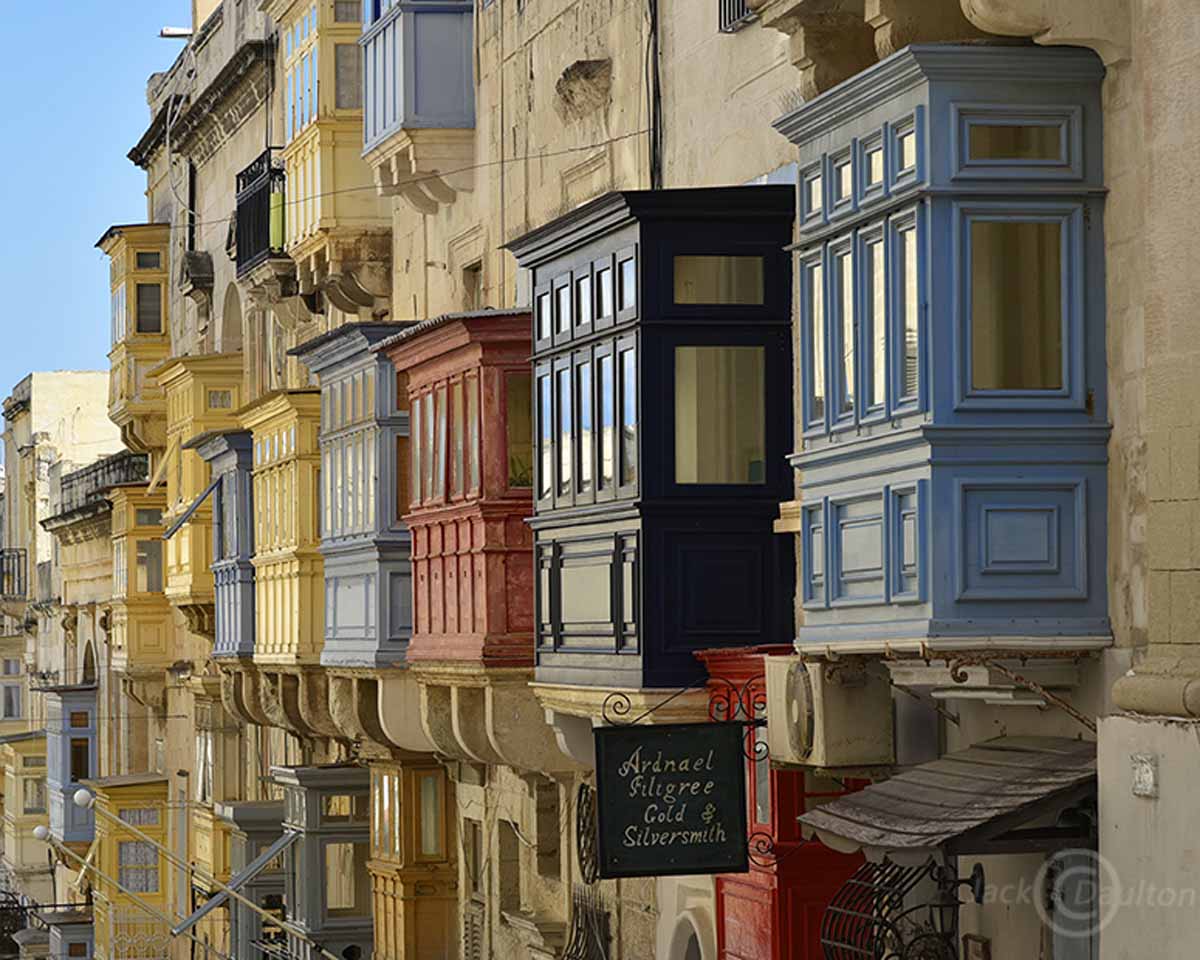
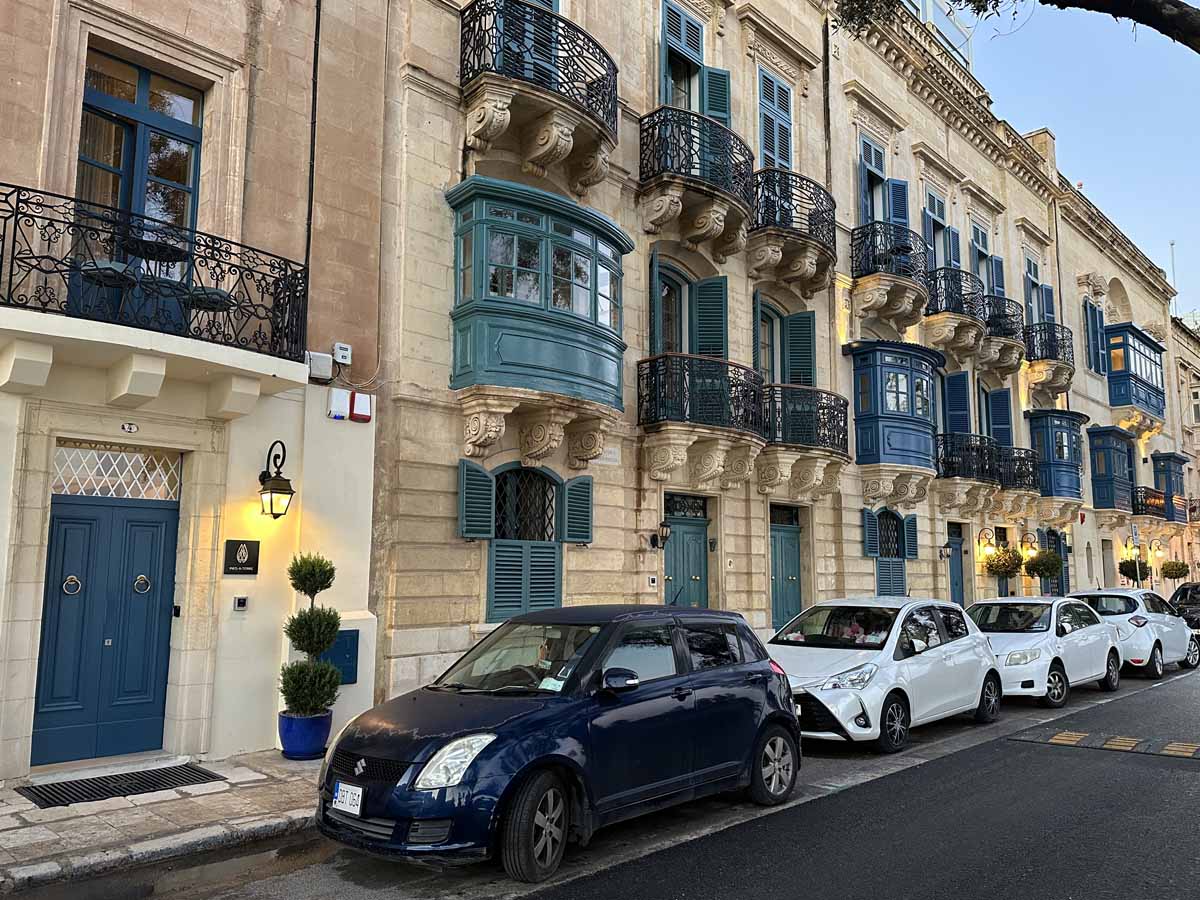
Valletta is also known for its many unique & colorful wooden balconies on buildings throughout the town and all of Malta. It was a pure joy to wander Valletta’s small city center and its narrow streets filled with shops, cafes & adorable homes. Plus, Valletta is a popular cruise ship port of call these days.
Quick Maltese History
Due to its strategic location at the center of the Mediterranean, Malta has a long & complex history. It started with prehistoric temple builders (3850 BC). Malta was then colonized over the centuries by the Phoenicians, Romans, and Arabs – all which shaped its language and culture.
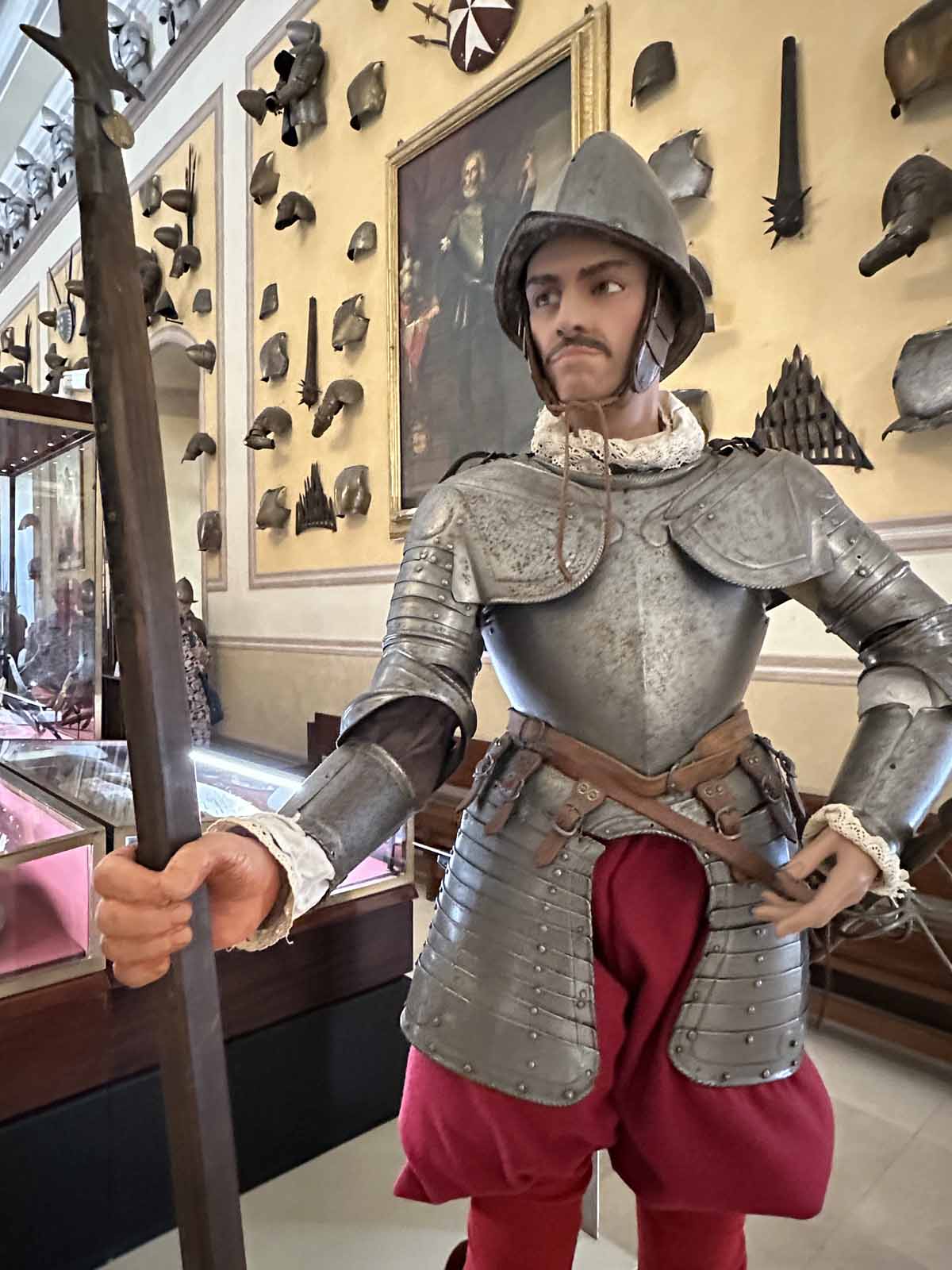 Malta was ruled by the Knights of St. John (1530–1798) – who were greatly responsible for transforming the island. Britain took control in 1814, with Malta playing a key role in WWII for the Allies. Malta gained independence in 1964 and joined the European Union (EU) in 2004.
More About the Order of the Knights of St. John
As a military order, the Knights of St. John took part in the Crusades. However, in 1291, they were driven from the Holy Land (Jerusalem). After a short stay in Cyprus, the Knights occupied Rhodes for the next two hundred years until they were forced to leave.
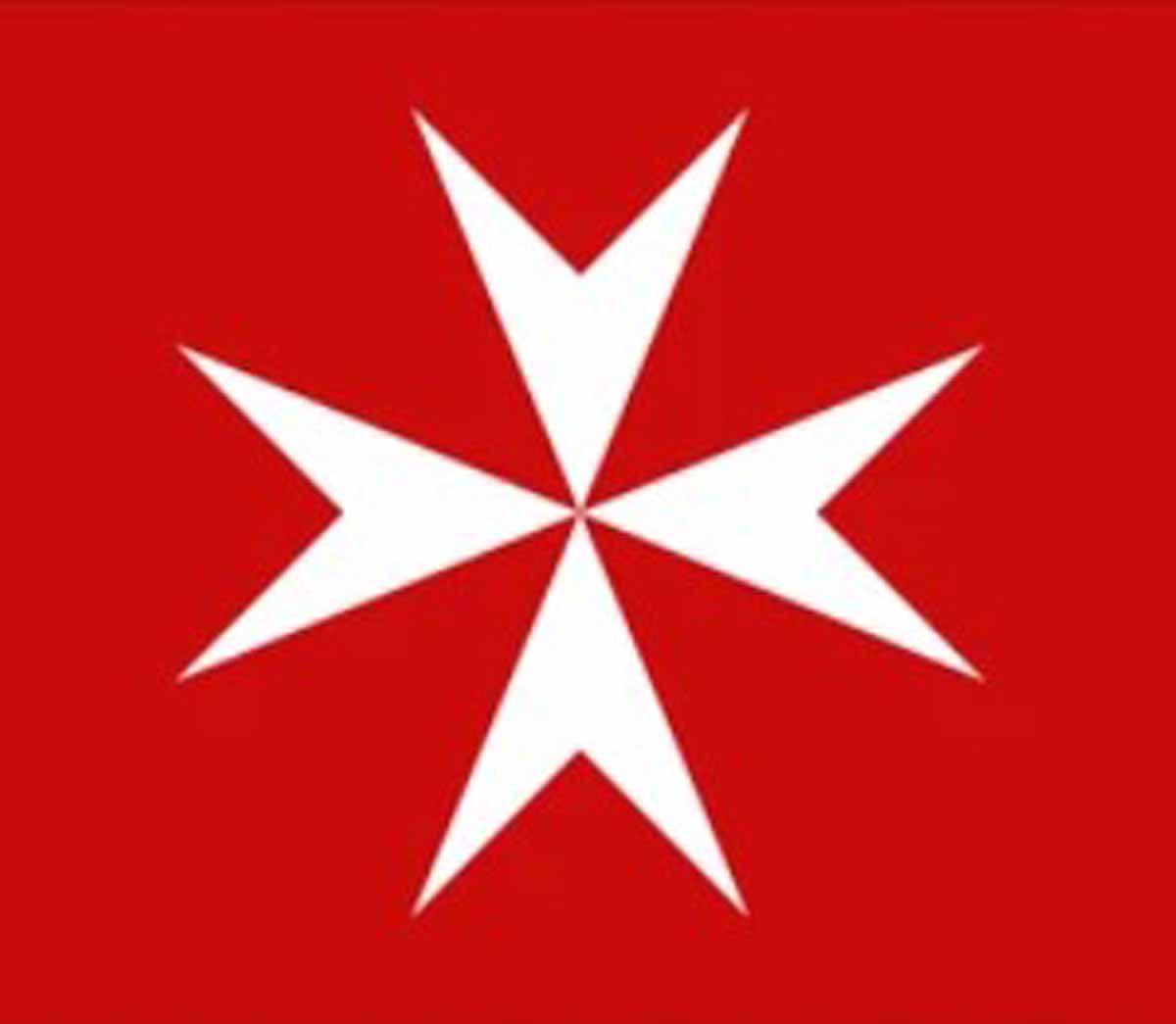
Ultimately, the Holy Roman Emperor offered the island of Malta to the Knights of St. John. So, in 1530, they arrived in their new home to rule Malta for almost 300 years. Their well-known symbol is a white eight-pointed cross on a black (or red) background.
KEY SIGHTS TO SEE IN VALLETTA – LET’S GO TOURING
Walking Valletta’s City Center & Bustling Republic Street
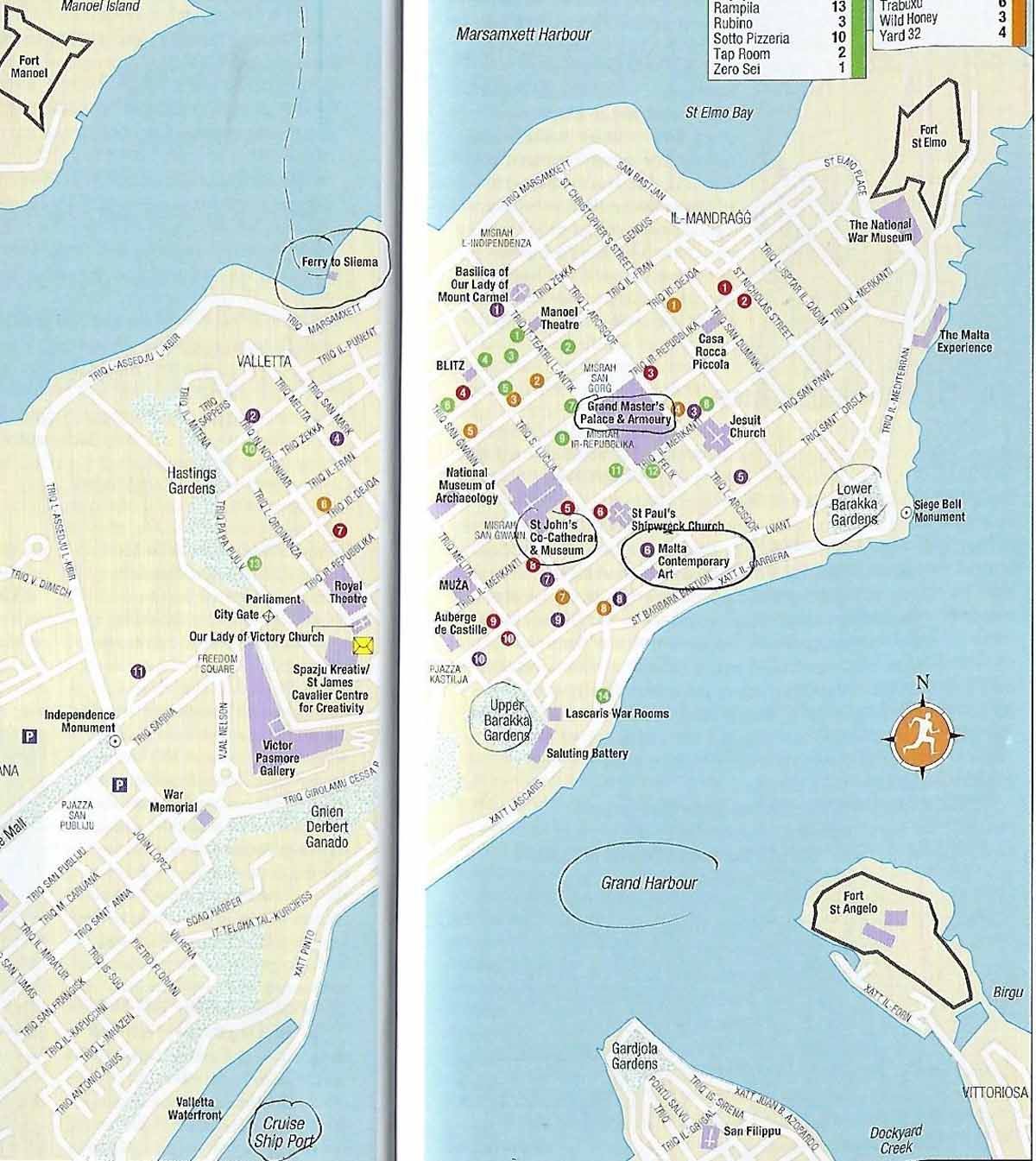
Republic Street is Valletta’s main, primarily pedestrian street, which is lined with shops, cafes, and historic limestone buildings. It’s about 1km (0.6 miles) long, running from the City Gate east towards Fort St. Elmo. It’s a great place to start your exploration – with a leisurely stroll and fun people watching!
-

- Valletta Map Credit: Rough Guide – Malta & Gozo
-

- The Maltese Cross / Click on map & all photos to enlarge
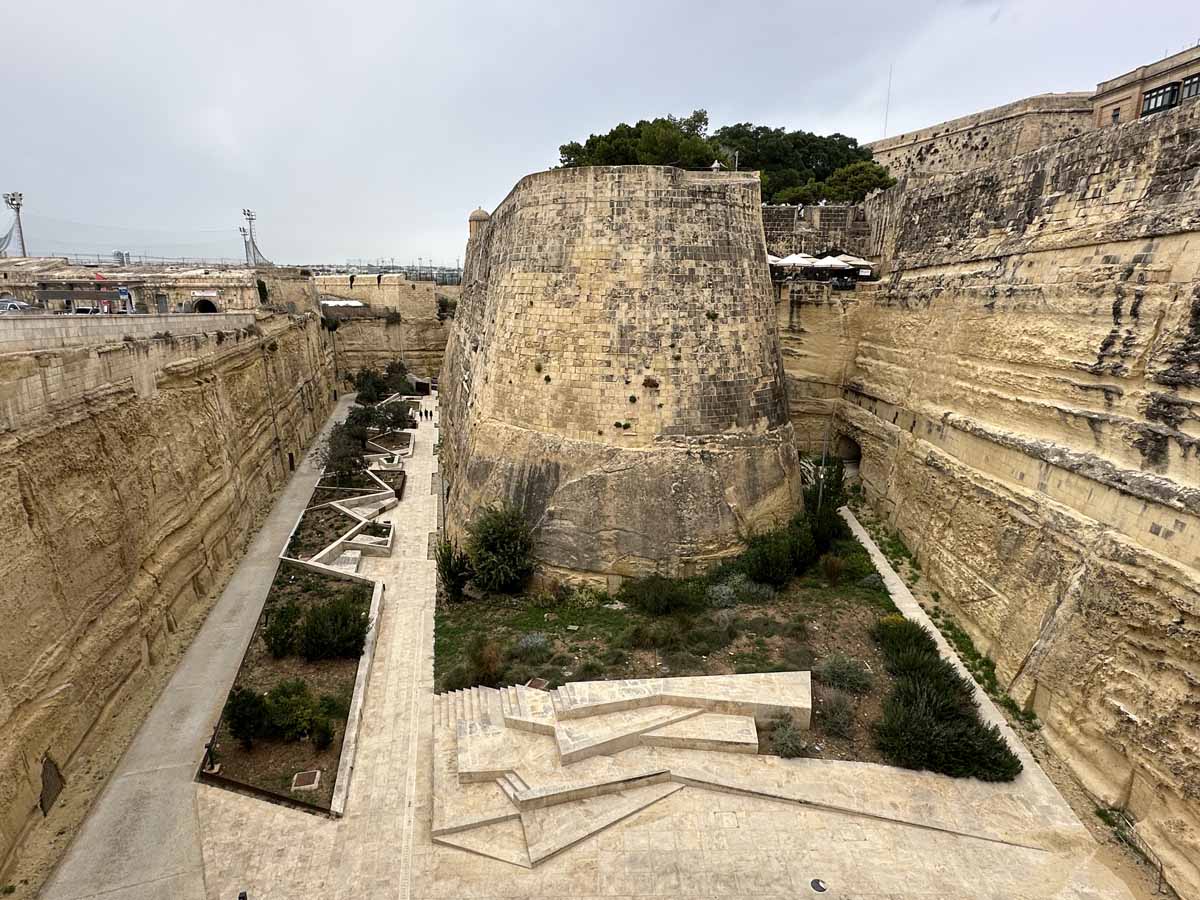
First Stop is the sleek City Gate, the main entrance to Valletta. Newly designed in 2013, its footbridge crosses an 18-meter (59-foot) deep dry moat and passes through the city’s old ramparts. It’s flanked by Malta’s also new Parliament Building (built in 2015). (photo below right)
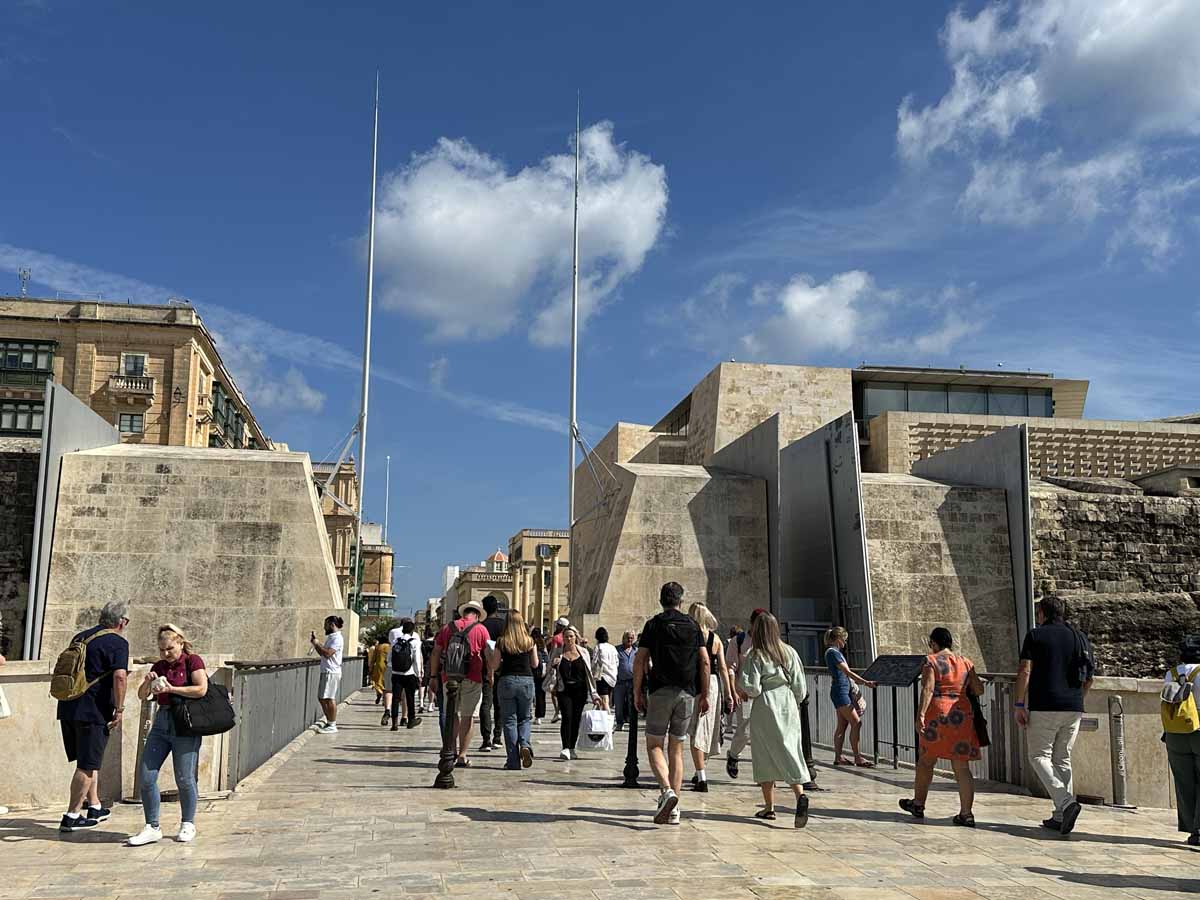
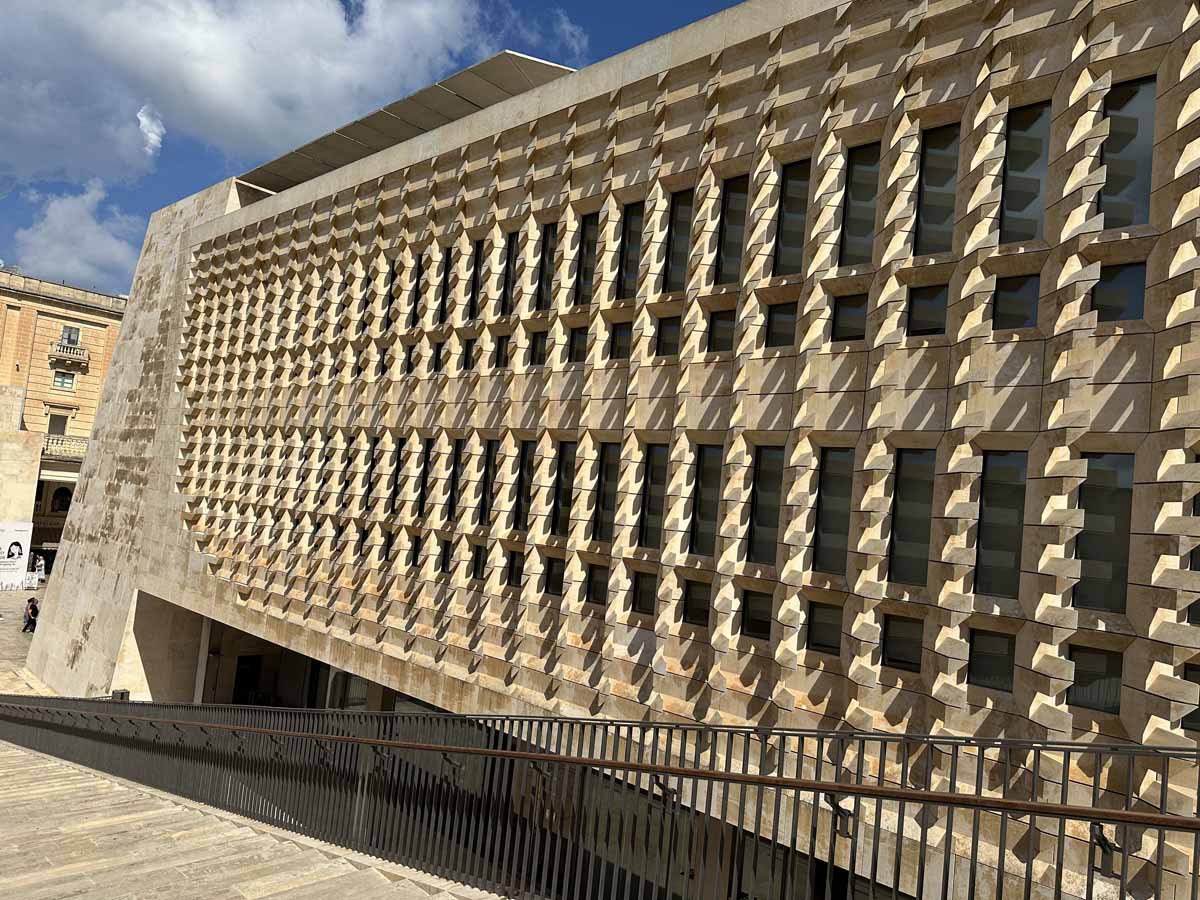
Both the City Gate & Parliament building were constructed of cream-colored limestone blocks – which were extracted from nearby quarries in Gozo. I loved the architecture of both.
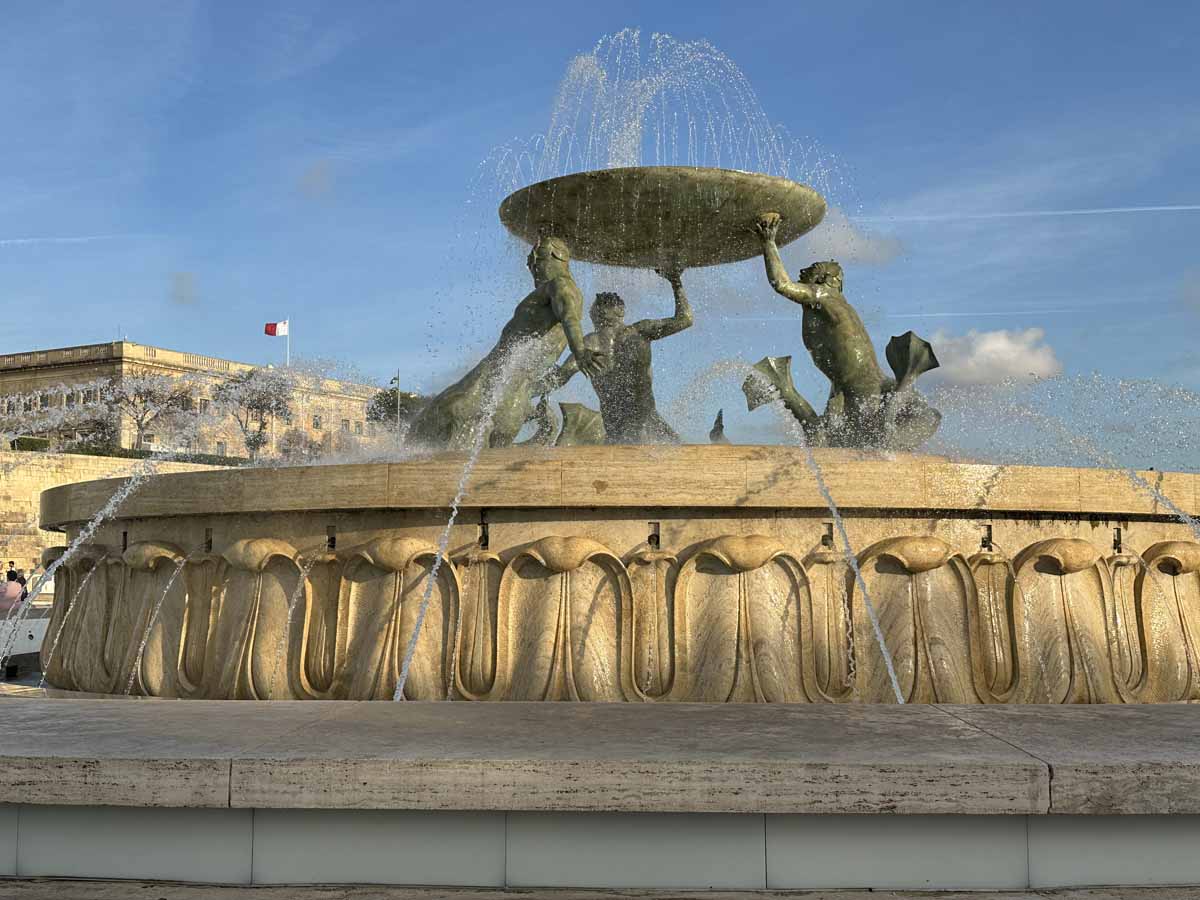
Just outside the City Gate is Tritons’ Fountain, a restored 1959 landmark in Triton Square. It features three bronze mythological Tritons and serves as the primary meeting point at the entrance to the city. As you can imagine, it’s a popular spot for photography.
Grand Master’s Palace & Armoury
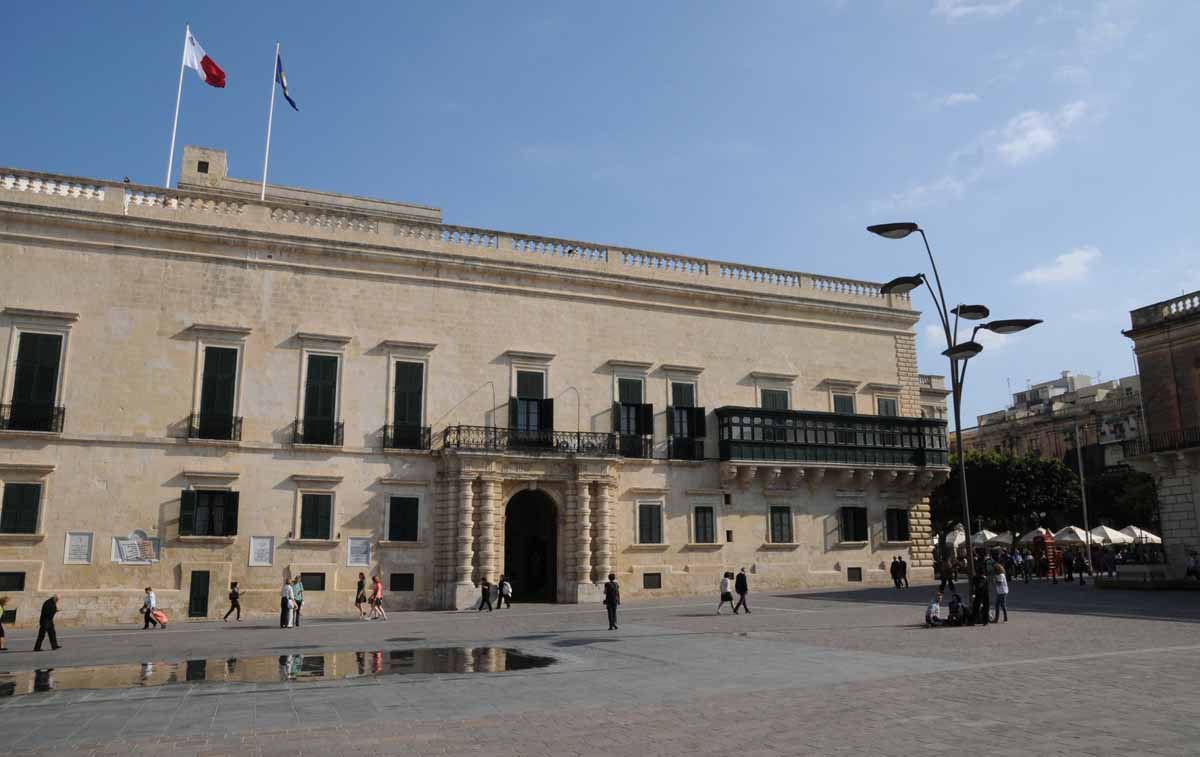
The beautiful 2-story Grand Master’s Palace dominates Valletta’s main square (also located on Republic Street). This Baroque masterpiece (and UNESCO site) was founded in 1571 by Grand Master Jean de Valette of the Knights of St. John.
-

- Grand Master’s Palace / Credit: DepositPhotos
-

- Grand Master’s Palace / Credit: DepositPhotos
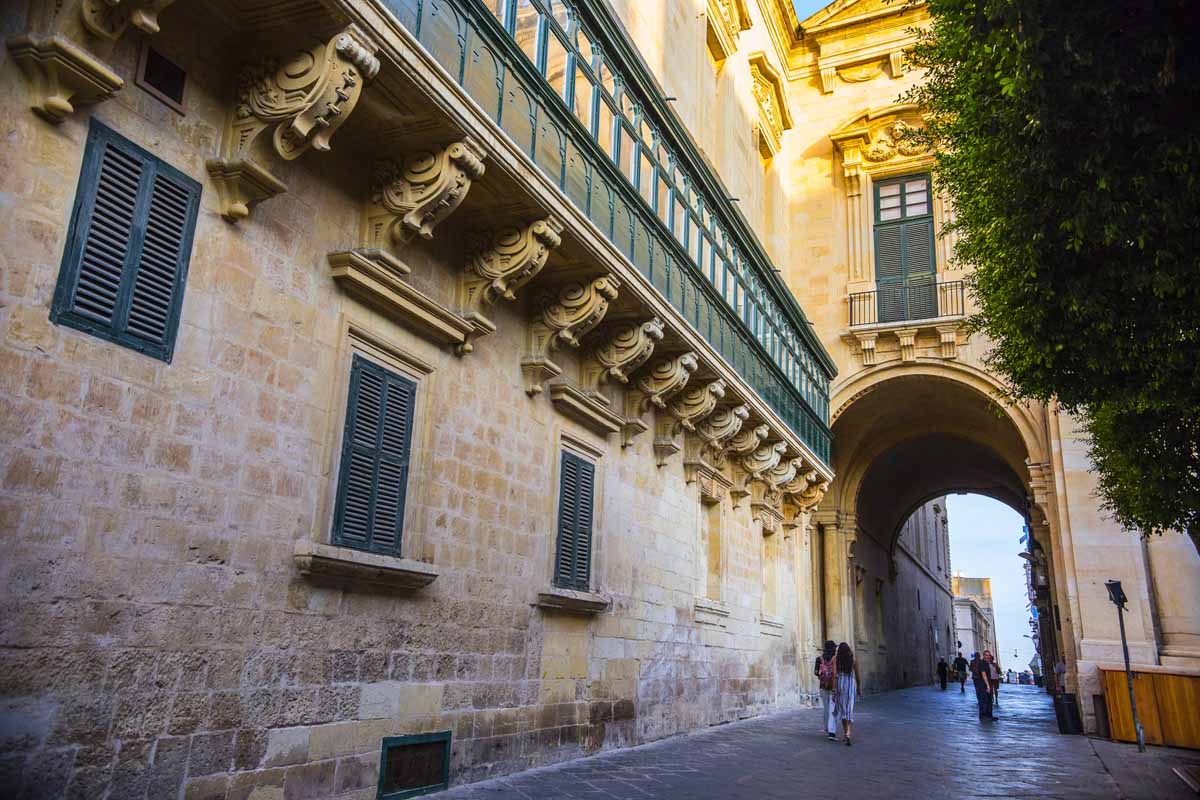
The Palace served as the Knight’s administrative center until their rule ended in 1798. It later became the Governor’s Palace under British rule – and remained the seat of Malta’s political power until 2015, when the Maltese Parliament was moved to its new home.
The Palace Armoury was opened to the public in 1860 as Malta’s first public museum. Today, it houses one of the world’s largest collections of arms and armor from the 16th to 18th centuries, including the personal armor of Grand Master La Valette. Visitors can also visit the Palace’s opulent State Rooms.
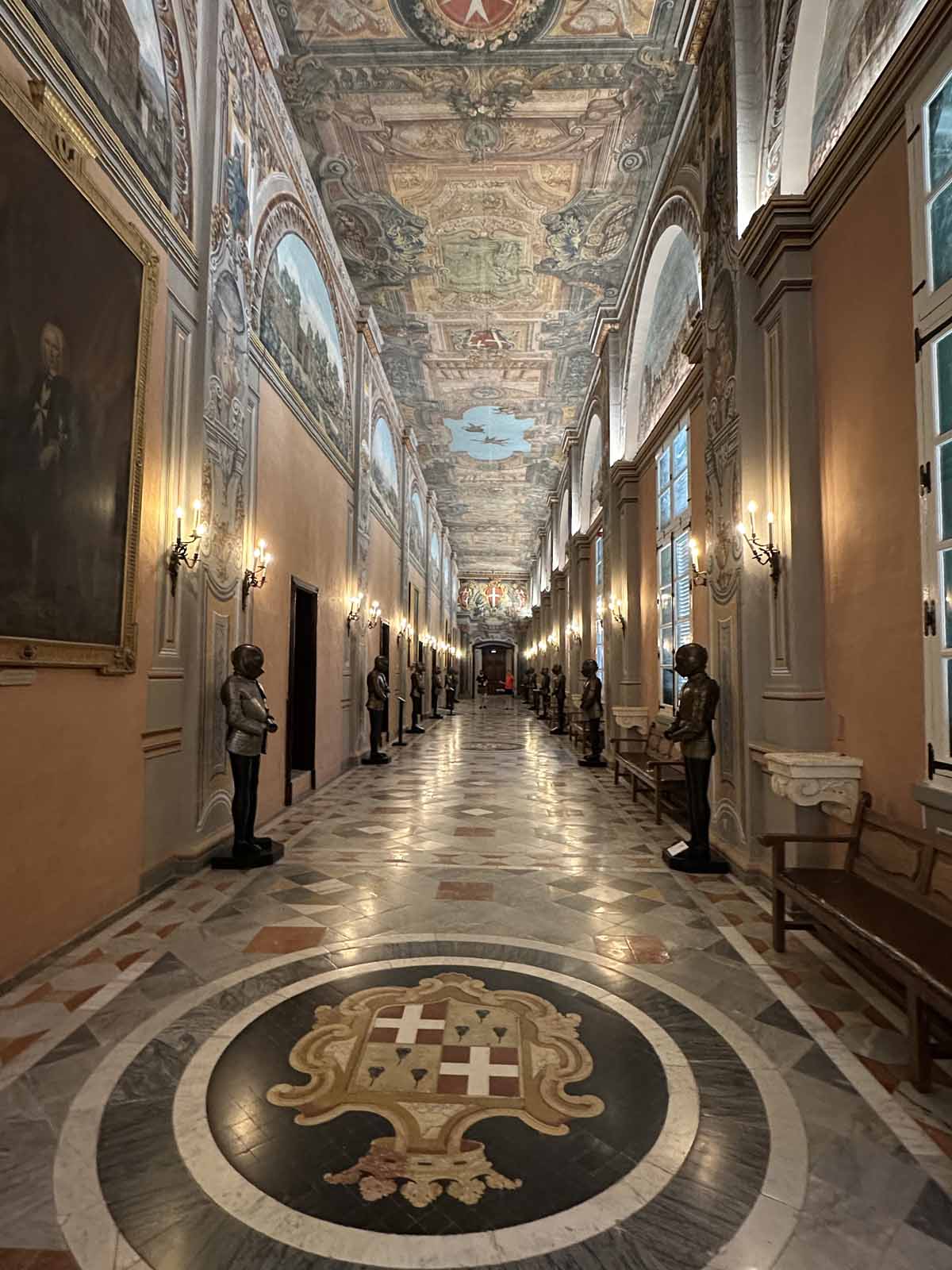
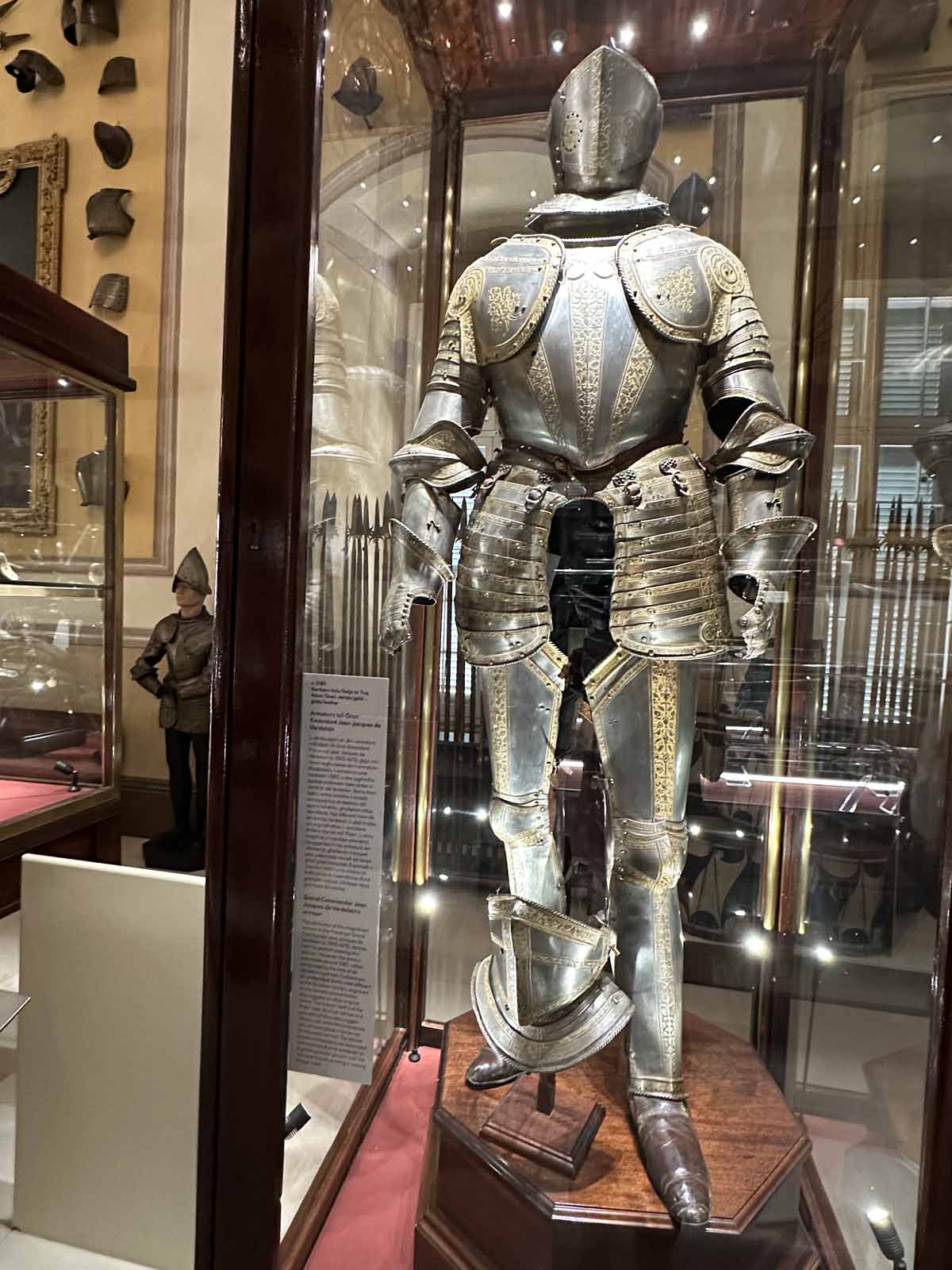
We toured both parts of the Grand Master’s Palace (entry fee:10-12 euros). I highly recommend visiting both the beautiful State Rooms & the Armoury. Note: I will admit I don’t usually get excited by exhibits of old weapons, but this armoury was very interesting & really worth a browse!
St. John’s Co-Cathedral
Valletta’s revered St. John’s Co-Cathedral is a masterpiece of high Baroque art & architecture. It’s particularly known for its opulent interior, in stark contrast to its simple exterior. The Cathedral was commissioned by the Knight’s Grand Master and built between 1573 and 1577. It is dedicated to the Order’s patron saint, John the Baptist.
With Baroque extravagance, there is no surface (floor-to-ceiling) left untouched by gilding, painting, marble or sculpture. In addition, the Cathedral is the burial place for most of the Knight’s Grand Masters. The floor contains nearly 400 beautiful inlaid marble tombstones of the knights.
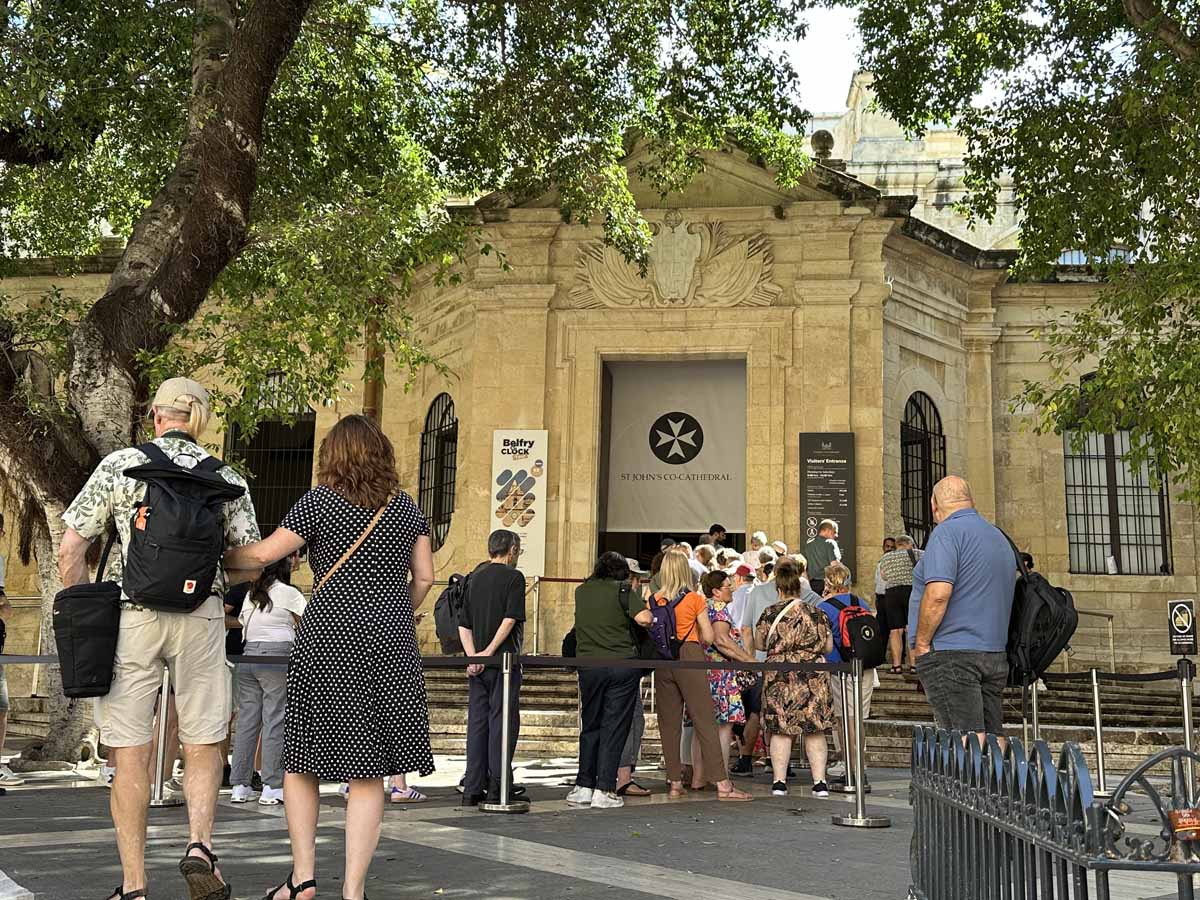
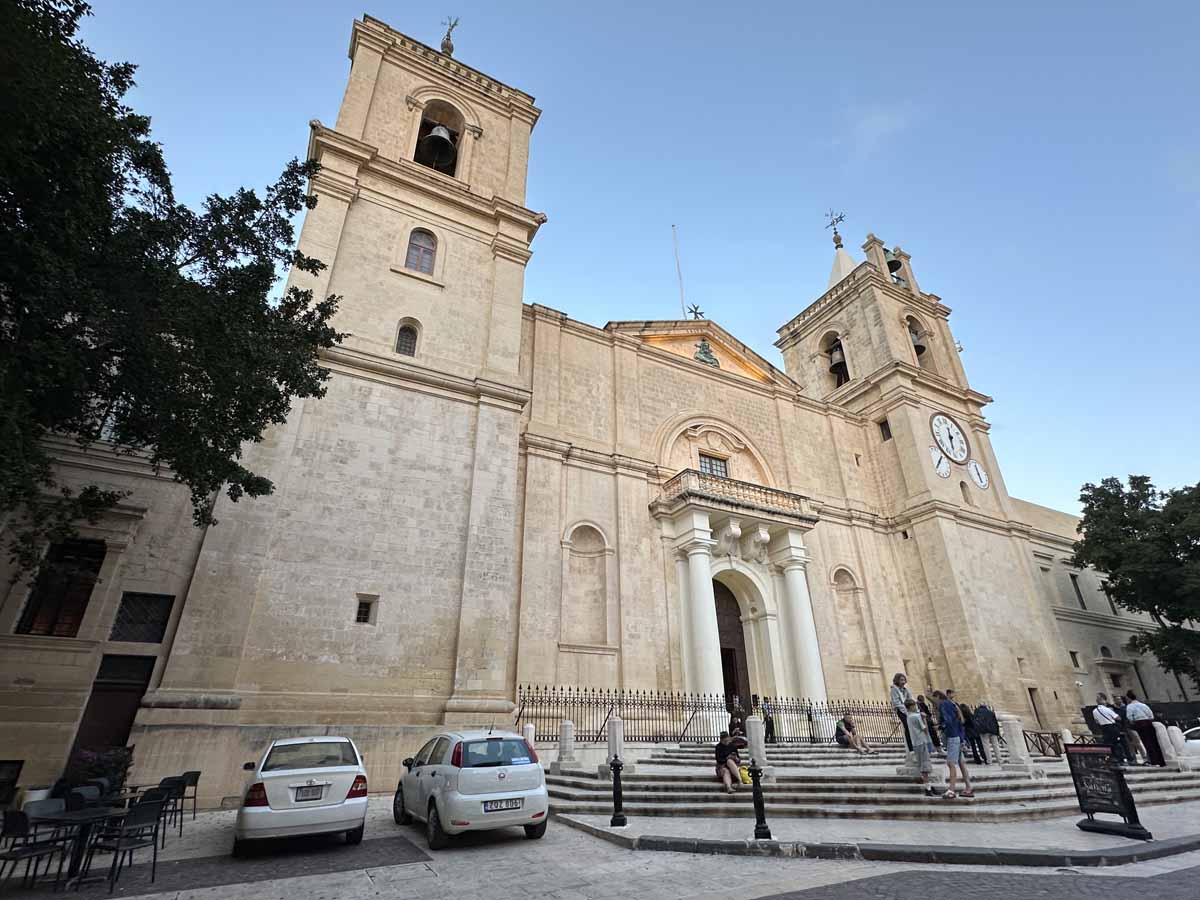
St. John’s Co-Cathedral is generally open for visitors Monday through Saturday and closed holidays & Sundays (except for attending mass.) I mention this to you because Jack & I almost missed out on seeing inside the Cathedral!
There were long lines every time we walked by the church side entrance (located on Republic St.) where the tours start. We kept delaying a visit, thinking we’d do it on our final day in Valletta – not realizing at the time they are closed for tours on Sunday. Oops…
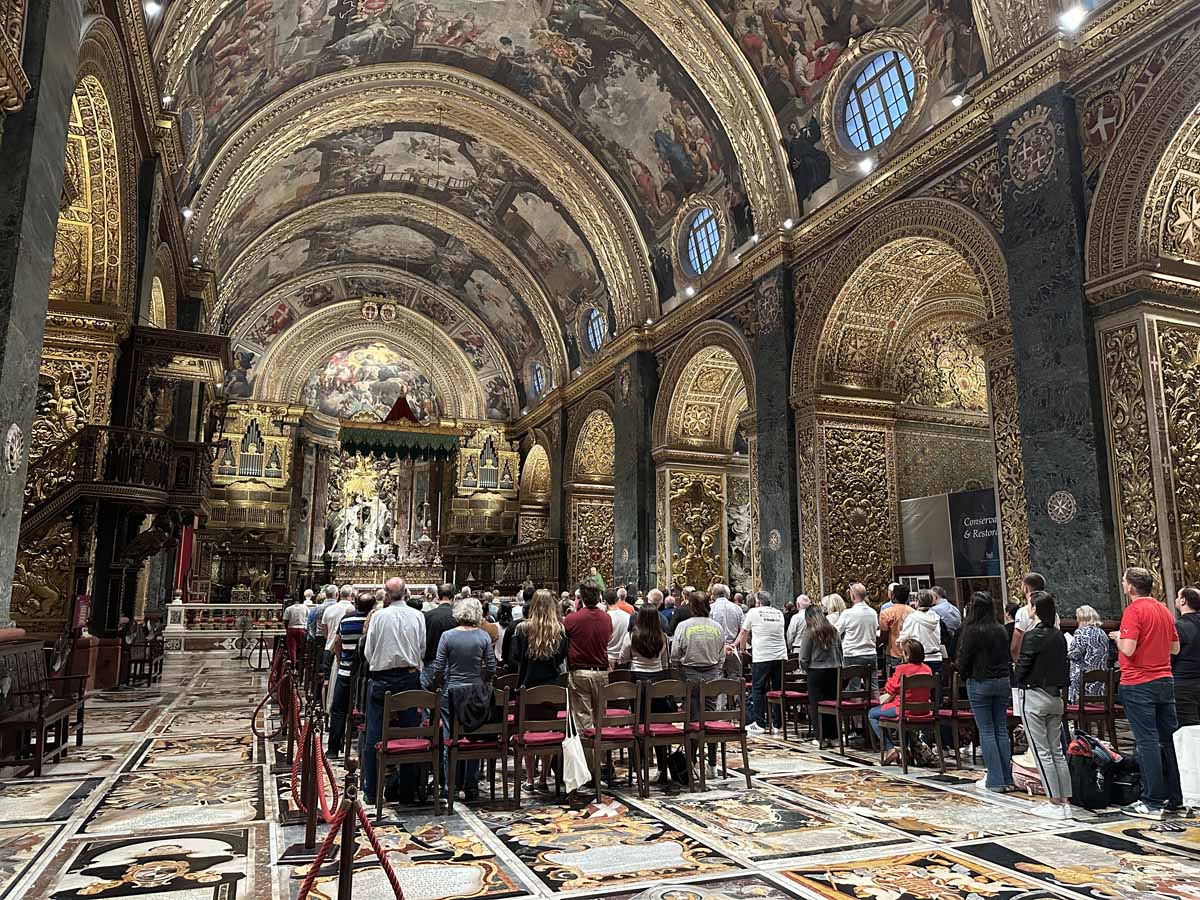
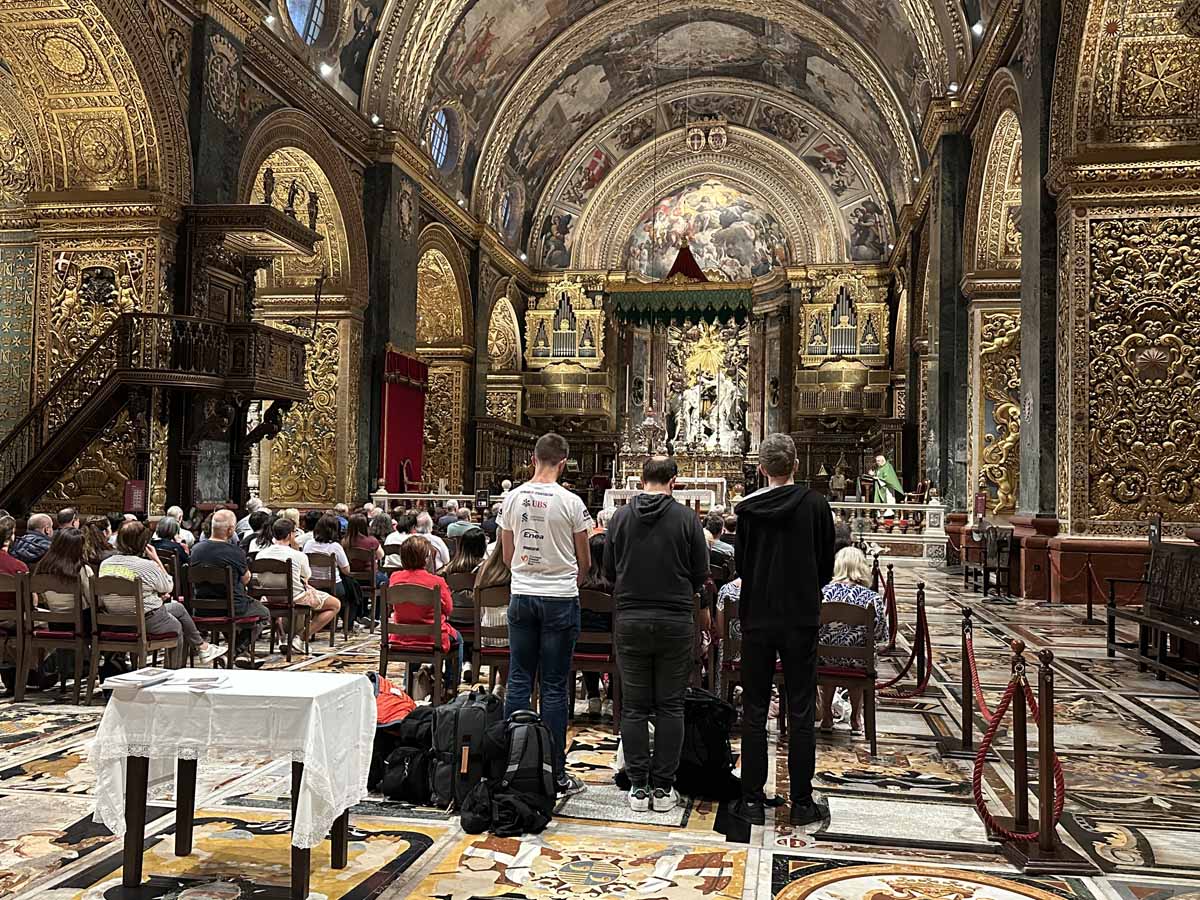
Luckily, we were able to enter the church on Sunday, for the 5:45pm mass. We happily stood quietly in the back (behind the stanchions) with the other “tourists.” Still, we were able to view the beautiful interiors, take some photos, and experience a bit of the mass. Phew…
Upper Barrakka Gardens – For Amazing Views
Looking for the most spectacular view in all of Malta? Then head over to Upper Barrakka Gardens for sweeping views of the Grand Harbour, the Three Cities, and the Mediterranean Sea. Not to mention views of Valletta’s hilly cityscape.
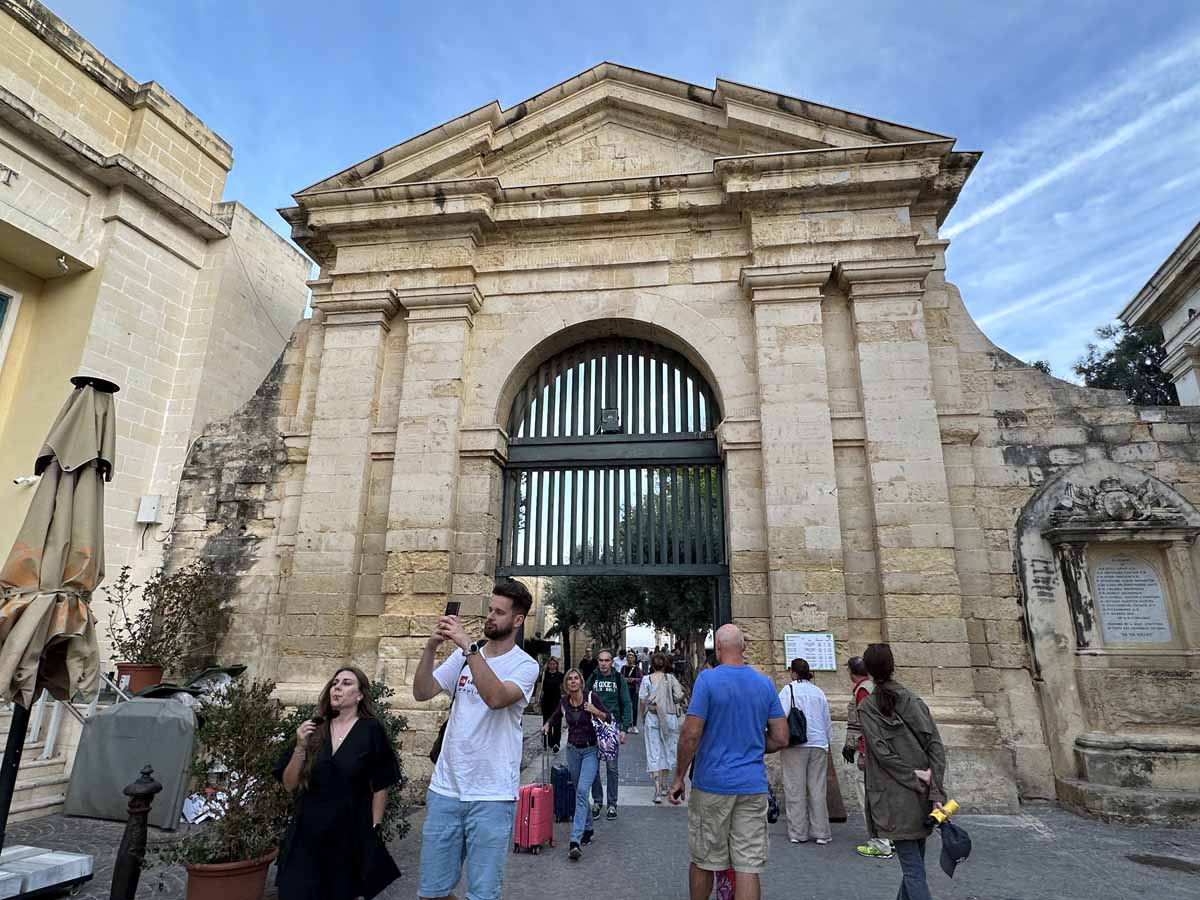
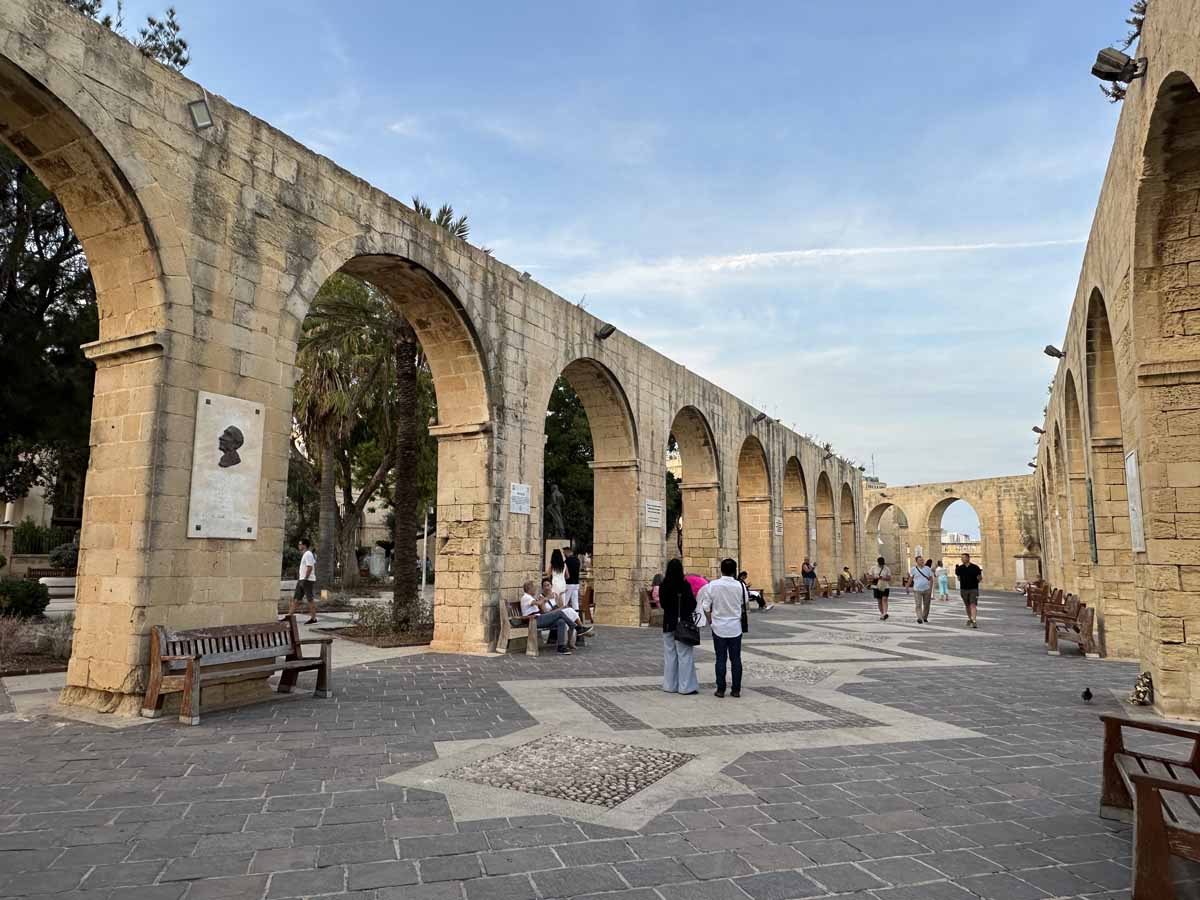
This lovely public park is adorned with beautiful arches, manicured flower beds, palm trees, and historic monuments. It’s a photographer’s paradise, plus a peaceful, scenic escape from hectic city life.
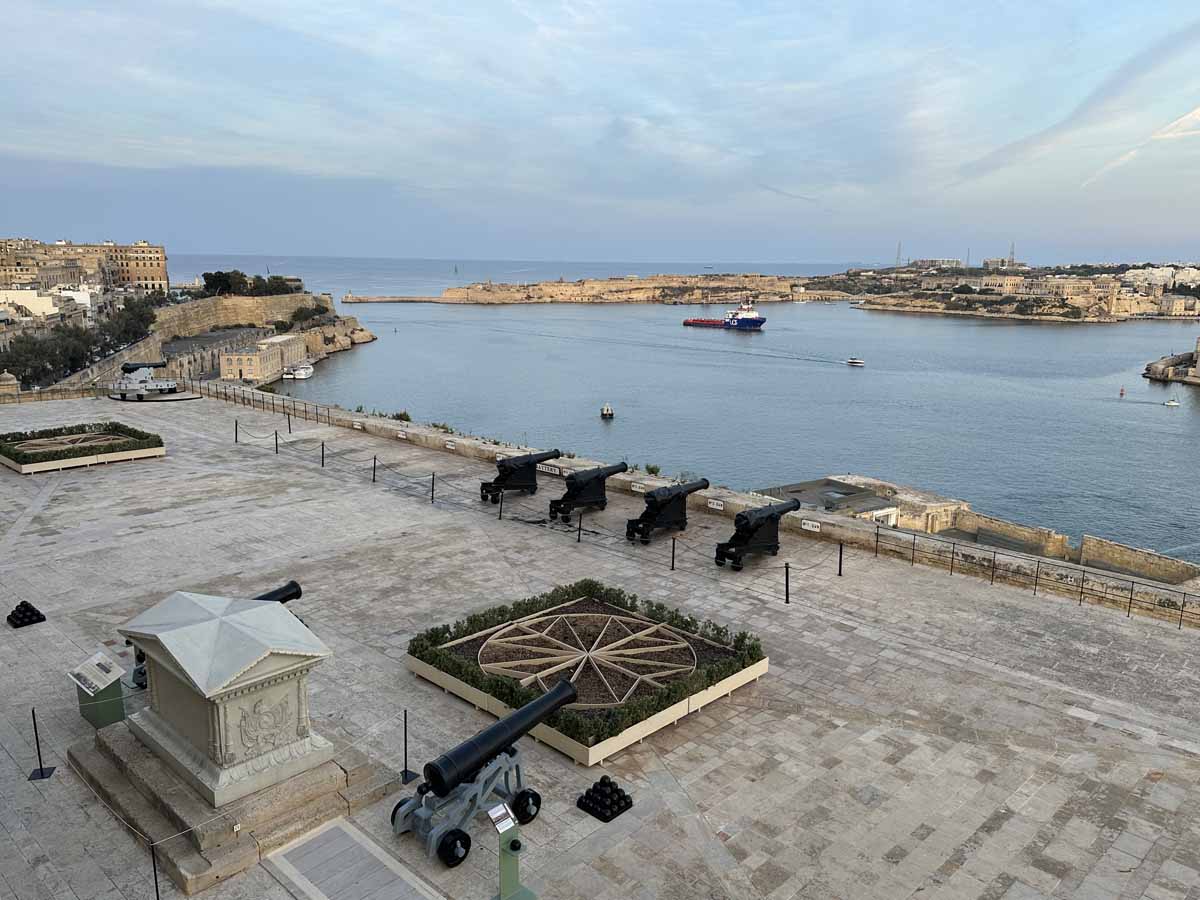
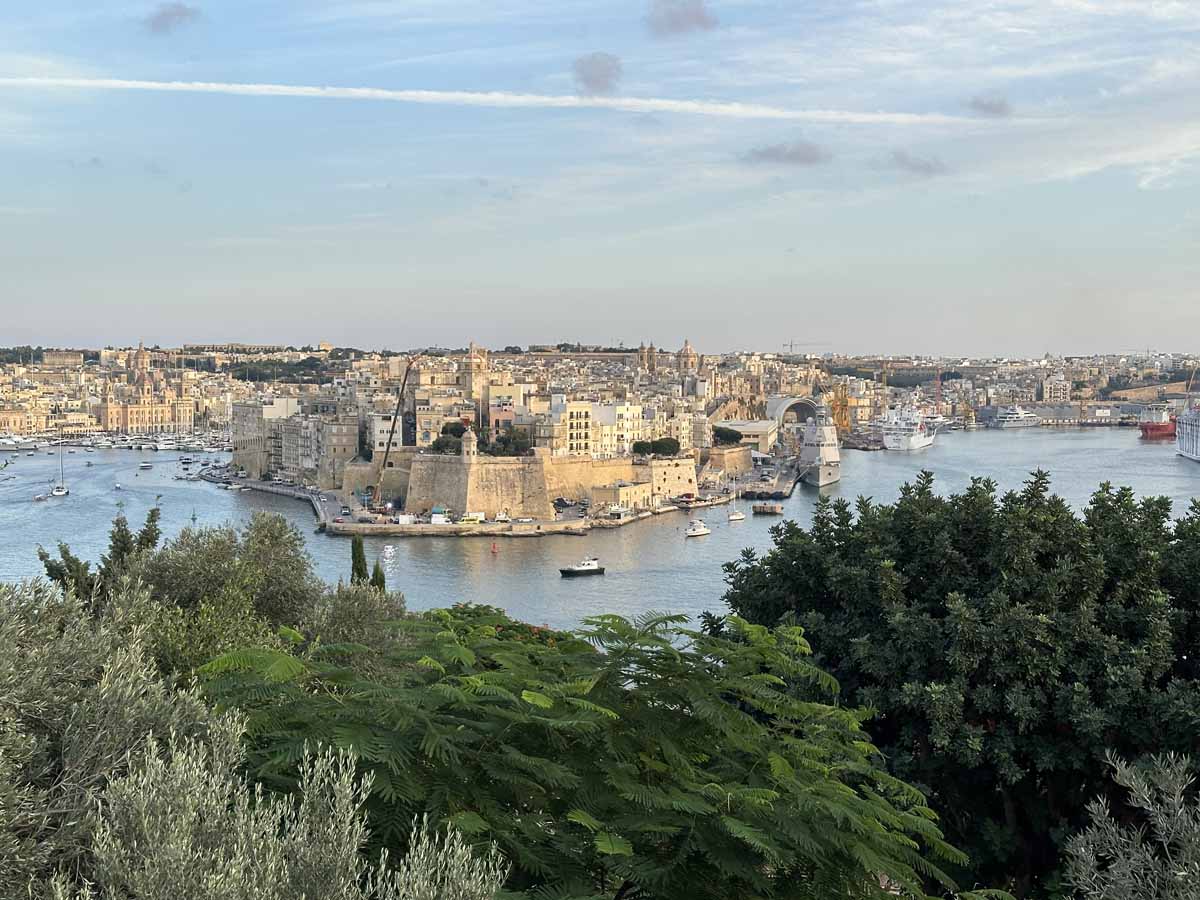
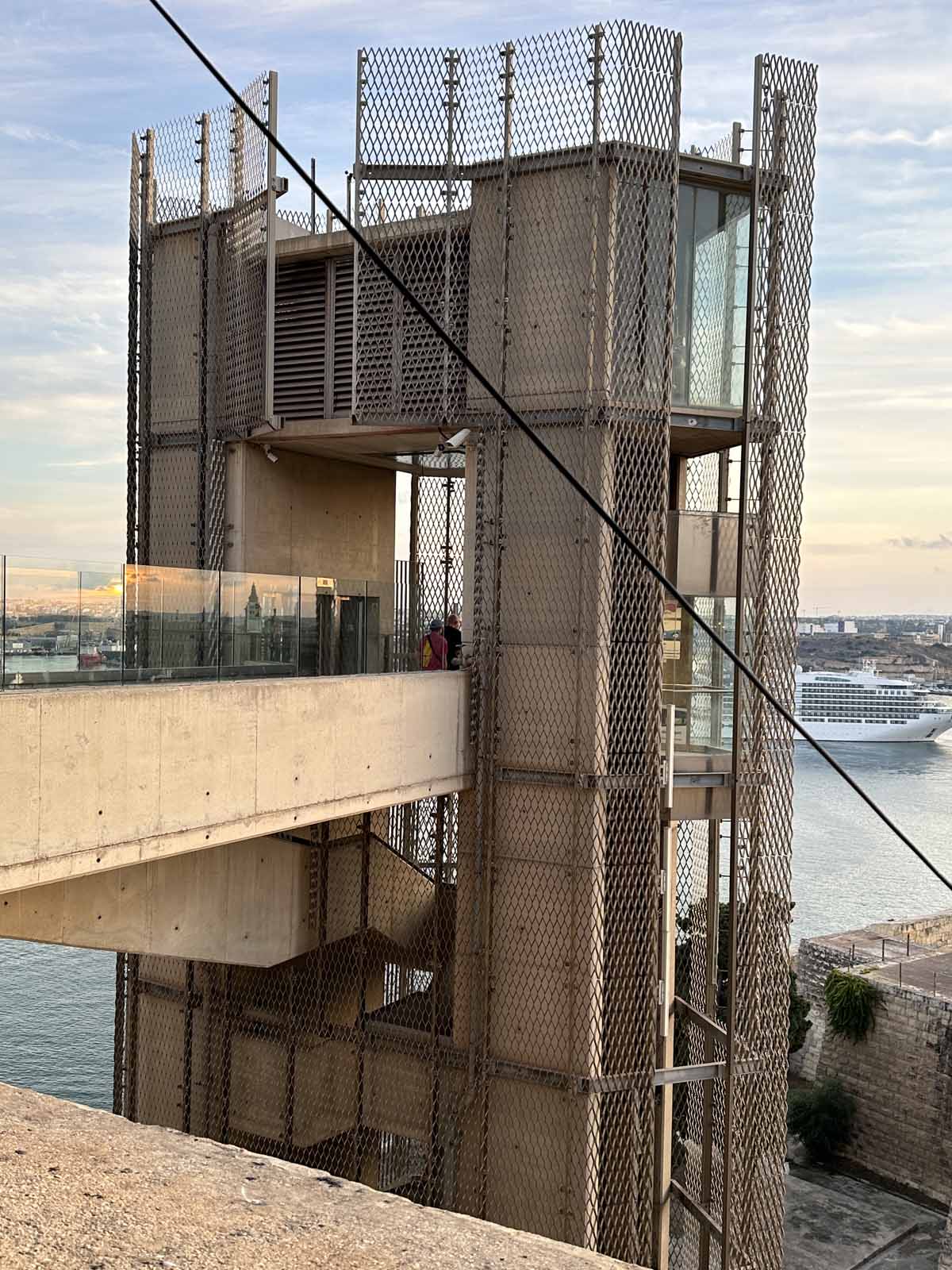
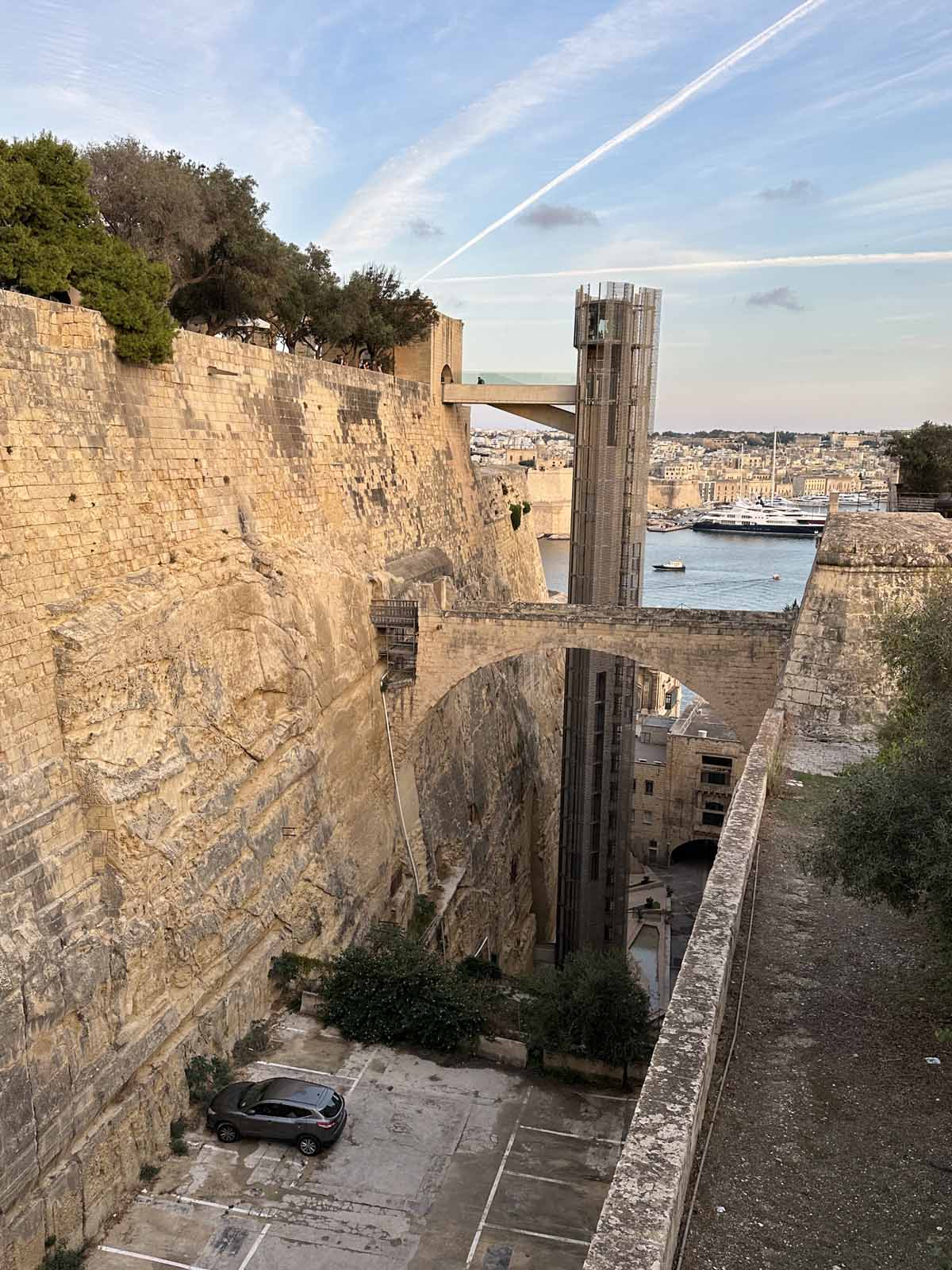
Be sure to enjoy the very cool Upper Barrakka Lift, a high-speed panoramic elevator which provides easy access to the Grand Harbour waterfront far below! The lift is a whopping 58 meters (190 feet) high & the ride takes only 23-25 seconds. Costing only 1 euro for a round-trip, it’s a great deal for local commuters and tourists alike.
OUR DAY TRIP TO BIRGU & THE “THREE CITIES”
The Three Cities / Birgu’s History
The Three Cities – Vittoriosa (Birgu), Senglea (Isla), and Cospicua (Bormla) – are a trio of fortified historic boroughs located directly across the Grand Harbour from Valletta.
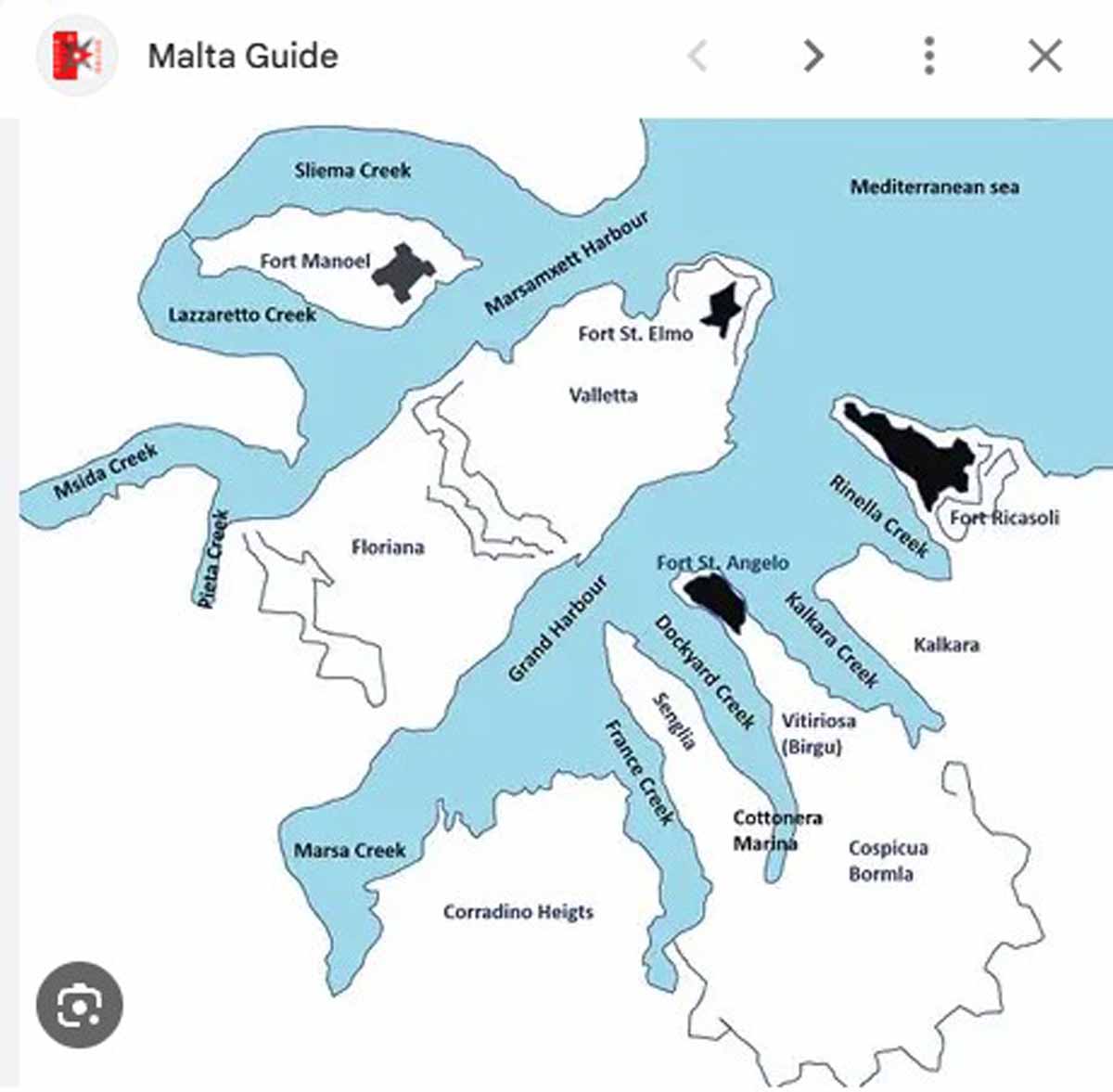
Valletta, Grand Harbour & Three Cities / Map Credit: Malta Guide
Known as the “cradle of Maltese history,” they offer an authentic, quiet alternative to Valletta. They feature narrow streets, ancient churches, and deep-rooted maritime traditions – including sailboat & yacht-filled marinas lining their picturesque waterfronts.
Quick History of Birgu
When the Knights of St. John arrived in Malta in 1530, the island’s original capital, Mdina was located inland. Since this didn’t suit the Knights’ naval activities, they moved their stronghold here to the town of Birgu.
Birgu was hastily fortified and Fort St. Angelo (at its peninsular tip) was constructed in anticipation of an attack by the Ottoman Empire – which arrived in 1565 with the Great Siege.
Soon after, the Knights planned a new capital city, moving across the Grand Harbour to Valletta in 1571. Birgu lost its political importance, but continued to operate as a naval base for various occupying forces (like the Brits) over the following four centuries.
Our Visit To Birgu
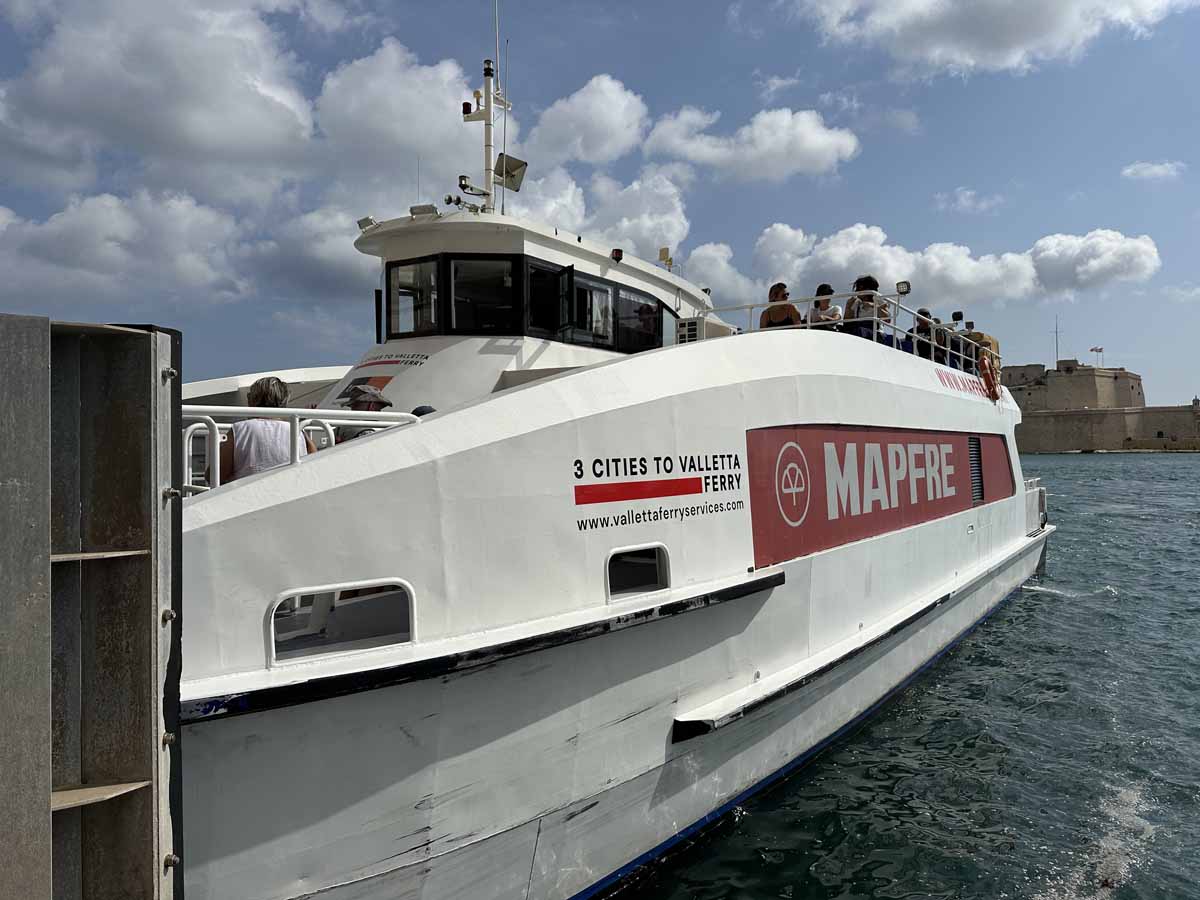
Jack & I were excited to make a day trip to the nearby Three Cities. They’re easily reached from Valletta by a catamaran ferry which runs every half hour across the Grand Harbour. The ride takes only 10 minutes and lands at the Bormla ferry terminal.
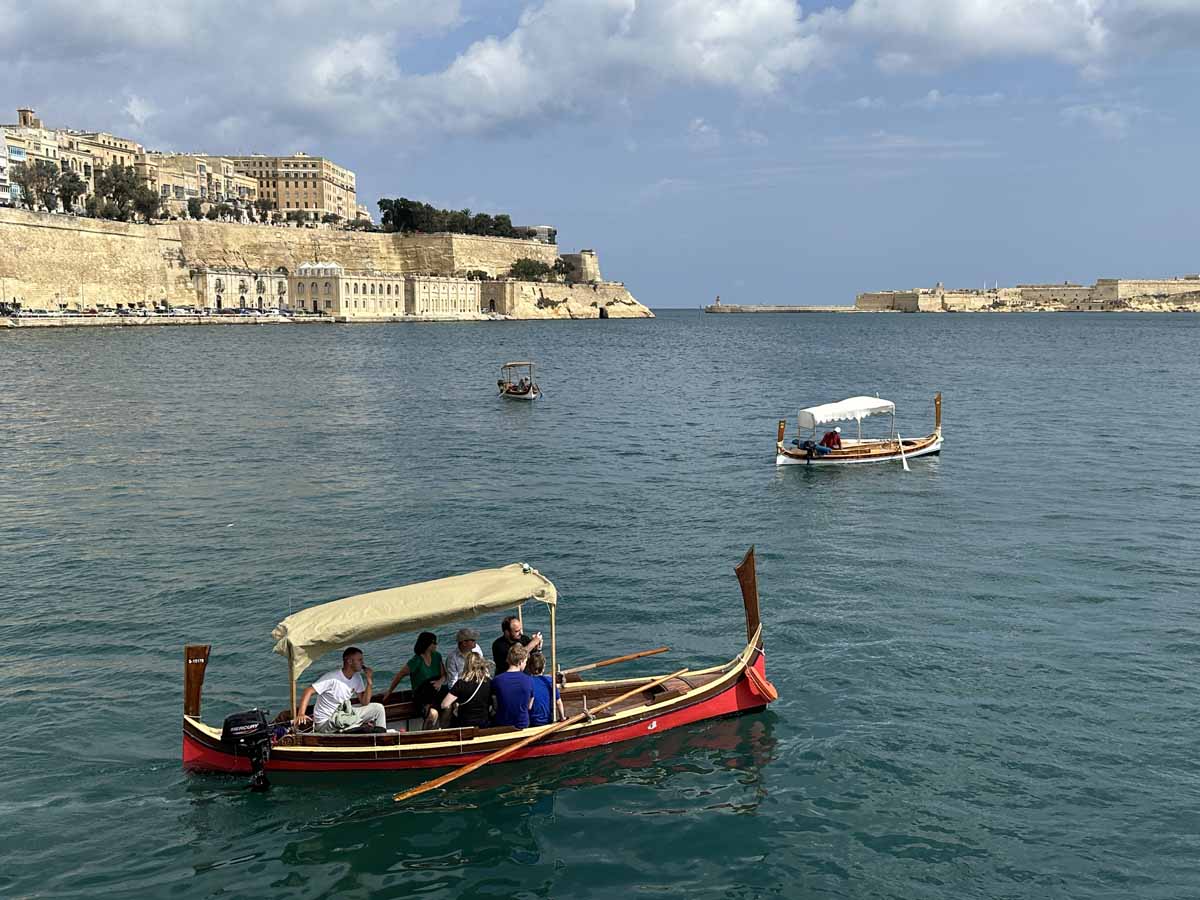
Another option is to take one of the colorful, traditional wooden dgħajsas, often referred to as Maltese gondolas. These “water taxis” are historically rowed, typically with two oars instead of one. However, today many use outboard motors. Unfortunately, we didn’t get the chance to take one – it looked like fun.
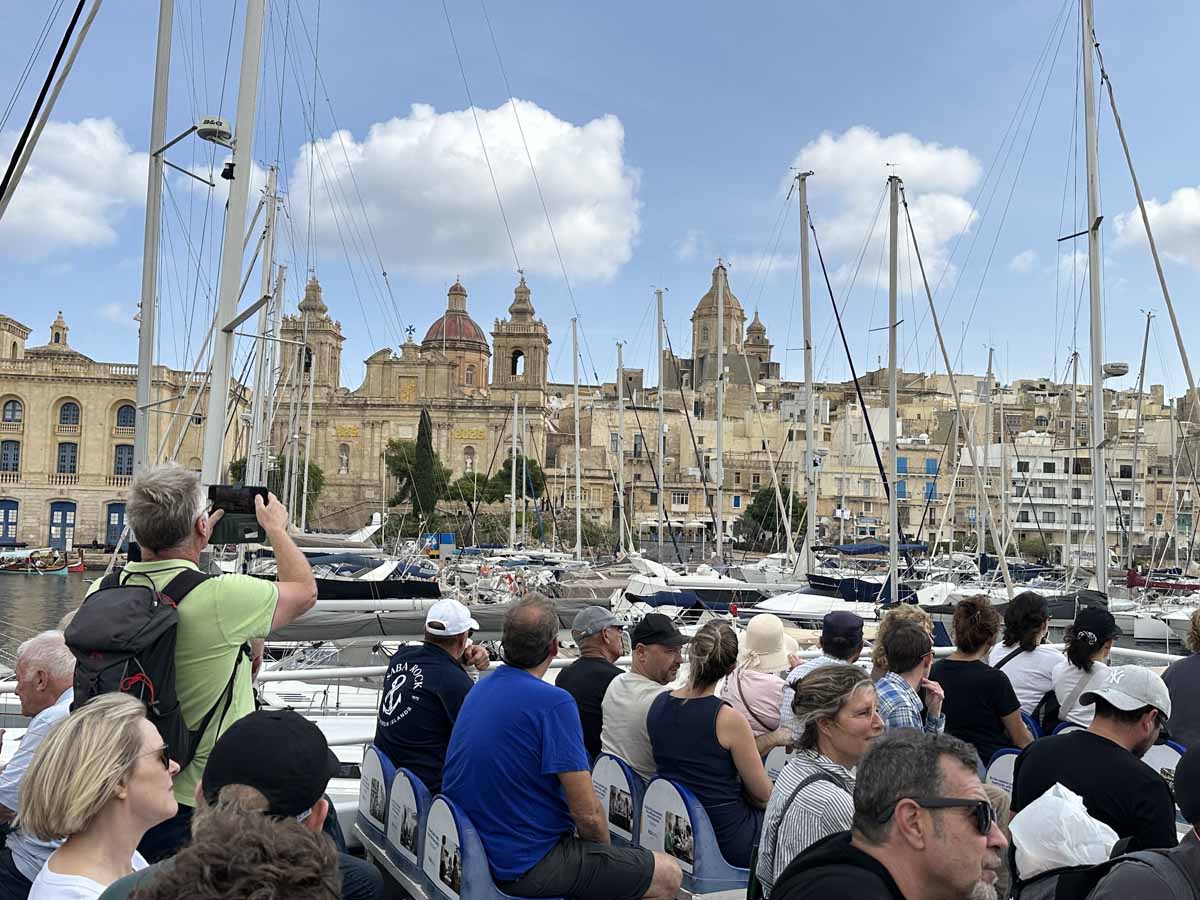
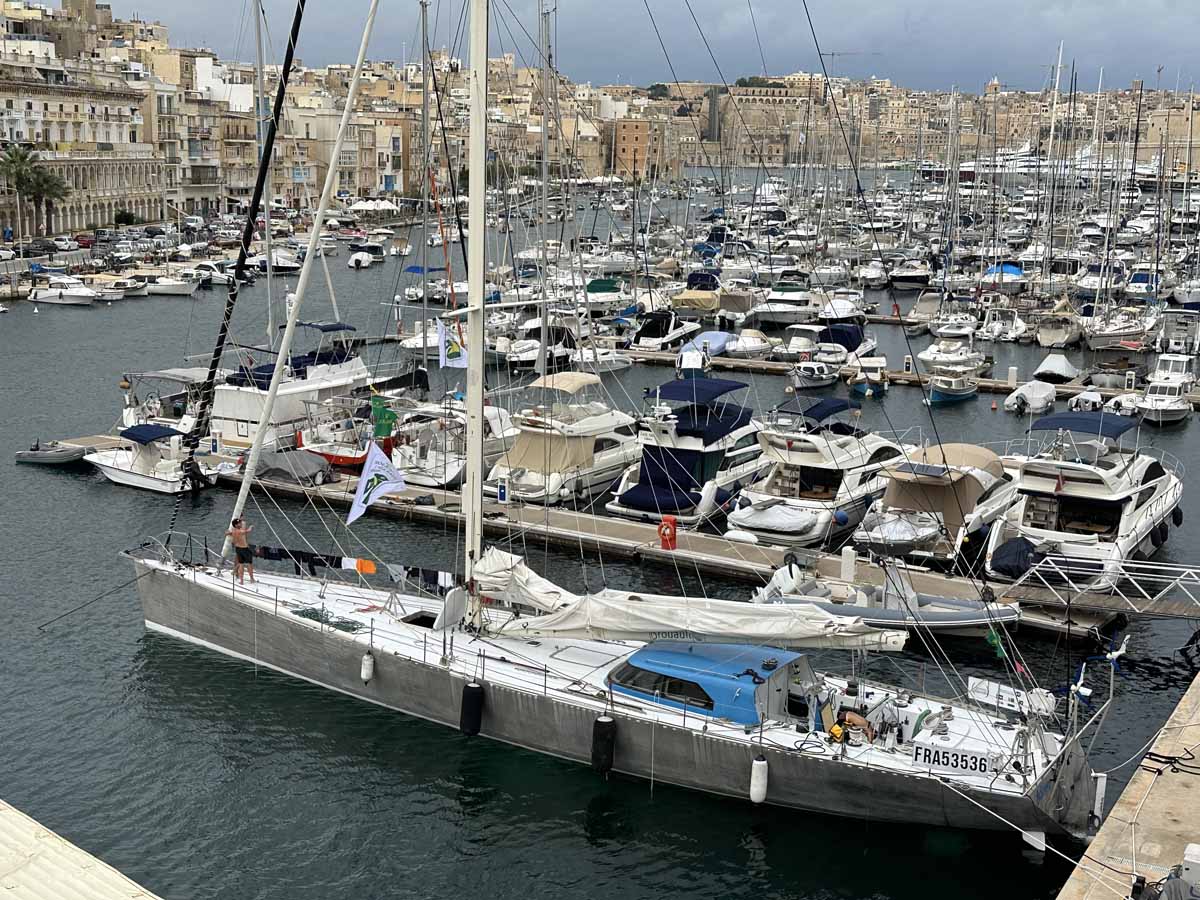
Arriving at the ferry landing, we took a walk along the waterfront & its picturesque yacht-filled marinas on our way to Birgu – the town where we chose to spend our time (due to our guidebook’s recommendation of offering the most sights in Three Cities).
-

- Be Birgu Cafe / Photo to Right – Credit: Jack Daulton
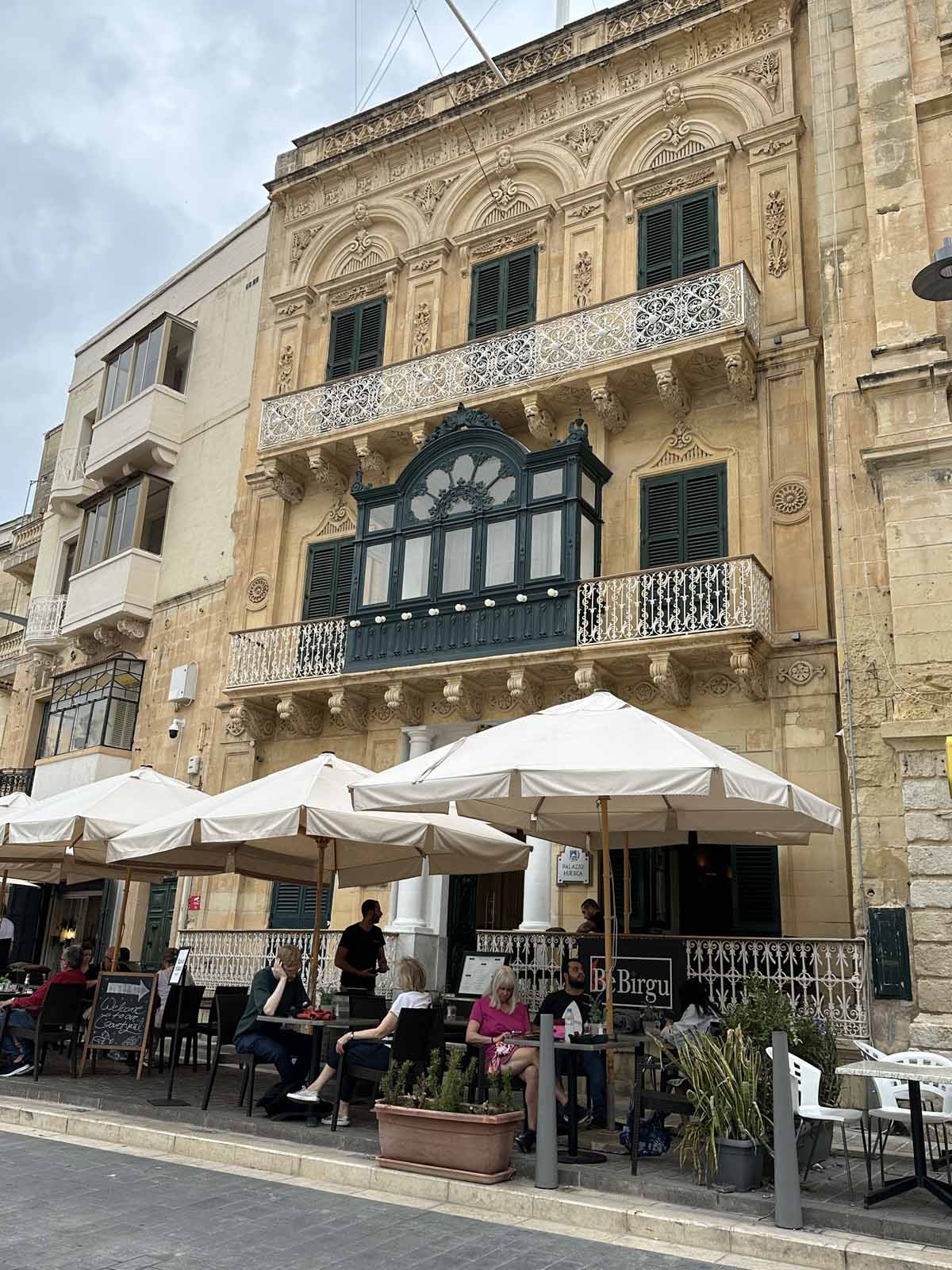

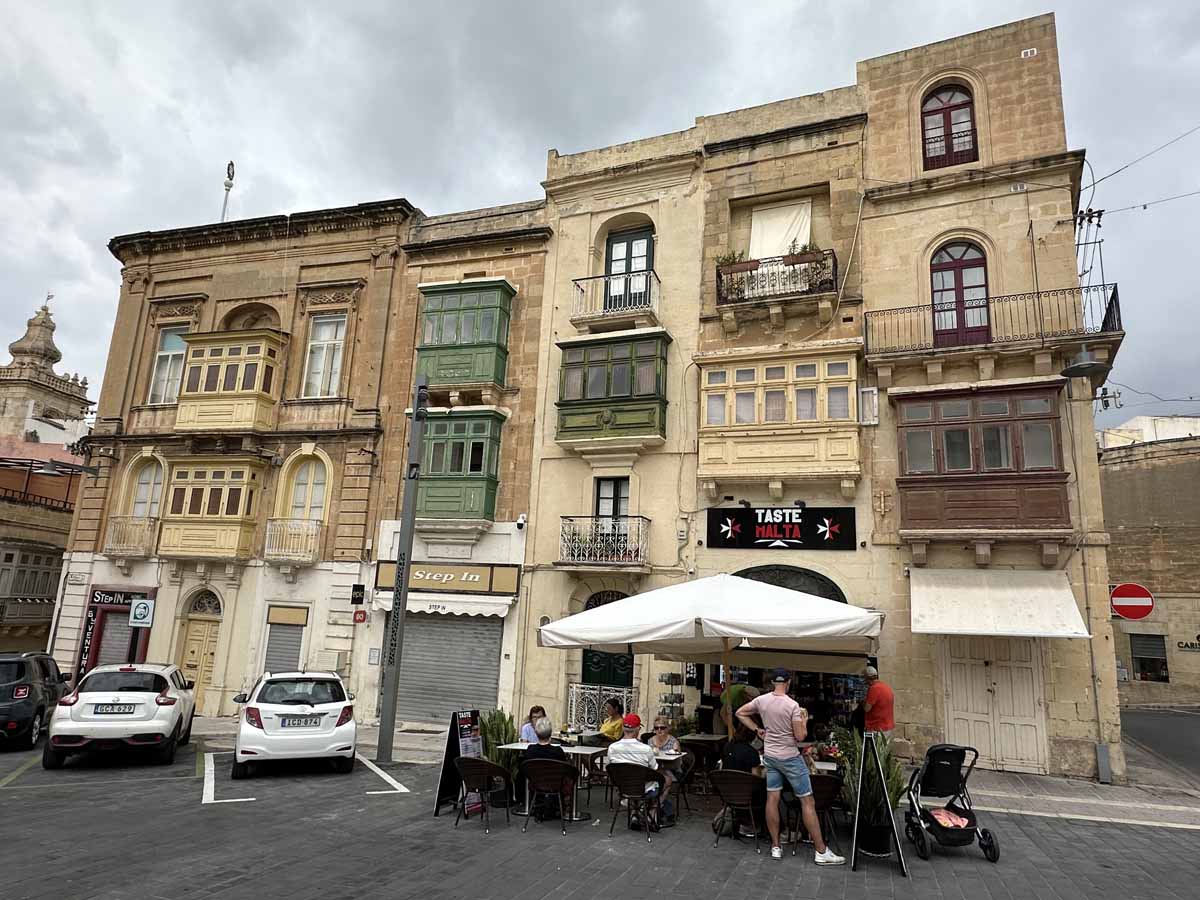
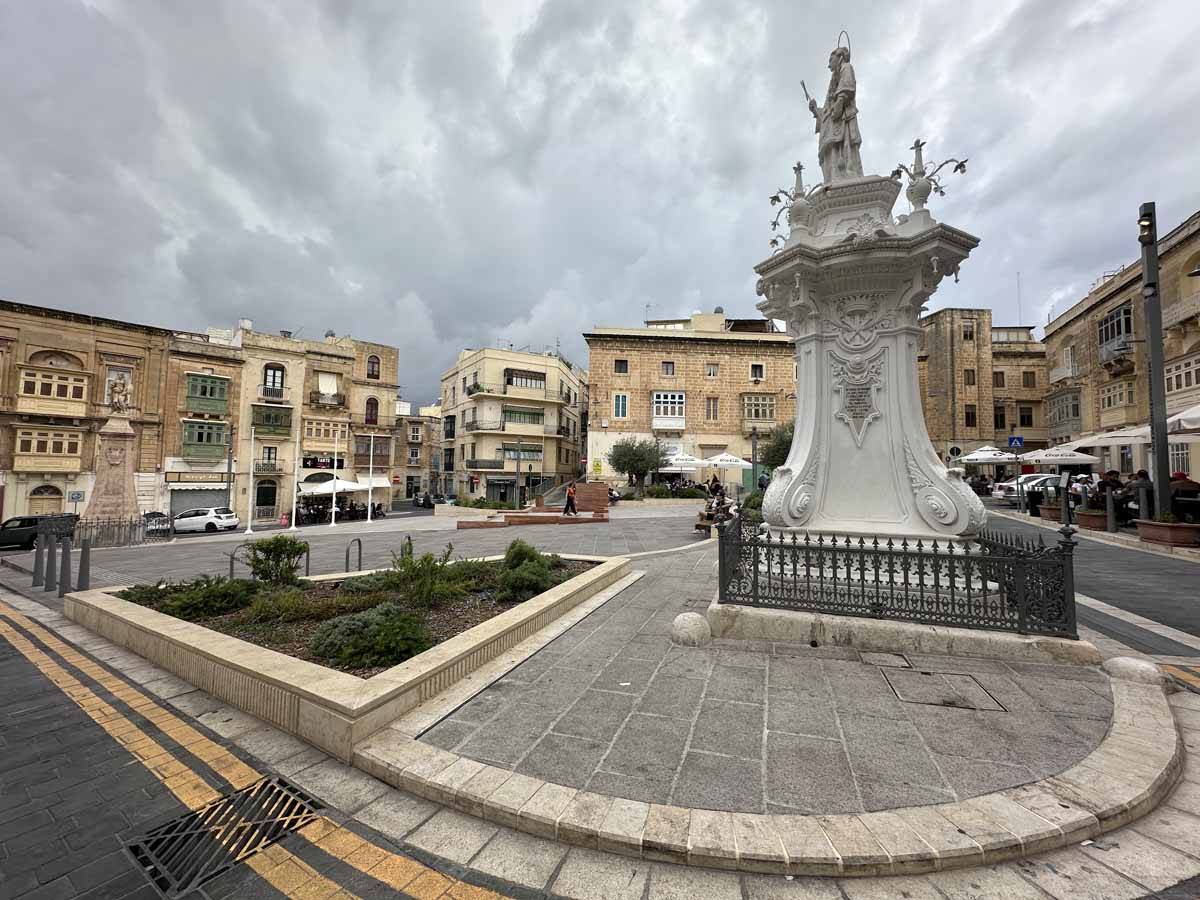
We spent a delightful afternoon in Birgu, walking the charming, winding & peaceful lanes of its old neighborhood (named Collachio). We also enjoyed a nice lunch at the atmospheric BeBirgu Café on the main square. Carefully watching the dark, ominous skies above, we made a run for the nearby Inquisitor’s Palace as soon as it started to rain!
The Inquisitor’s Palace
The Inquisitor’s Palace is a unique 16th-century Baroque building that served as the seat of the Maltese Inquisition for over 200 years (from 1574 to 1798). It showcases the Roman Inquisition’s history, including prison cells, torture chambers, and the tribunal hall. We spent an interesting 1.5 hours here and I do recommend a visit – it’s so unique.
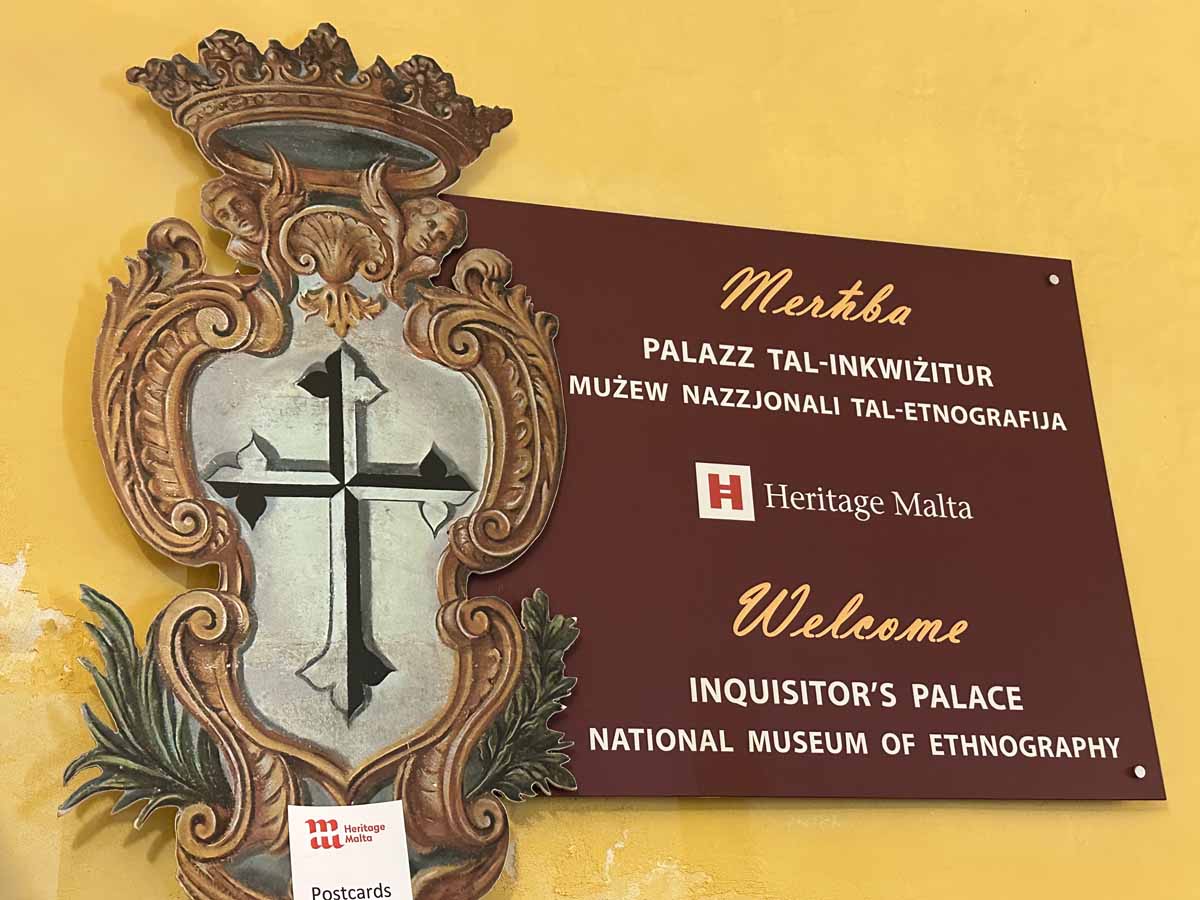
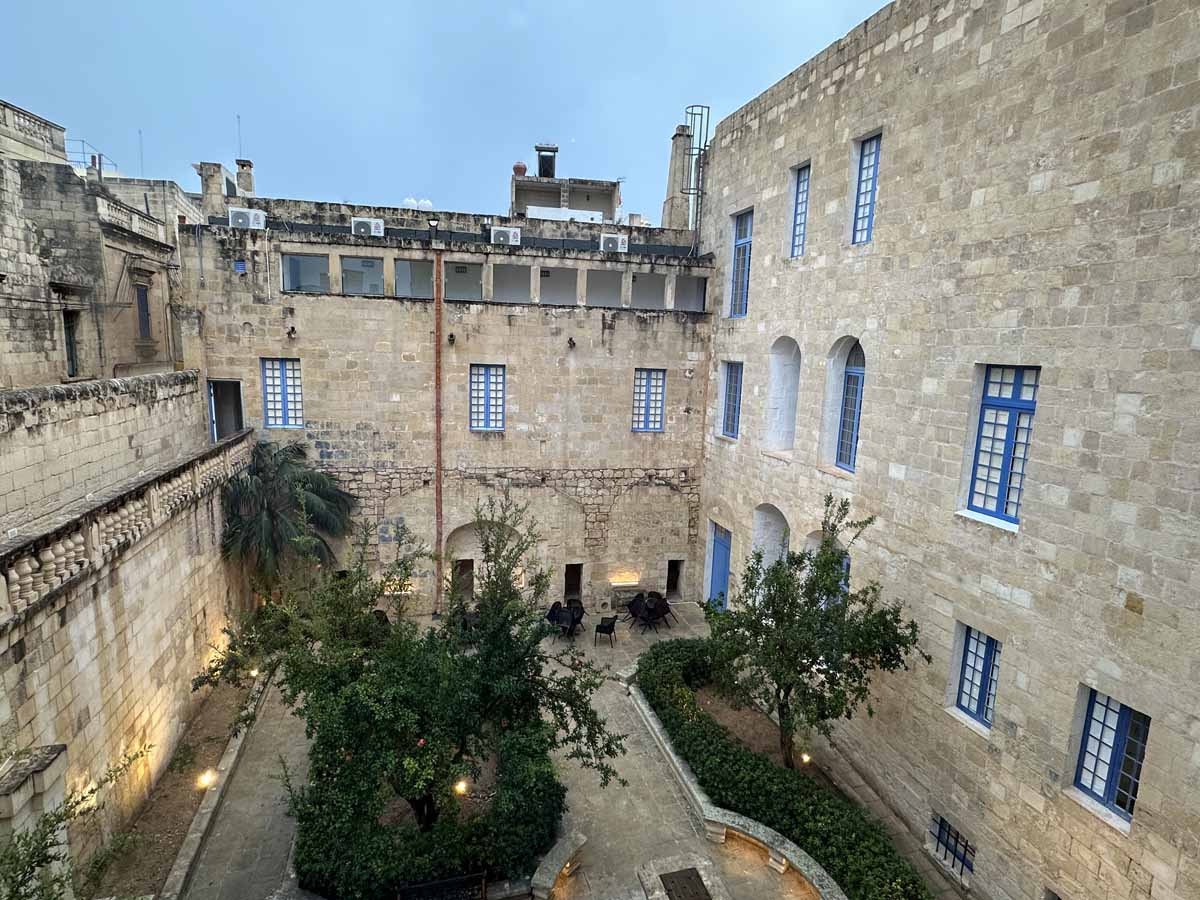
It was originally built as a courthouse for the Order of St. John. In 1574, it became the residence and office of the first General Inquisitor. These Inquisitors acted as high-ranking representatives of the Pope. They investigated and punished heresy, blasphemy, and unapproved religious customs. This included Protestants and others with beliefs contrary to the Roman Catholic church. Wow, sobering history…
Walking the Collachio Neighborhood & Waterfront
When the rain finally stopped, we continued our walk through the lovely Collachio neighborhood, teeming with potted plants and more colorful wooden balconies.
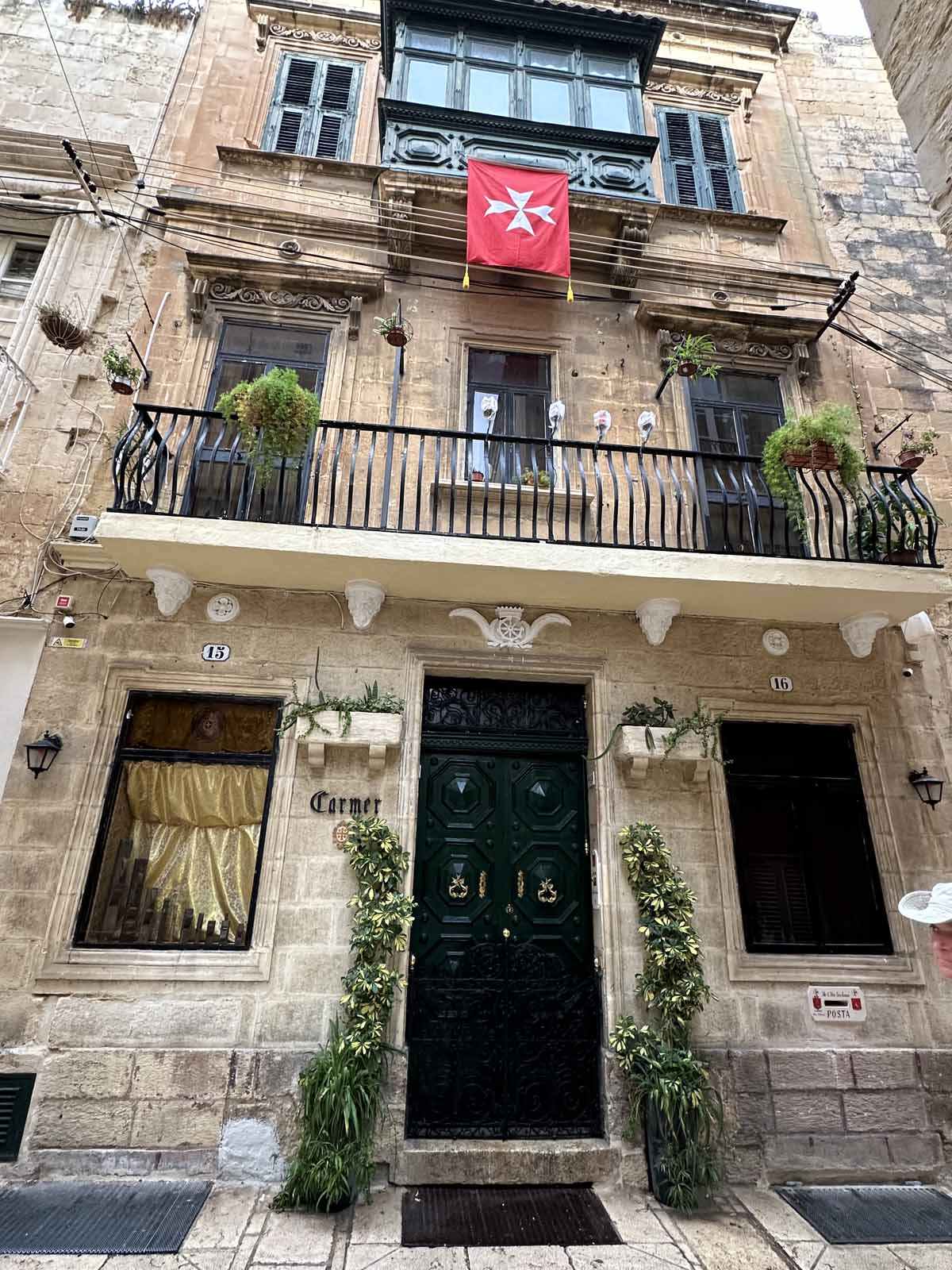
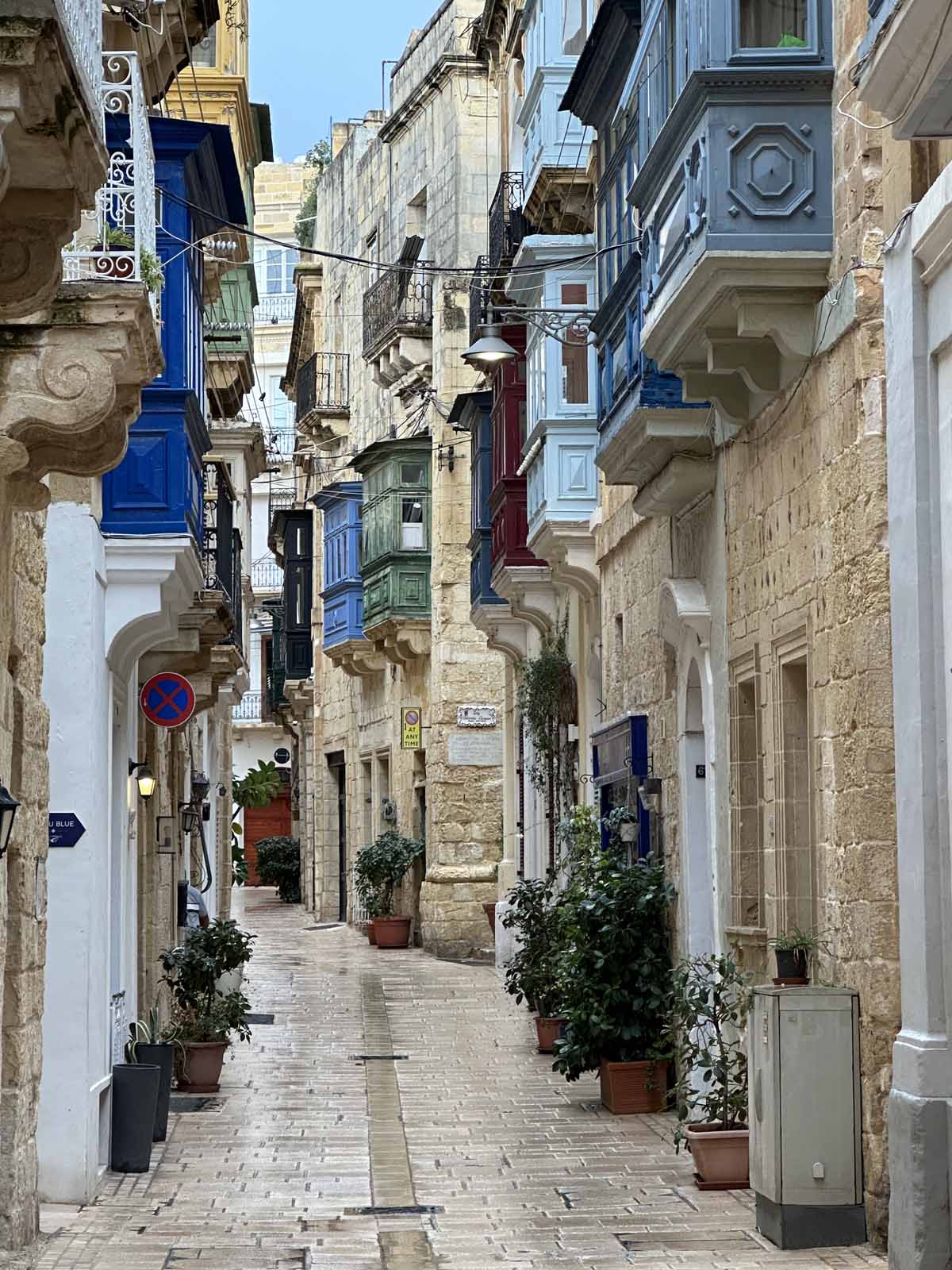
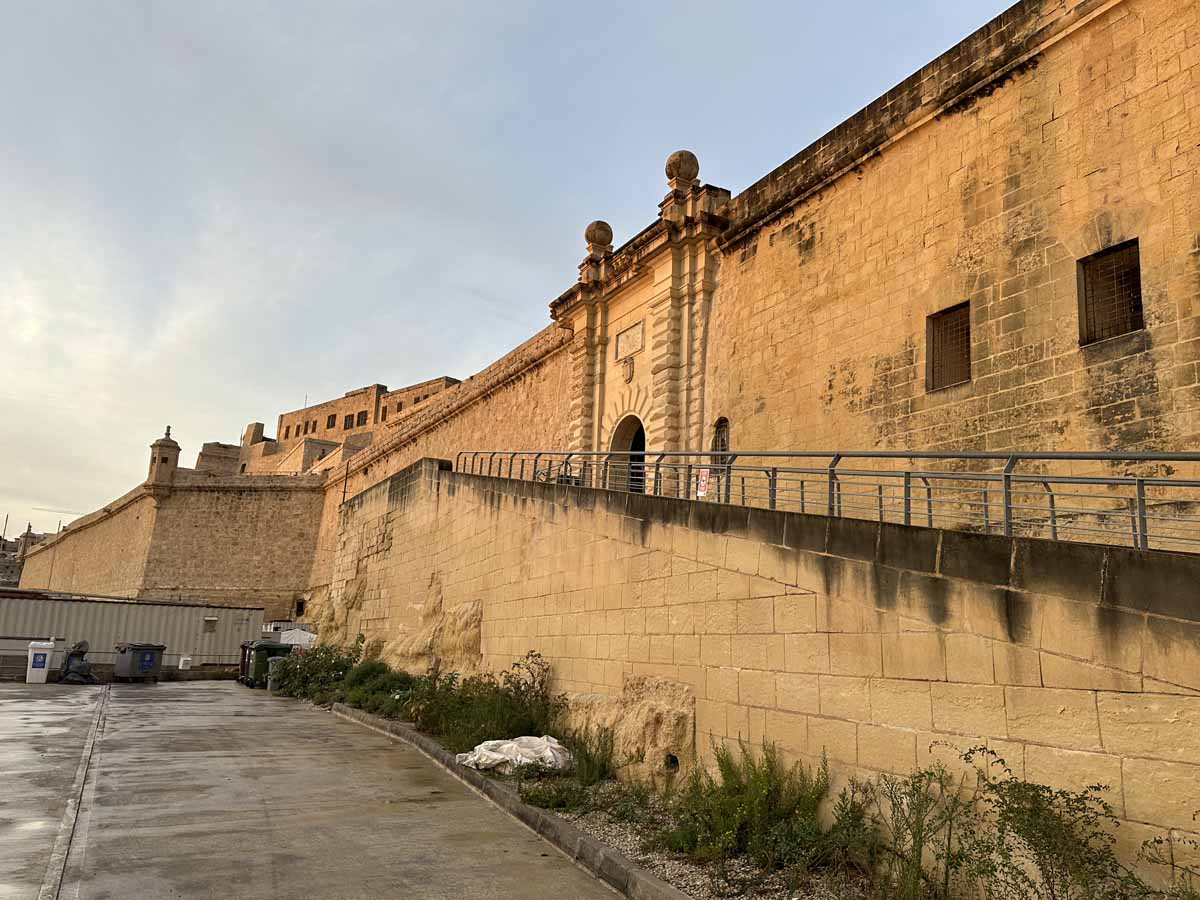
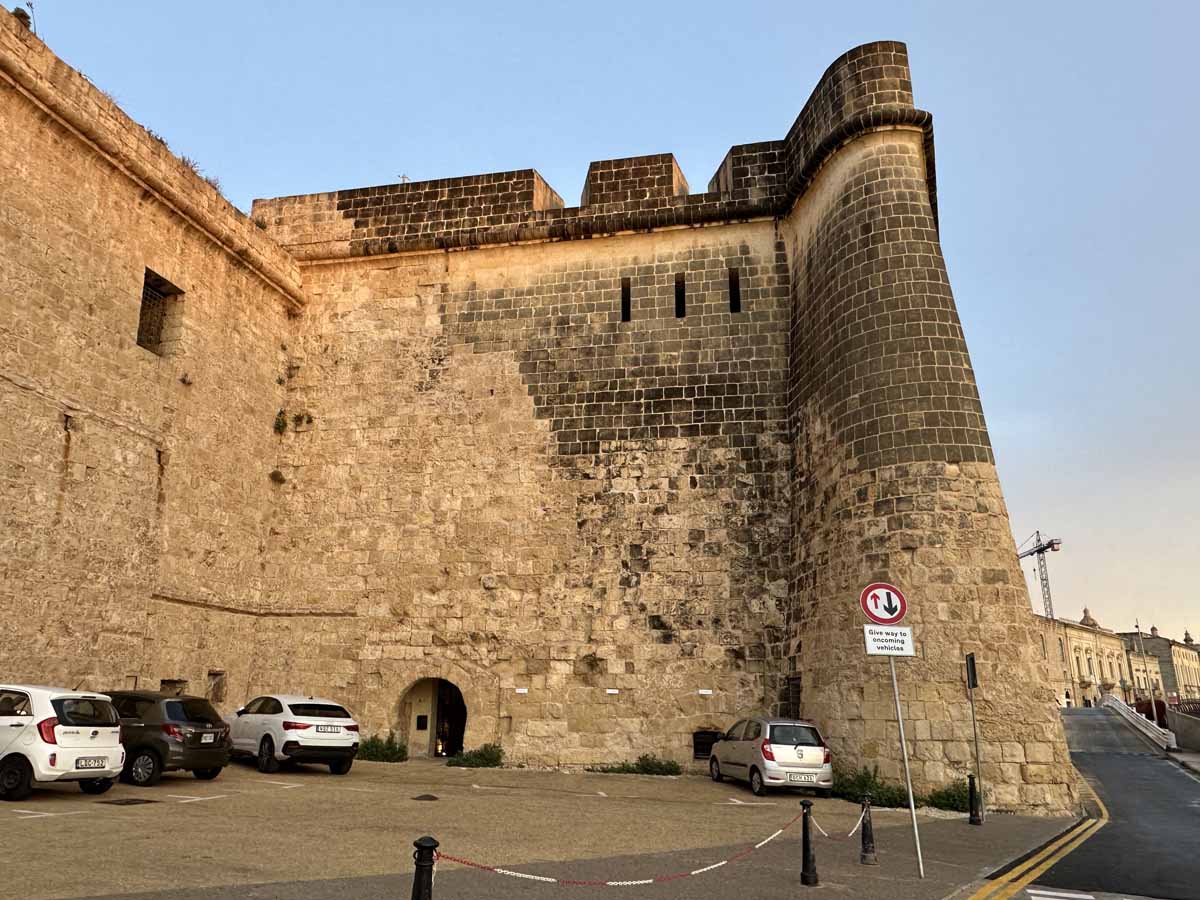
We then walked along Birgu’s high bastions and waterfront on the other side of the peninsula out to the tip where Fort St. Angelo is situated. Unfortunately, the fort closed at 6pm so we were too late to make a visit inside, which we would have liked to do.
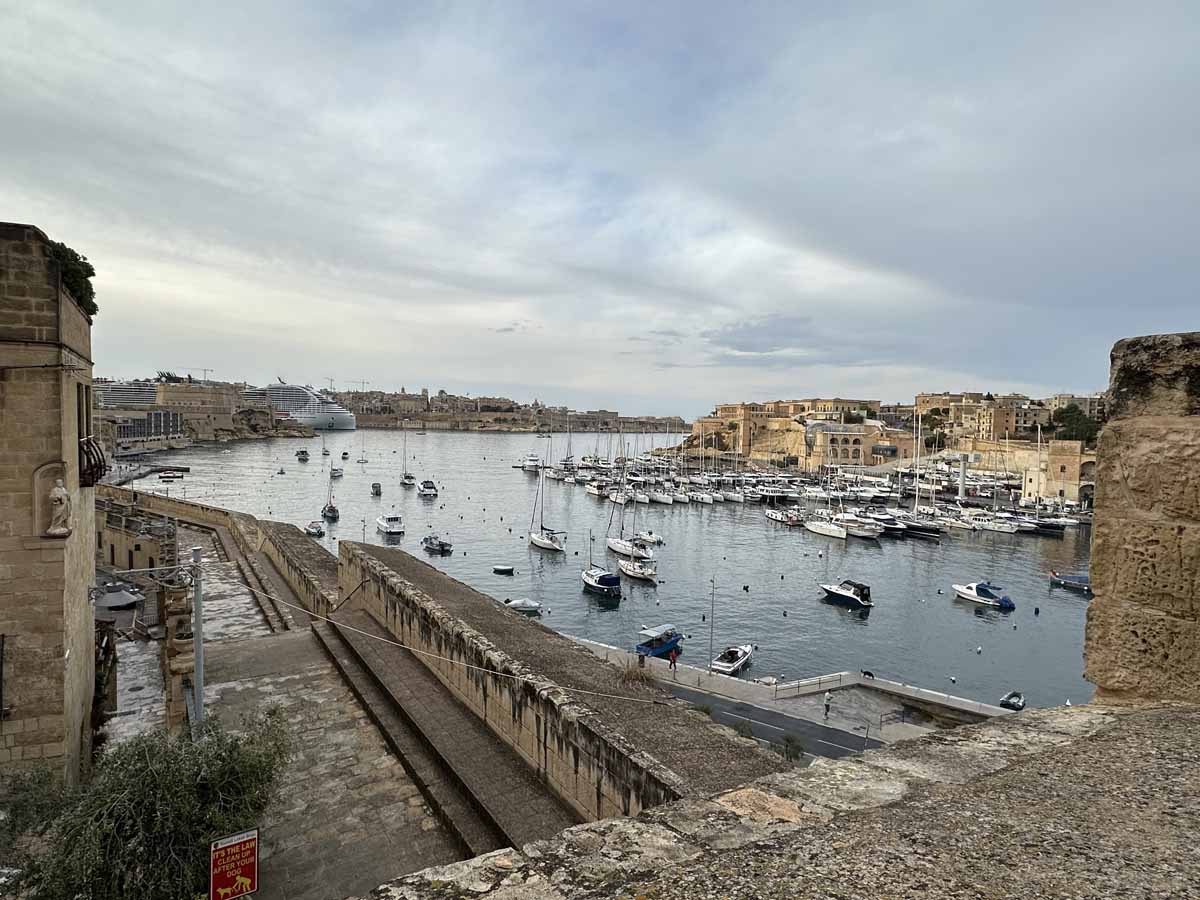
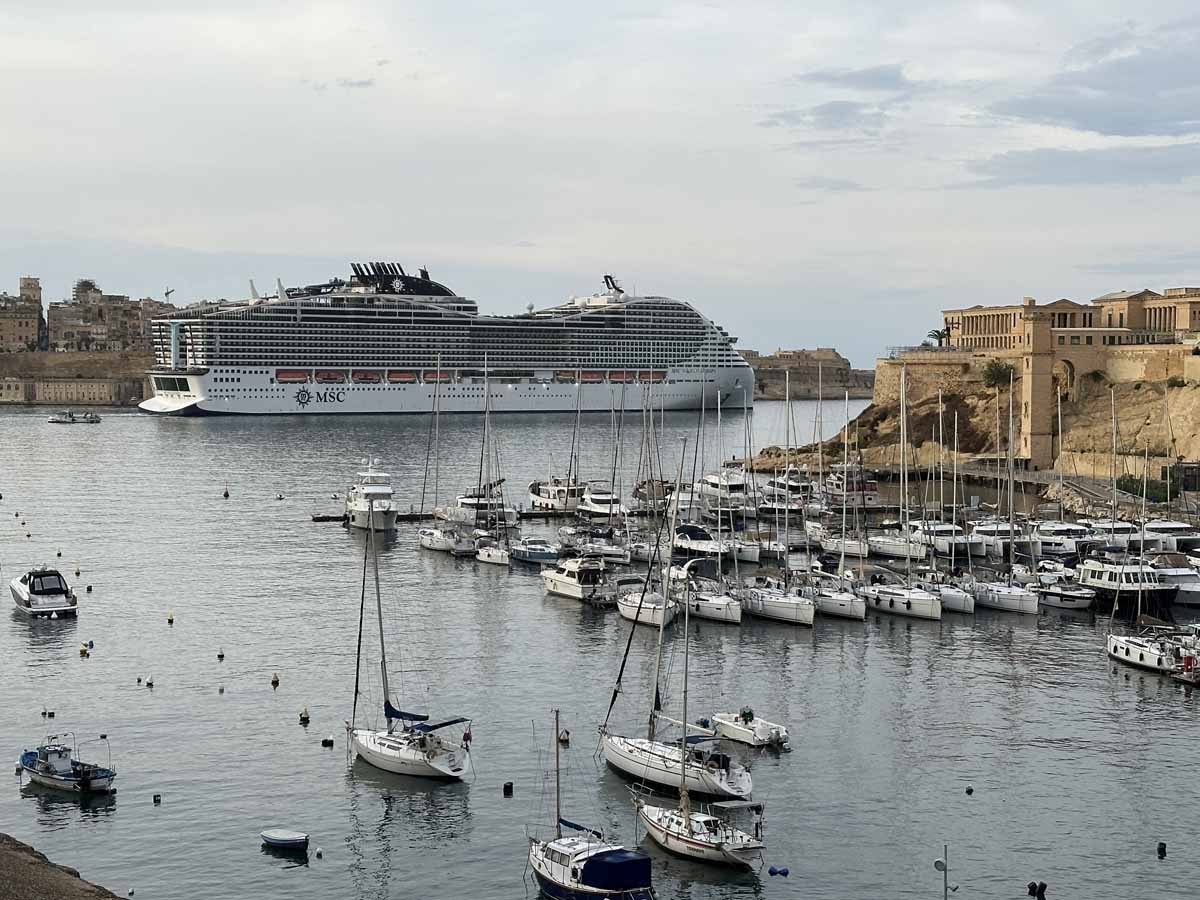
Along the way, we got a view of a HUGE cruise ship (photo above) that was heading out of the Grand Harbour after its Valletta port stop that day. This MSC “World Europa,” which is one of the world’s largest, holds around 5200 passengers. It seemed to dwarf the town!
-

- Fort St. Angelo – Birgu
We headed back along the Birgu waterfront, passing the area where huge luxury yachts are docked along with many beautiful sailboats. Truly, lifestyles of the rich & famous here in Malta! We returned to Valletta once again by ferry – happy that we had gotten a good taste of the Three Cities.
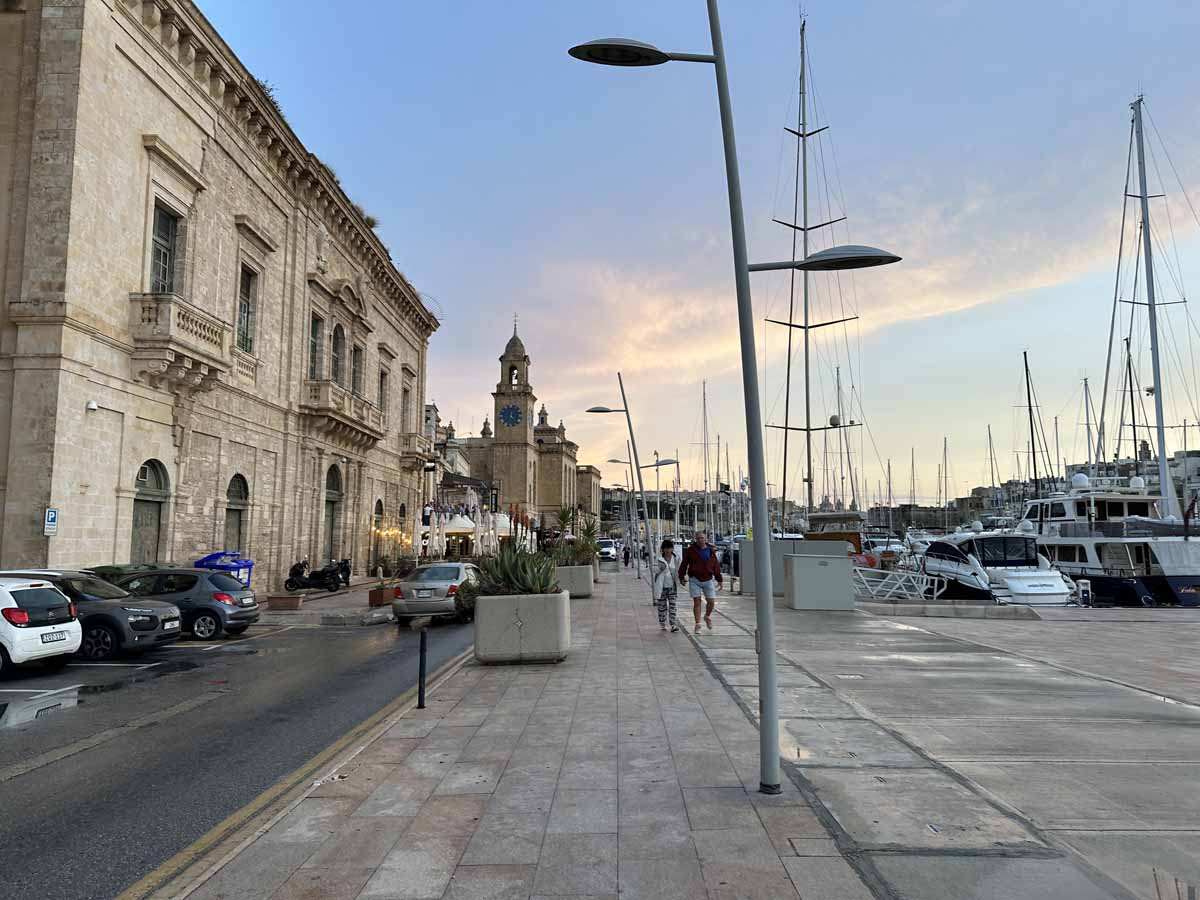
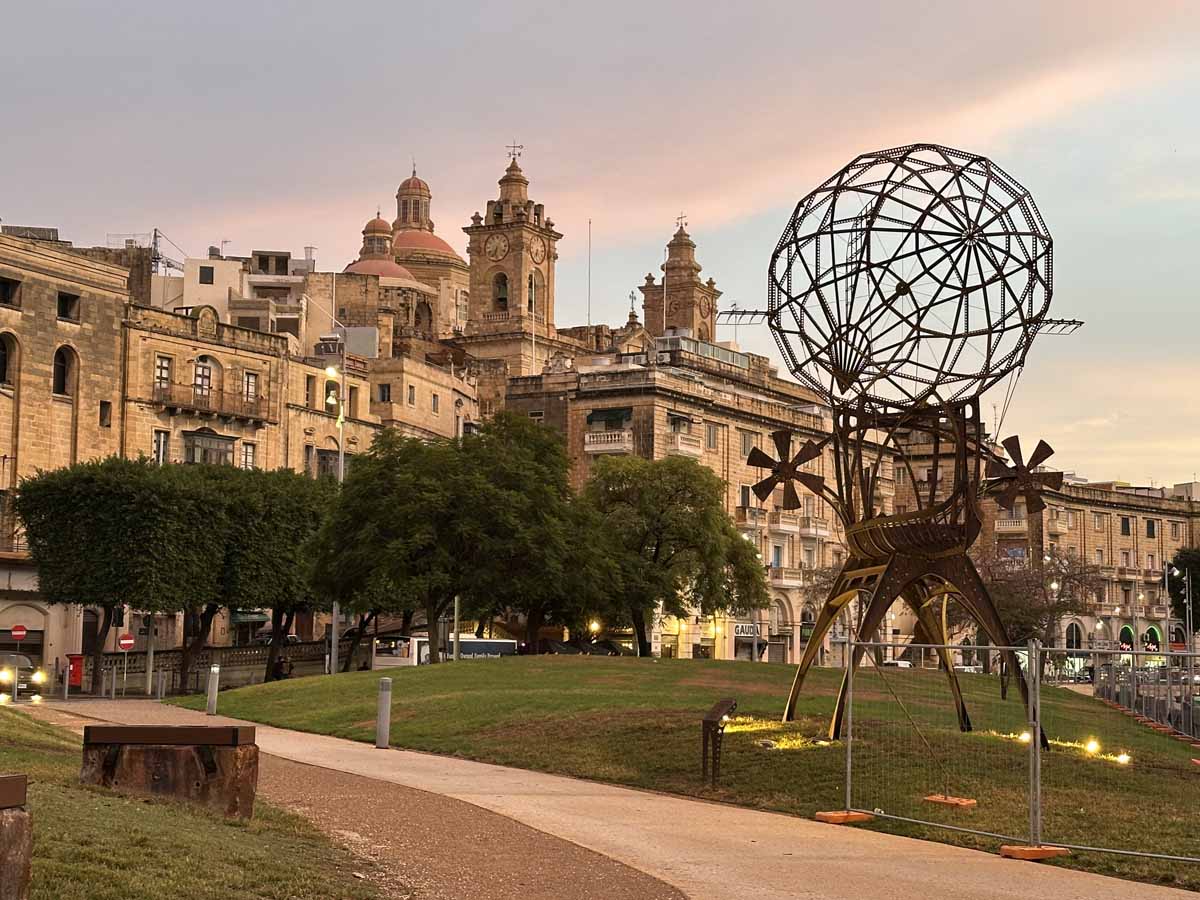
I later read that the recently constructed Grand Harbour Marina in Vittoriosa (Birgu) is a premier hub where large superyachts and megayachts are commonly docked throughout the year, particularly during winter for maintenance. The marina has 26 dedicated berths for vessels up to 135 meters (443 feet). WOW!
Eating in Valletta – Yum!
Without a doubt, one of the joys of travel is eating great food, typical of the region – and Valletta certainly keeps its visitors happy! Jack & I are definitely not Michelin-style foodies, but we enjoy a good meal. And I can state that all of our meals in Malta (in a variety of settings) were delicious.
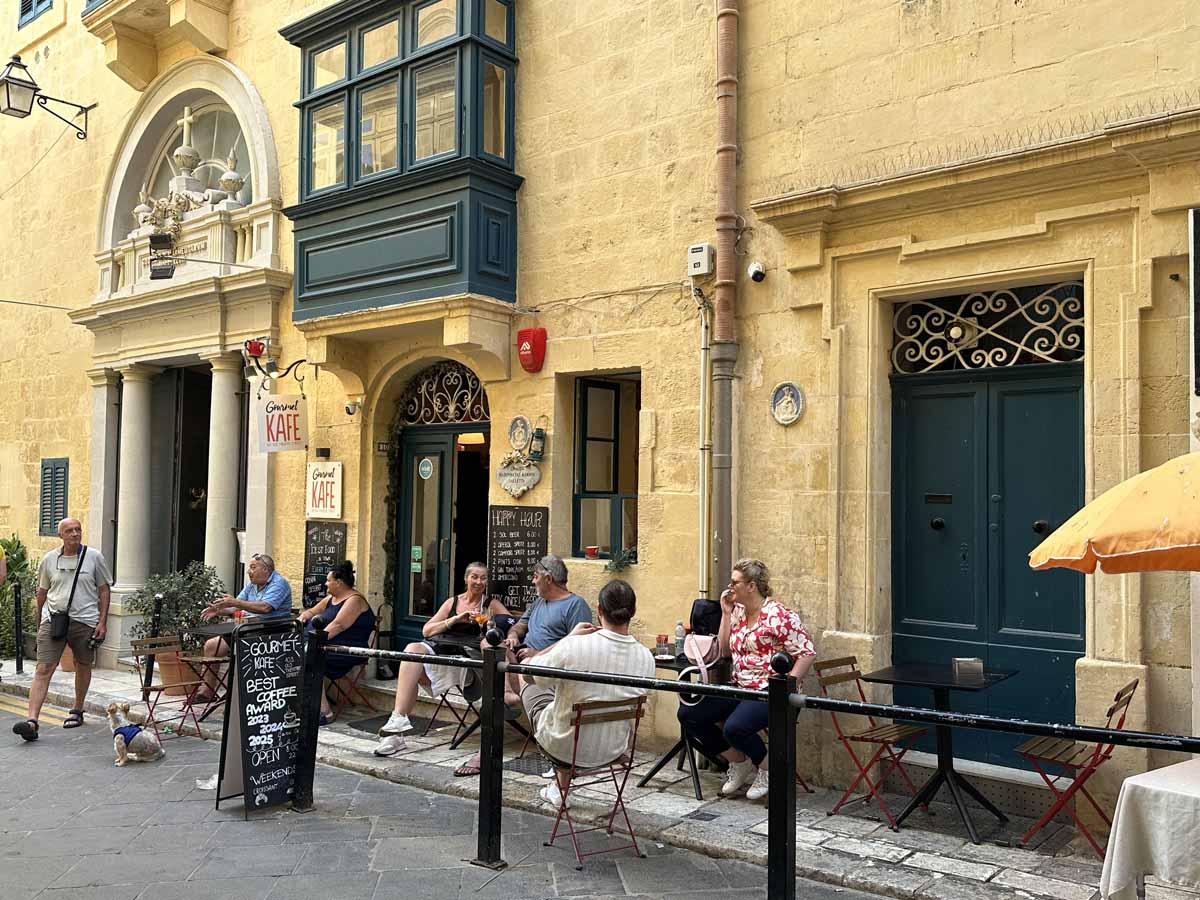
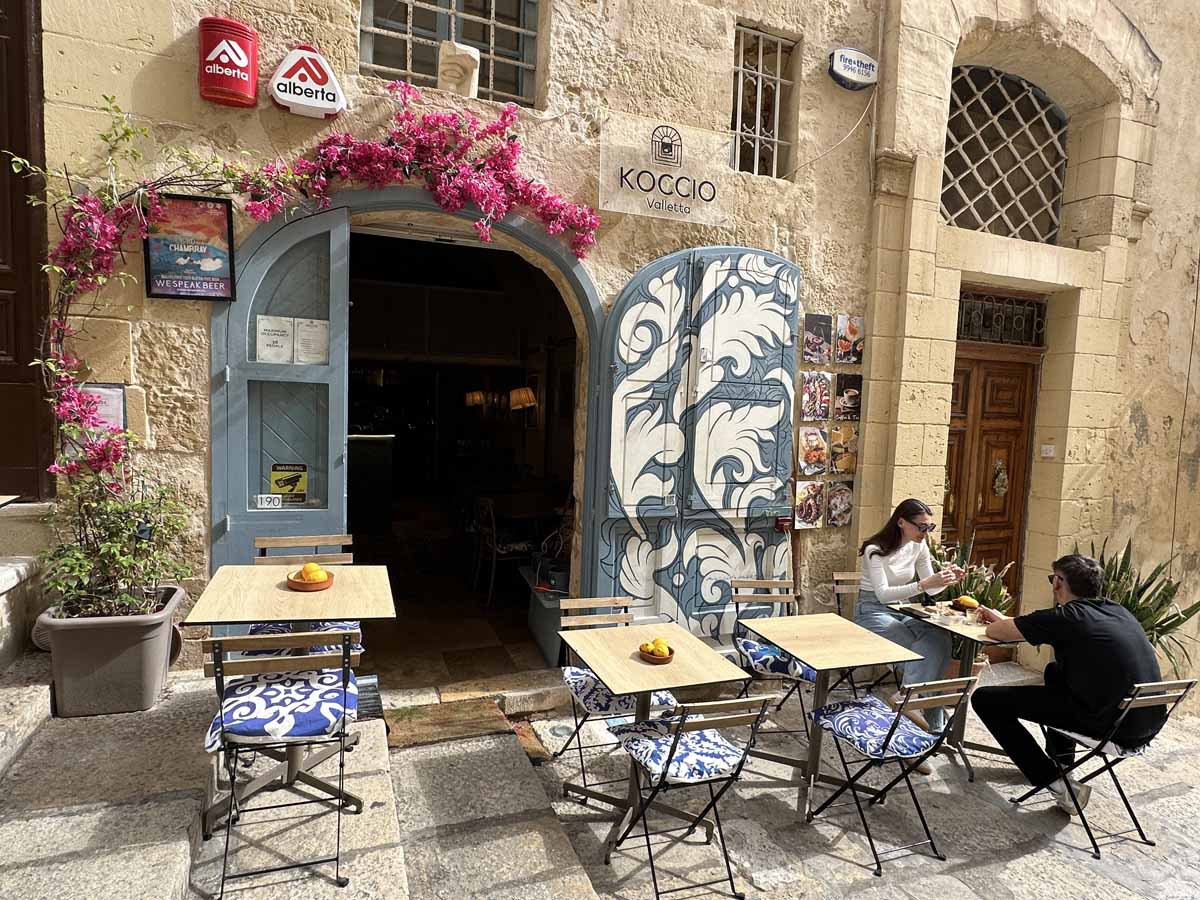
My guidebook says that Valletta is brimming with mid-priced and upmarket restaurants, mostly Mediterranean, Italian and Asian. Since our apartment was just a few blocks from the city center, we would walk to the central area to see what caught our fancy for dinner each night.
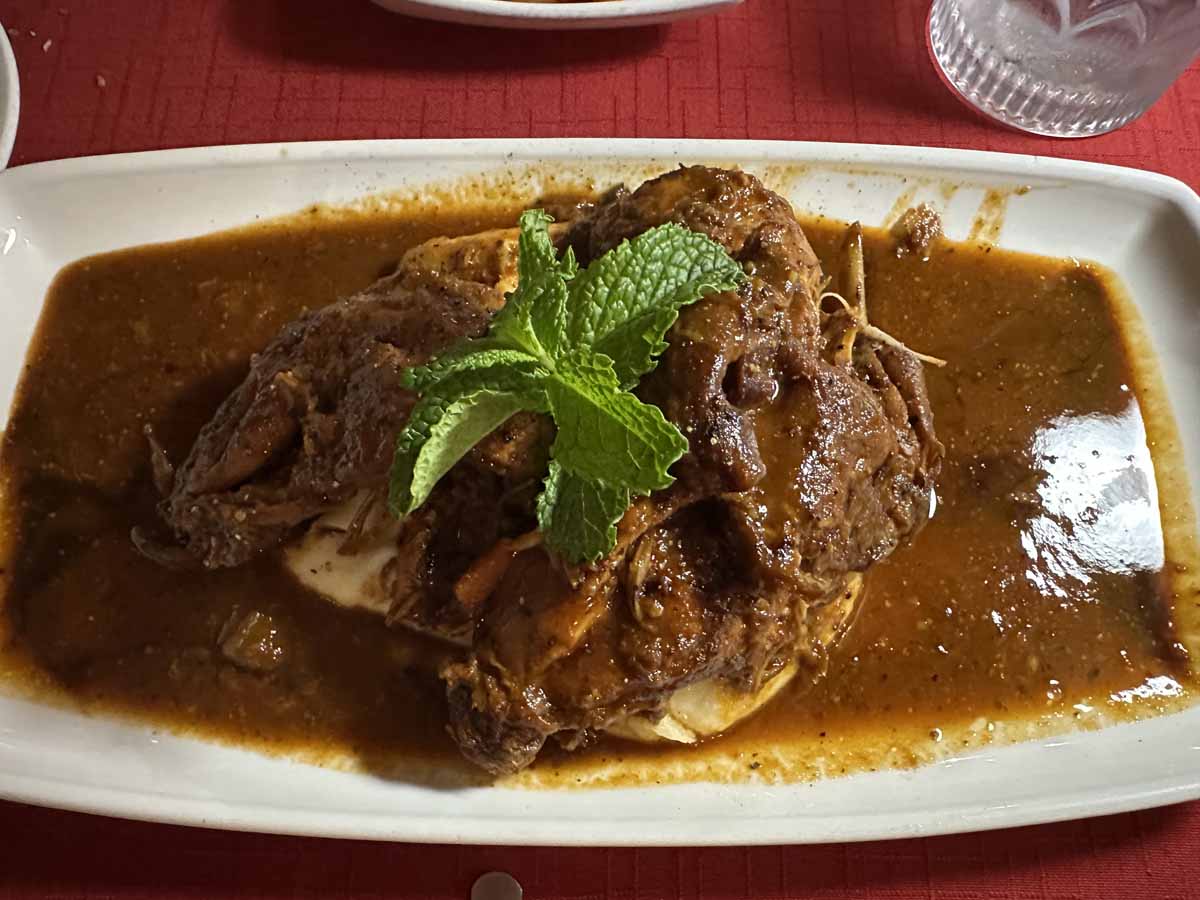
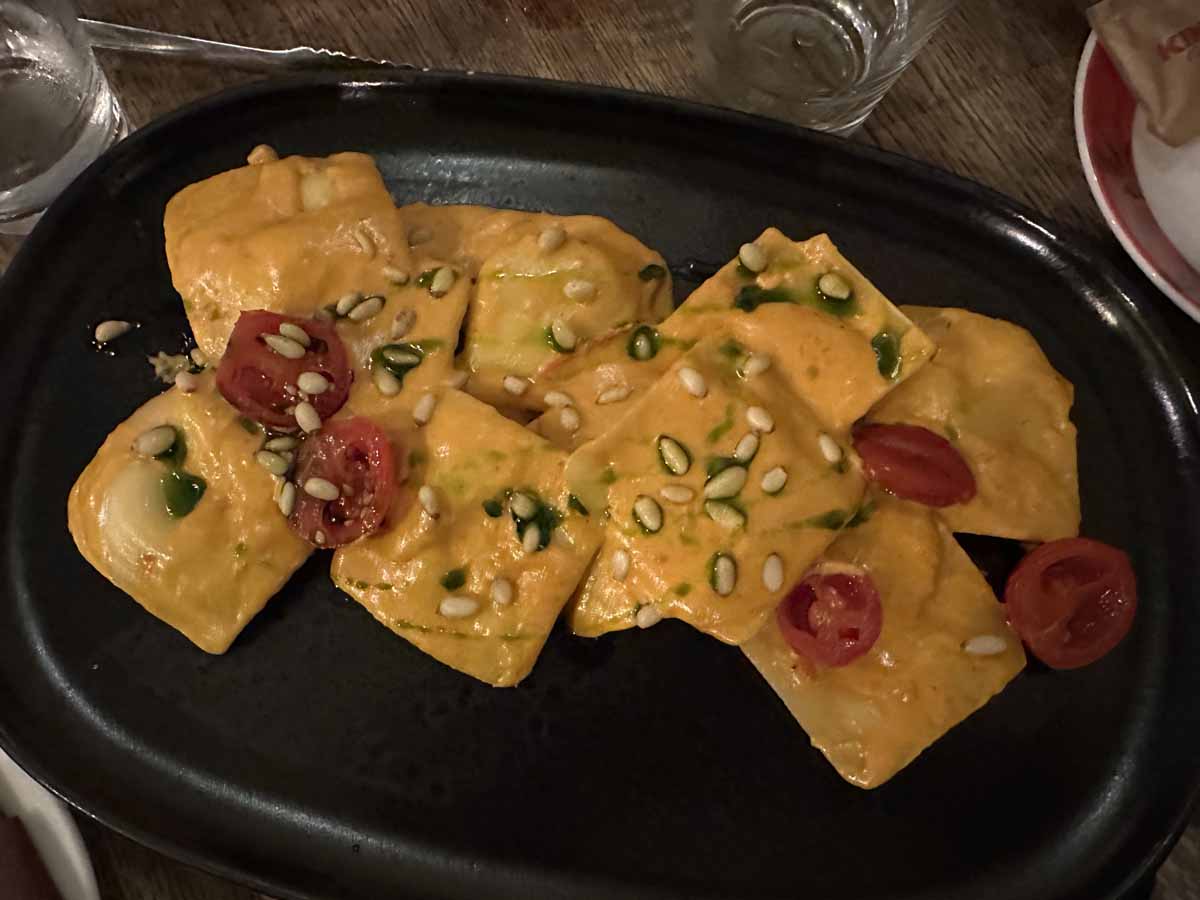
One of our nights at a delightful outdoor café, I tried rabbit stew – which is Malta’s national dish. (photo above left!) I’m happy to report that it was absolutely delicious! Even skeptical Jack (who had the seabass) was impressed. The stew is characterized by tender rabbit meat slow-cooked in a rich red wine and tomato sauce with garlic, onions, and root vegetables.
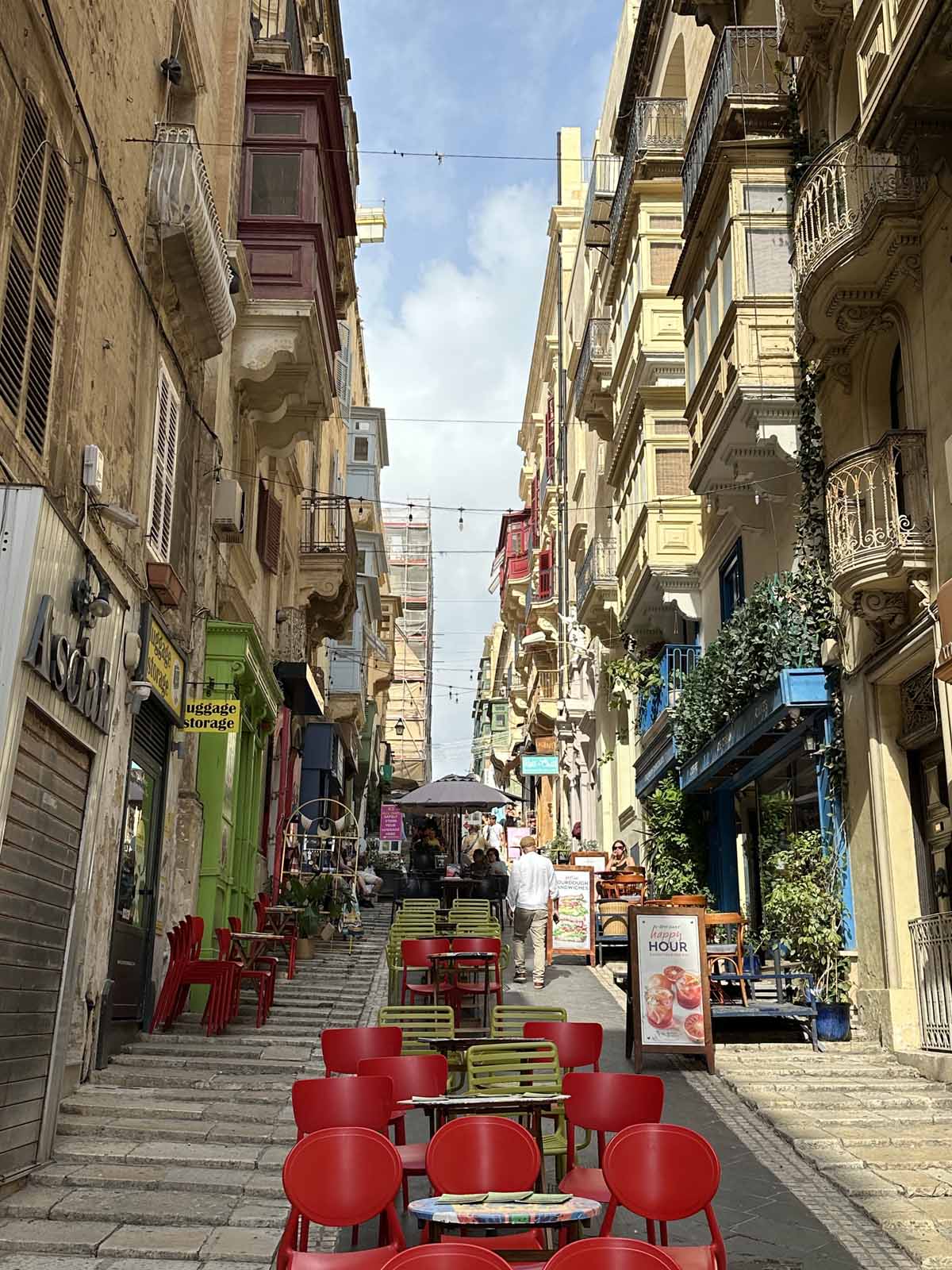
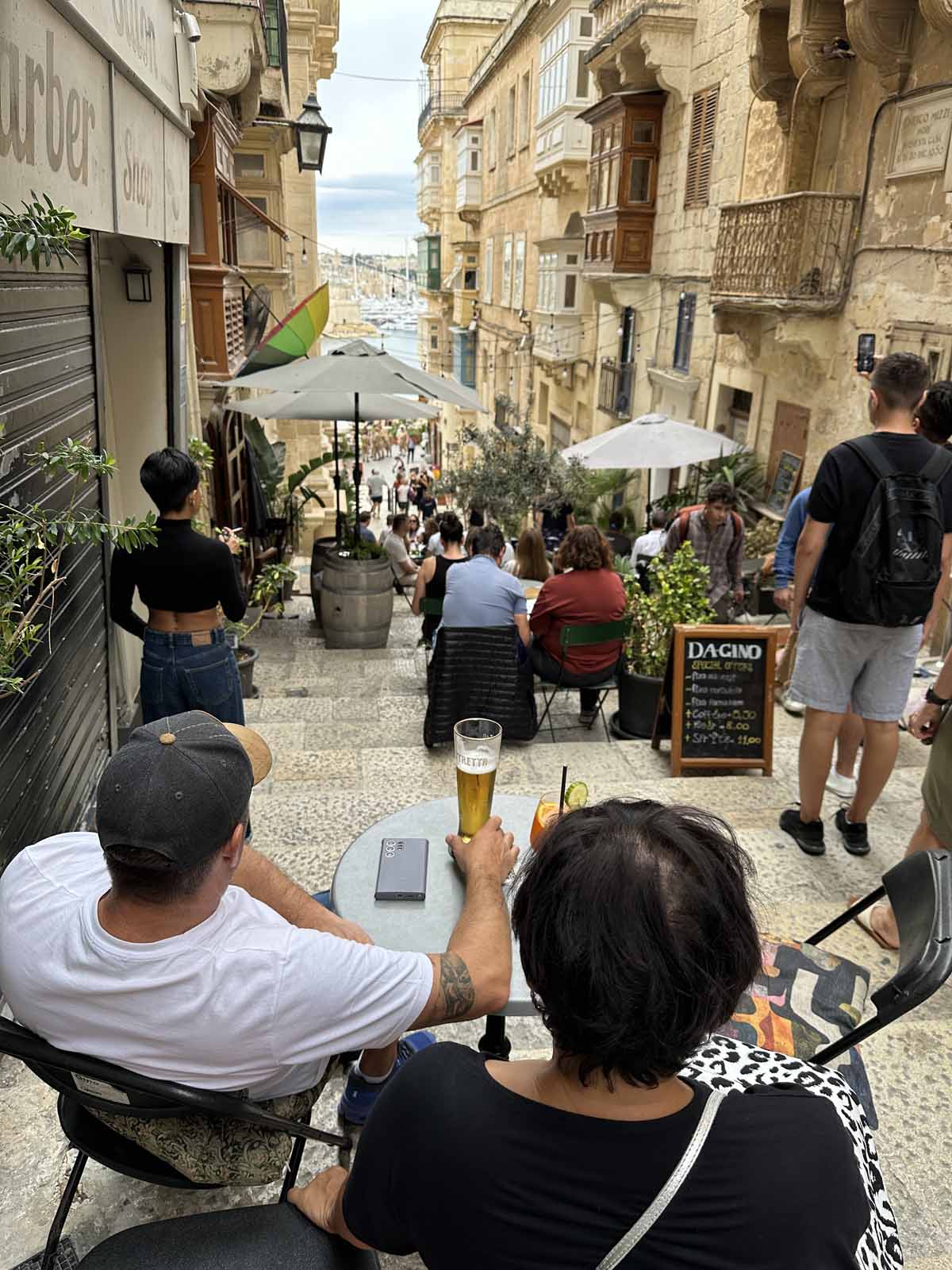
Plus, Valletta’s city center is filled with nightlife – from its many cafes, restaurants and bars. And much of it was outdoors (since we were there in mid-October with still warm weather). In wonderful Maltese style, sidewalk tables, chairs and cushions were laid out along each level of the many steps leading up some of the side streets – and they were filled with people of all ages enjoying Maltese life!
Fort St. Elmo & National War Museum
Fort St. Elmo was built by the Knights in 1552 in just 4-6 months, as they prepared for an imminent invasion by the Turks. This majestic fort bore the brunt of Ottoman arms during the Great Siege of Malta. It also received its fair share of bombardment during World War ll.
From My Guidebook: Today, this beautifully restored fort which overlooks the two harbors houses the National War Museum. This excellent museum traces the history of military activity in Malta from the Great Siege of 1565 to WWII. Unfortunately, we didn’t have time to visit inside the Fort, but it sounds interesting.
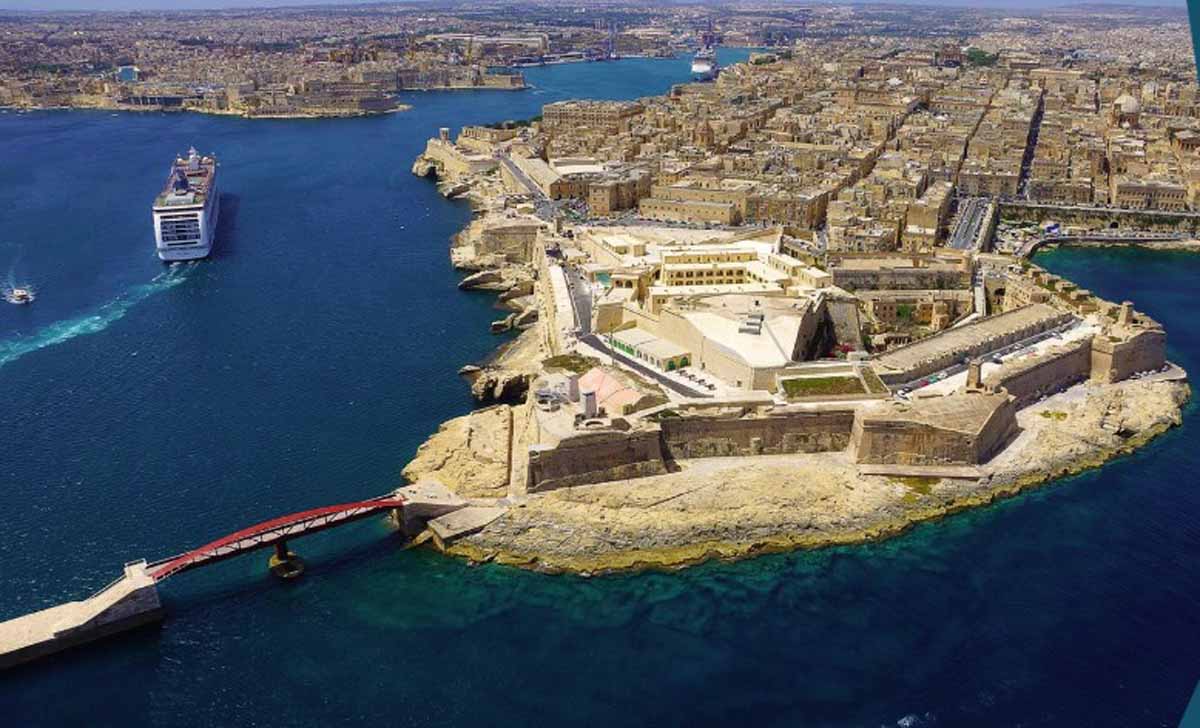
Aerial View of Fort St. Elmo / Credit: Visit Malta
I mention the Fort because of the wonderful walk around its base that we did & will describe next…
Walking A Waterfront Path at the Base of Fort St. Elmo
In our guidebook, we read about a walking path outside the fortress walls of Fort St. Elmo that offered a scenic route along the tip of the Valletta peninsula. It sounded perfect for us – both as a nice long walk and the chance to get some photos & views from a variety of cool vantage points.
We did this walk on our final day in Valletta and loved it! So, I wanted to share this with you, as this is a more hidden sightseeing gem in Valletta.
We started the path on the northern side of the peninsula at St. Elmo’s Bay and walked clockwise around Fort St. Elmo, which was sitting high above us. The path ultimately brought us back to the main town near the Lower Barrakka Gardens (overlooking the Grand Harbour).
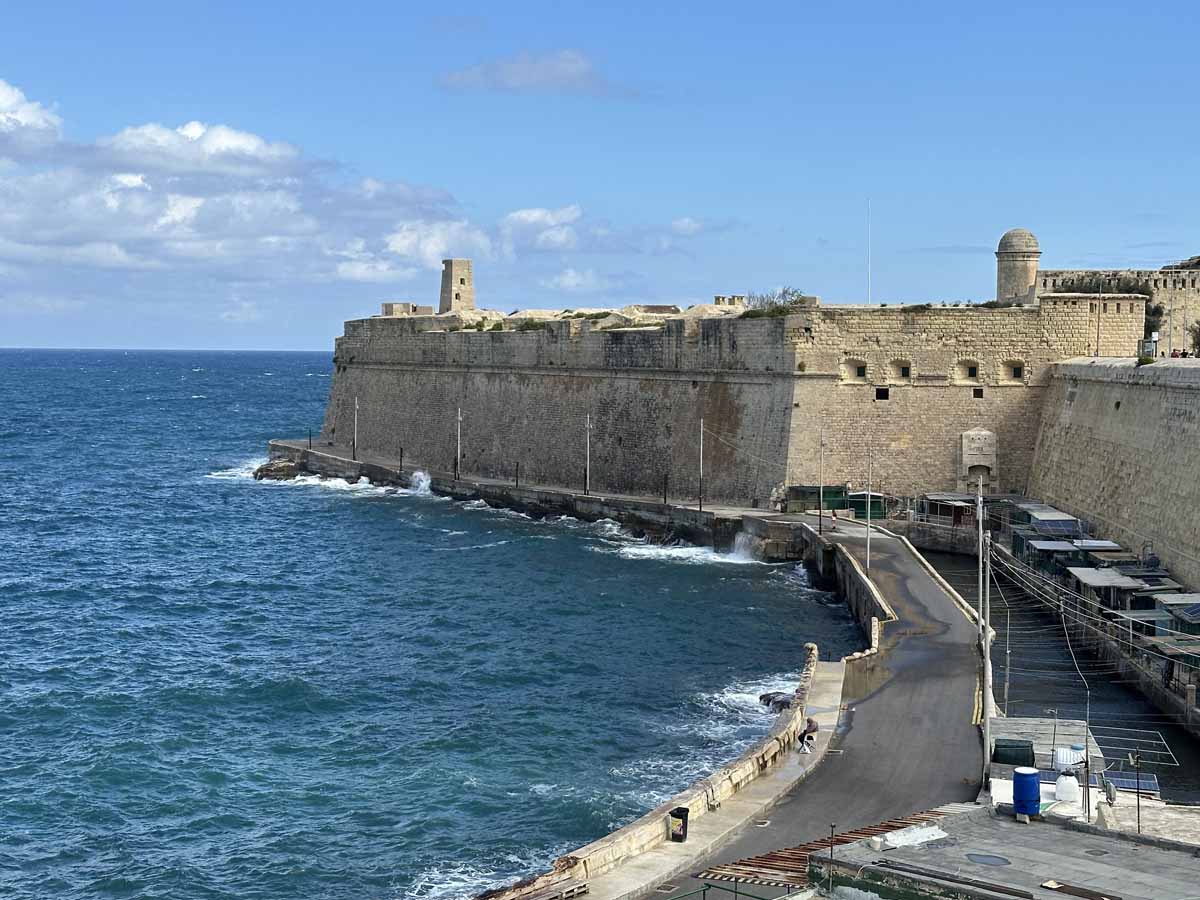
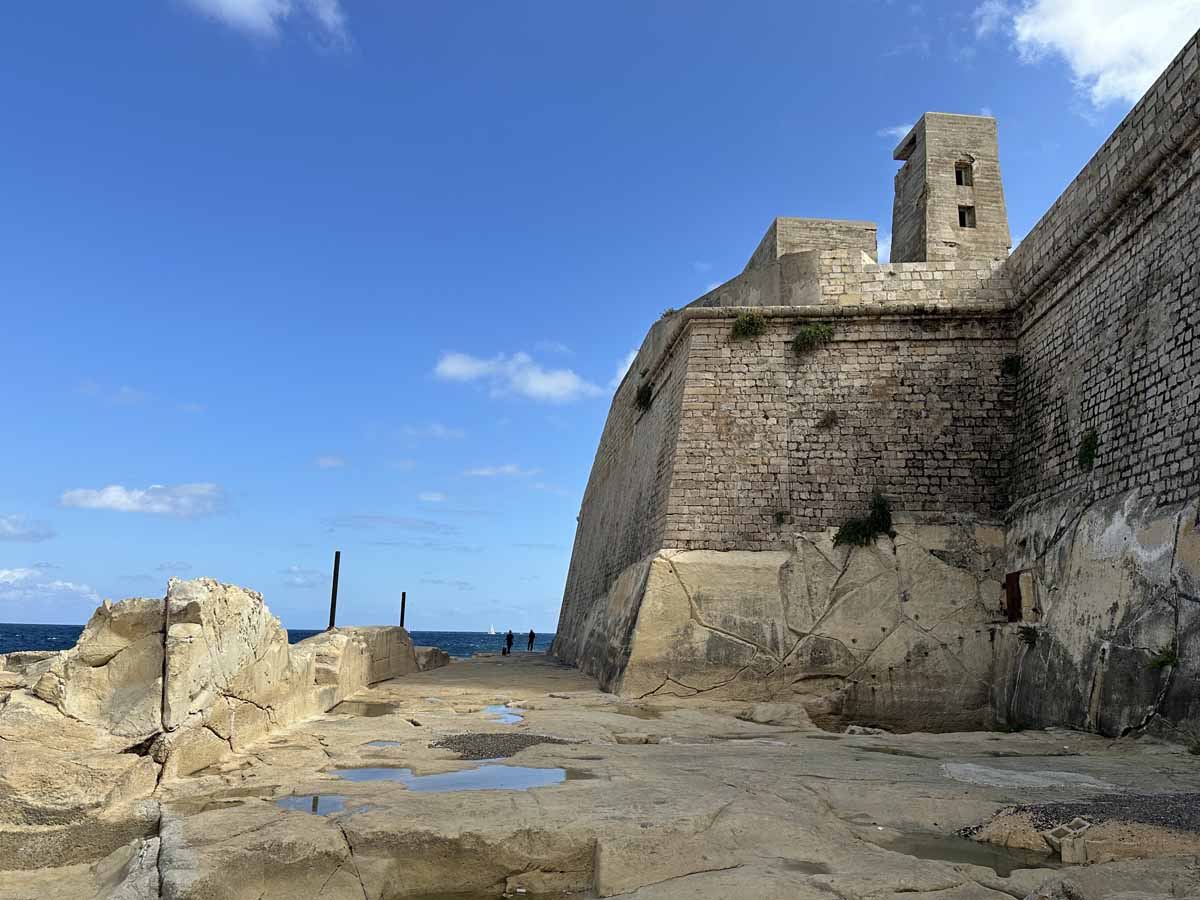
These many photos will give you a good idea of the walk. It turned out to be a windy day, with high surf pounding the coast, which added to the drama of the photos! My photographer boyfriend Jack was in heaven – loving the crashing surf and rocking ferry boats.
The walk was first along a paved road, then it turned to dirt and rocks with a couple small metal bridges over small rocky cliff gorges as the path narrowed further along.
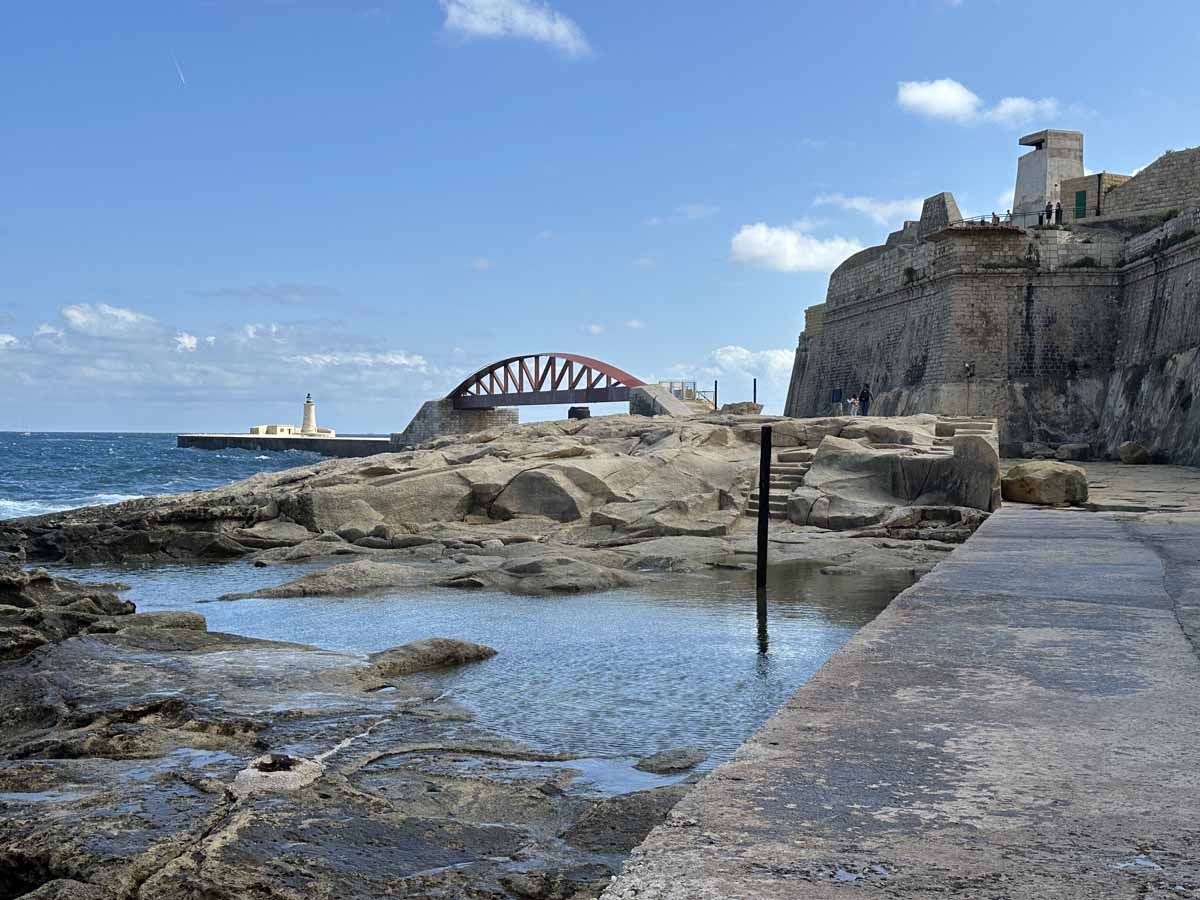
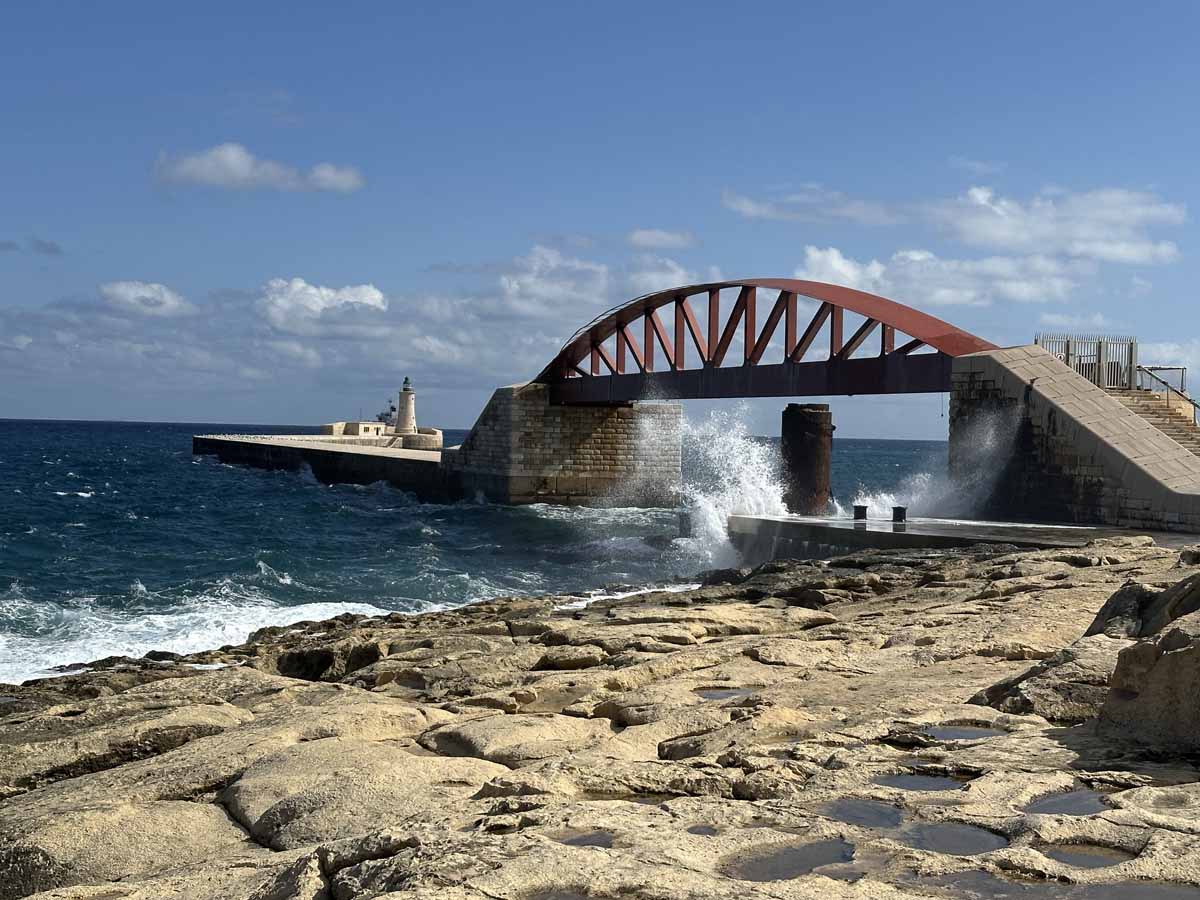
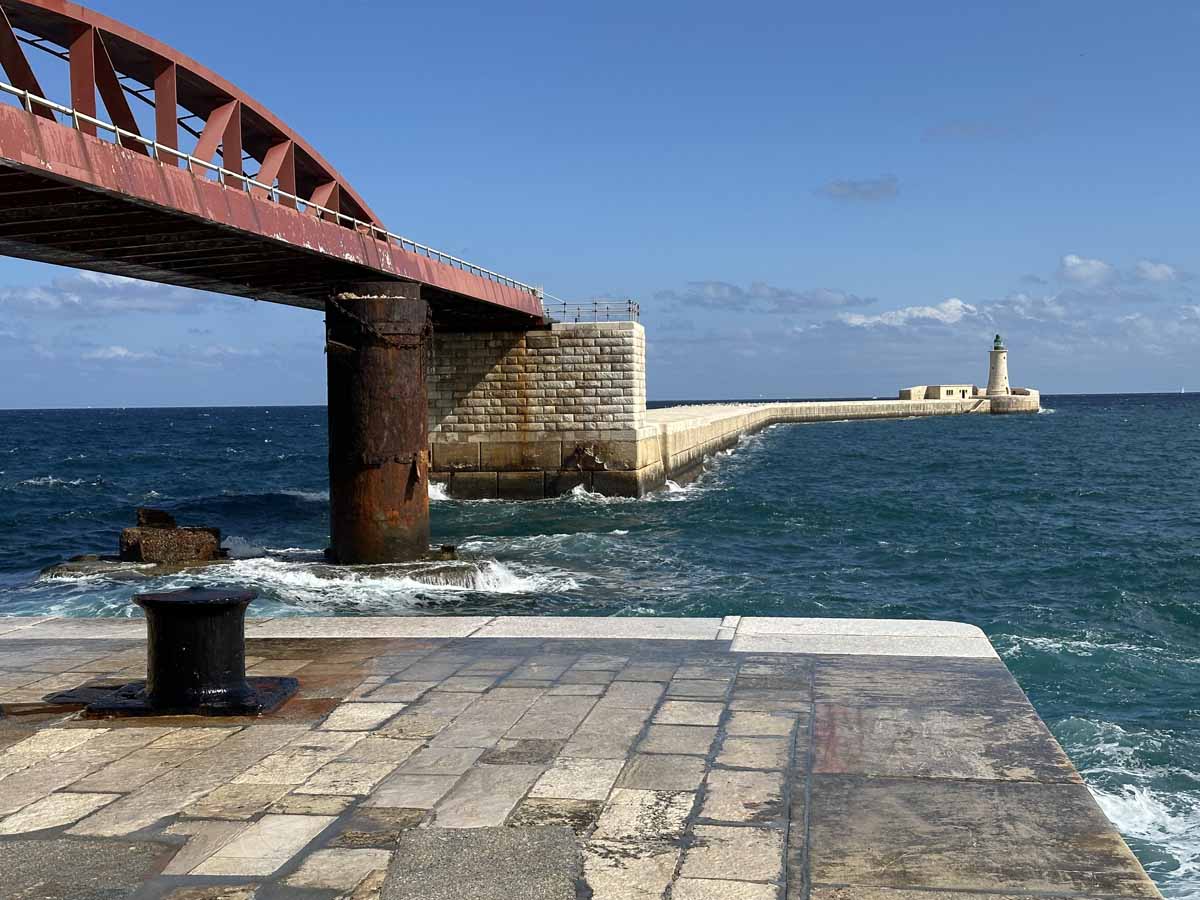
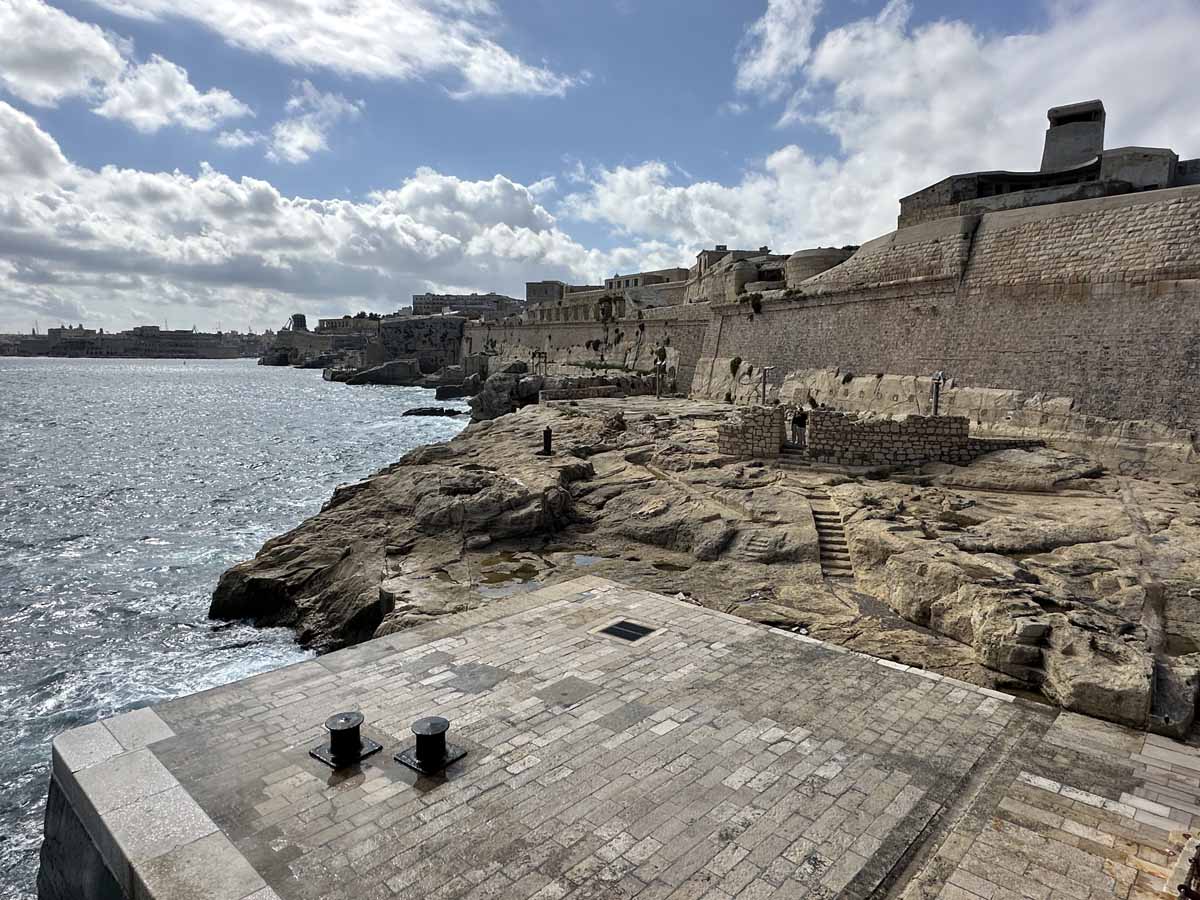
At the peninsula’s tip, we viewed the impressive red steel 70-meter St. Elmo Bridge (rebuilt in 2011) that connects to the breakwater & a small lighthouse at the entrance to the Grand Harbour. The bridge itself was gated off but it was most photogenic.
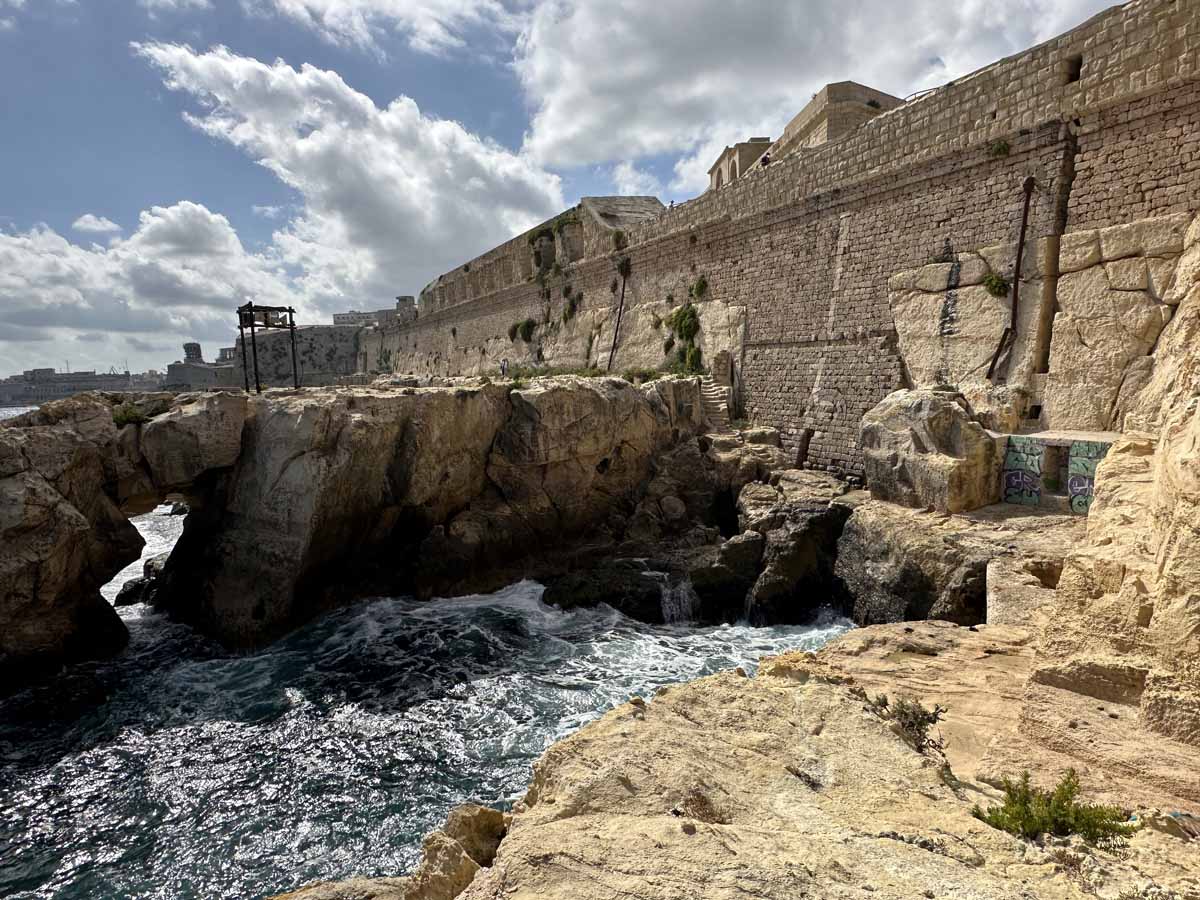
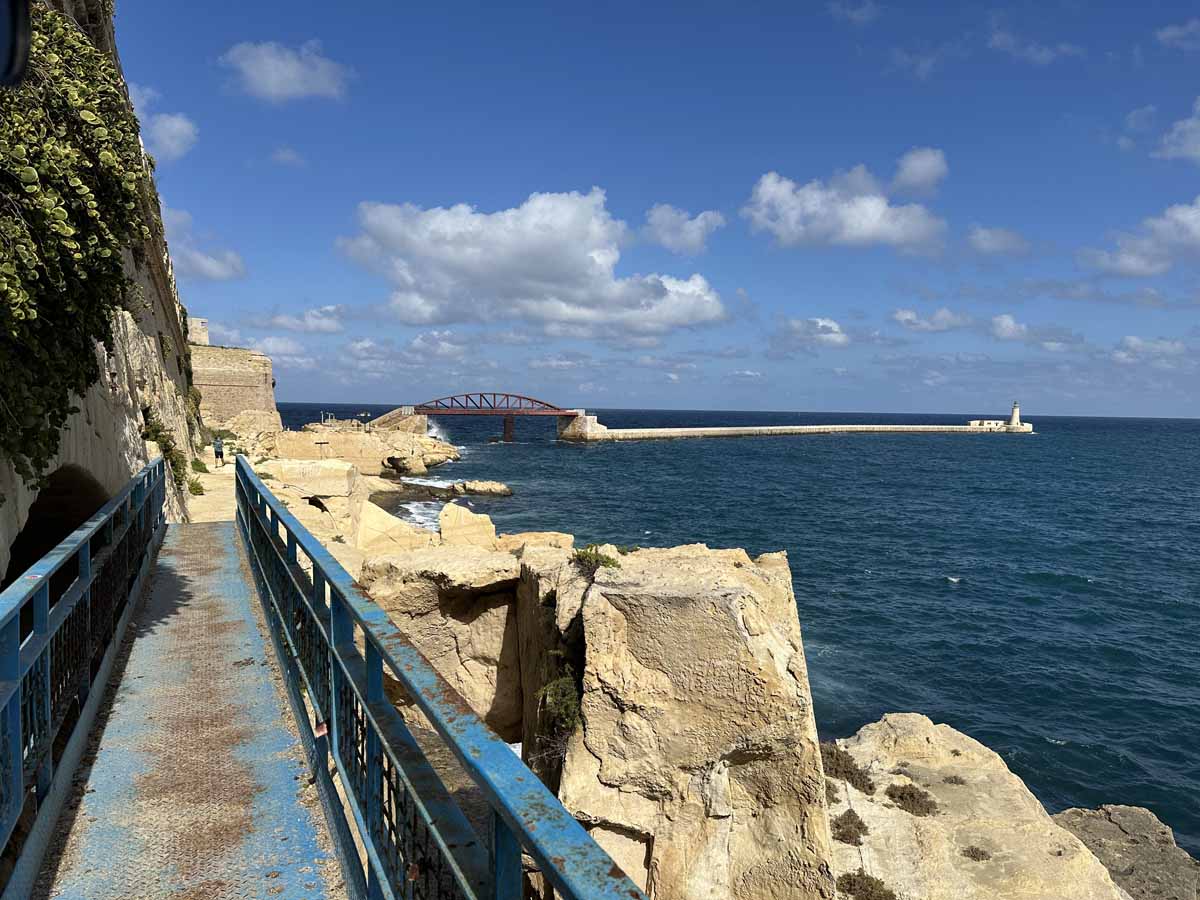
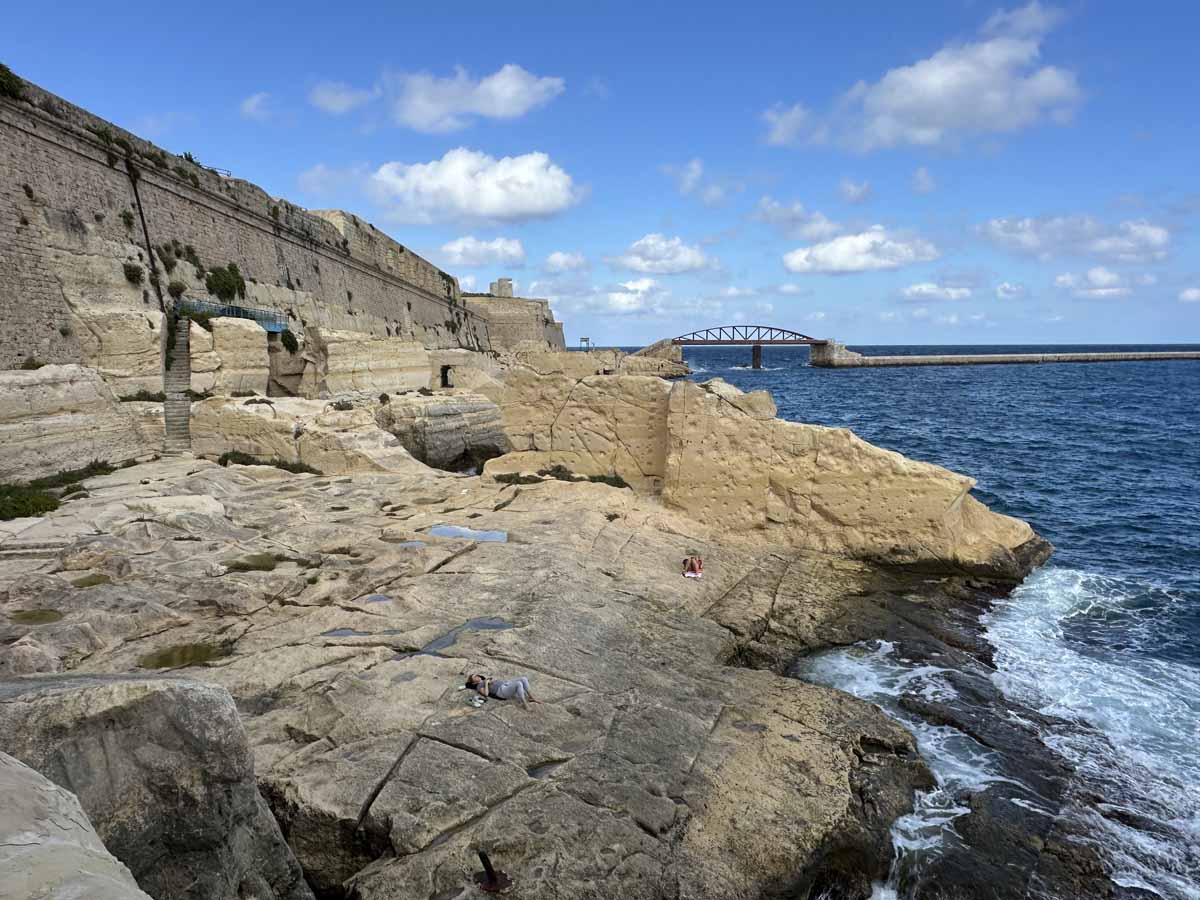
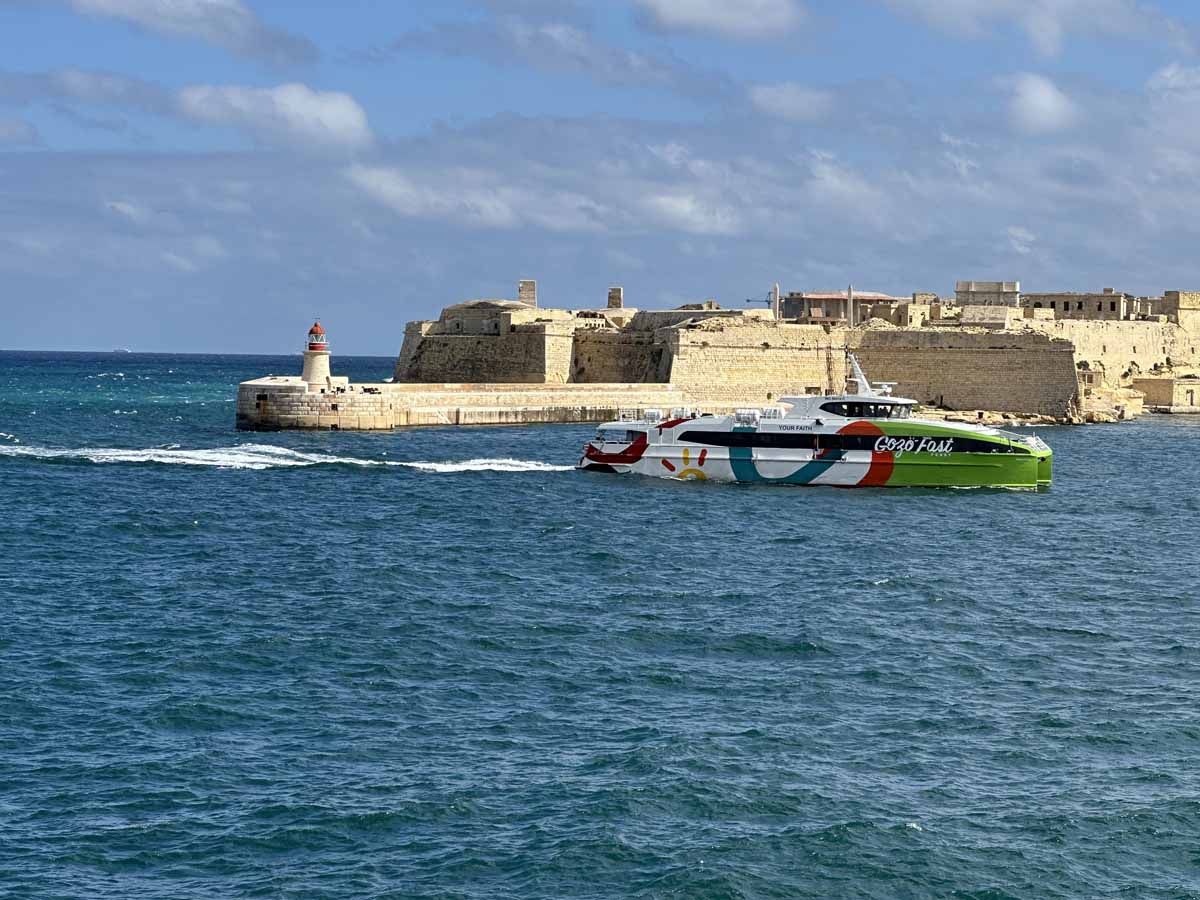
The final part of the path flattened out a bit onto “smooth rock” beaches where people could swim. Of course, no one was in the rough seas this day. This last area was filled with cool old sea cottages that reminded me of Greece.
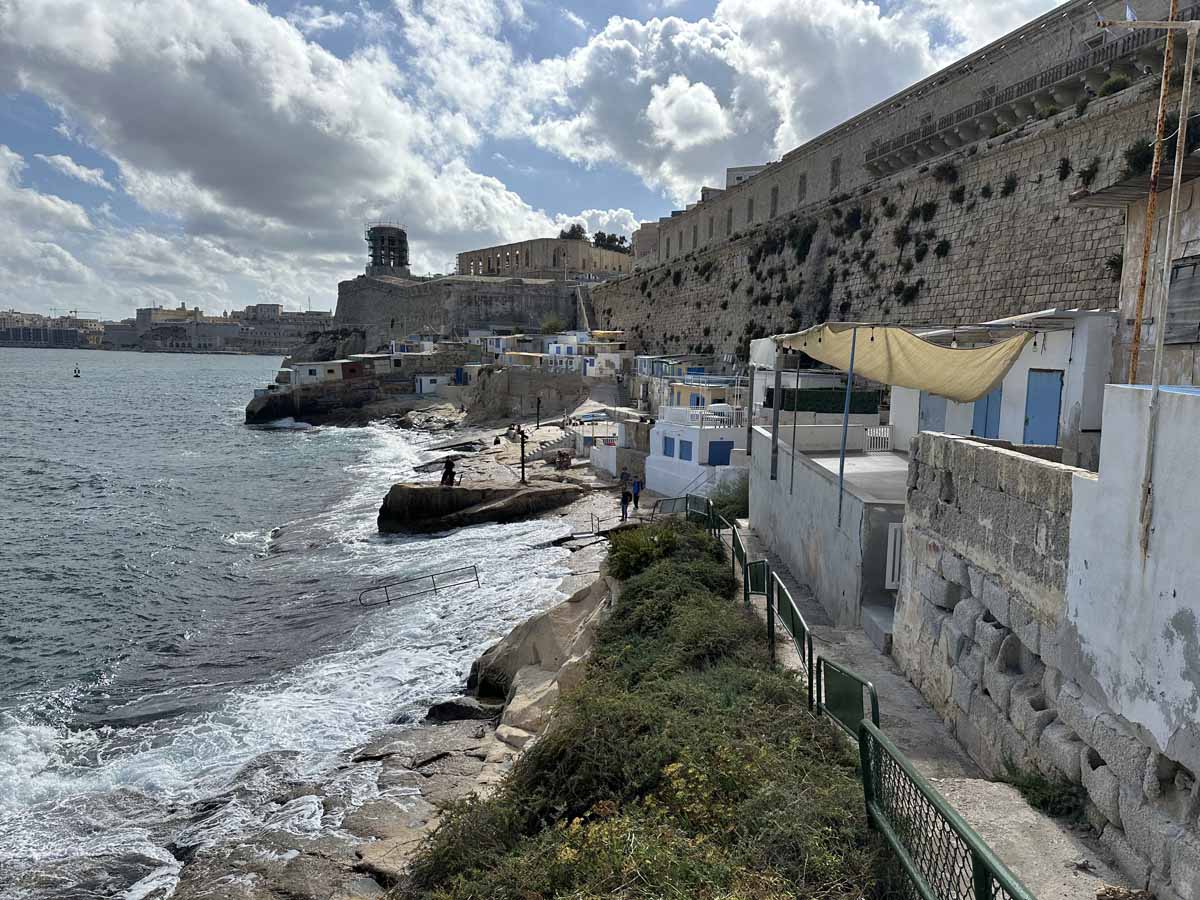
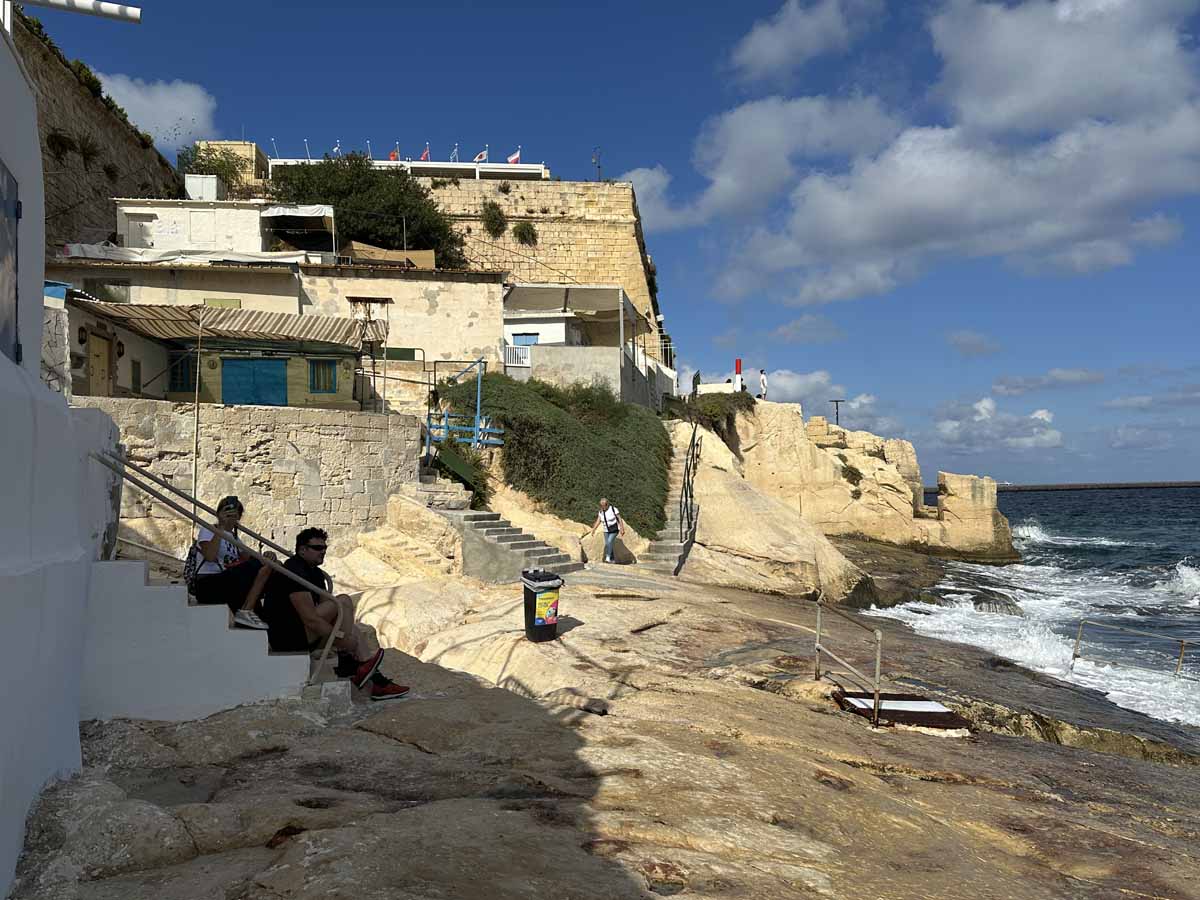
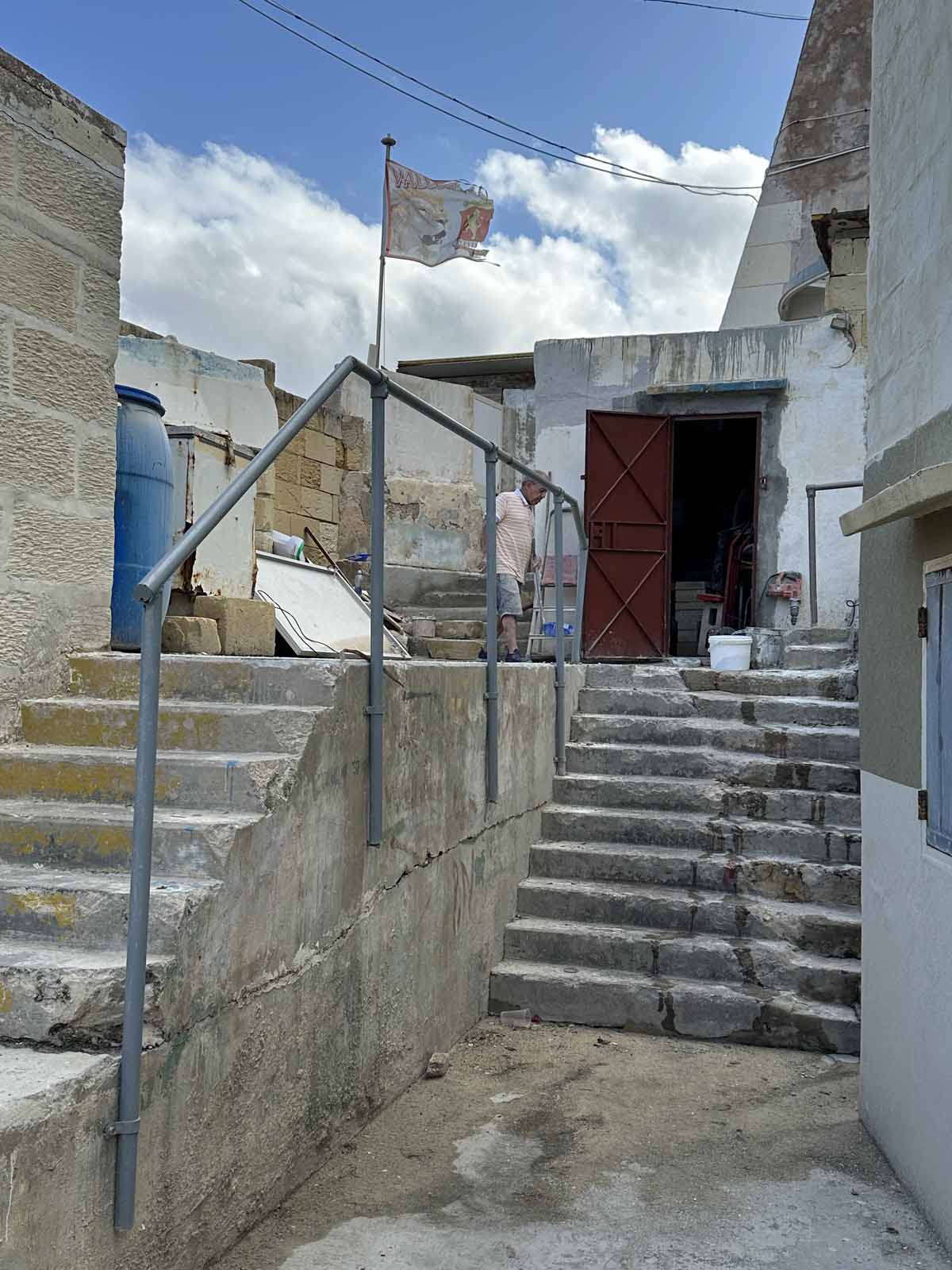
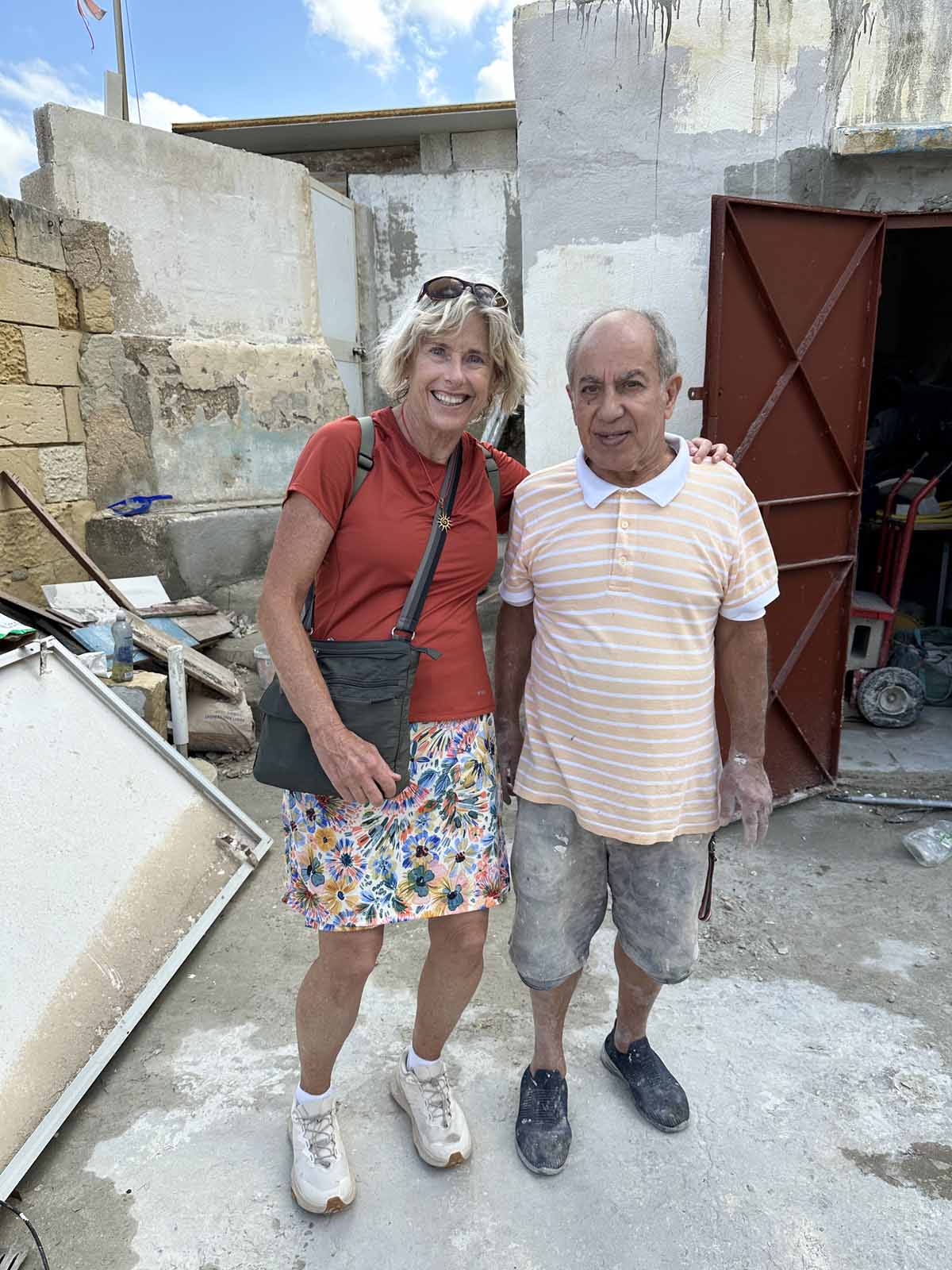
Towards the end, I saw an older man busy at work. I stopped to chat, and learned his name was Tony. He told me his family owned this small beach house for years. In the summer season, they hold family gatherings here at the beach, along with a BBQ for 25 people. (photo of Tony & me). From here, it was a short walk up to the main road & back to town.
Watching the Start of the Rolex Middle Sea Sailboat Race
As you can imagine with Malta’s location in the middle of the Mediterranean with a huge Grand Harbour, maritime activities (business & leisure) have been & remain an important part of Malta’s history, culture and modern-day life.
So, we were excited to learn that a prestigious offshore annual sailboat race – The Rolex Middle Sea Race – was taking place on Saturday, Oct. 21st while we were in town! The Race was founded in 1968 by the Royal Malta Yacht Club – and the 2025 race was its 46th edition.
This challenging 606-nautical mile (1,122 km) yacht race starts and finishes in Malta’s Grand Harbour and travels counterclockwise around the large island of Sicily. It takes most boats 3-6 days to complete, with the fastest ones able to do it in a blazing 40 hours!
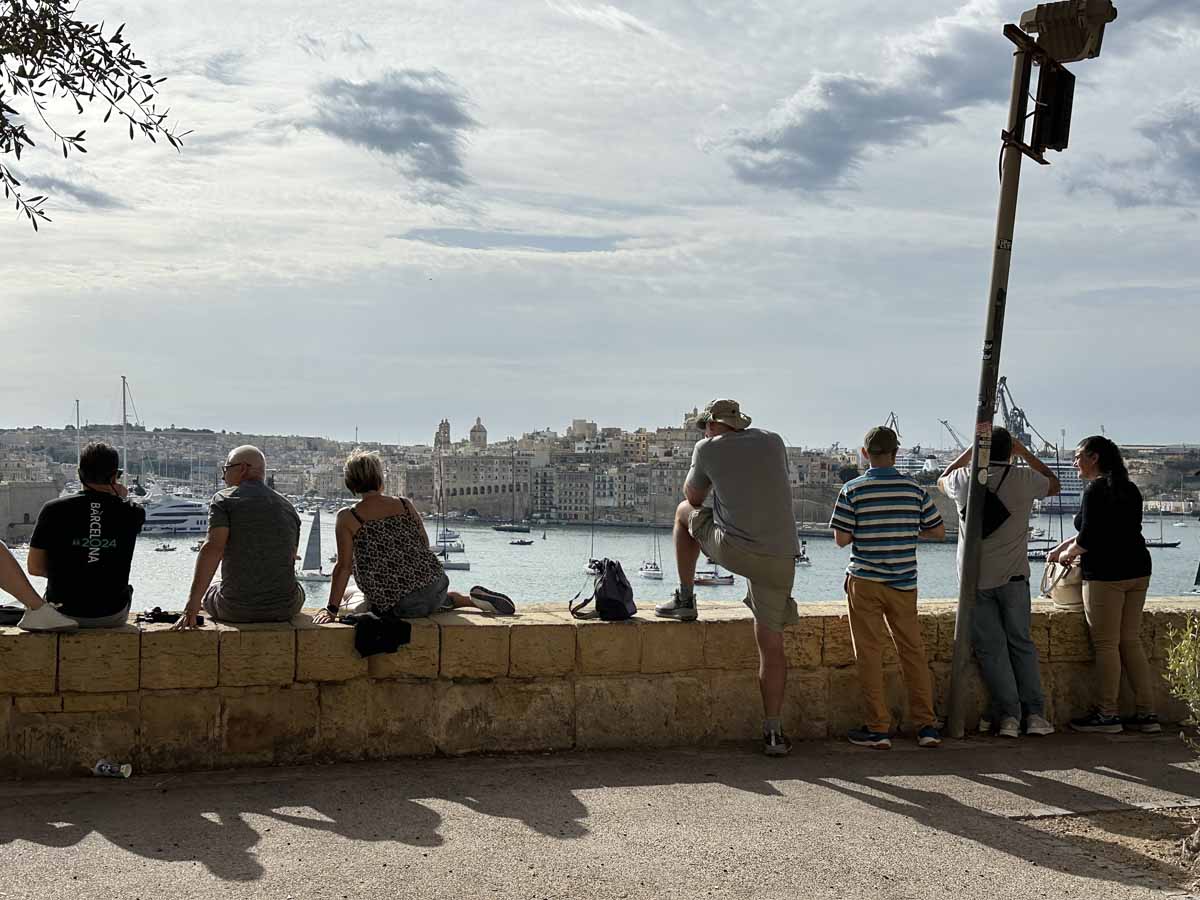
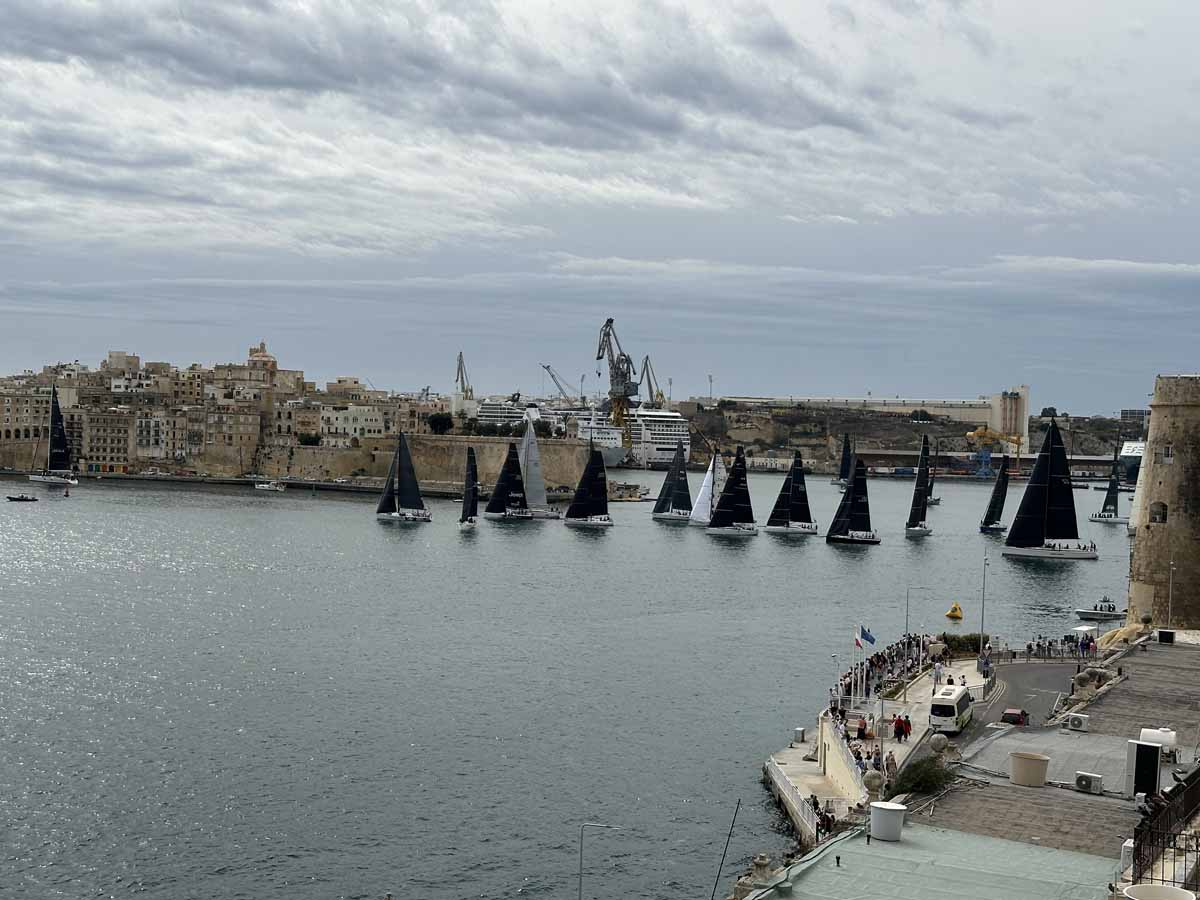
Jack & I made sure to find a good viewing point that overlooked the Grand Harbour, well in advance of the 11am start time. It was pure serendipity that we ended up standing next to & talking to a nice local Maltese family.
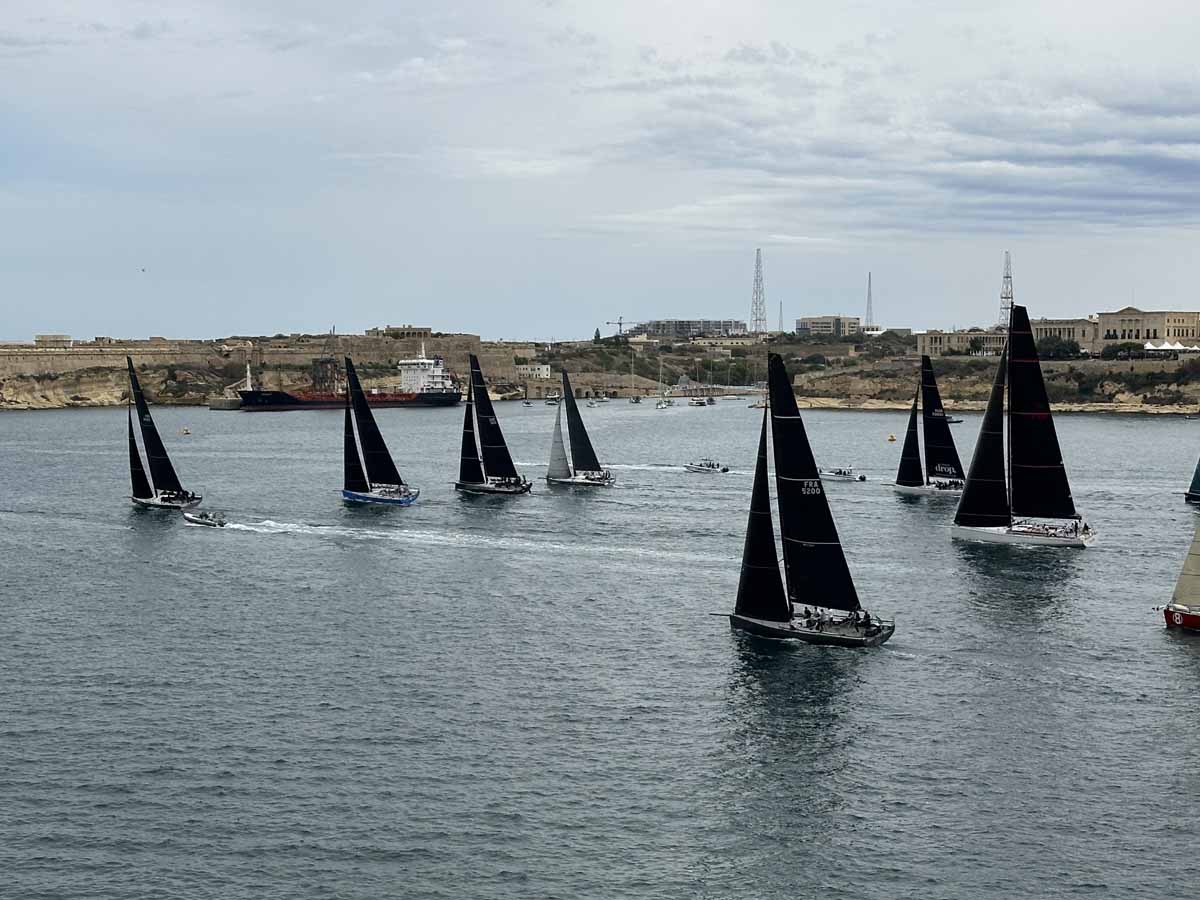
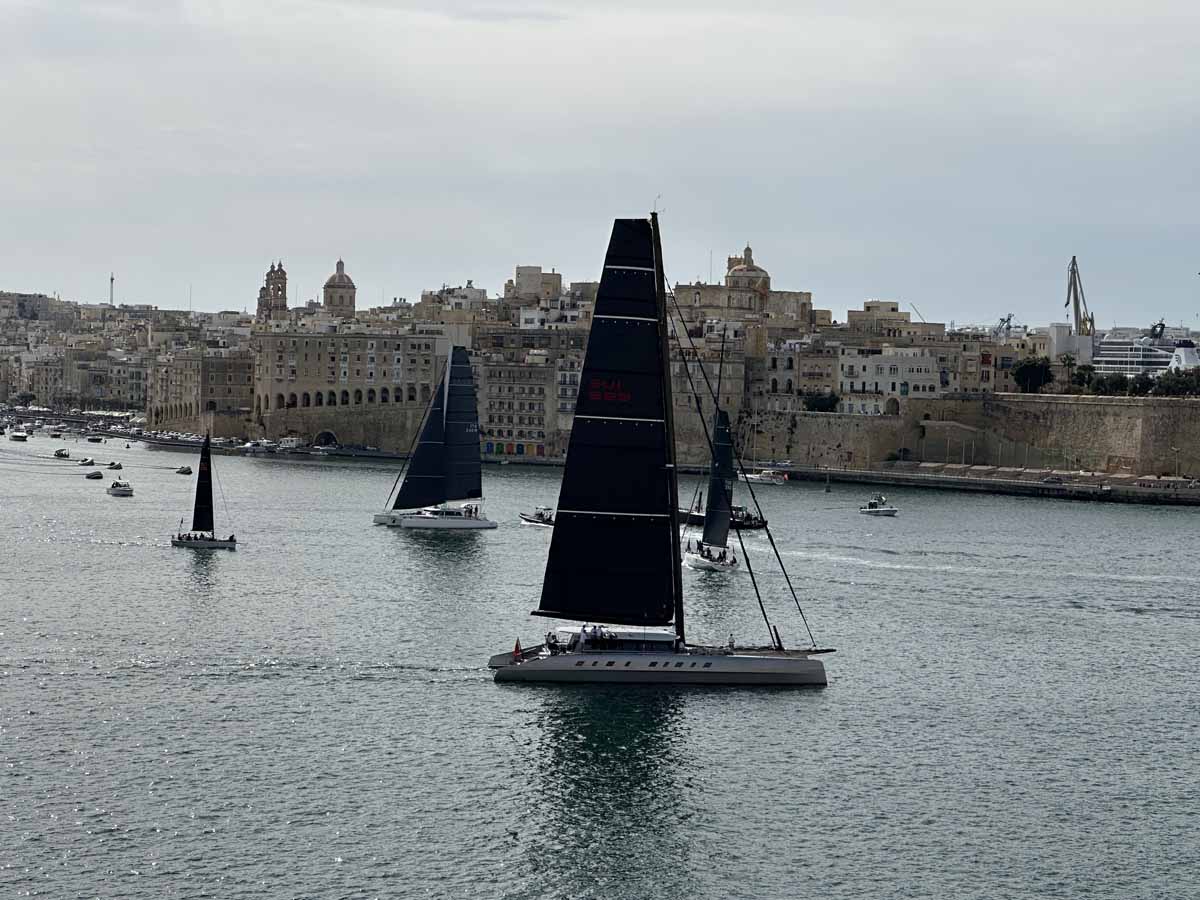
Turns out, the woman’s husband, Timmy Camilleri was one of the sailors in the race – sailing on the Artie III boat (42 ft) with a crew of 10. Timmy’s been sailing since age 17 and has done this race many times. He’s now aged 60 & a local GP doctor in town. His sweet wife was there with her adult kids & grandkids to cheer him on.
The race had a total of 117 sailboats, with staggered starts every 10 minutes between 11am and noon. There was a wide variety of boats & sizes – single hulls and multi-hulls (catamarans). It was great fun watching these beautiful boats lining up for their race starts and then taking off as a large cannon from the nearby fort boomed!
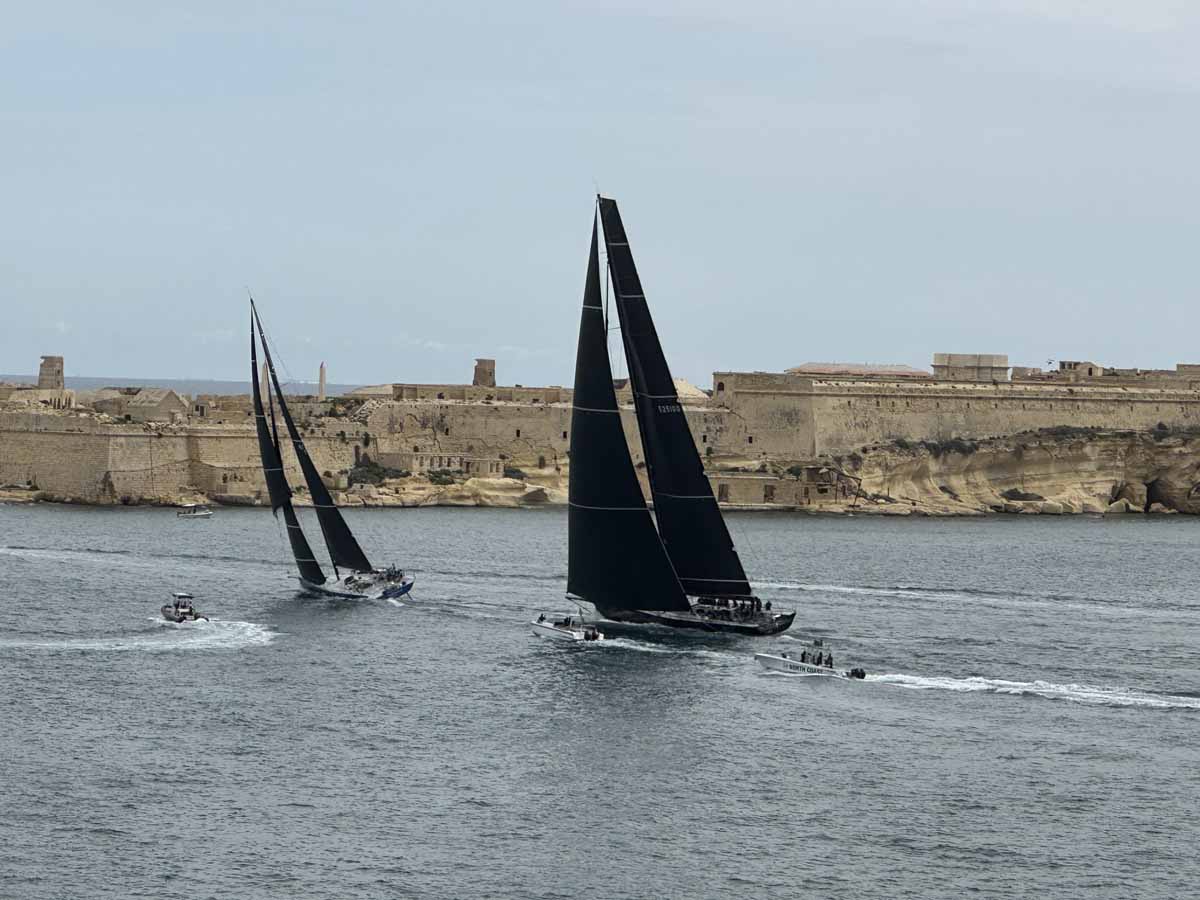
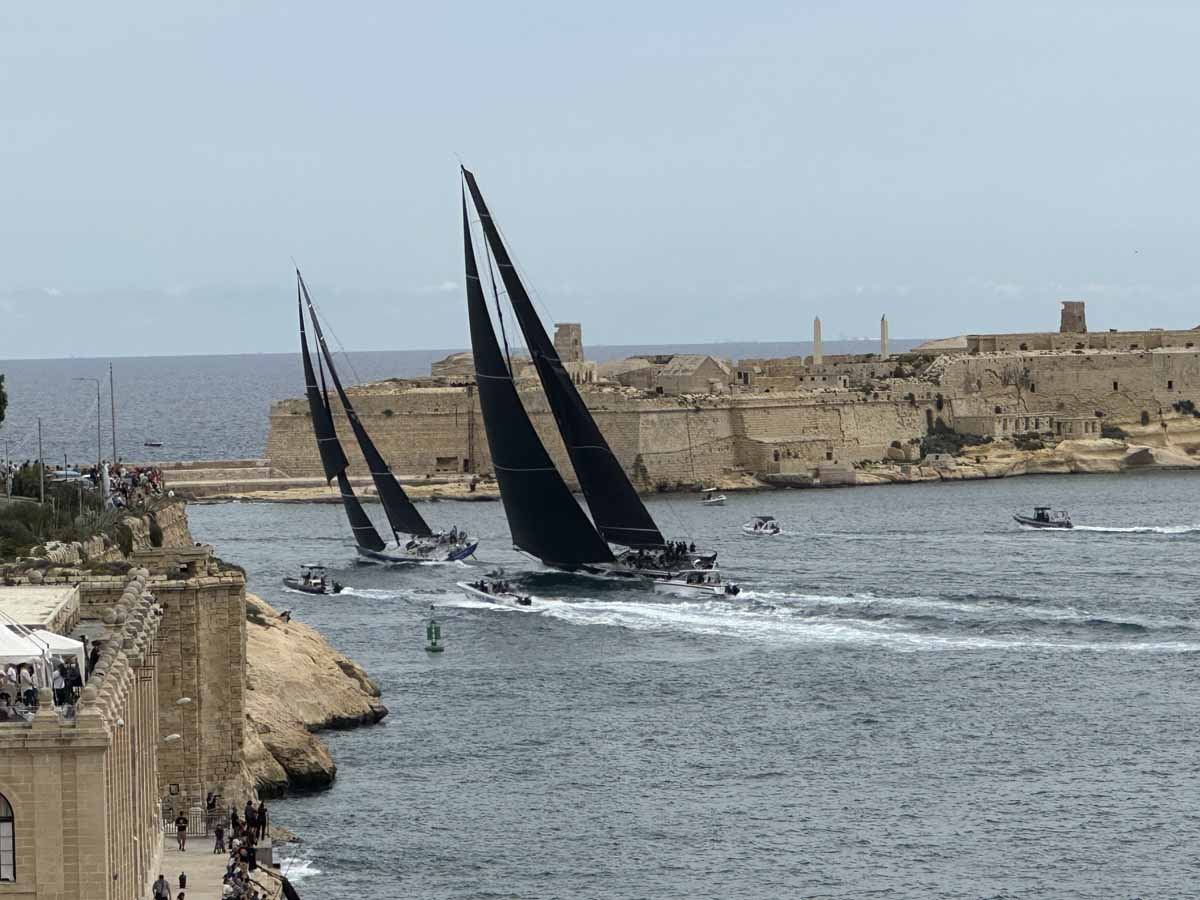
Plus, we were able to follow the race in real time on a special app the family told us about. Later, we were happy to see that Artie III finished well – after 4 grueling days and 14 hours. I’m sure all those intrepid Rolex Middle Sea sailors were more than ready for a hot shower and a good night’s sleep in a warm bed that didn’t rock!
Our Malta Trip Logistics
Getting To & From Malta – By Ferry & Plane
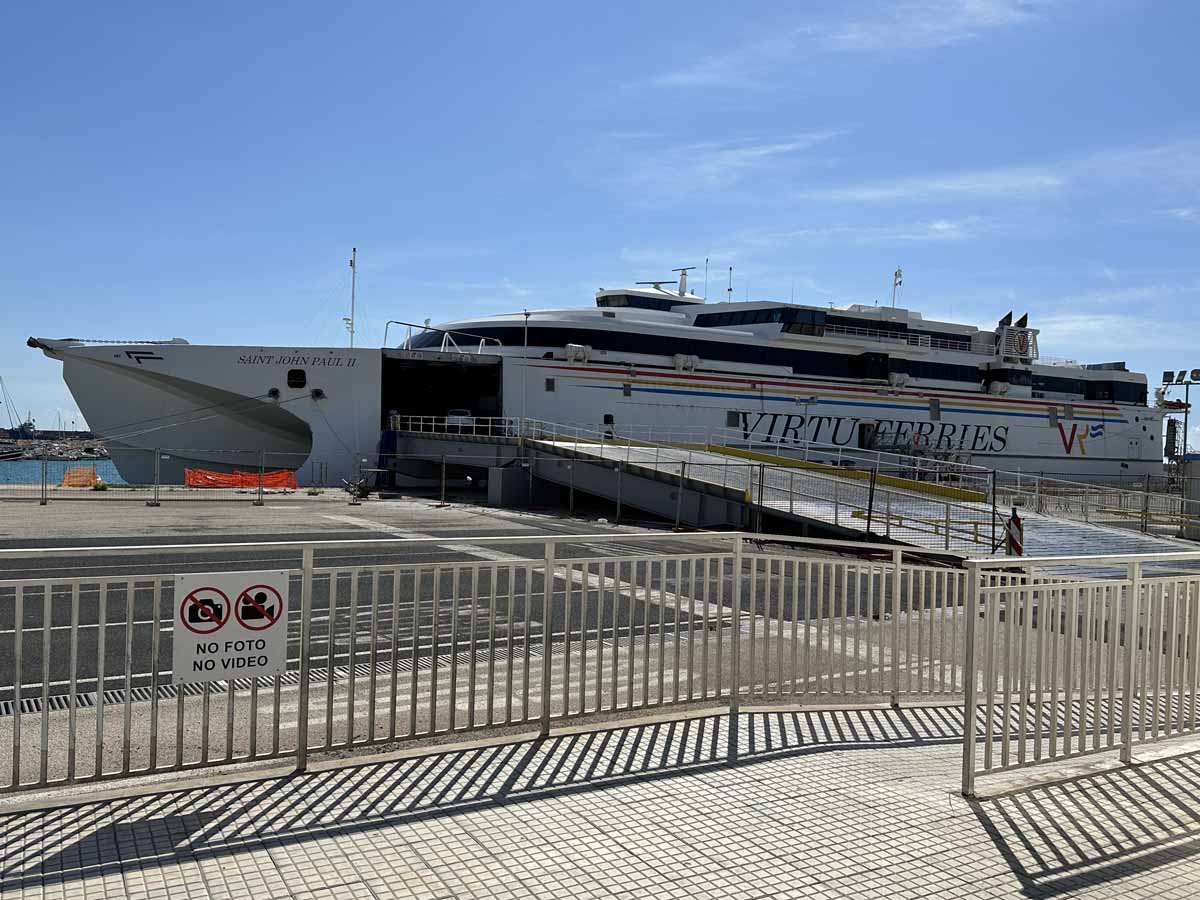 Our Sicily tour ended in the town of Catania on the east coast of the Italian island. From there, we got a driver to transport us the 1.5 hours down to the port town of Pozzallo on Sicily’s southern coast.
This is where we caught the ferry (through Virtu Ferries) to Valletta. The ride on a beautiful 900-passsenger ferry (St. John Paul II) took only 1 ¾ hours!
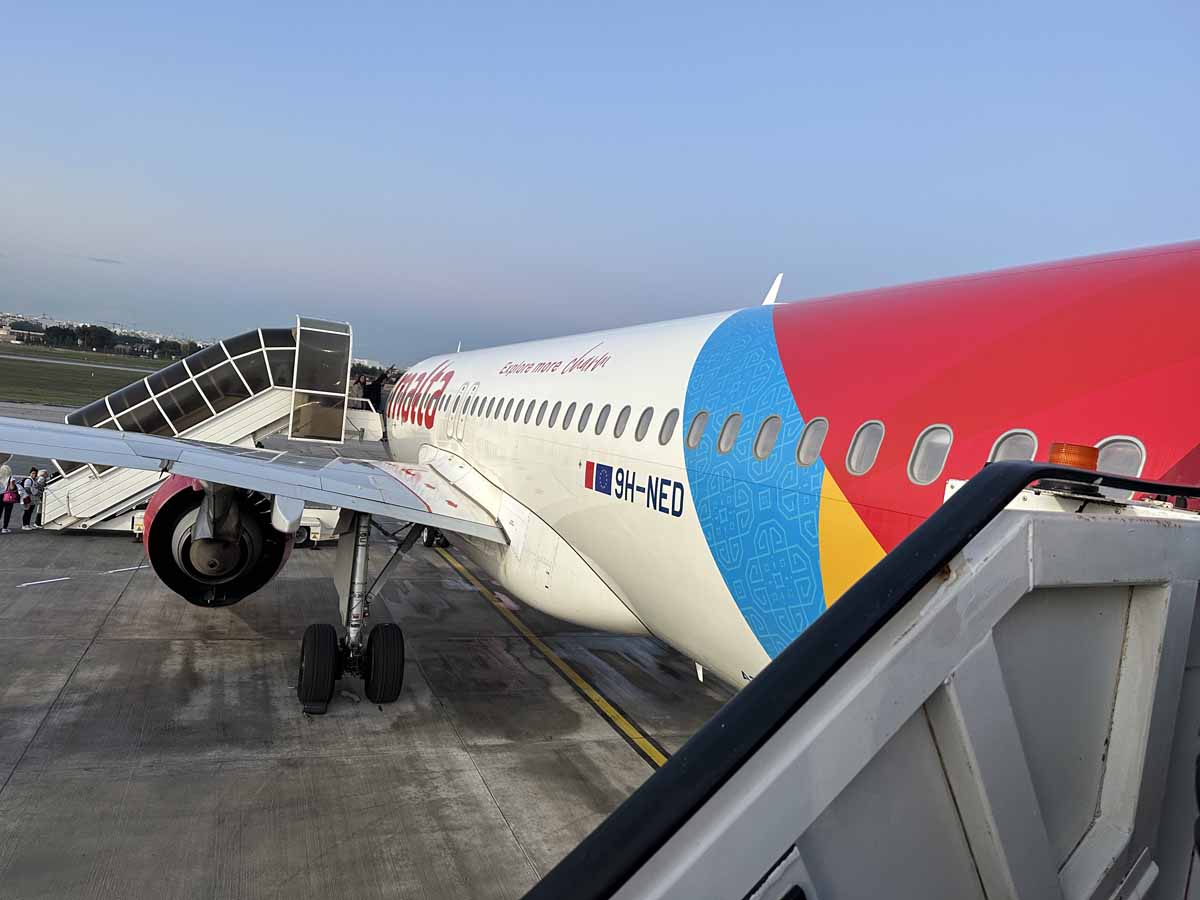
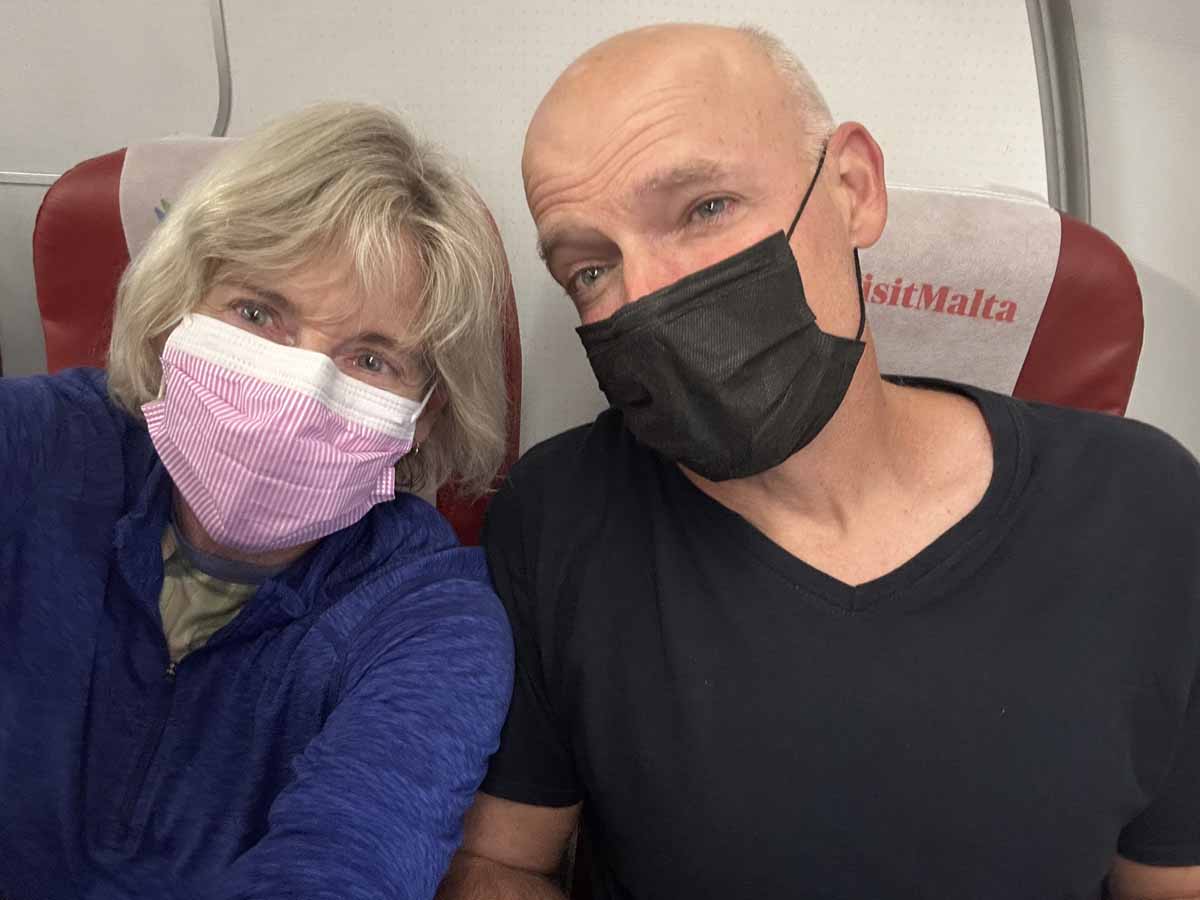
At the end of our time in Malta, we were returning to the U.S. So, we flew out of Malta’s International Airport, only a short drive from Valletta. Jack & I flew Malta Air to Munich, where we connected with our Lufthansa flights back to the States. All easy!
 Valletta Lodging
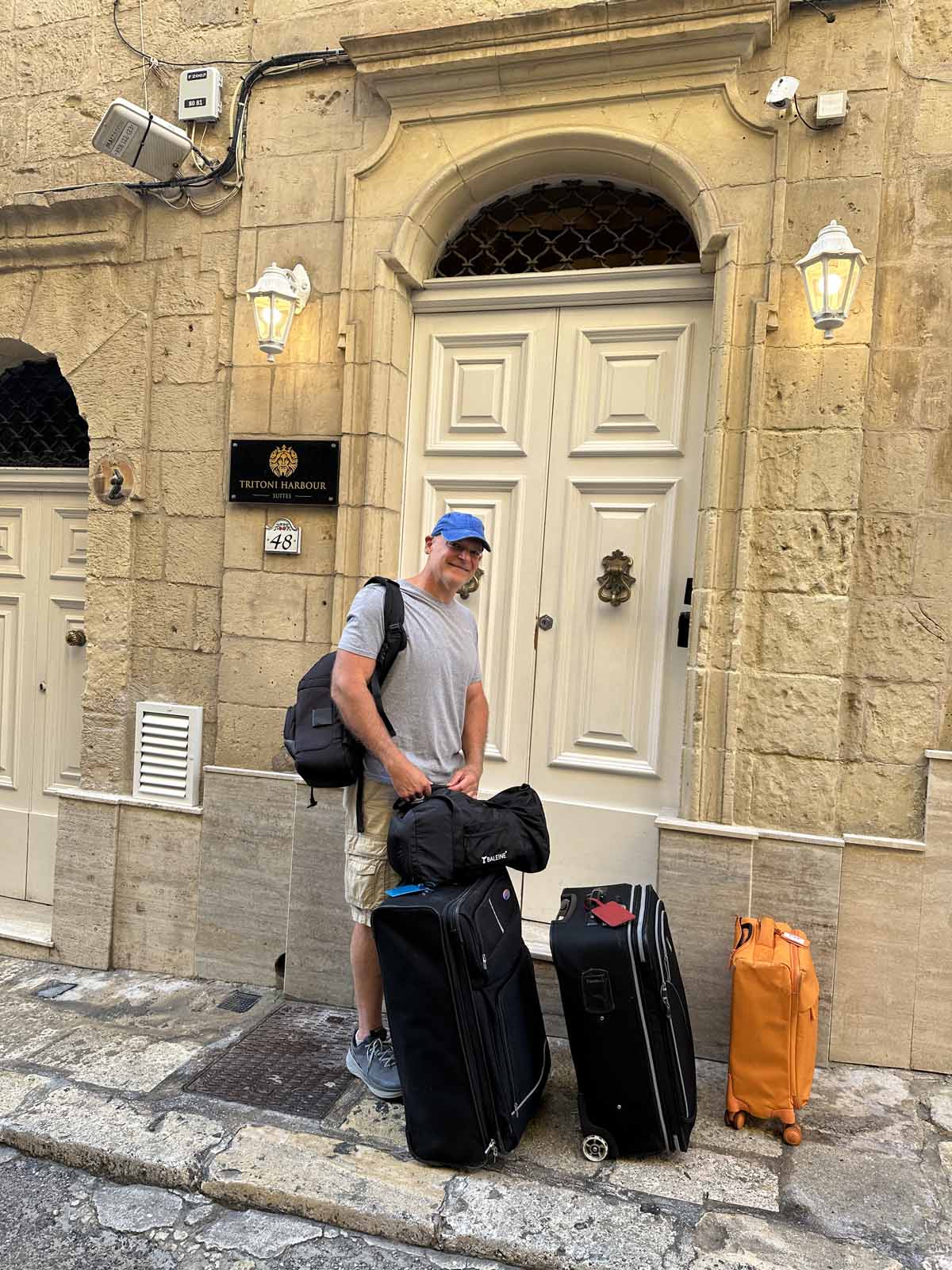
There’s lots of lodging options in Valletta. For our 7 nights, we stayed in a nice 1-bedroom apartment in Valletta, located close to city center. We booked through Booking.com.
It turned out to be a good decision as Valletta is a great base for touring all around Malta and Gozo.
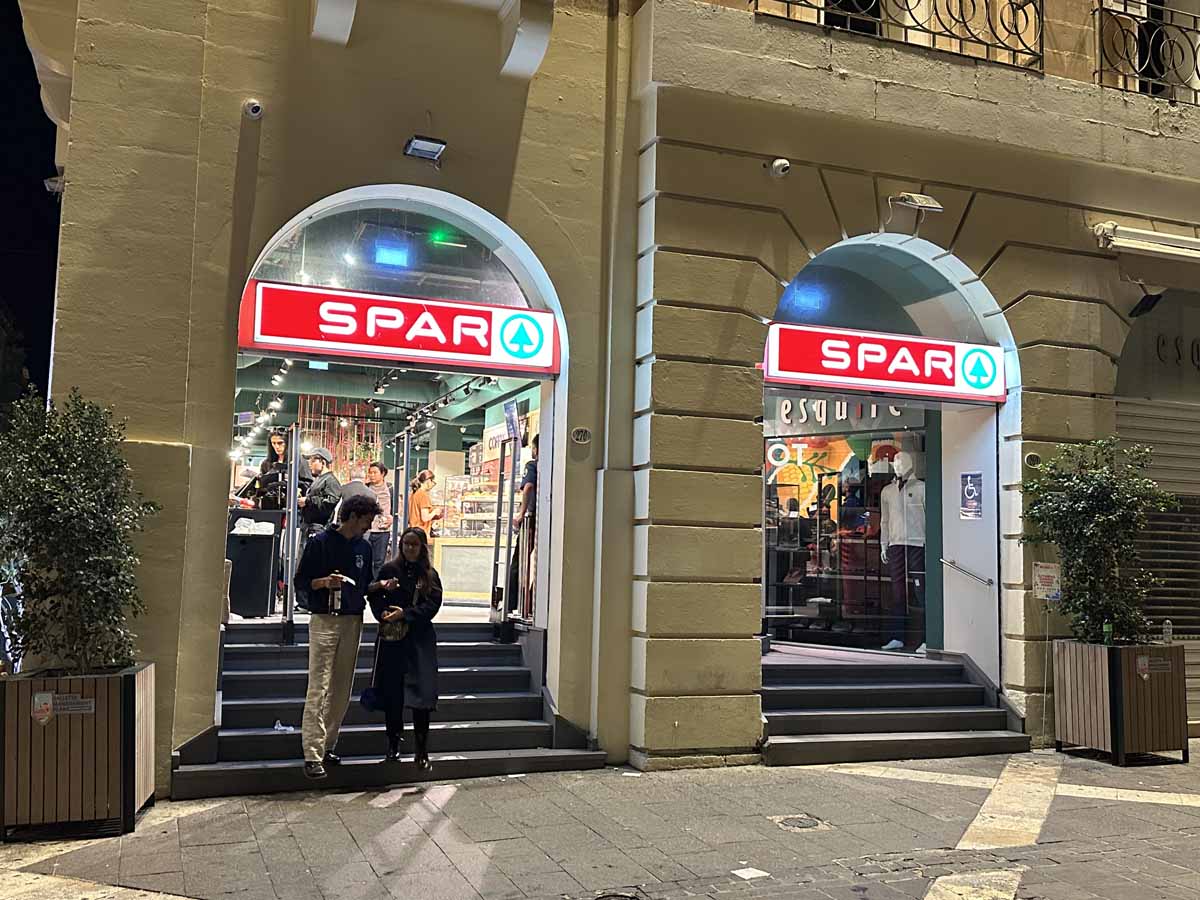
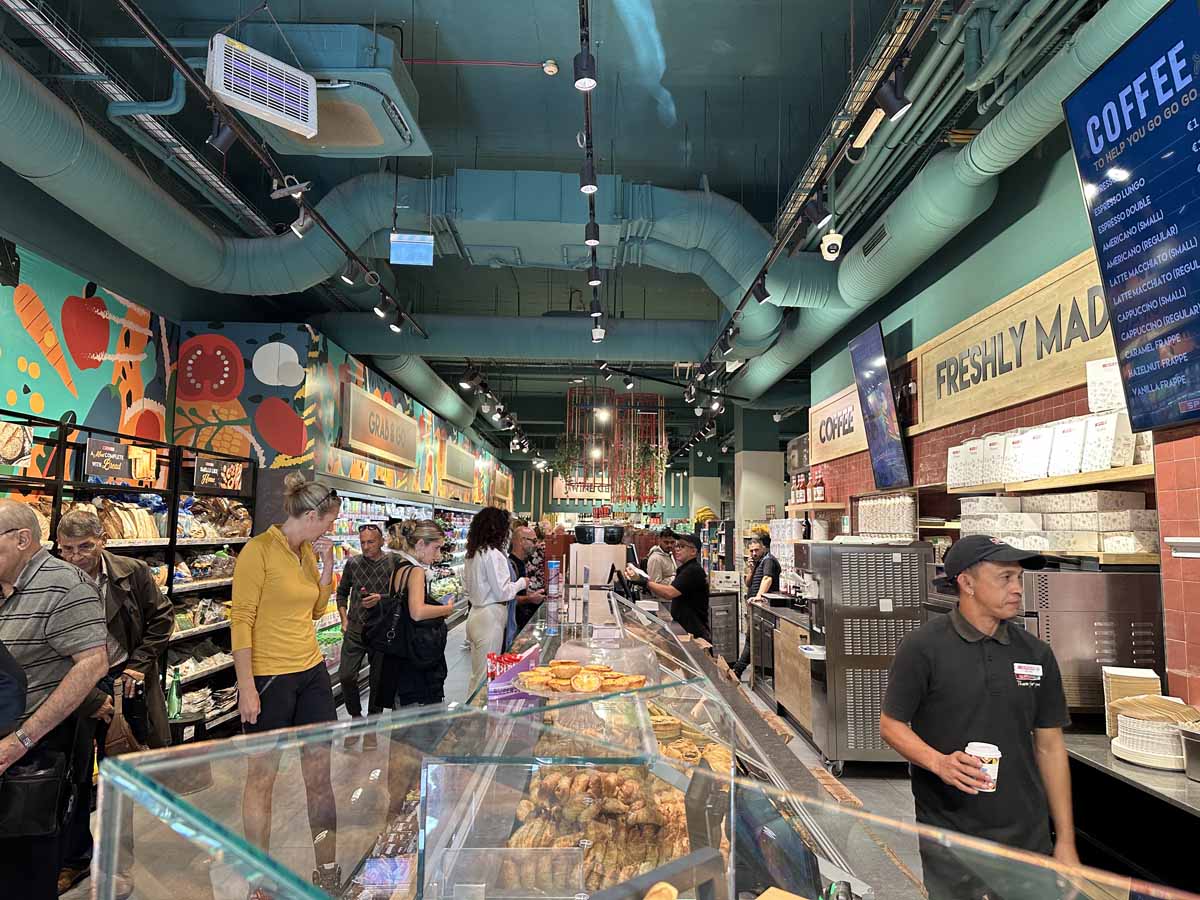
Another Valletta gem is the SPAR market located in the heart of the city (near St. John’s Co-Cathedral). Amazingly, it’s open 24/7 and is busy at all times of day and night.
It has everything (groceries, fresh made food, toiletries & more). Yep, we made daily runs to Spar, often late in the evening!
Language – English & Maltese
Maltese & English are both Malta’s official languages. As mentioned, virtually everyone in Malta speaks English – making it easy for us visitors. However, the great majority of local residents speak Maltese and consider it their main language.
Maltese (Malti) is a mishmash of many languages, with its roots in the Arabic of western North Africa. Italian was Malta’s default language up to 1934, when it was officially replaced by Maltese and English. (History reminder – Britain took control of Malta in 1814, until its independence in 1964).
Good Malta Tourism Website
Comments: Have you visited Malta? Was it on a land tour or part of a cruise stop? What did you think?

We loved our 7 days in Malta & your recent review brought back some wonderful memories.
Thanks, Cheryl. That’s great that you also got to spend 7 days in Malta – so you know what a great place it is to visit!