

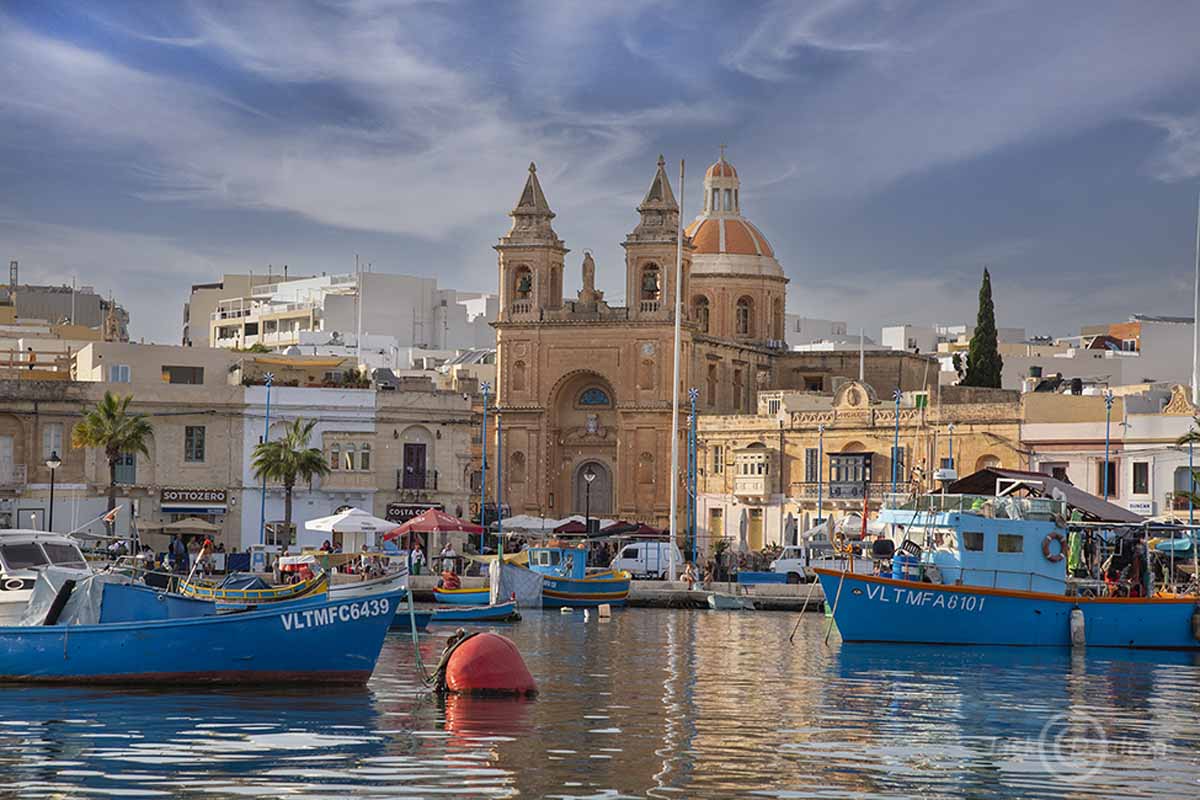
Marsaxlokk Harbor & Parish Church / Photo Credit: Jack Daulton
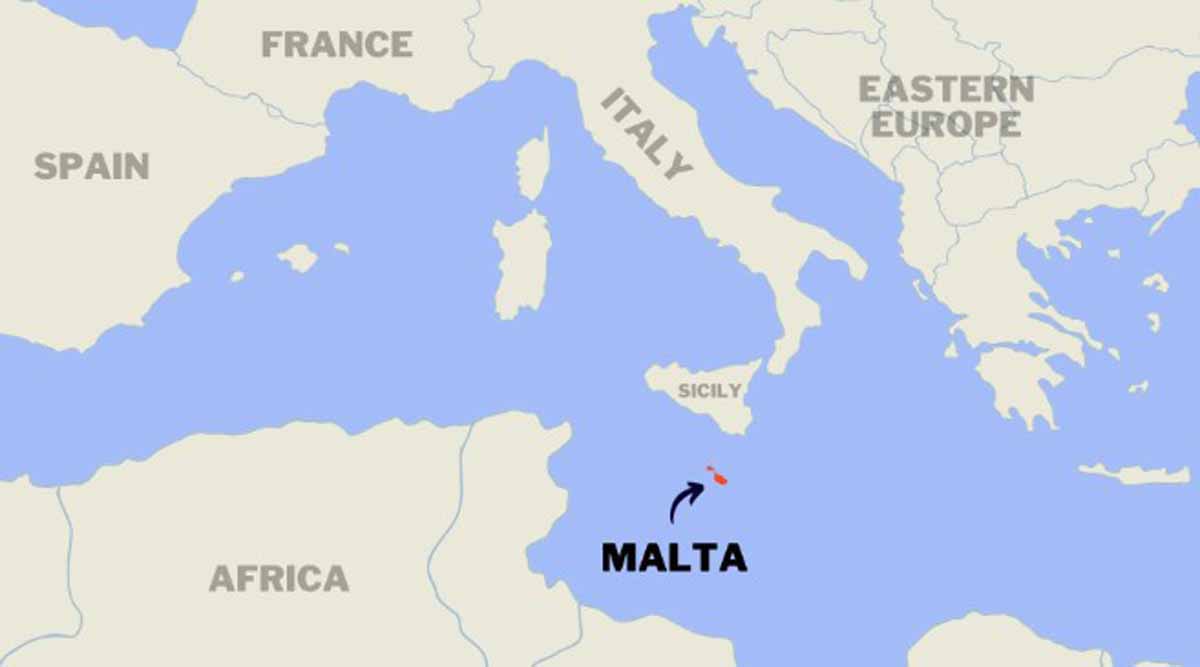
Map Credit: Malta Info Guide / Click all photos to enlarge
I fell head over heels in love with the island of Malta on my recent week-long visit. This Mediterranean charmer (located close to Sicily) offers an abundance of delights for its lucky visitors.
I visited Malta with my boyfriend Jack in October 2025 after a 2-week Overseas Adventure Travel (OAT) tour of Sicily. We stayed for seven nights in Valletta, Malta’s lovely capital city.
I’ve already written a blog post focused on Valletta entitled Touring Malta & Its Capital Valletta. Please check that out to learn more.

Map of Maltese Islands / Click to enlarge
This blog post is Part 2 of my Malta series. We’ll explore 4 other key sights around Malta & Gozo that I really enjoyed. I highly recommend all of them – to give you a more complete experience of the wonderful & diverse offerings of Malta for your visit.
Here Are the Malta & Gozo Sights Covered in This Blog Post: Using Valletta as our base, we made day trips (via bus & ferry) to each of these interesting sights.
- Marsaxlokk Fishing Harbor & Waterfront
- Hal Saflieni Hypogeum – Neolithic Burial Chamber
- Mdina – Malta’s Ancient Capital (Medieval & Baroque architecture)
- Island of Gozo – Its Capital Victoria & Citadel Visit
#1 – Marsaxlokk Harbor & Waterfront
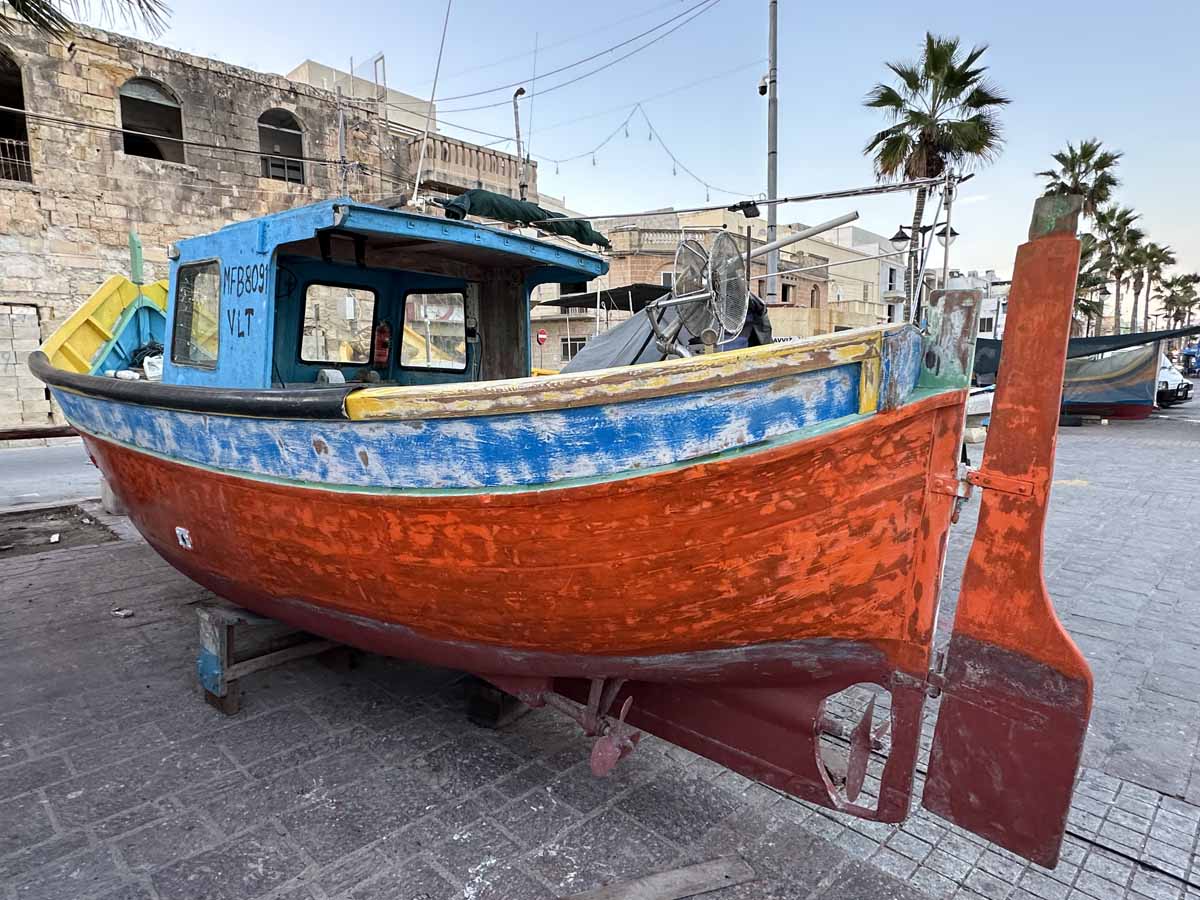
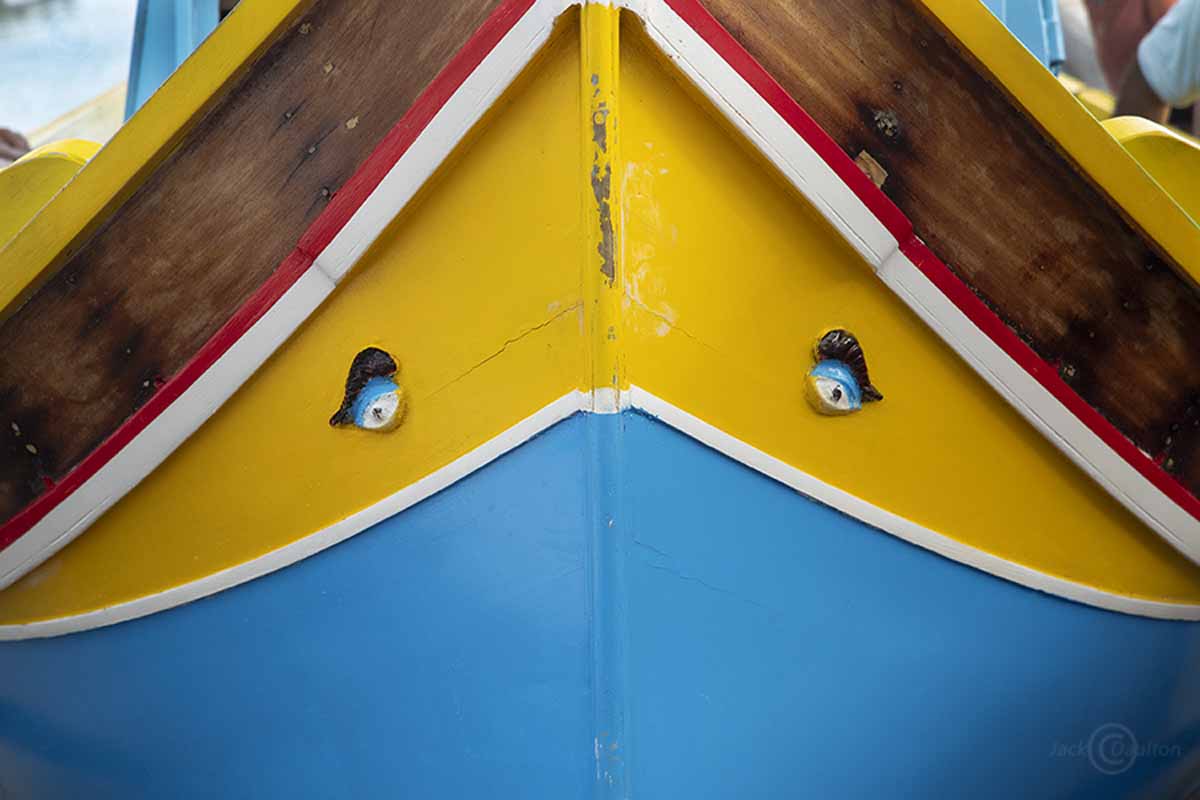
The picturesque fishing village of Marsaxlokk is a great place to experience a quieter, more traditional side of Malta. It’s known for its brightly colored wooden fishing boats (called luzzus), many of which feature the “Eye of Osiris” on the bow (meant to protect fishermen while at sea).
-

- “Eye of Osiris” on Colorful Luzzu / Credit: Jack Daulton / Click on all photos to enlarge
Located on the southeastern coast of Malta, Marsaxlokk is still a working fishing harbor. In fact, it’s home port for Malta’s largest fishing fleet. There you can see fishermen unloading their catch, repairing nets, and going about daily life much as they have for generations.
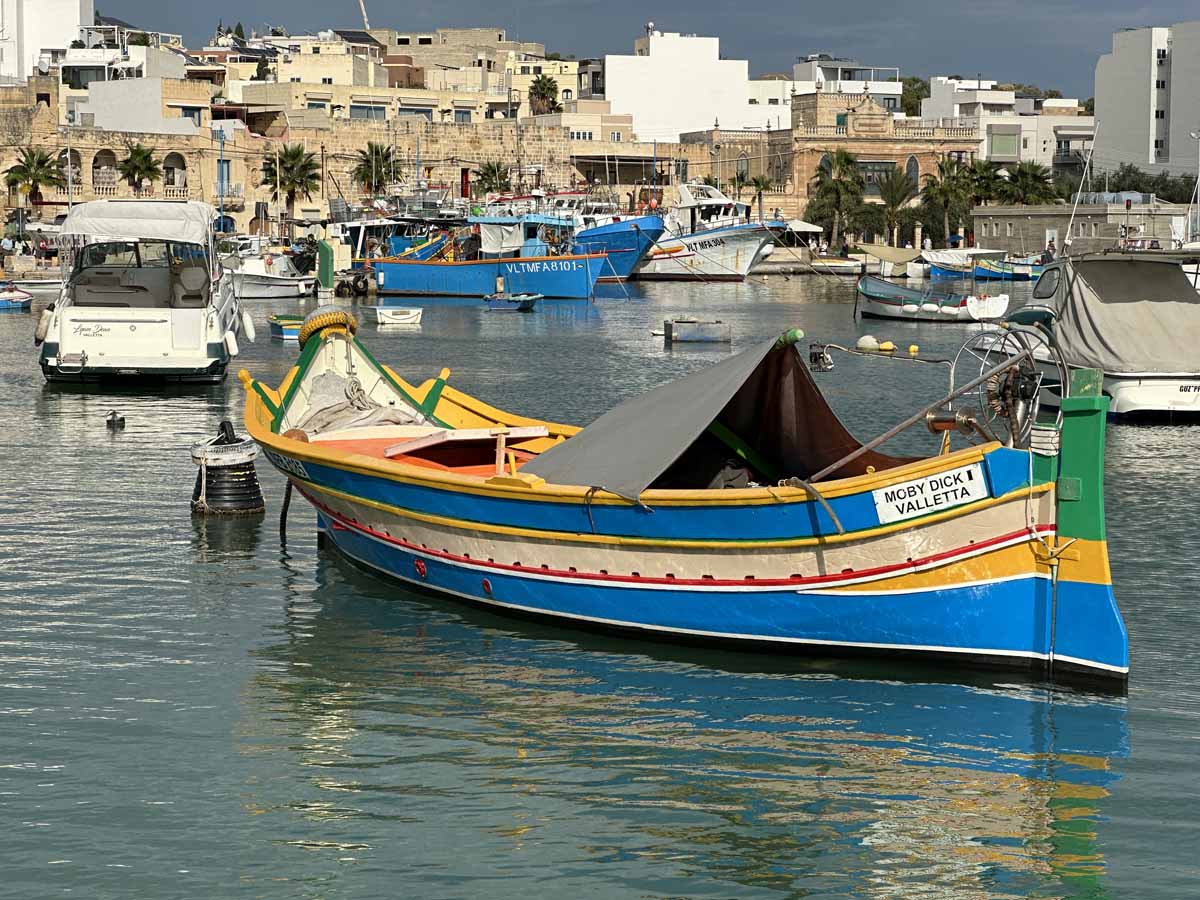
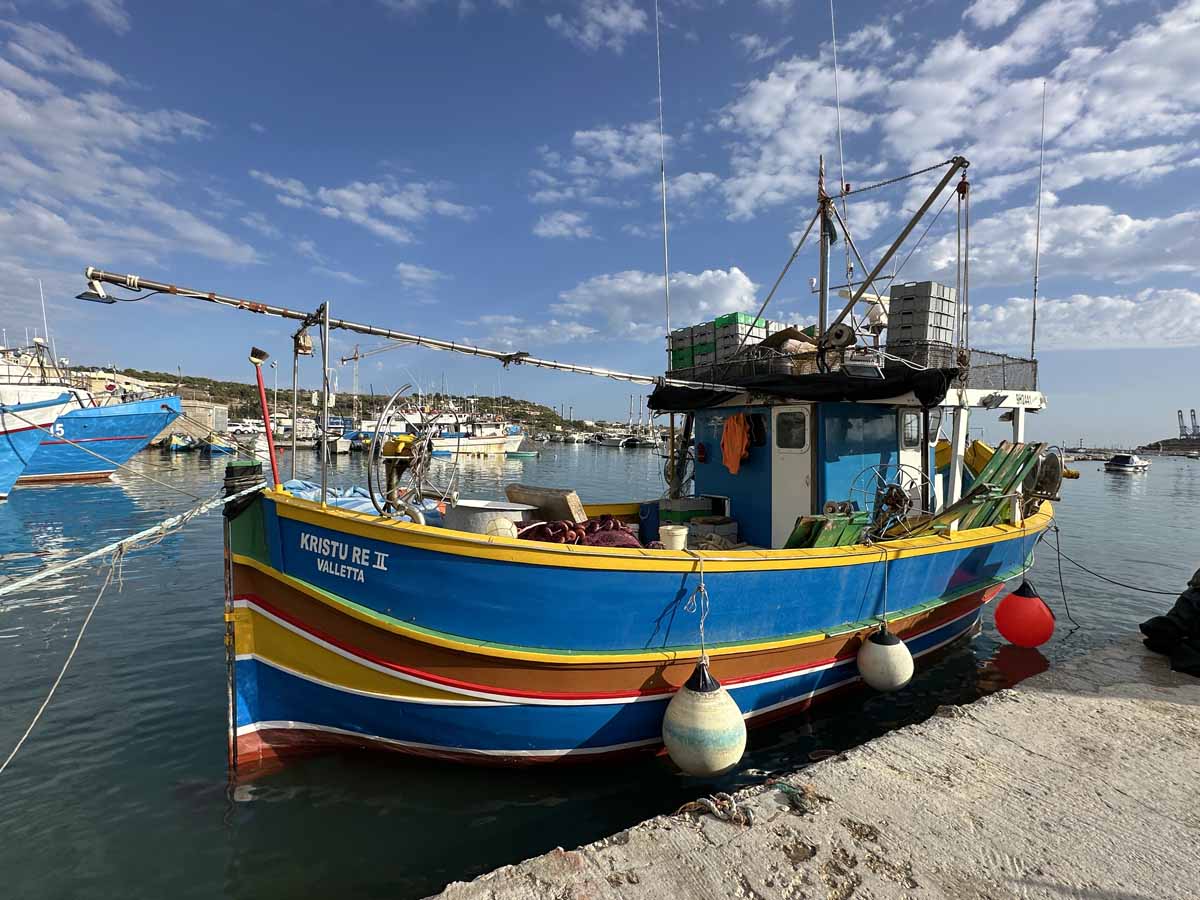
As you might imagine, the seafood here is about as fresh as it gets. Waterfront restaurants serve dishes like grilled fish, octopus, and calamari that are often caught the same day.
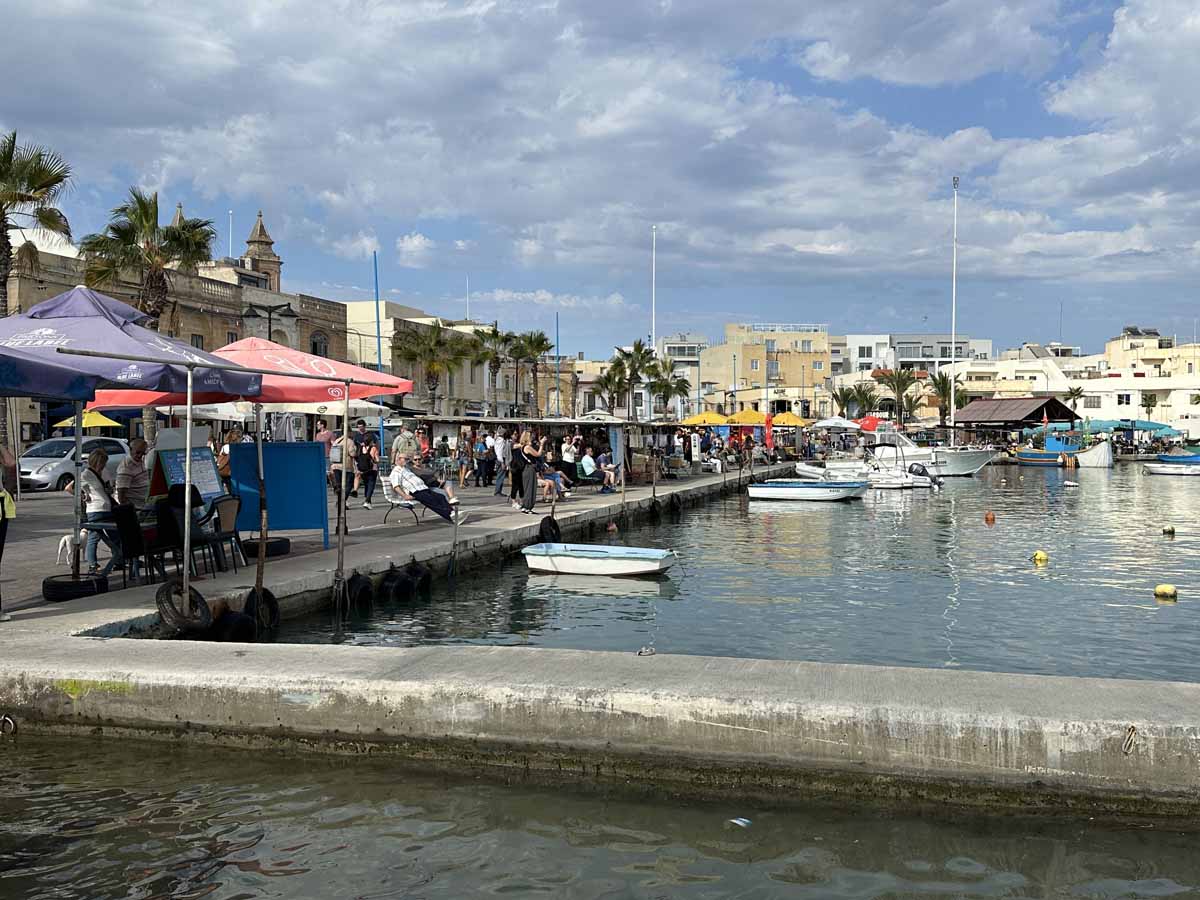
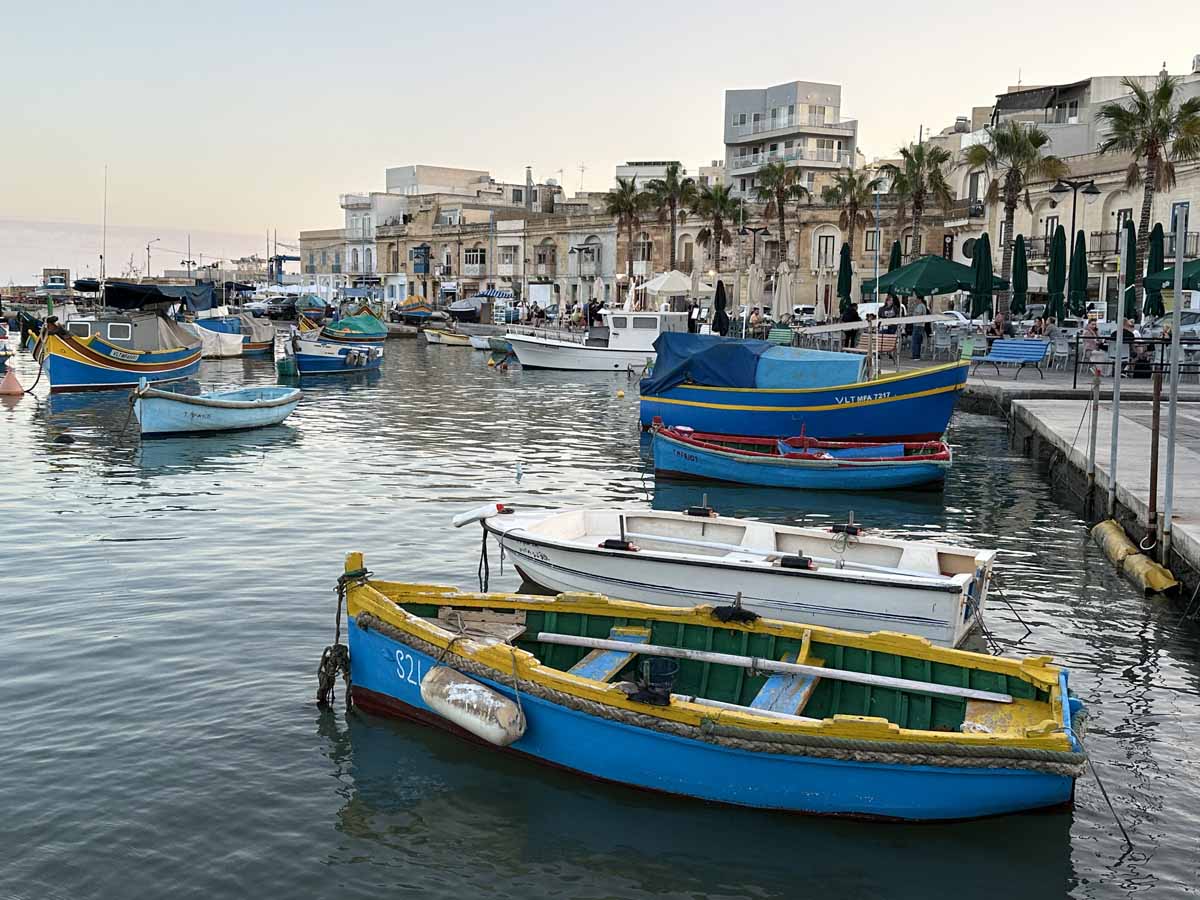
We took the public bus to Marsaxlokk from Valletta on a Thursday. We first stopped at the Hypogeum for a visit – sight #2 that I will cover next. We arrived in the mid-afternoon at Marsaxlokk’s harbor to begin our exploration of the town’s bustling waterfront and delightful promenade. The colorful scene is certainly eye candy for cameras!
Exploring the Waterfront
Marsaxlokk has a daily open-air farmer’s market, with the Sunday morning market being especially popular for locals and visitors alike. Jack & I did a quick walk through the covered stalls to peruse the fresh seafood. The market also sells traditional goods such as honey, goat cheese, local olives and crafts like Maltese lace. Not to mention sweets like pistachio kannoli (cannoli).
We stopped to watch some older local fisherman as they worked to pull one of the luzzu boats out of the water. They were using a green rope pulley along with a wood cross beam held by two men on each side to steady the boat.
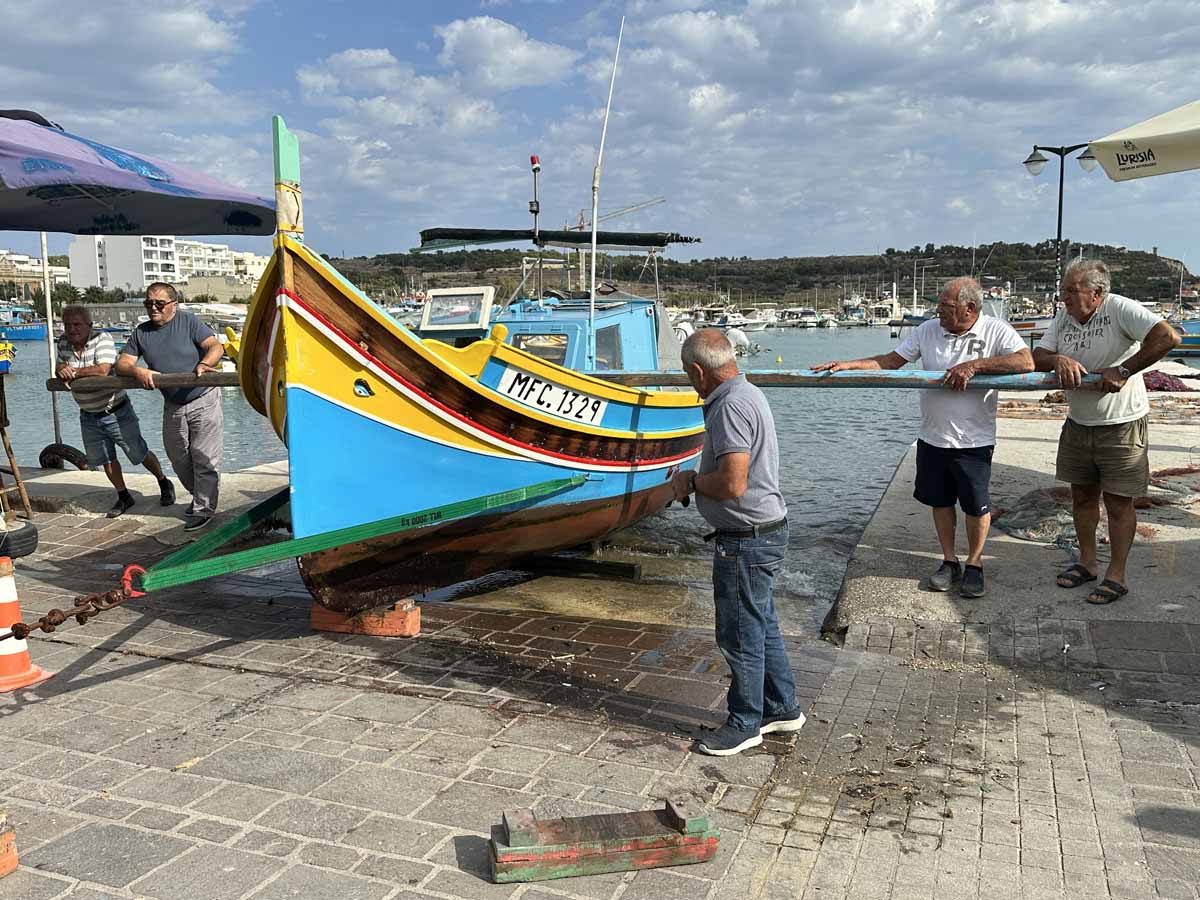
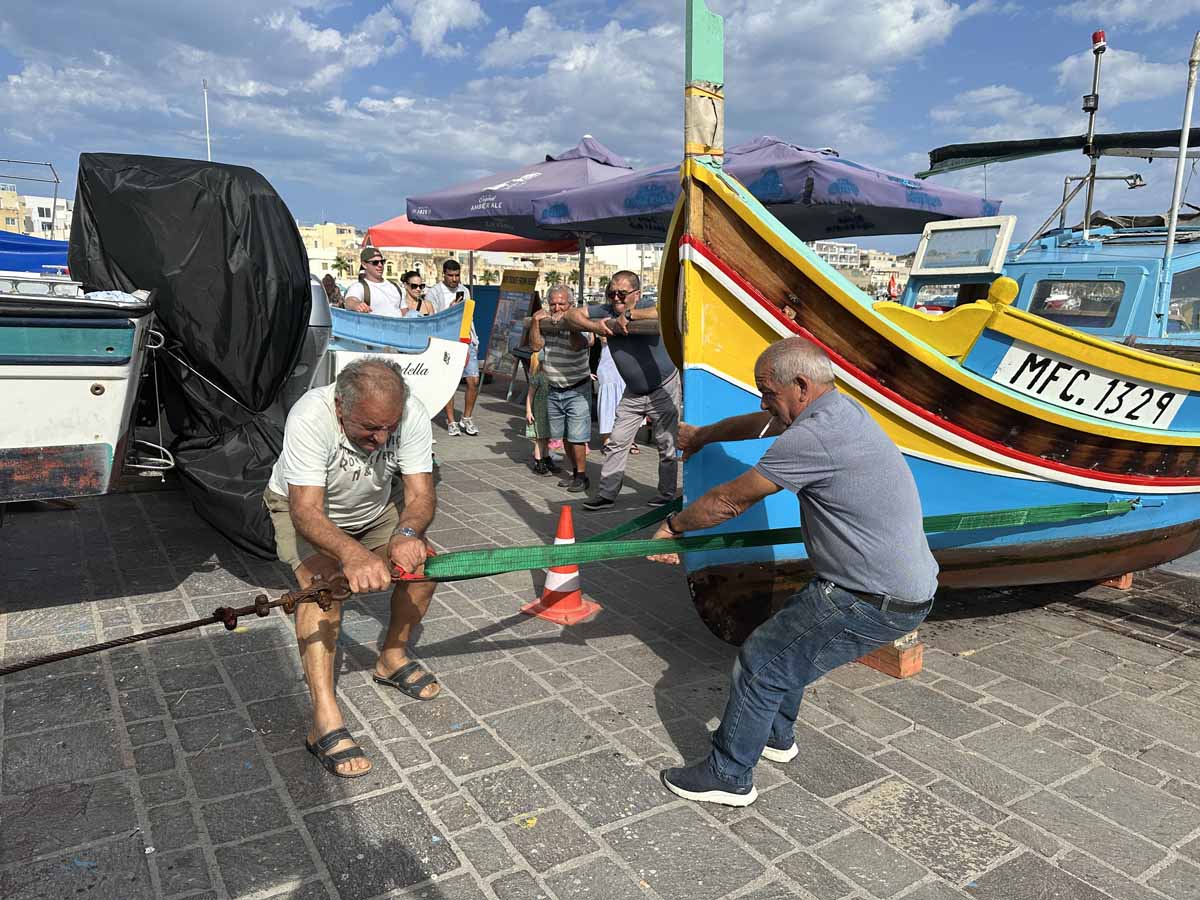
Slowly, the boat inched forward to move across wooden blocks on the concrete sidewalk until it was safely on land & sitting on its perch. We really enjoyed watching this “team effort” process, which took quite a while. Of course, Jack & I snapped photos and took videos of this interesting daily slice of fishing life. (see below)
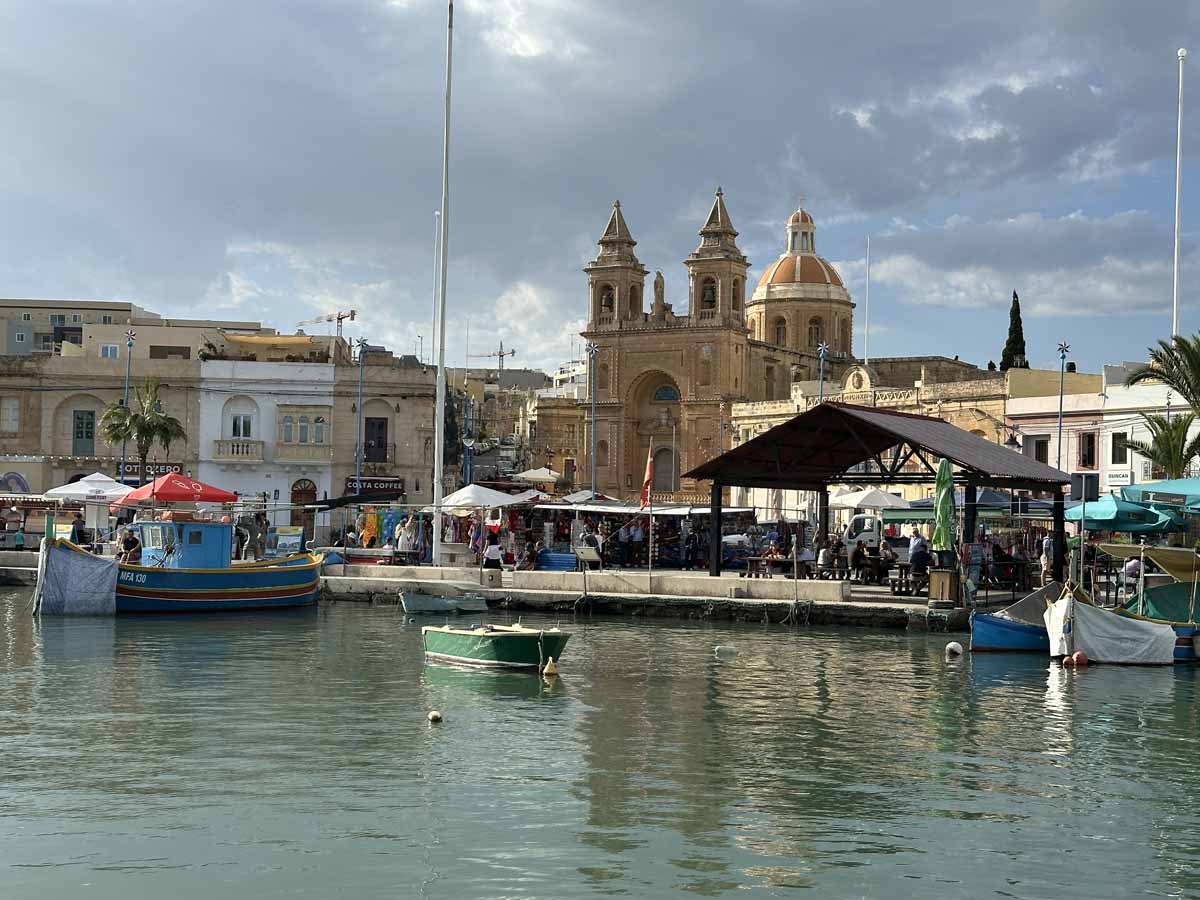
We stopped for a snack at the Costa Coffee café on the nearby pedestrian-only cobblestone plaza, fronted by the pretty Parish Church of Our Lady of Pompei. The church with its beautiful rounded central dome and two graceful bell towers is featured in many of the town’s photographs. (photos below)
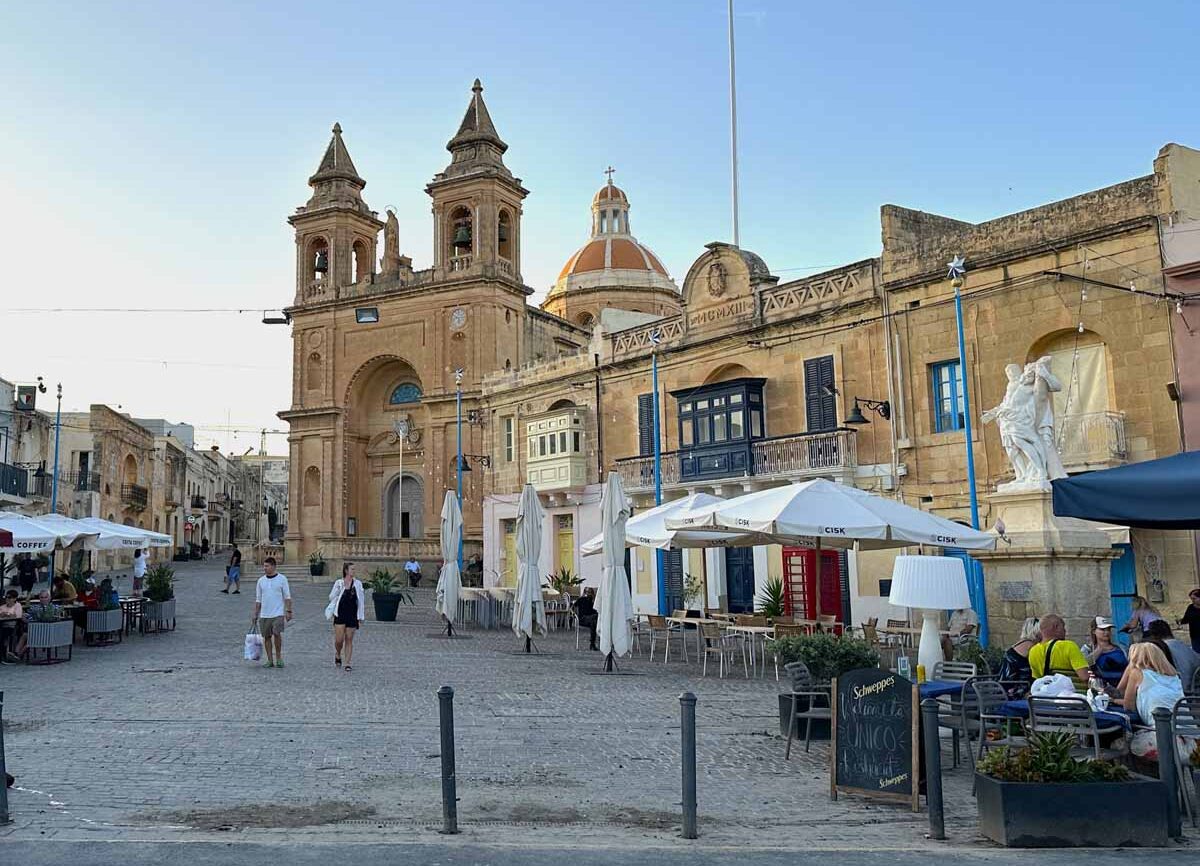
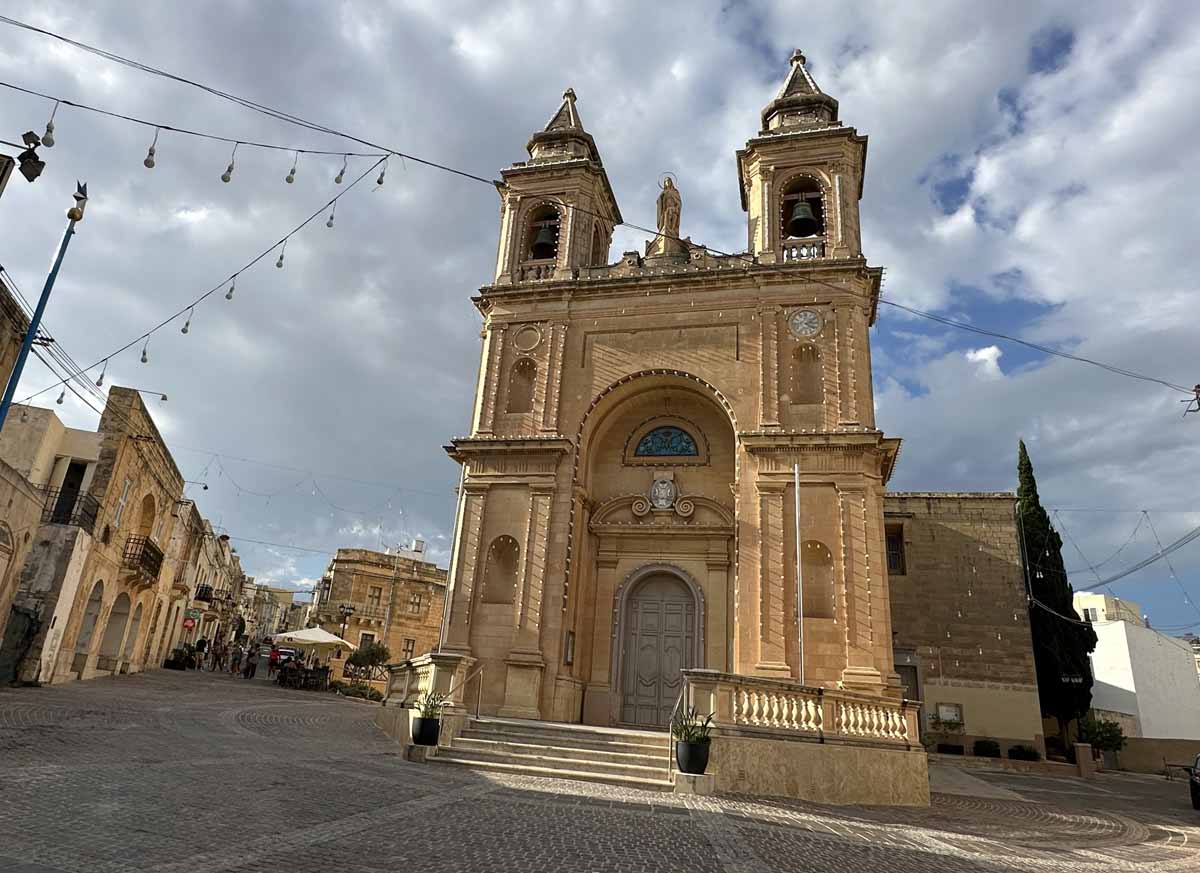
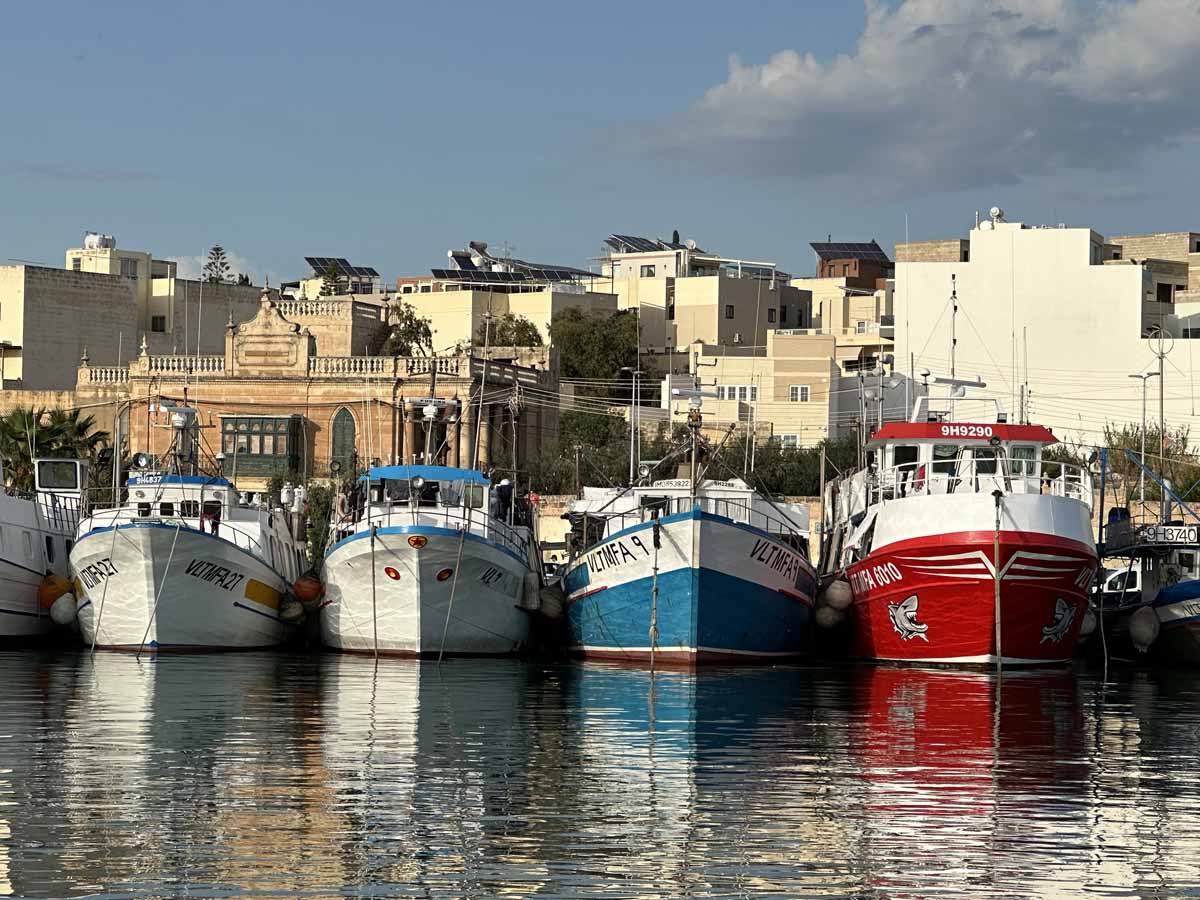
We then walked along the east side of the harbor, passing by some larger fishing boats. We stopped in the Tourist Info (TI) office for a map and continued past a sand beach to a long jetty where a variety of fishing boats were docked. From that end, we enjoyed great views of the harbor’s waterfront promenade and the parish church. (below right)
Seafood Dinner Time
We returned to the main plaza and walked in the other direction along the promenade. It was now around 6pm and the seaside restaurants (many with outdoor tables) were starting to open for dinner. With focused intention, we scoped out the menus (and overall ambiance) as we strolled by.


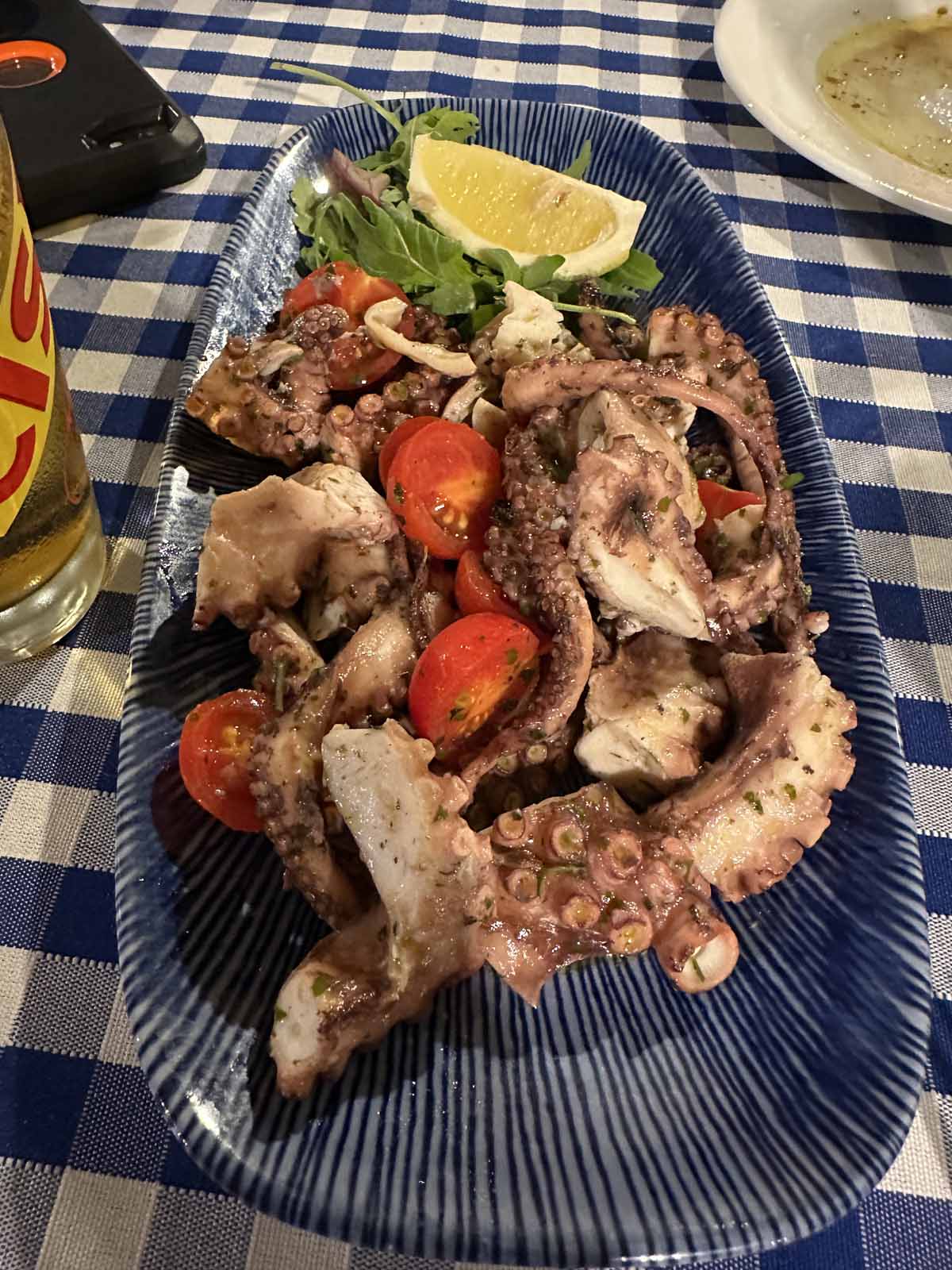
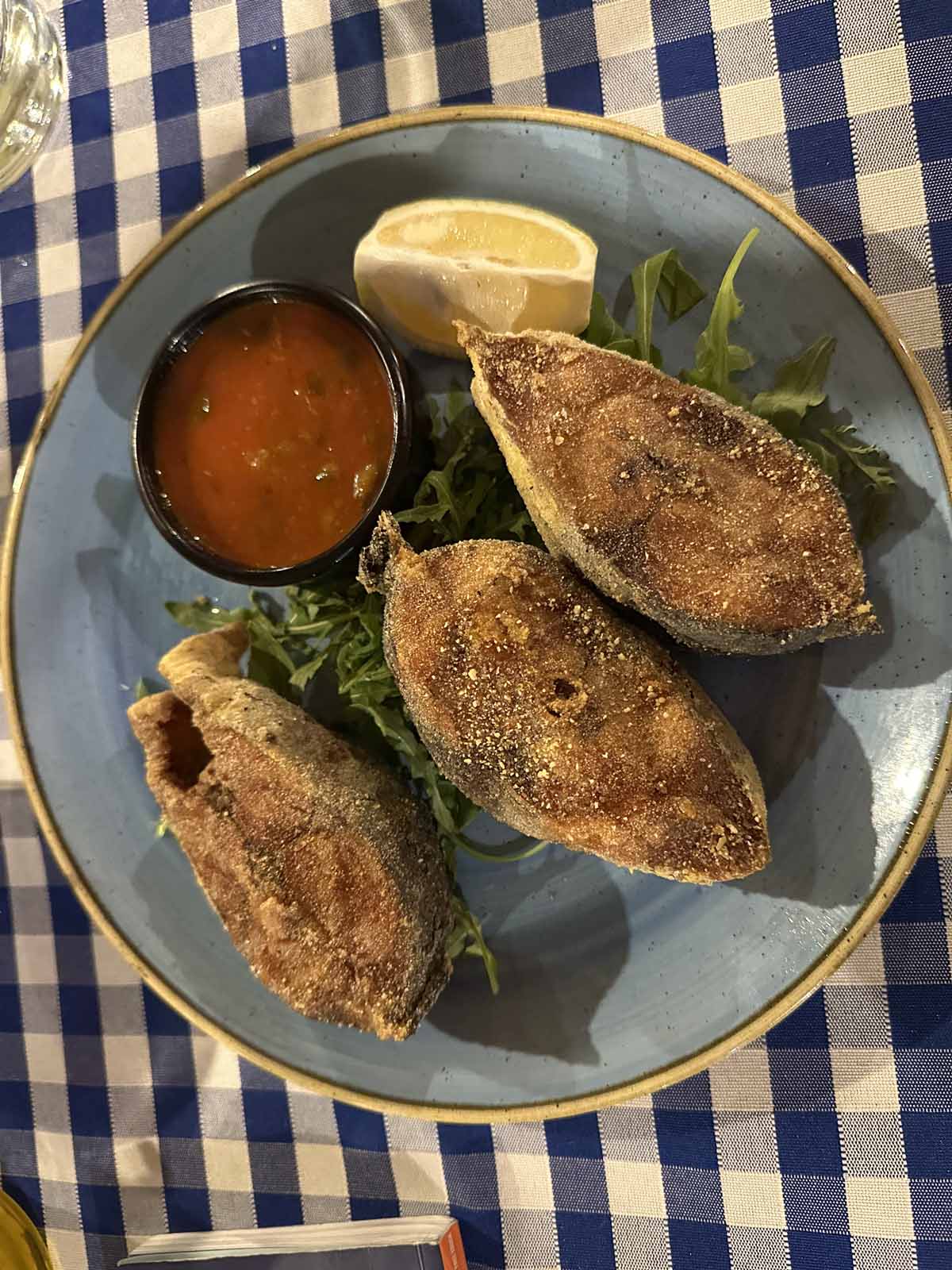
The Mare Bello restaurant was the winner for our “fresh seafood” dining tonight. We were seated at an outside table under a canopy where we enjoyed a delicious meal. Jack & I shared an octopus (pulpo) appetizer. For the entree, he ordered the lobster pasta & I selected fried lampuki (dolphin), which is Malta’s popular local fish.
After dinner, we took another seaside stroll for lovely night views of the harbor before returning to Valletta by public bus (which took 40 minutes). We had spent five delightful hours here in Marsaxlokk enjoying the waterfront – and agreed it had been a perfect & very worthwhile visit!
#2 – Hal Saflieni Hypogeum
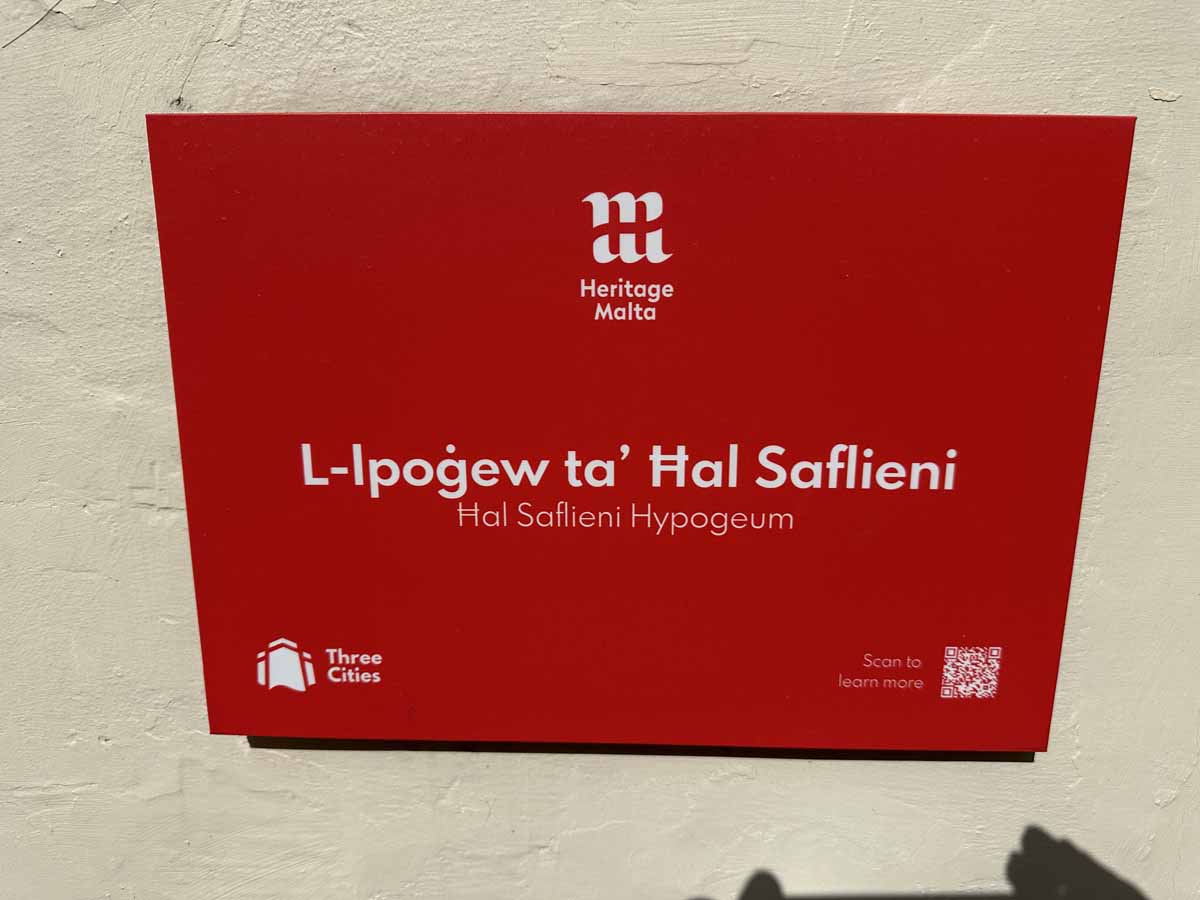
Talk about a major culture shift from our visit to Marsaxlokk. The Hal Saflieni Hypogeum (meaning an underground structure, especially for burial or religious purposes) is one of the best preserved & impressive sites of the ancient world. It was designated a UNESCO World Heritage site in 1981.
Located in the town of Paola (near Valletta), the Hal Saflieni Hypogeum is a 6,000-year-old underground Neolithic necropolis & sanctuary. It was carved entirely out of limestone rock around 4000–2500 BCE, which makes it older than Stonehenge and the Great Pyramid of Giza! Imagine that…

Credit: Heritage Malta
The Hypogeum was in use until 1500 BCE. Fast forward almost 3 ½ millenia to 1902, when it was discovered by a group of laborers building a house in the area. Excavations of this 3-level underground temple & burial complex found the remains of roughly 7,000 individuals.
I will confess I had not heard of this Hypogeum. However, when I told my sister Carol about plans to visit Malta, she advised me not to miss it & to get tickets early. And she was right – I booked our tickets quite a few months in advance.
Preparing for the Hypogeum Tour
Jack & I arrived in Malta with Oct. 16th Hypogeum tickets happily in hand for the 1:00pm tour. From the Heritage Malta booking website, I had learned that the 45-minute Hypogeum tours are very restrictive – only 8 tours given each day & just 10 people per tour. That means just 80 lucky visitors each day!
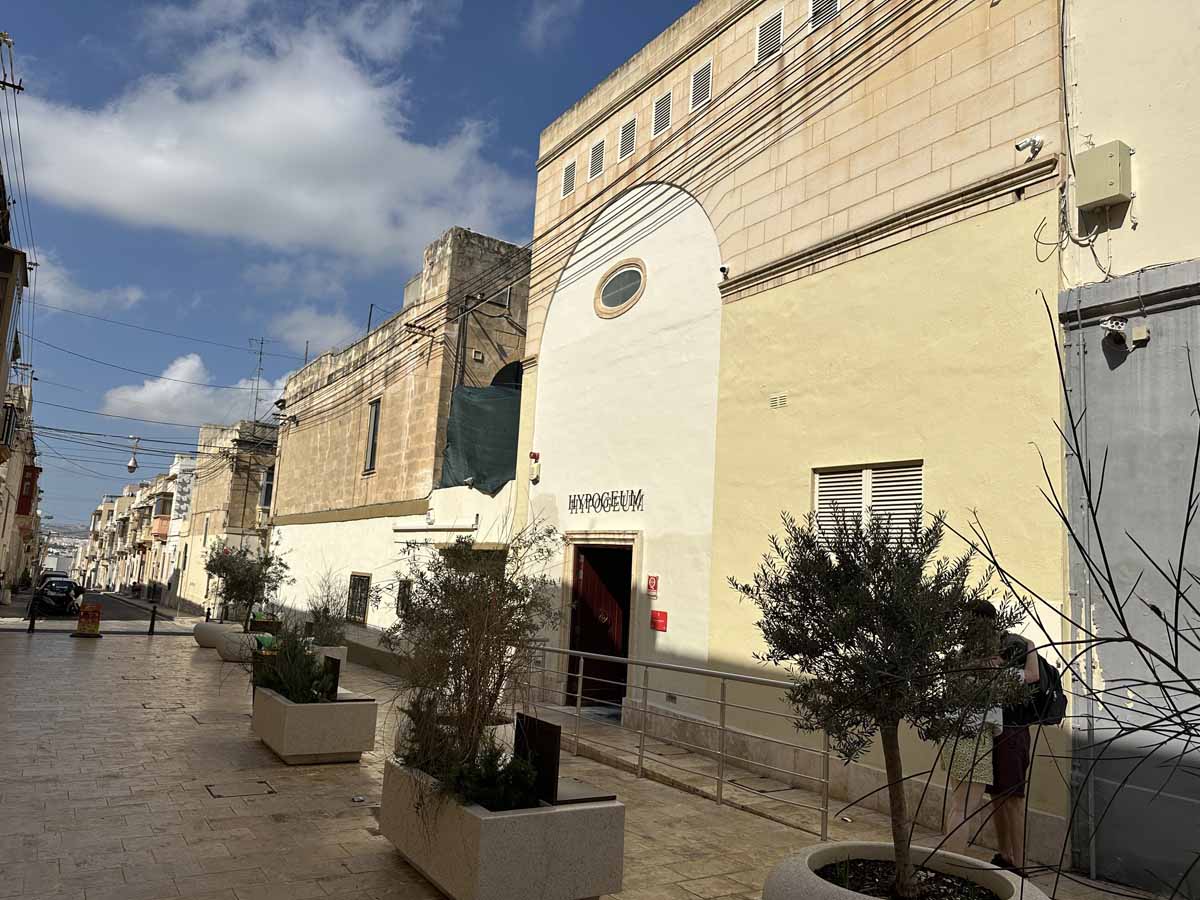
That is because the Hypogeum’s underground environment is very delicate. Thus, strict controls of temperature, humidity, and carbon dioxide levels (by visitors) are needed to preserve this ancient site. Plus, many spaces within the site are small.
To get there, we took the public bus from Valletta to Paolo (about 30 minutes), making sure to arrive in plenty of time for our designated tour. In their small modern lobby, we checked out the various books and items for sale, including a cool Hypogeum t-shirt Jack bought.
Our Hypogeum Tour
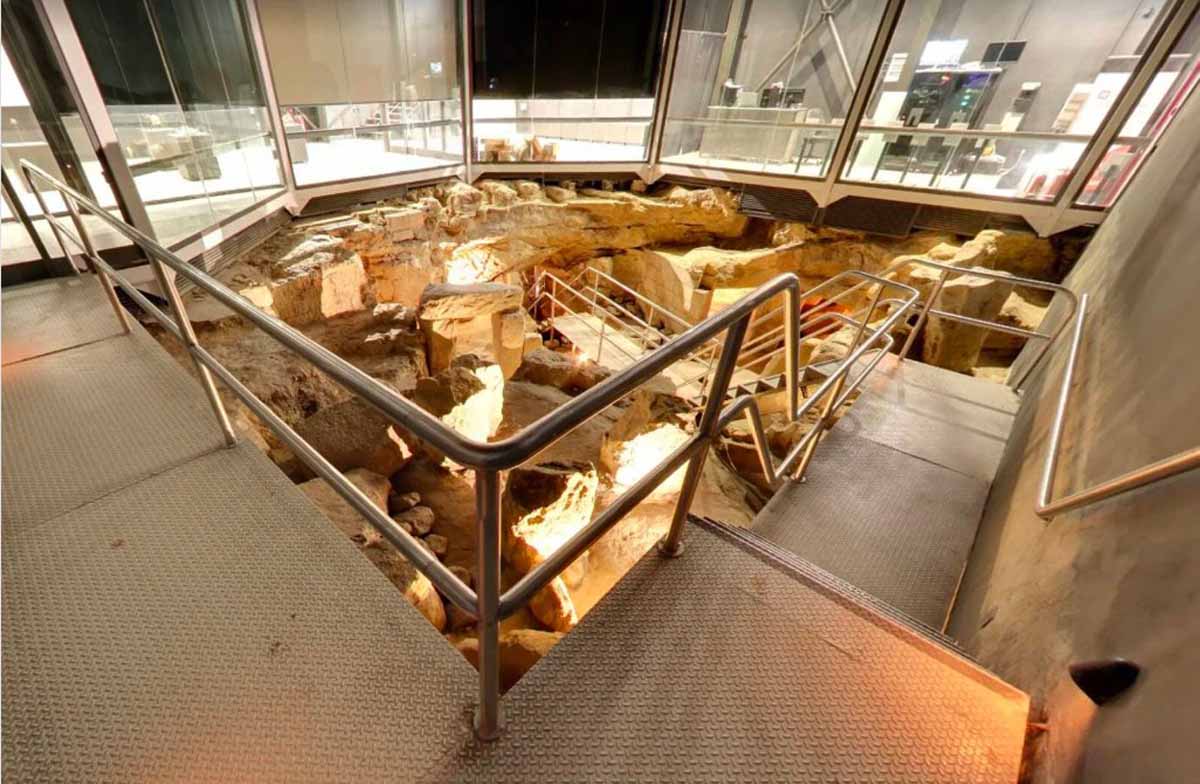
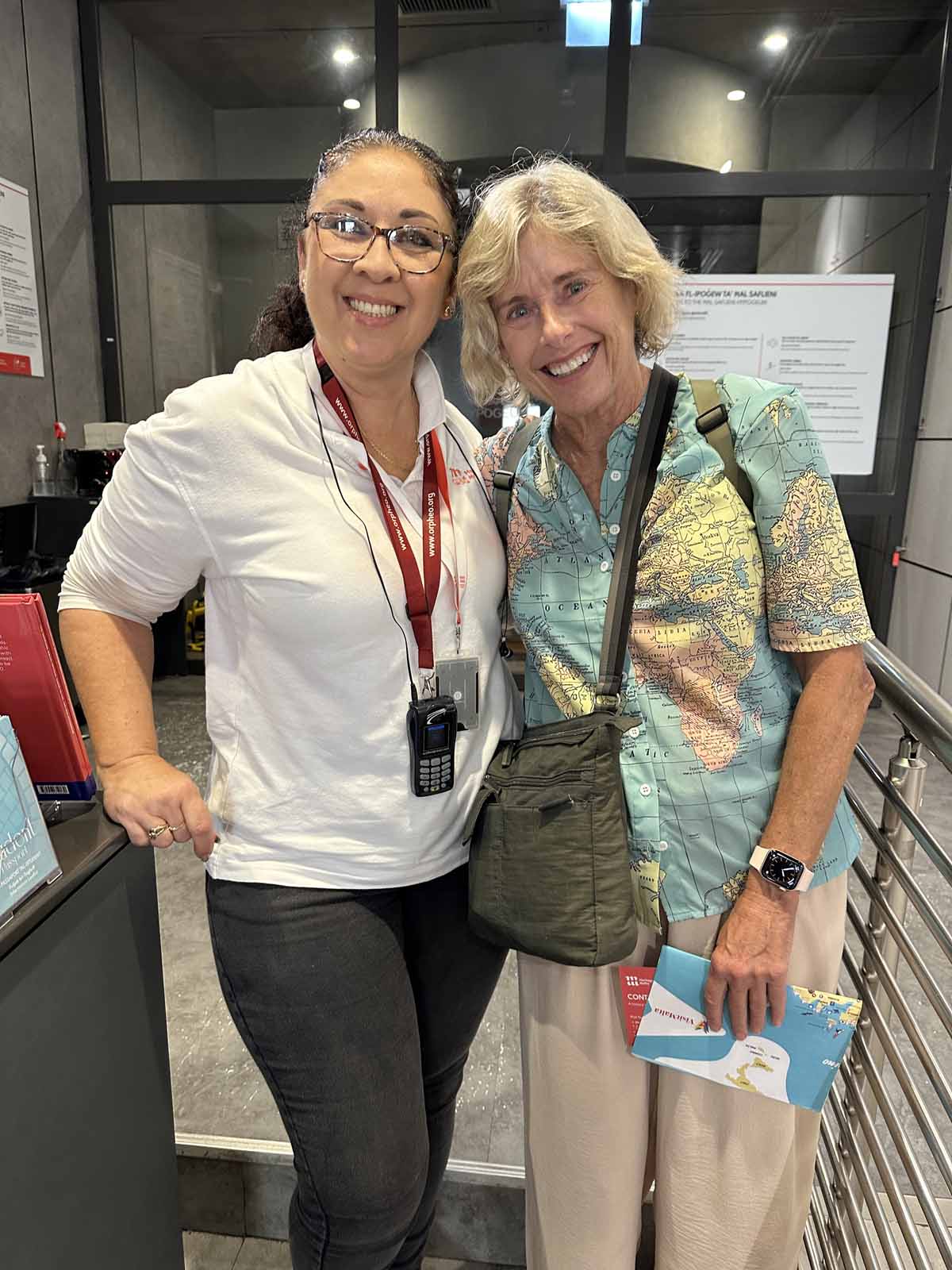 Around 1pm, our group was called forward to show our tickets. We were given booties to wear over our shoes. We needed to put all bags and items in provided lockers – and that included our phones & cameras as no photography is allowed! (So that means that all Hypogeum photos below are from the Heritage Malta website).
Starting the tour with our guide, we entered a big room to watch an informative audiovisual presentation. Plus, we each received an audio guide. The well-organized tour then took us to each of the 3 levels of the Hypogeum site along specific walkways with lighting being turned on for each section that we were visiting.
Under her watchful eye, our guide would lead us to the next tour point where we listened to the audio narration. Overall, the tour was very cool with a real sense of eerie mystery as we descended into each underground level with its dim lighting.
1st Level
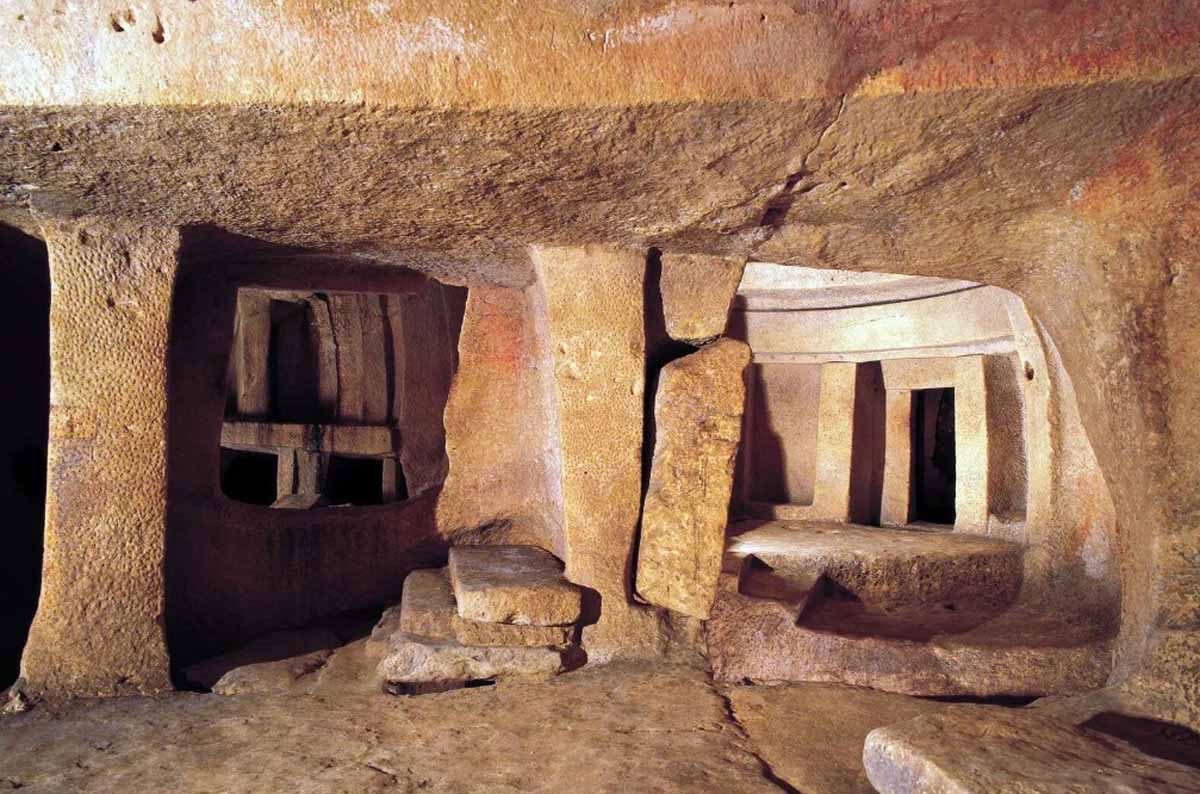
We began the tour on the first (and oldest) level. This upper level consists of a central passage with simple cave-like burial chambers on each side. An intact entrance trilithon (two upright megaliths with another laid on top) created a gateway into the underground realm.
2nd Level
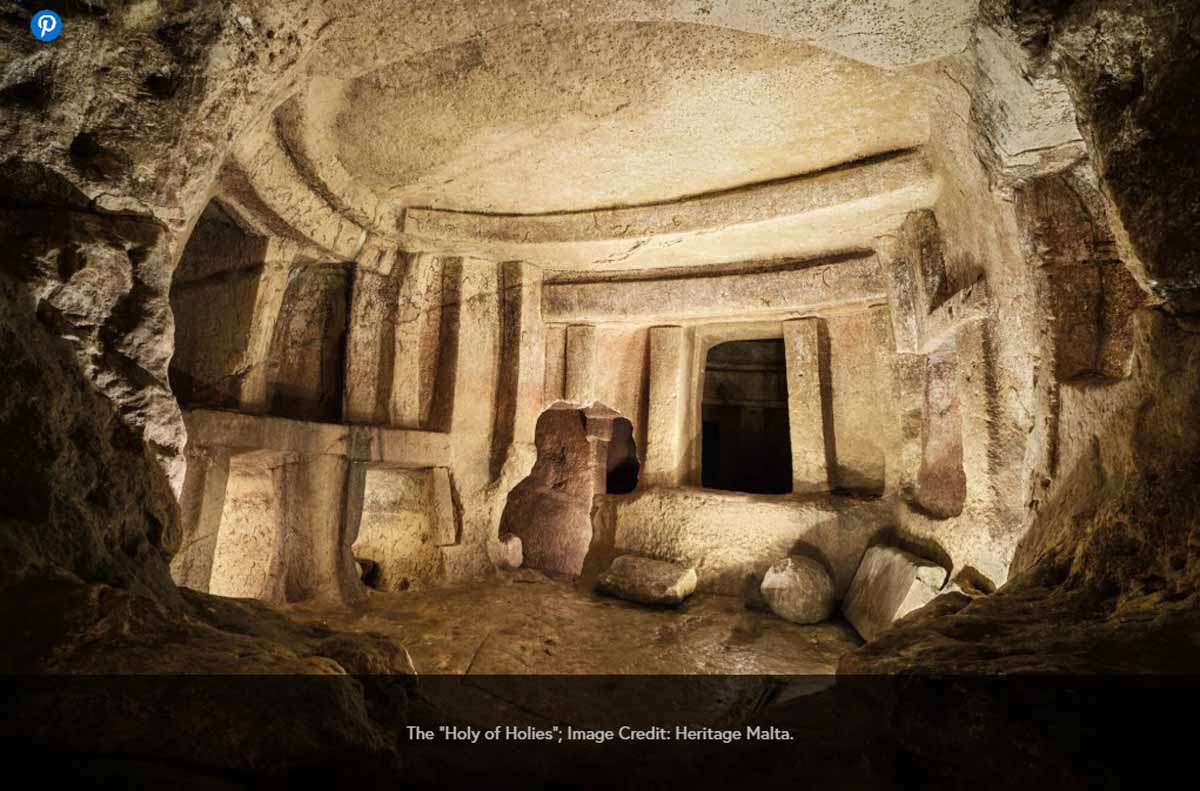
The 2nd or middle level is the most decorated, with rooms replicating features seen in above-ground megalithic temples. Archeologists believe this level is where the funerary processions began.
This level includes the “Oracle Room” which is painted with intricate red ochre motifs (spirals, spots and honeycombs) on the walls and ceiling. (below right) This perhaps represented the Neolithic people’s worldview of cyclical continuity. In addition, there is a painted tree on the roof believed to symbolize the tree of life.
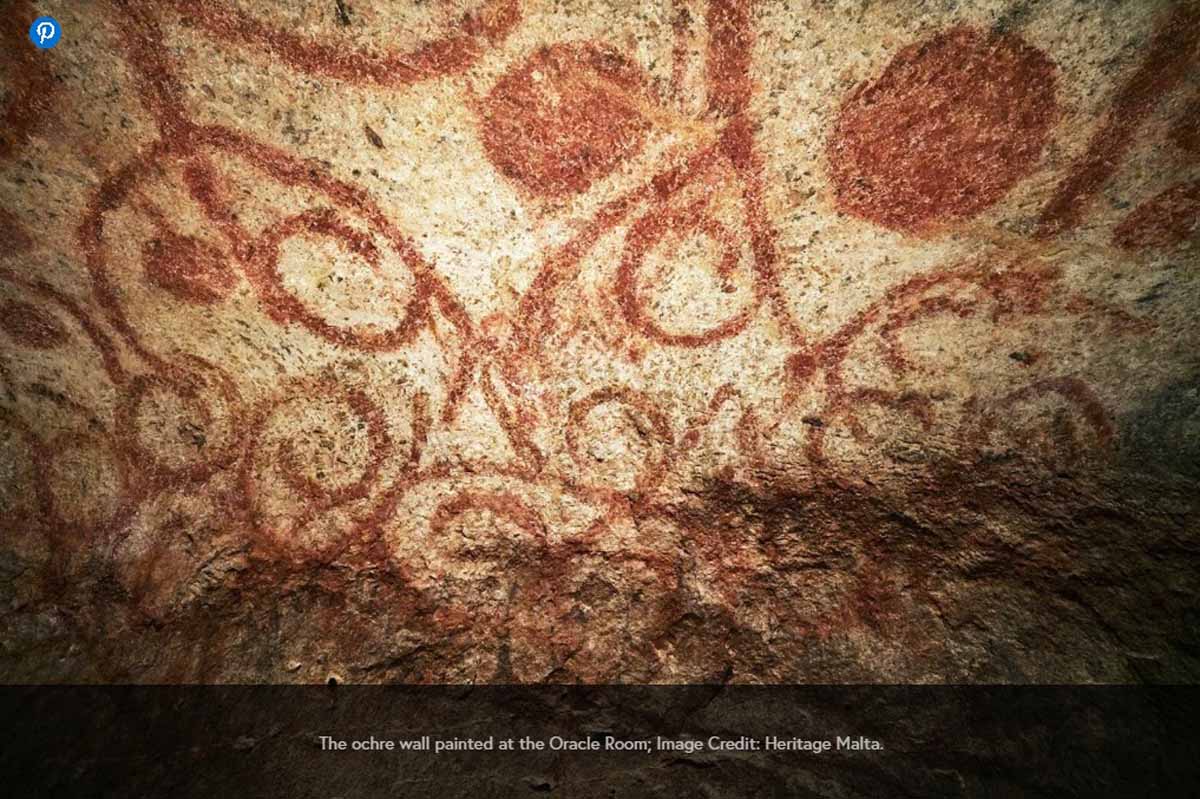
The Oracle Room was so named because of a small niche that has remarkable acoustic properties which amplify the voice. It may have been used for ceremonial chanting or rituals by the priests.
A small, carefully carved room located deep within the complex (still on the middle level), and set apart from the more accessible areas, has become known as the Holy of Holies. The purpose of the room remains a mystery, as no bones were recovered during excavations. It may have been used for ceremonial or ritual purposes. (above left)

“The Sleeping Lady” Figurine
The Sleeping Lady
Here, in the main chamber of the second level, the “Sleeping Lady” statuette was found. This delicate, hand-sized figurine of a large woman reclining on her side (on a couch or bed) is carved in great detail. She’s currently housed in the National Museum of Archeology in Valletta.
3rd Level
The third and deepest level lies 10-11 meters (~35 feet) below street level. This youngest level is a complex of smaller spaces, which served as mass graves. As space became limited, the site users had to dig deeper!
The Hypogeum Tours – Over the Years
As mentioned, the Hal Saflieni Hypogeum site was accidentally discovered in 1902 by a stone mason who was laying the foundations to build several houses. By the end of 1903, the site had become public property and its excavation lasted until 1911.
Since opening to the public in 1908, thousands of visitors have flocked to see this internationally renowned pre-historic feat of advanced engineering. The Hypogeum’s underground layout mimics above-ground temples, with carved doorways, curved walls, and acoustic features.
However, to deal with years of increasing damage to the Hypogeum’s delicate environment, the site was closed for several years in the late 1990s to develop a scientific conservation system. In 2000, the Hypogeum reopened under Heritage Malta with the current system of controls. Further upgrades were done in 2016-17.
Thus, we lucky visitors are able to see the Hypogeum under some of the most carefully controlled archaeological conditions in the world! It’s great to know that this amazing site is being well-preserved for many generations of visitors to come. Kudos to Malta!
Hypogeum Tickets / Heritage Malta Website
 You can visit the very good Heritage Malta Hypogeum webpage for more information & to buy tickets. Plus, it offers a good online virtual tour.
As you’ve read, visitor numbers are greatly restricted – just 80 tickets are available each day. So, it is strongly recommended that you book tickets well in advance (many weeks to a few months).
The website also states: Last-minute tickets might be available and can only be purchased one day before the visit on a first-come, first-served basis. [FYI: These tickets cost more (around €50) than the other tickets).
About Neolithic Malta – If You’d Like to Know More
(Credit to The Rough Guide – Malta & Gozo)
Malta’s Neolithic community, which blossomed from 5000-2500 BCE, was the most advanced civilization of its time. Its temples (almost 25 major sites have been discovered so far) are the oldest freestanding man-made structures in the world. And the relics within are more artistically sophisticated than anything found anywhere else of the same period.
Yet Neolithic Malta remains shrouded in mystery. Around 2500 BCE, this temple-building culture suddenly disappeared! No one knows exactly why – possible causes include environmental stress, resource depletion, disease, or social changes.
#3 – Day Trip to Mdina
A visit to Mdina, Malta’s ancient capital, is another perfect day trip from Valletta. Mdina is small, easily walkable & mostly pedestrian, with a distinct sense of peace and calm. It’s quite the contrast to the hustle and bustle of Valletta (and other parts of Malta).
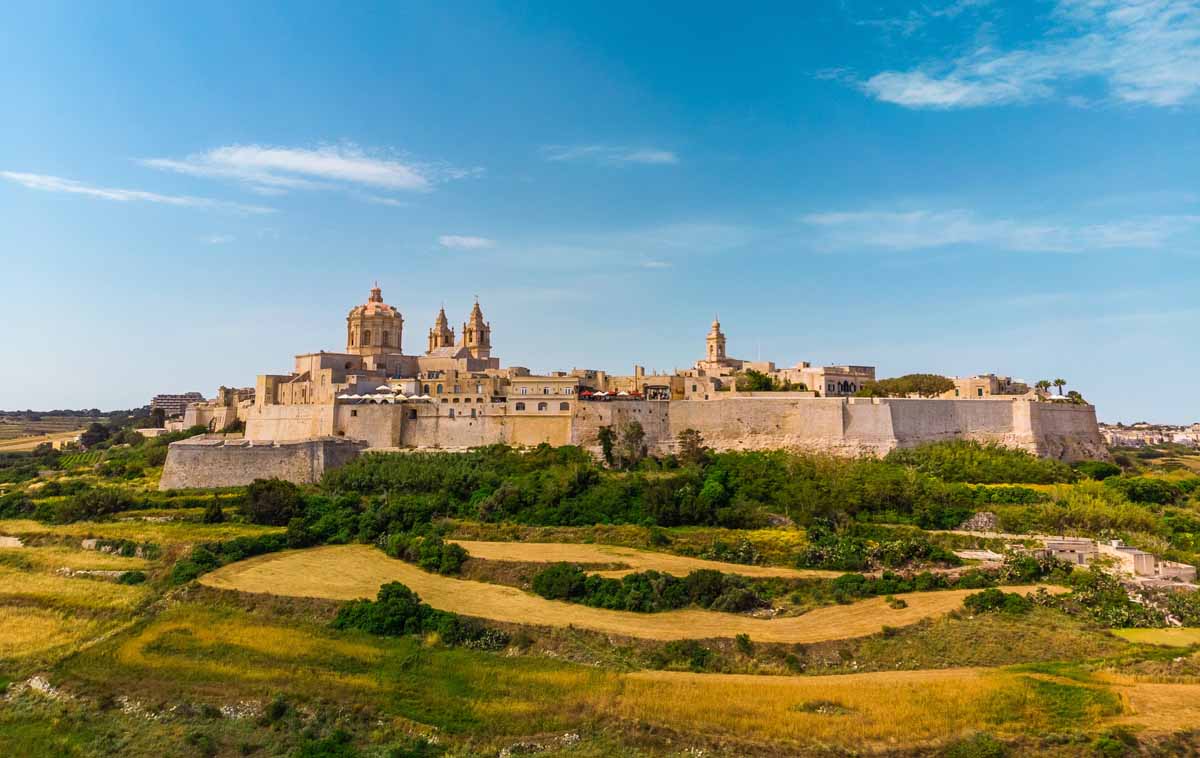
View of the ancient walled city of Mdina / Credit: DepositPhotos
Often called “The Silent City,” Mdina was Malta’s capital until 1571 when it moved to Valletta. Sitting on a hilltop in central Malta, it offers lovely views over much of the island from its bastions. In fact, Mdina remains one of Europe’s best-preserved examples of a walled city.
This historic old city (with only around 300 current residents) is known for its medieval & baroque architecture, beautiful limestone buildings, narrow winding streets, quiet plazas, and a golden ring of fortifications.
We visited Mdina on a Saturday afternoon, once again taking a public bus from Valletta. It was about an hour ride there – it’s not that far, but there was heavy traffic getting out of Valletta. From the bus stop, it’s a short walk to Mdina’s entrance.
Main Gate / Magisterial Palace
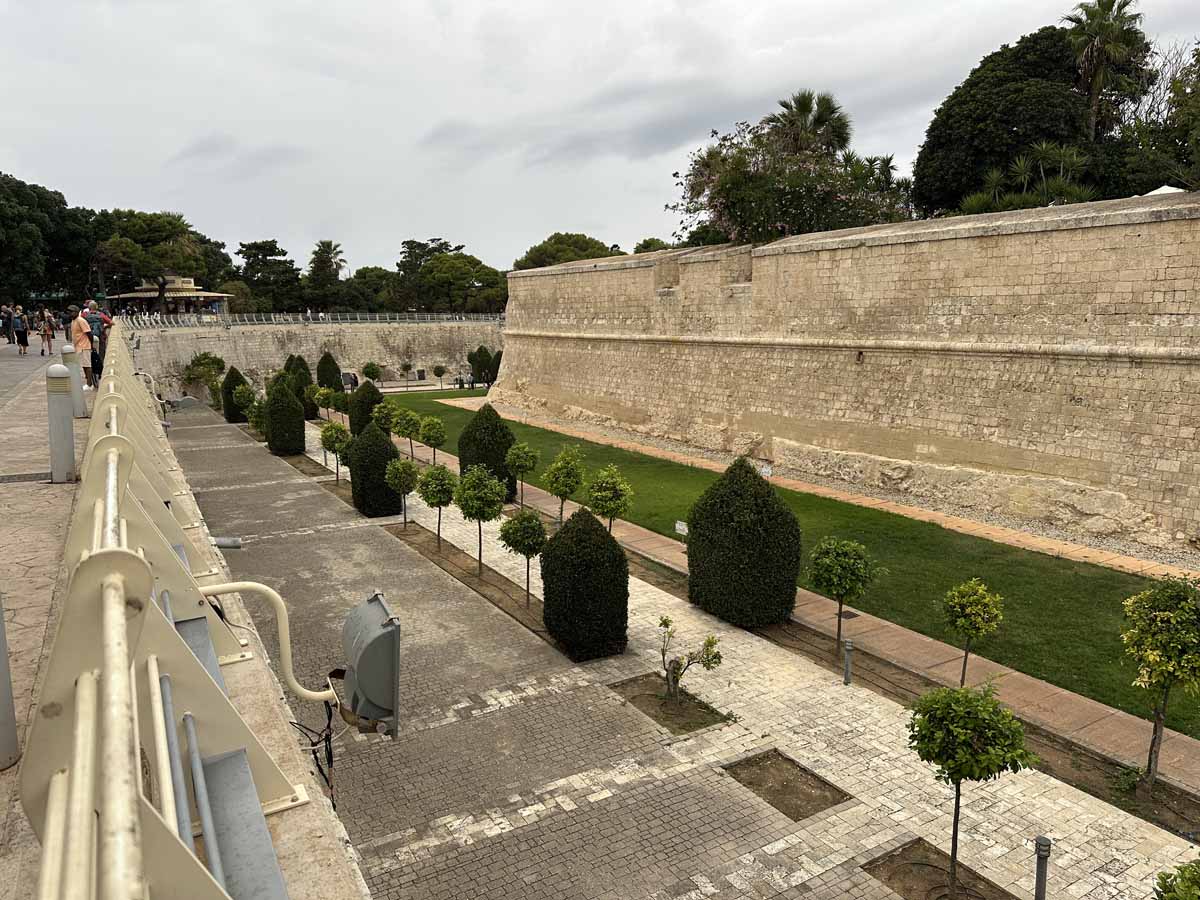
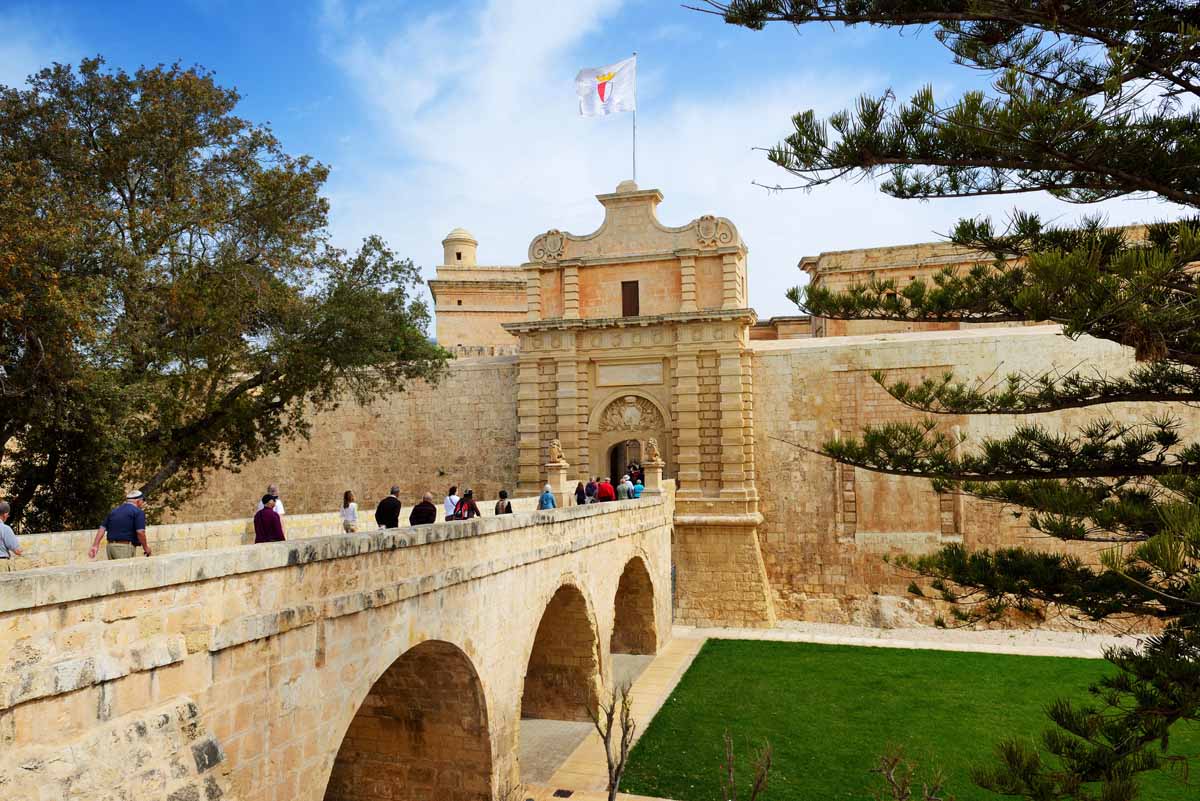
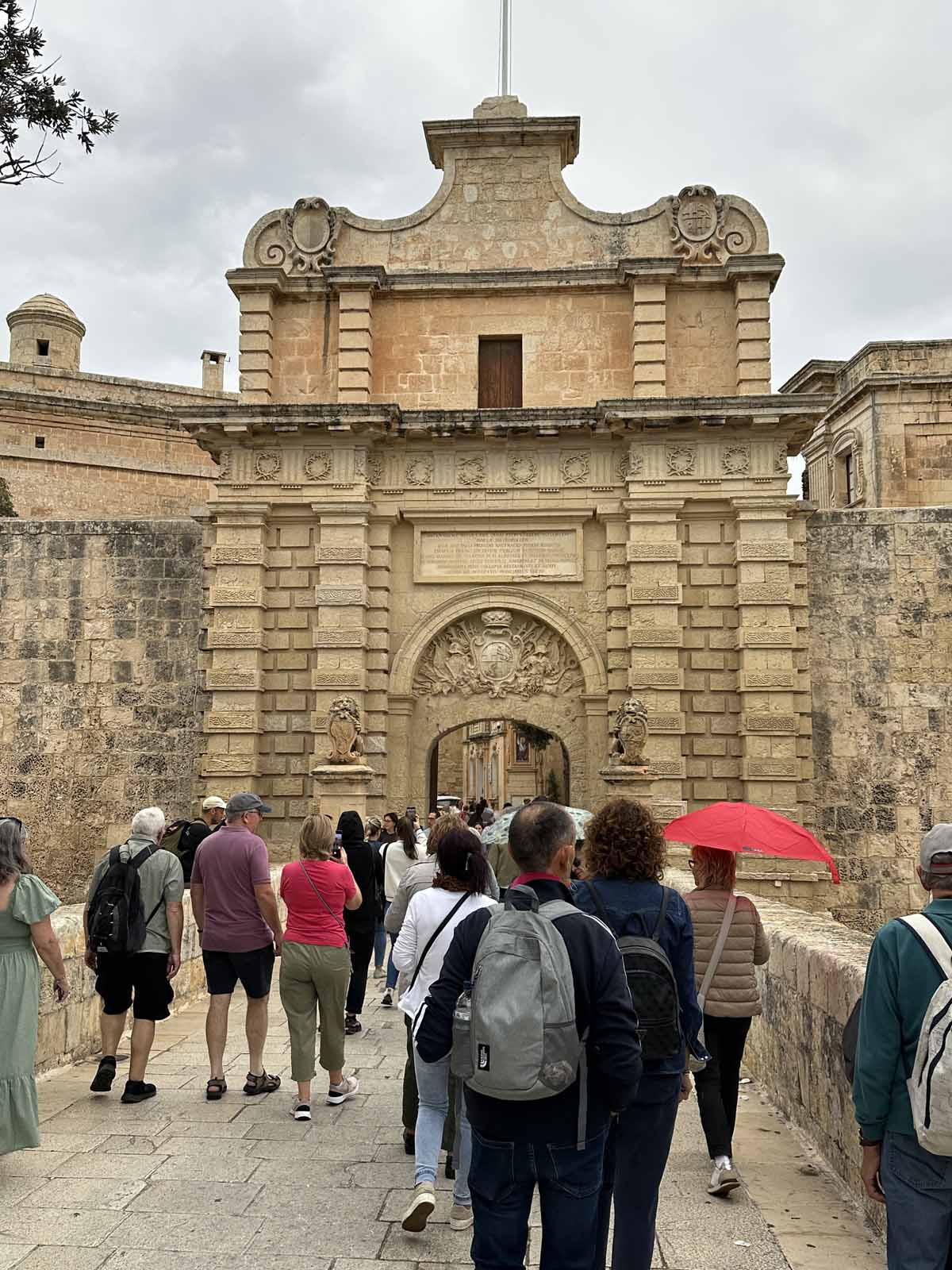
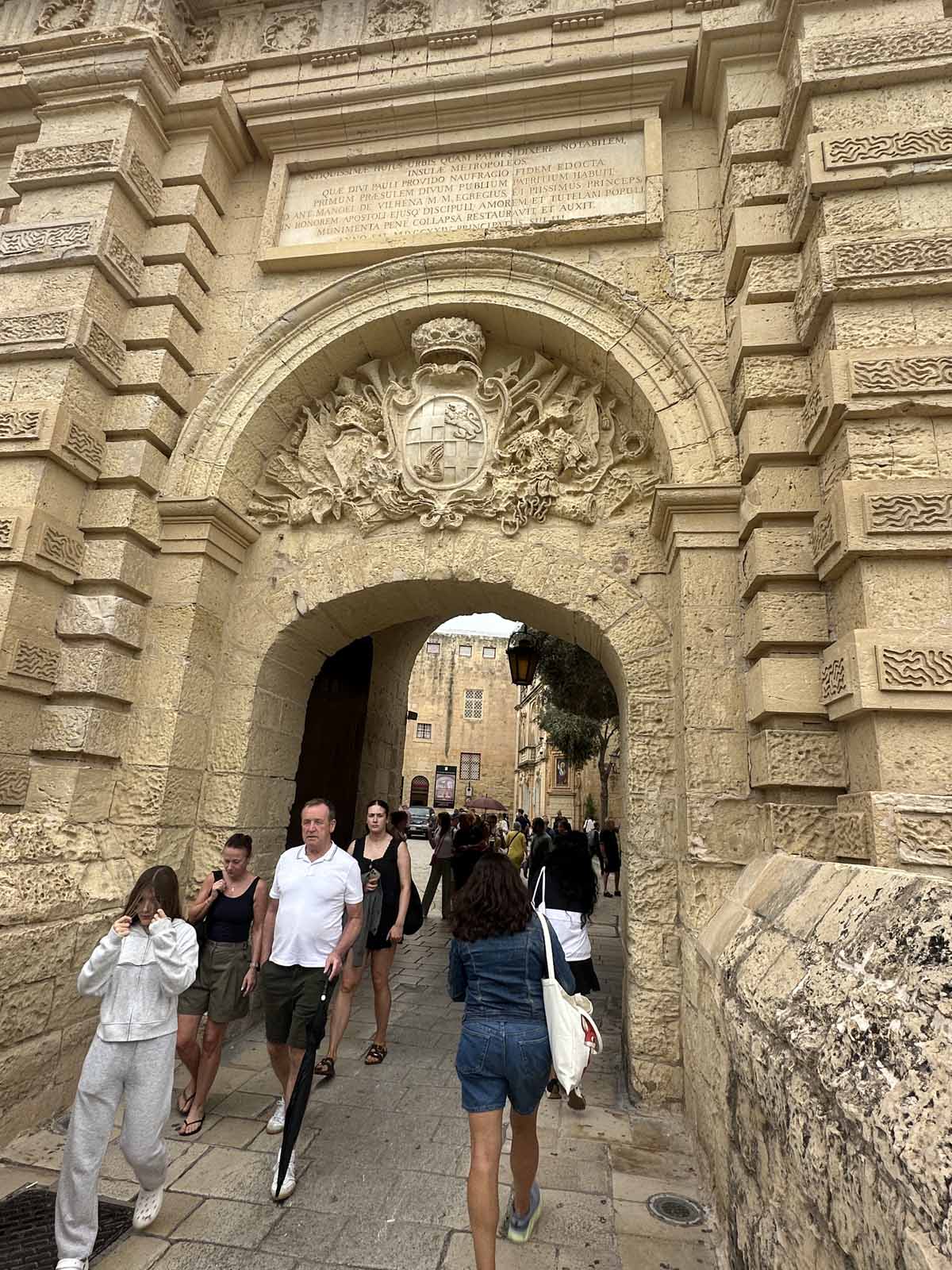
Everyone enters Mdina through the Main Gate. This grand gate was built in 1724 by the Knights of St. John in their beloved Baroque style. (see my blog post #1 on Valletta for more about the Knights). Below the gate, you can see a large dry moat, which was recently turned into a pretty public park.
-

- Credit: DepositPhotos
It started to rain as we joined the small parade of people entering Mdina. Quite a few people in horse-drawn carriages rode by us on the main street running through town. Certainly, these tourist rides are not really necessary for exploring this small town.
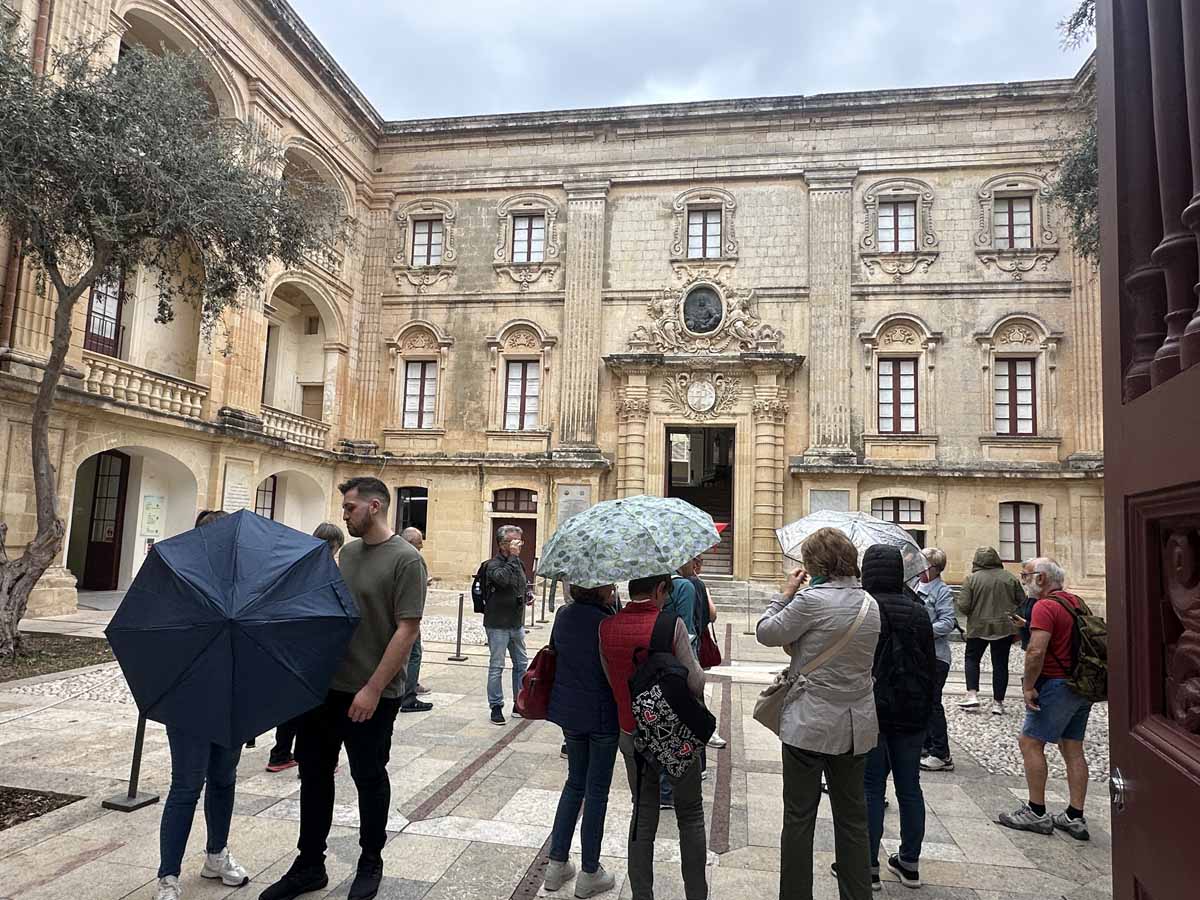
We passed by the Magisterial Palace with its beautiful façade. (below right) It was also built in 1724 for the Knights’ Grand Master, who liked to spend his summers here. It now houses the Museum of Natural History. We did not go inside, as my guidebook was lukewarm about the museum itself.
-
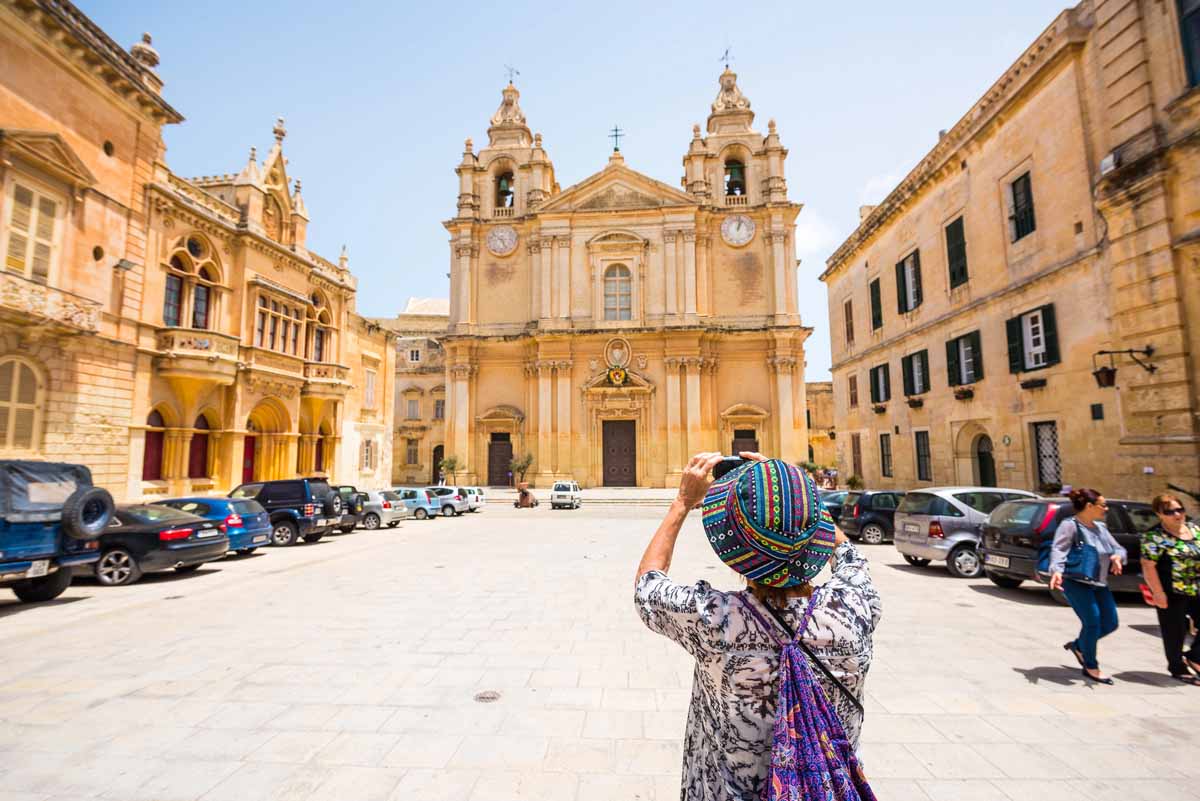
- Cathedral Plaza (above) / Credit: DepositPhotos / Photo to Right: The Magisterial Palace
St. Paul’s Cathedral
However, a visit to this beautiful cathedral is one of the highlights of a visit to Mdina. St. Paul’s Cathedral is located on the town’s large main square. (above left) First, you must buy a ticket at the Cathedral Museum, an imposing baroque palace which sits just across the street.
-

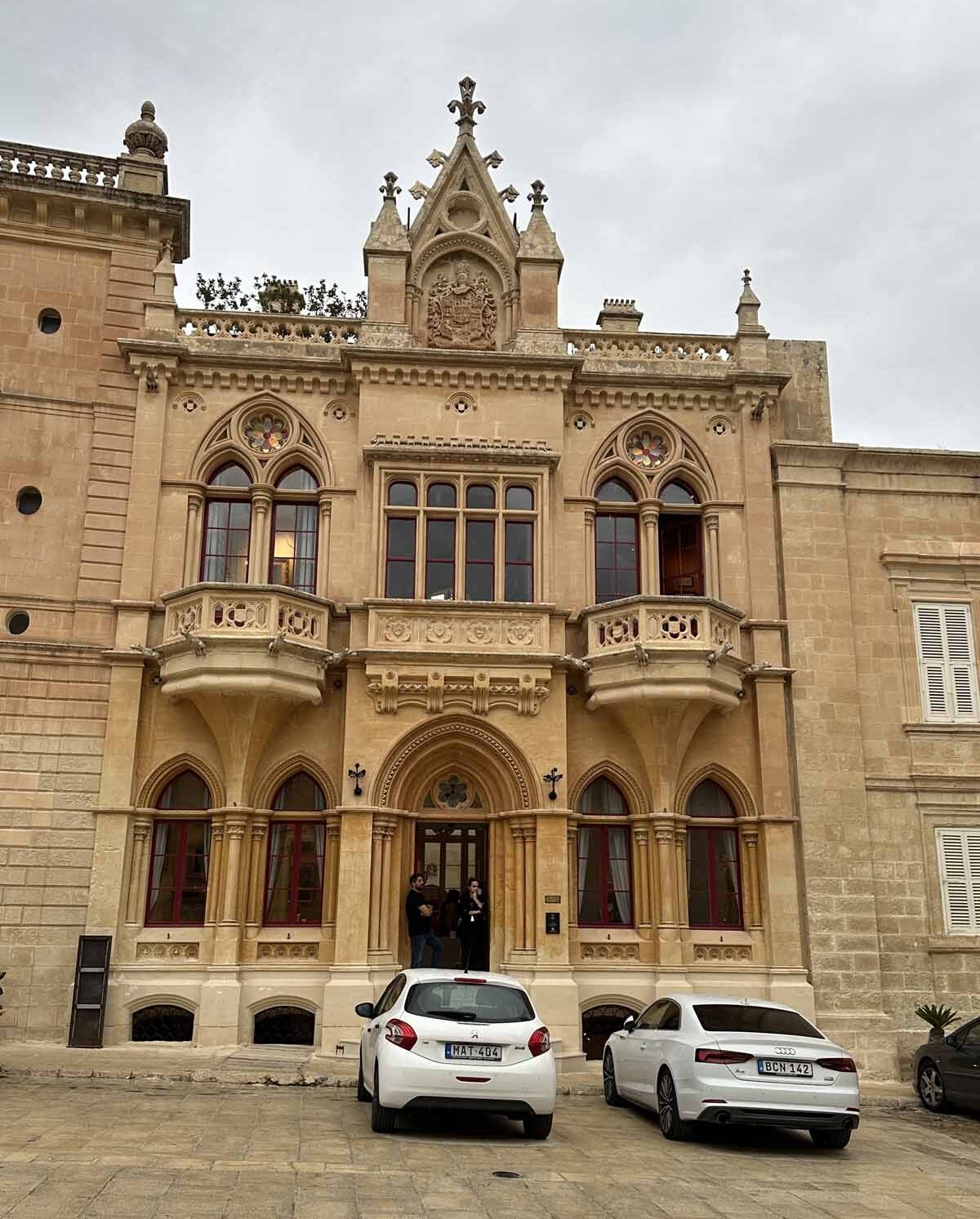
- Beautiful building on the Plaza
-

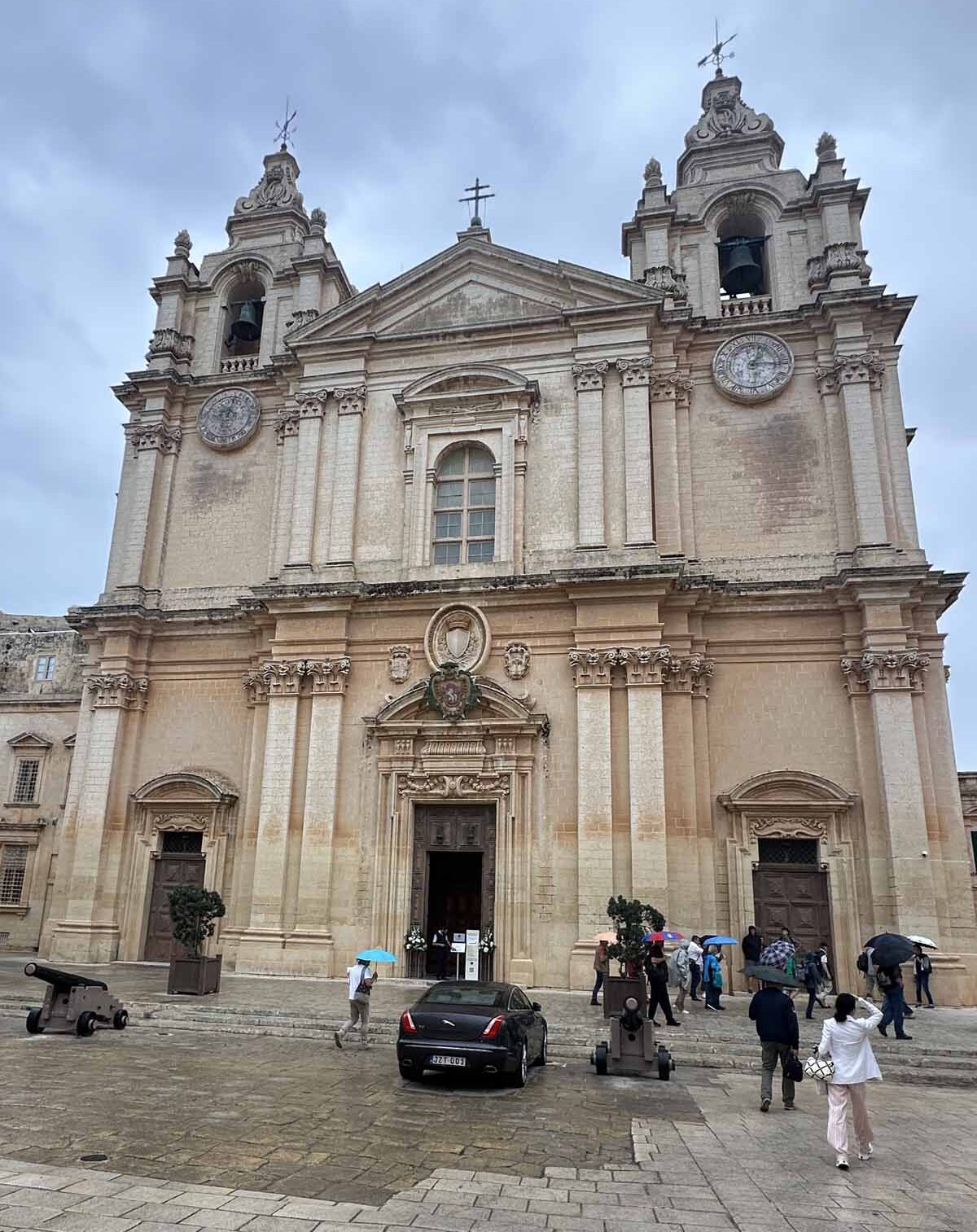
- Entrance to St. Paul’s Cathedral
The cathedral is traditionally believed to sit on the site where Saint Paul the Apostle met the Roman governor Publius of Malta after being shipwrecked on Malta around 60 AD. The early 12th century cathedral collapsed in the major earthquake of 1693. (This 7.4 magnitude quake also devastated Sicily and badly damaged buildings in Valletta).
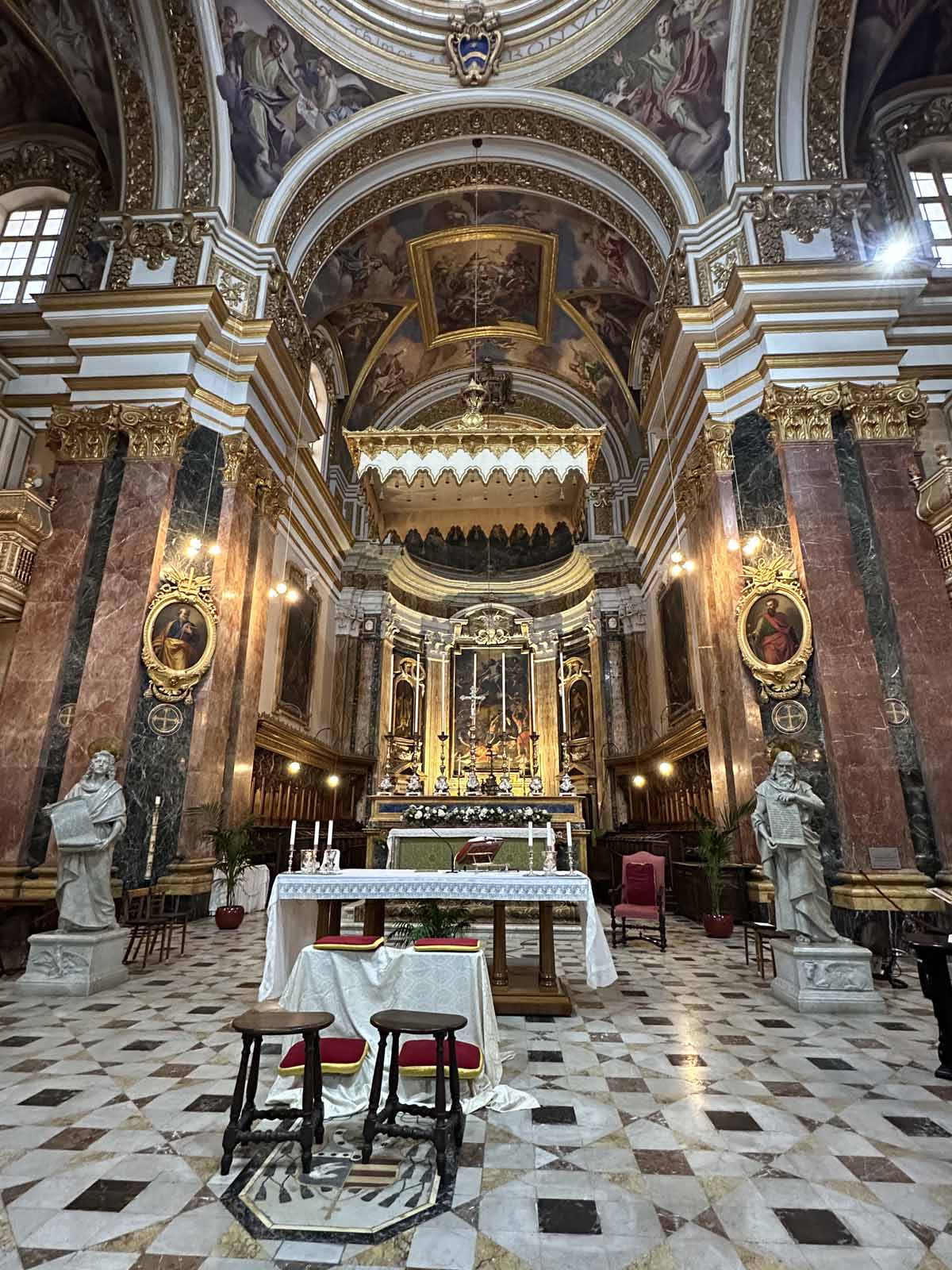

Thus, a larger St. Paul’s Cathedral was rebuilt in the new Baroque style. It is richly decorated, including a painted ceiling depicting scenes from Saint Paul’s life. I particularly loved the marble tombstones that patchwork the floor of the church nave. (photos below)
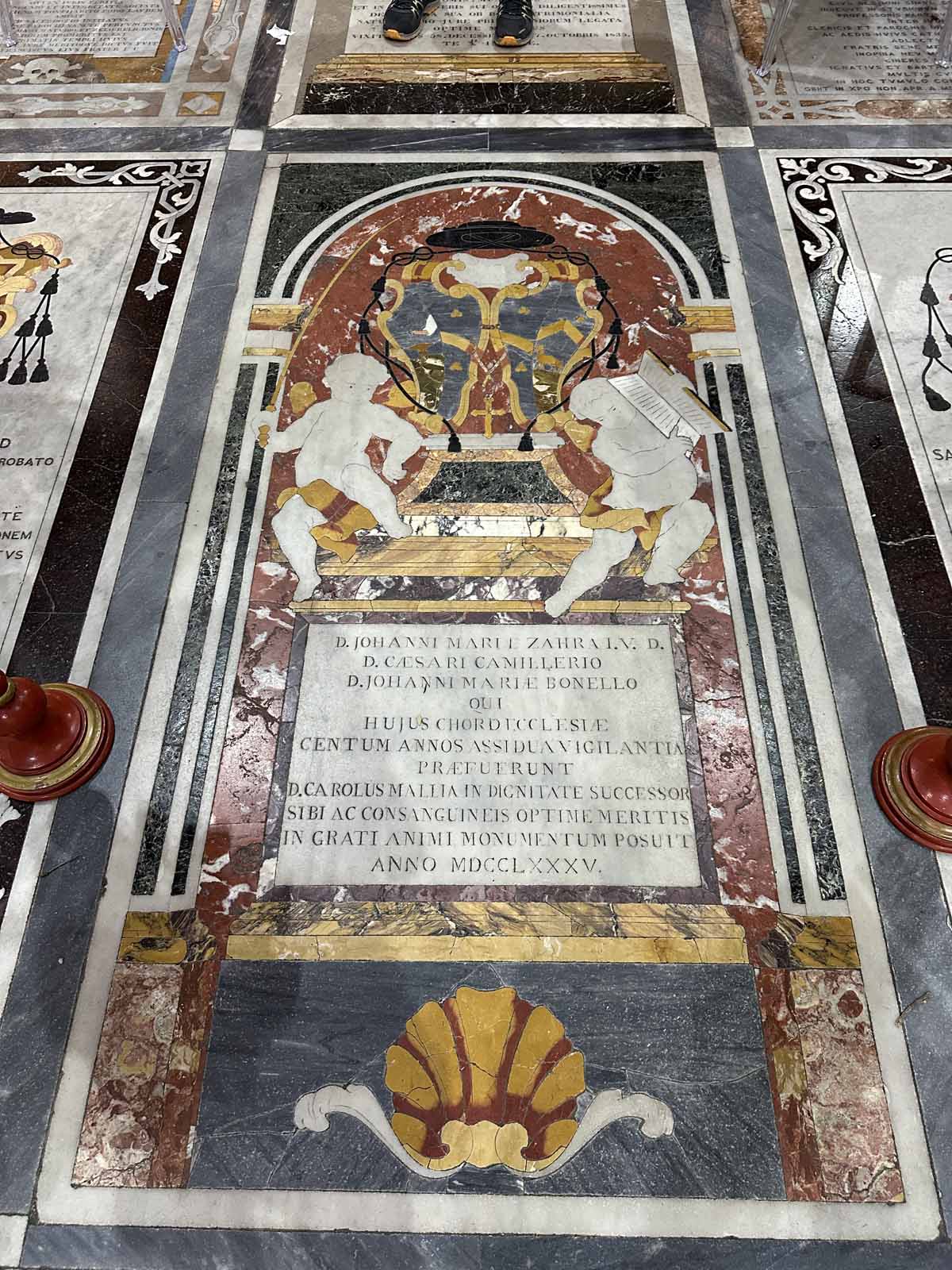
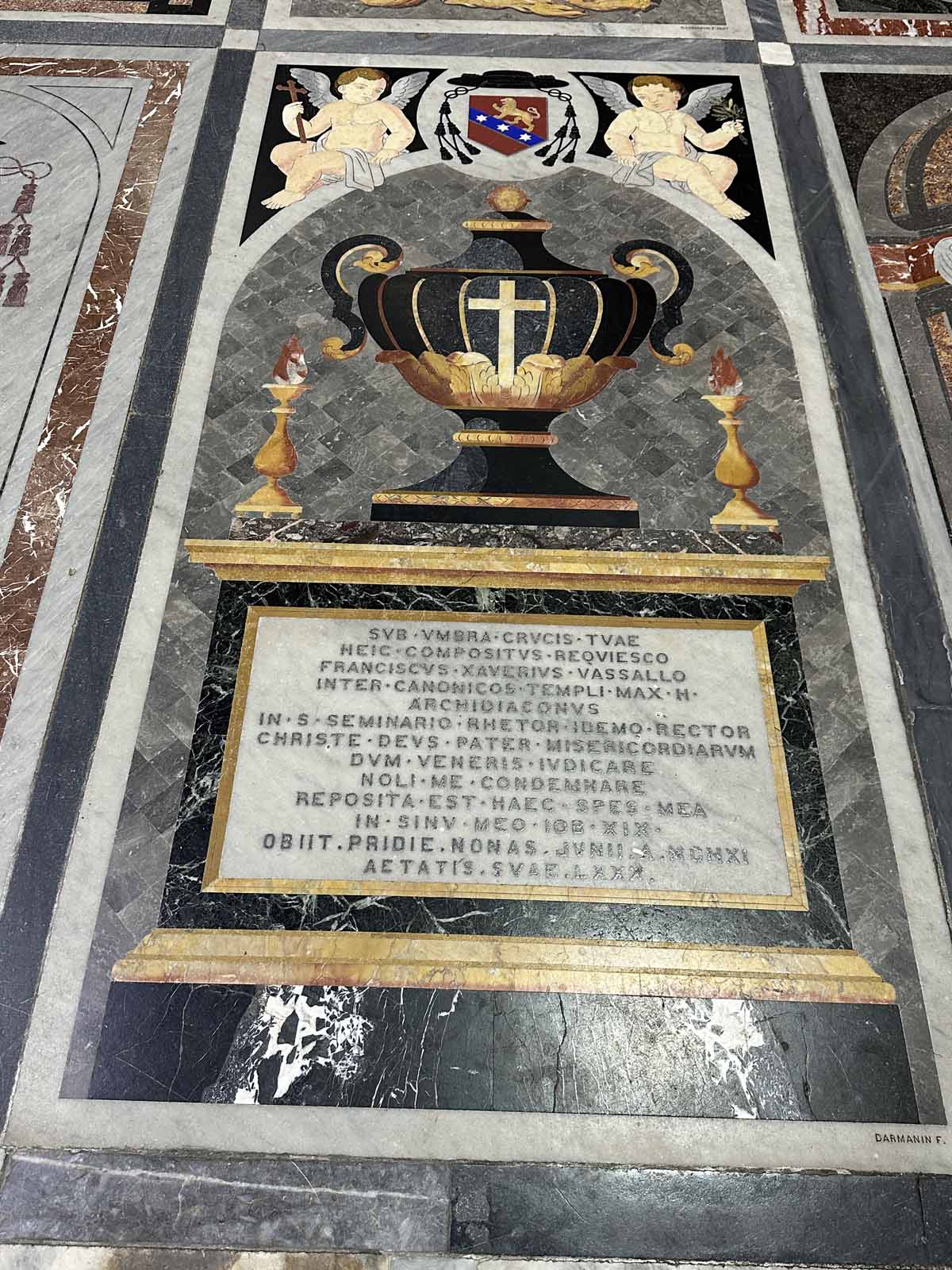
These inlaid tomb slabs (around 300 of them) mark the graves of venerated clerics and layman from Malta’s ancient noble families. In reality, most of the tombstones belong to churchmen, including bishops and canons.
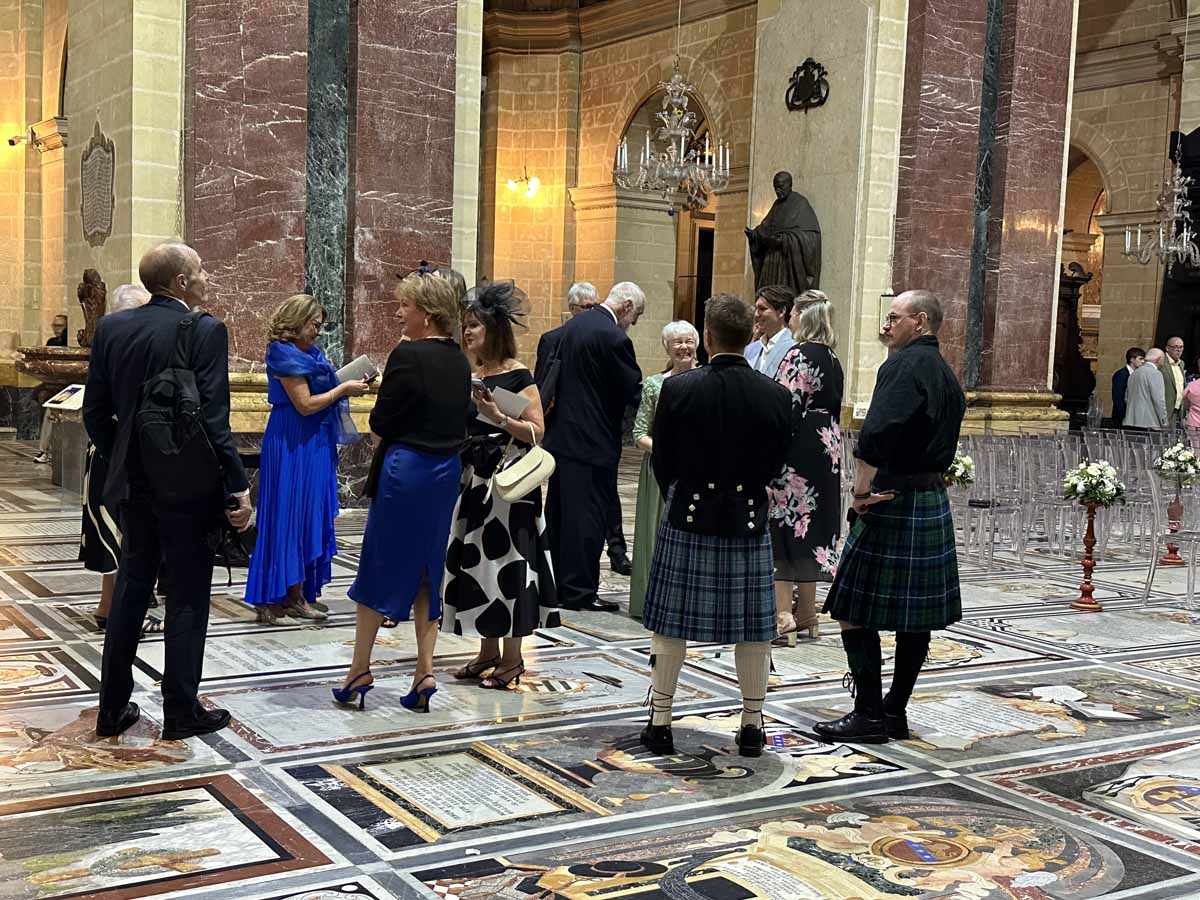
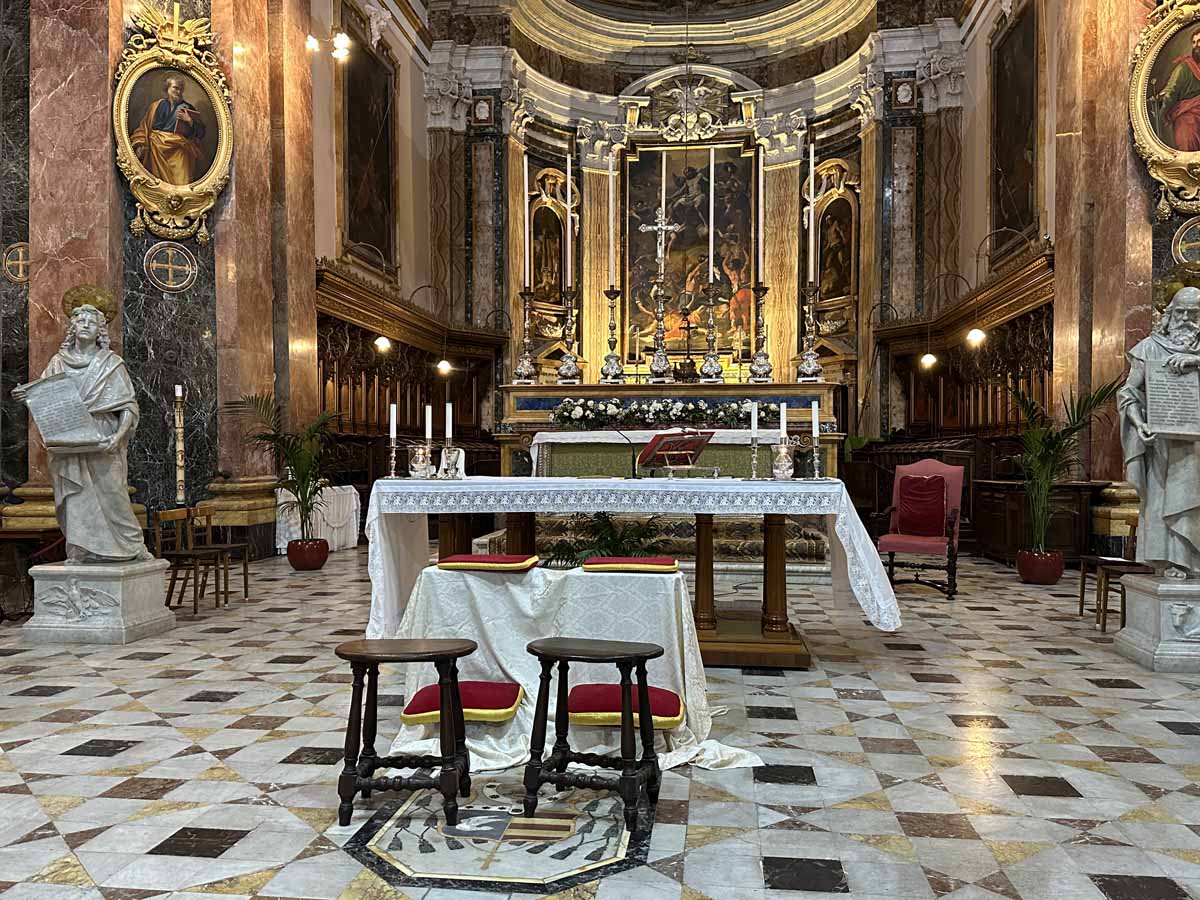
We spent half an hour exploring inside the Cathedral, as they were finishing setting up for a wedding and we had to get out soon. In fact, some of the guests were starting to arrive – and dressed much nicer than us tourists! (above left)
Fontanella Tea Garden
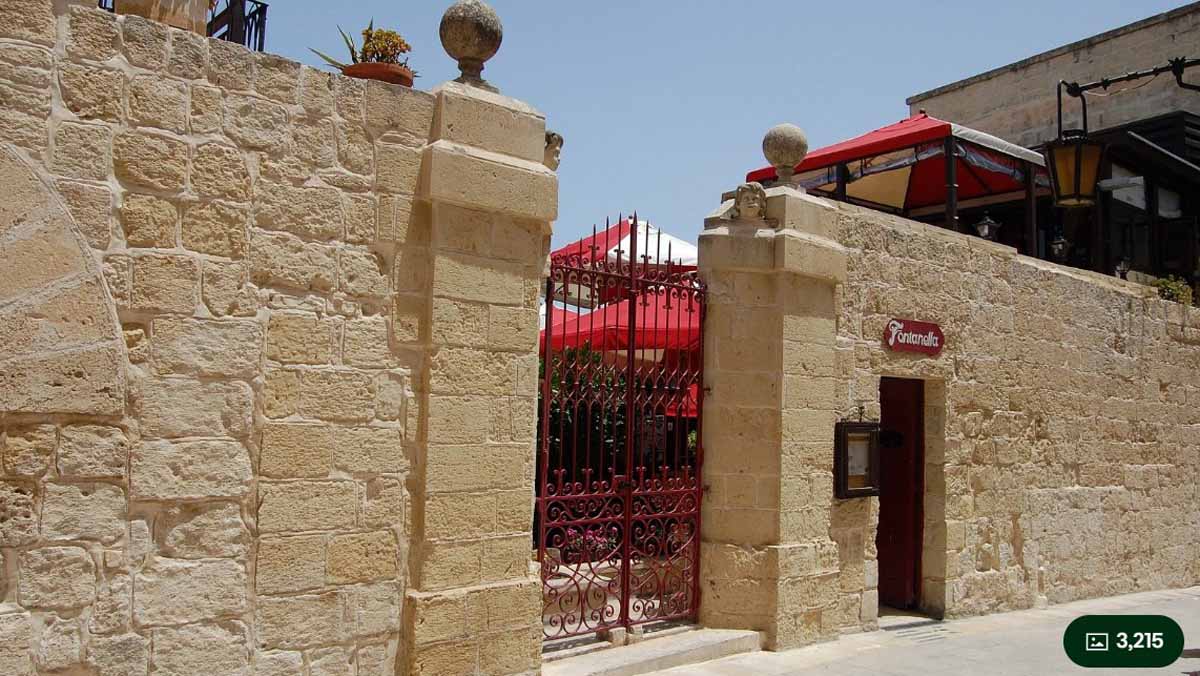
Photo Credit: TripAdvisor
We made a stop around 4pm at the beloved Fontanella Tea Garden. It was clearly time to enjoy a late lunch along with the chance to get out of the rain. Despite the weather, the place was hopping! Fontanella is a must visit when in Mdina – both for its food and its views.
Fontanella sits right on Mdina’s fortified walls & bastions. This garden cafe offers multiple terraces at different levels, including both indoor and outdoor seating. We were seated on one of the upstairs terraces in a covered area. On a non-rainy day, I’m sure it offers great views of the Maltese countryside.
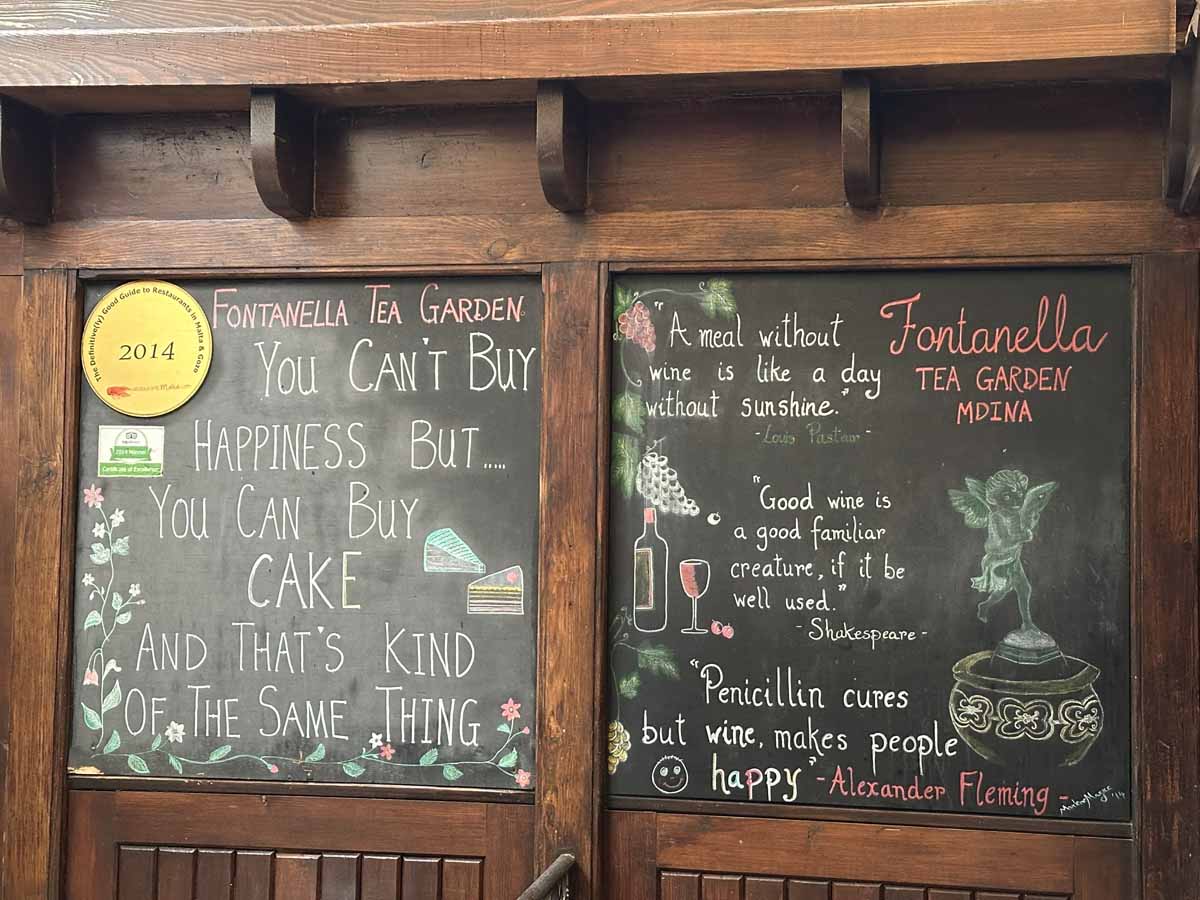
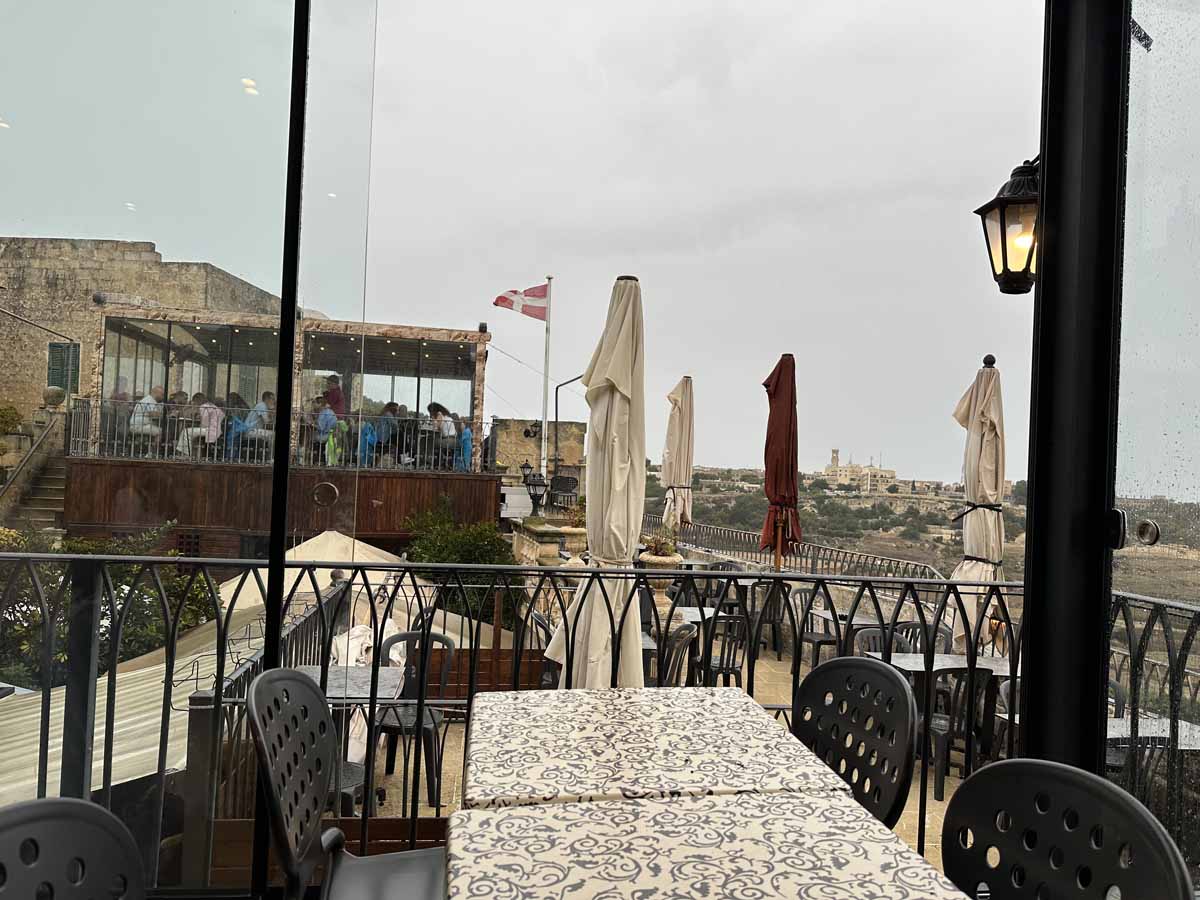
Fontanella is famed for its homemade cakes and desserts. Many of these recipes have been around since the café started in the 1970s, and everything is made fresh daily. They also offer light lunches, such as wraps and salads, plus coffee and tea.
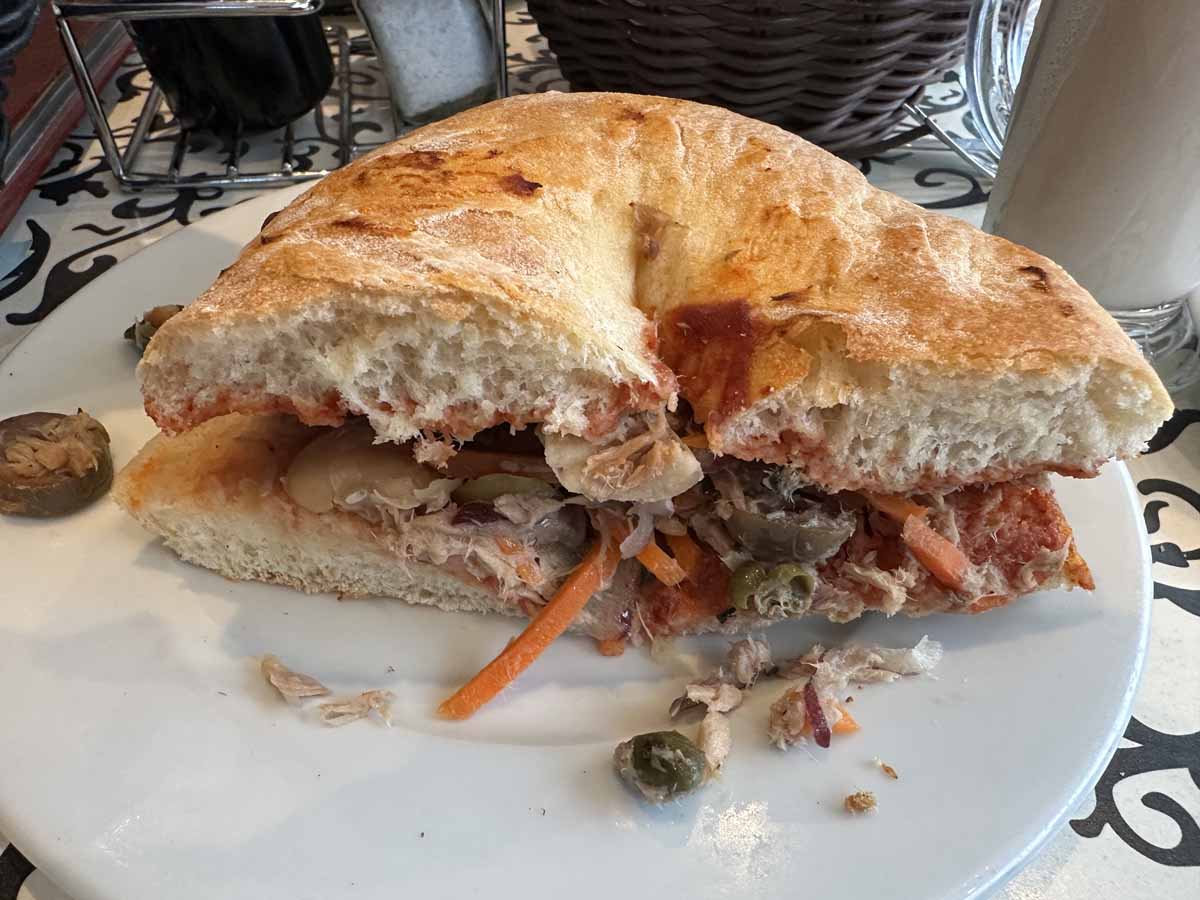
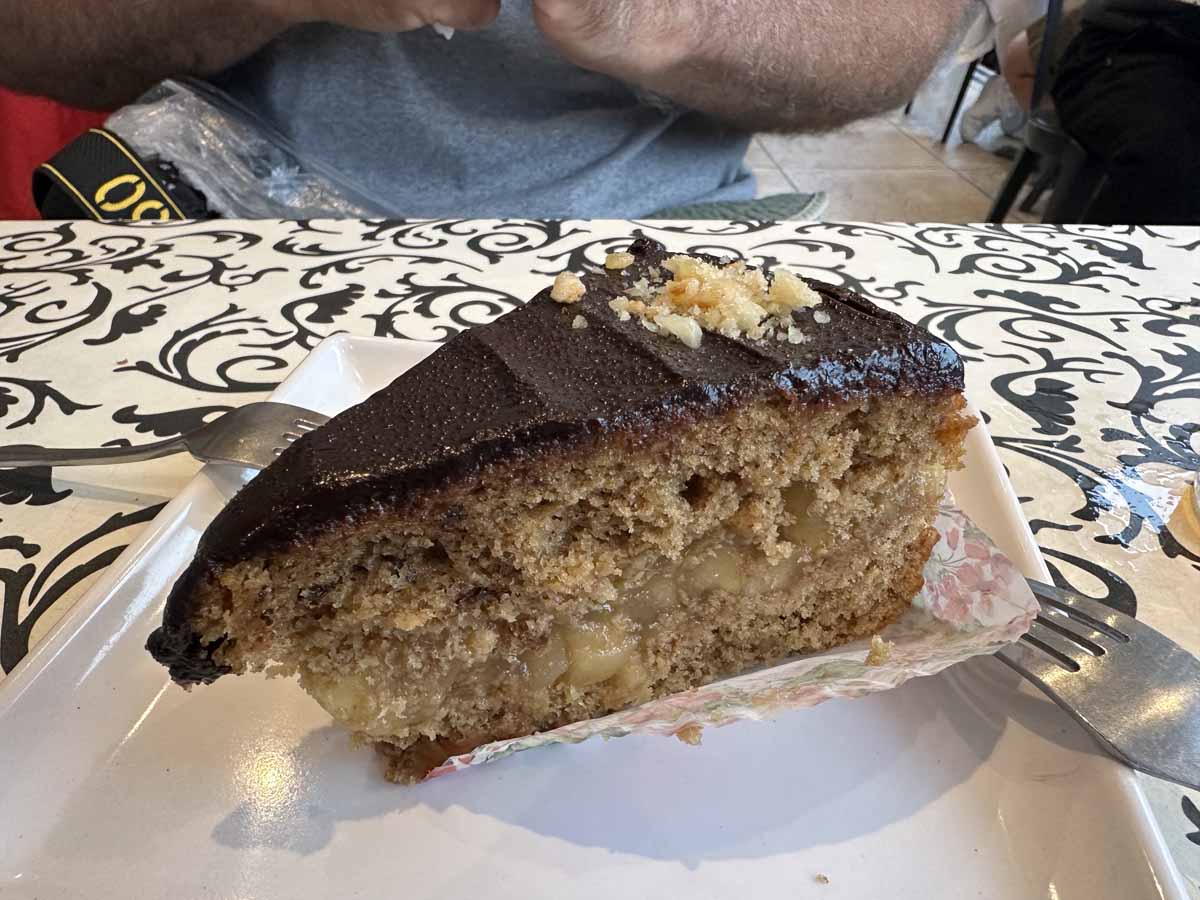
We ordered two different sandwiches made with ftira, a traditional Maltese bread. Of course, we followed with a dessert. Jack & I split one apple & hazelnut cake with a thick chocolate topping. Yum!
Final Touring of Mdina’s Peaceful Lanes
With our bellies filled and our bodies a bit warmer, we ventured back outside in the sprinkles to walk more of Mdina’s charming back lanes. They were lined with tall honey-colored stone block buildings with wooden doors in a variety of colors. Occasional vines overflowing with red bougainvillea flowers added to the allure.
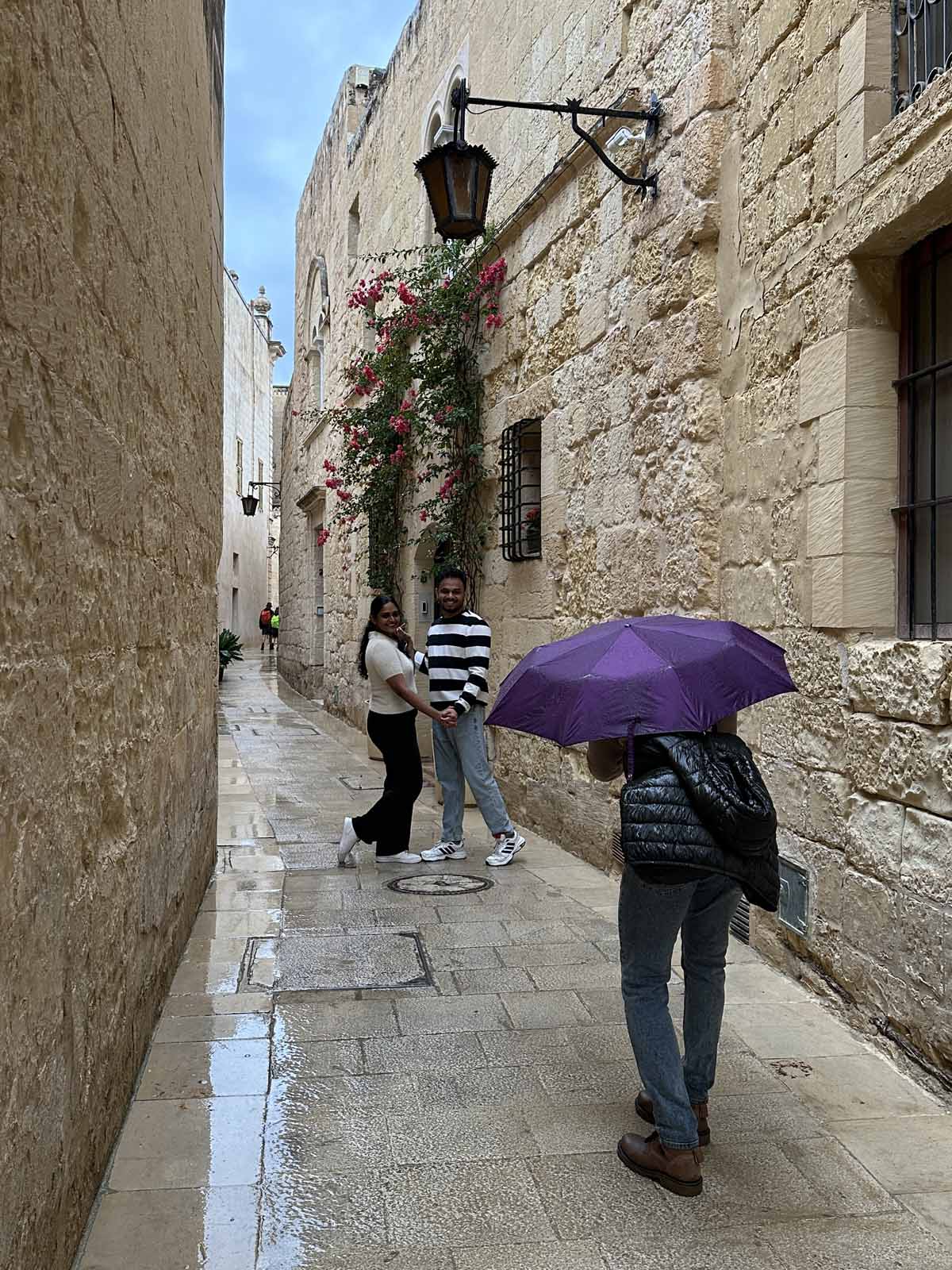
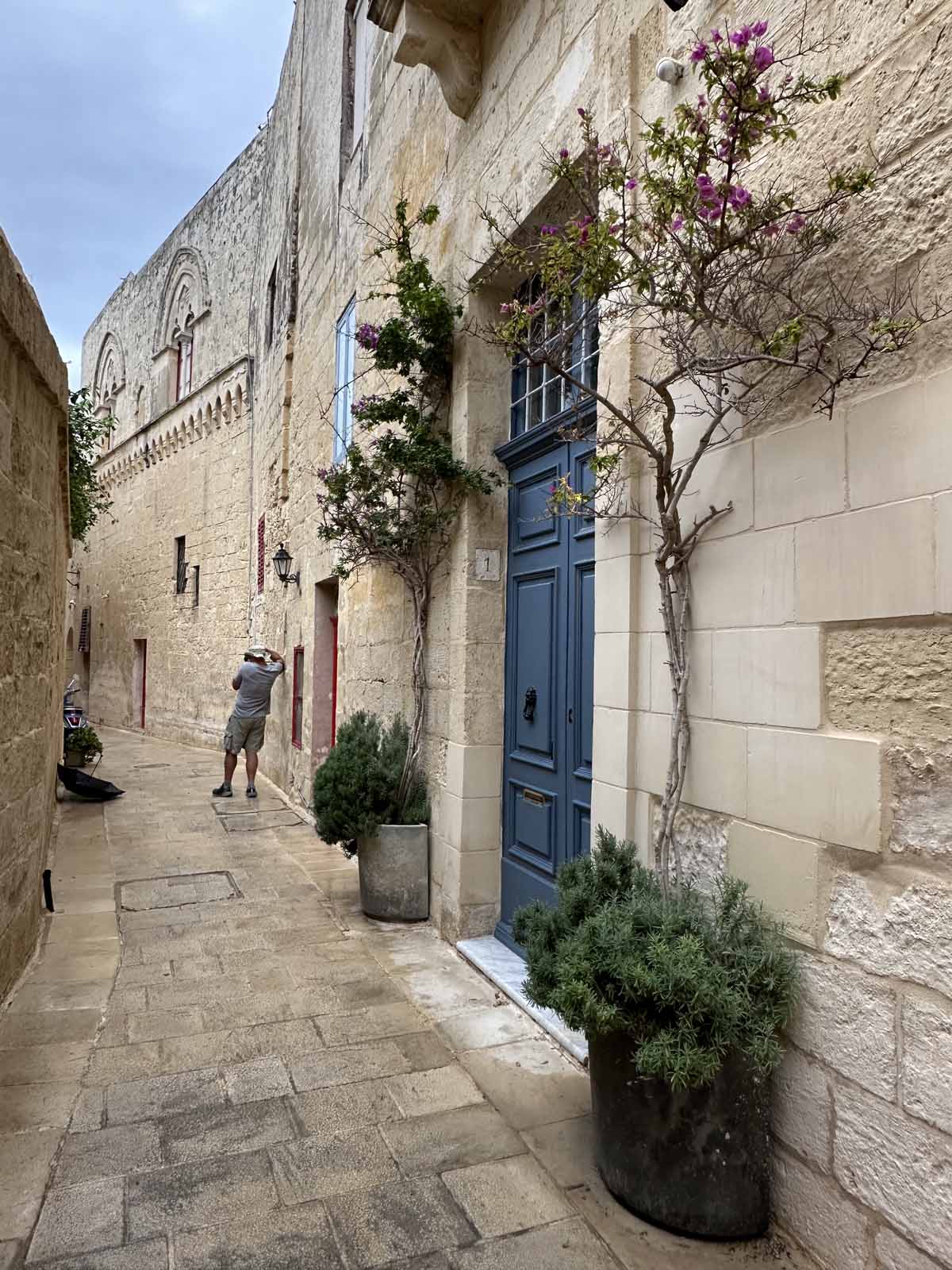
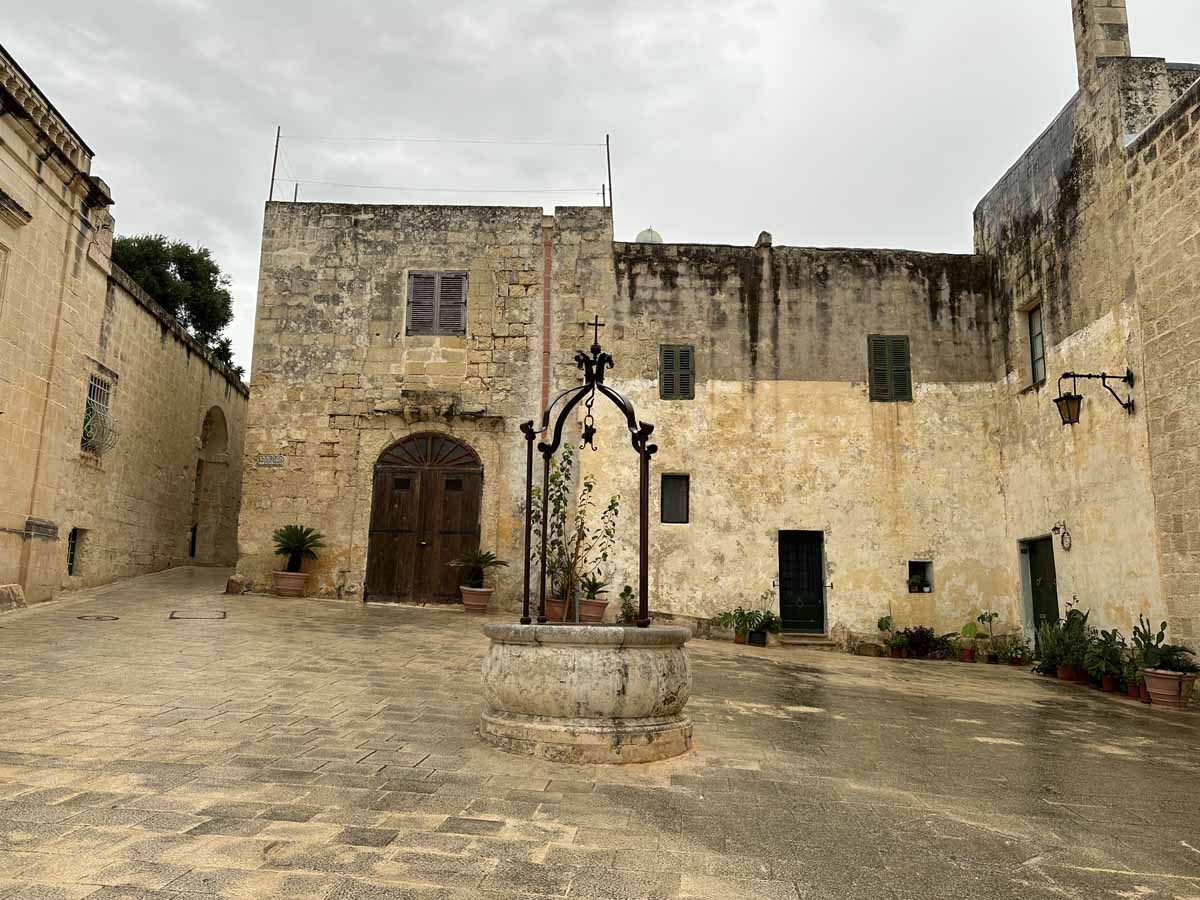
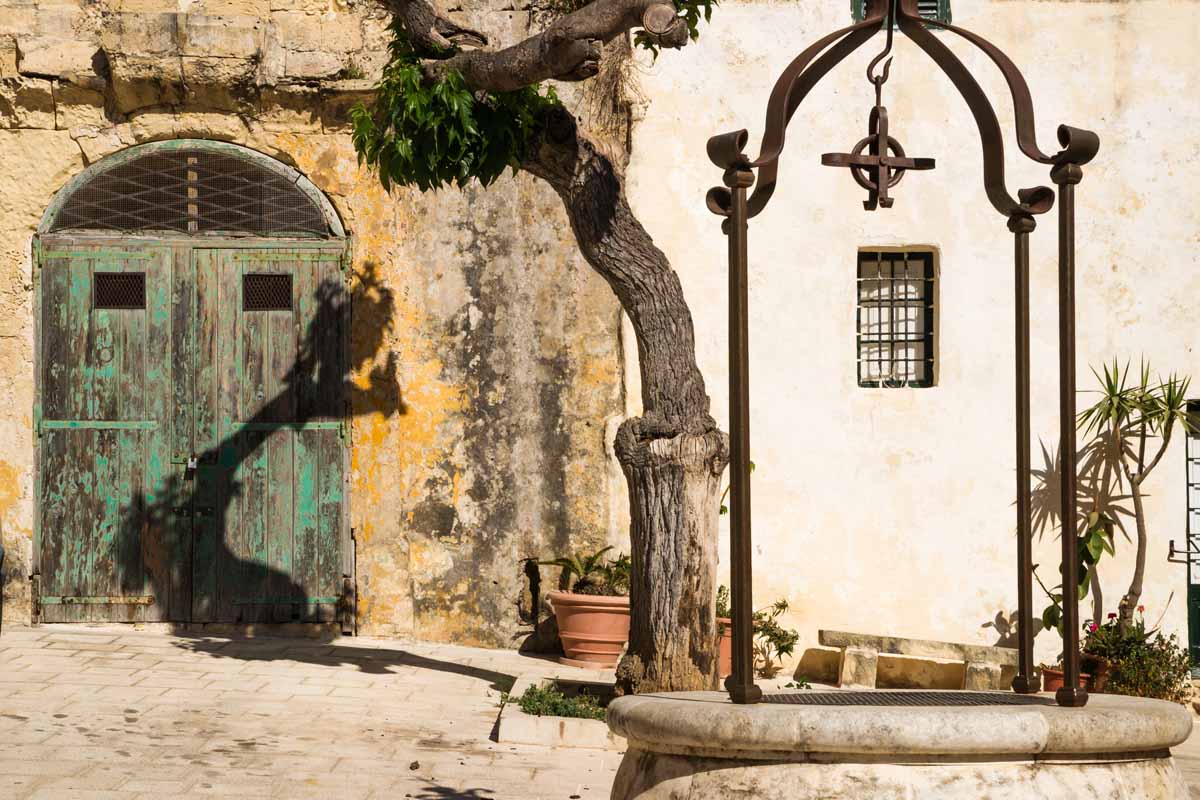
At the end, we happened upon a cool square – Mesquita Square. (photos below) This historic medieval square has what first appears to be a fountain in the middle but is an ancient stone well. It dates back centuries and was once a practical water source for the residents. From there, we headed back to the main street to exit Mdina through the Main Gate.
-
- Credit: DepositPhotos
We returned to Valletta by public bus (this time a 45-minute-ride). We spent a total of 3 hours in Mdina. We could have spent up to an hour more exploring the old lanes if the weather had been better. But we had gotten a very good taste of this lovely, ancient city – another must see in Malta!
#4 – Visit to Gozo – Its Capital Victoria & the Citadel
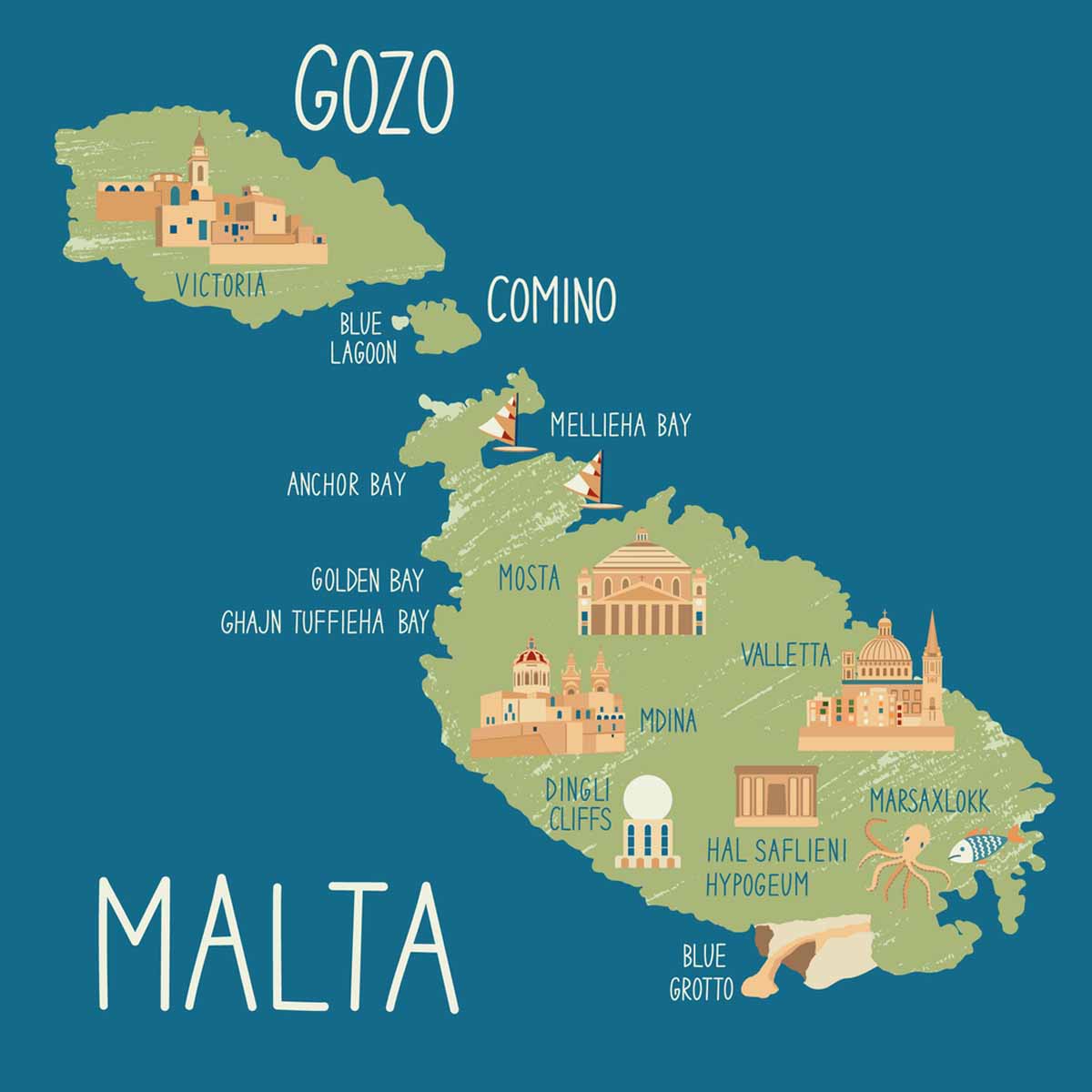
Map of Maltese Islands / Click to enlarge
Gozo is the second-largest island in the Maltese archipelago. (see map) It offers a greener, more rural, and distinctively slower-paced alternative to mainland Malta. Measuring just 9 miles by 4.5 miles, Gozo is home to roughly 39,000 residents.
Victoria (also known as Rabat) is the capital & heart of Gozo. It’s located in the center of the island with around 7,500 residents. Even though it’s much smaller and more relaxed than Malta’s main cities, Victoria is packed with history, culture, and great views. And it’s very walkable.
As mentioned: In planning our 7-night visit to Malta, it made most sense to stay the entire time in Valletta (on the main island of Malta) and do day trips to the other places we wanted to see. Of course, that included the nearby island of Gozo (with Victoria), which I knew I really wanted to experience.
Getting There – Rapid Ferry to Gozo
Luckily, there is a rapid ferry – Gozo Highspeed – which runs every hour between Valletta and Gozo. This modern ferry, which holds 300 people, takes only 45 minutes. And the cost is only around €15 round trip. It’s a perfect way to visit Gozo!
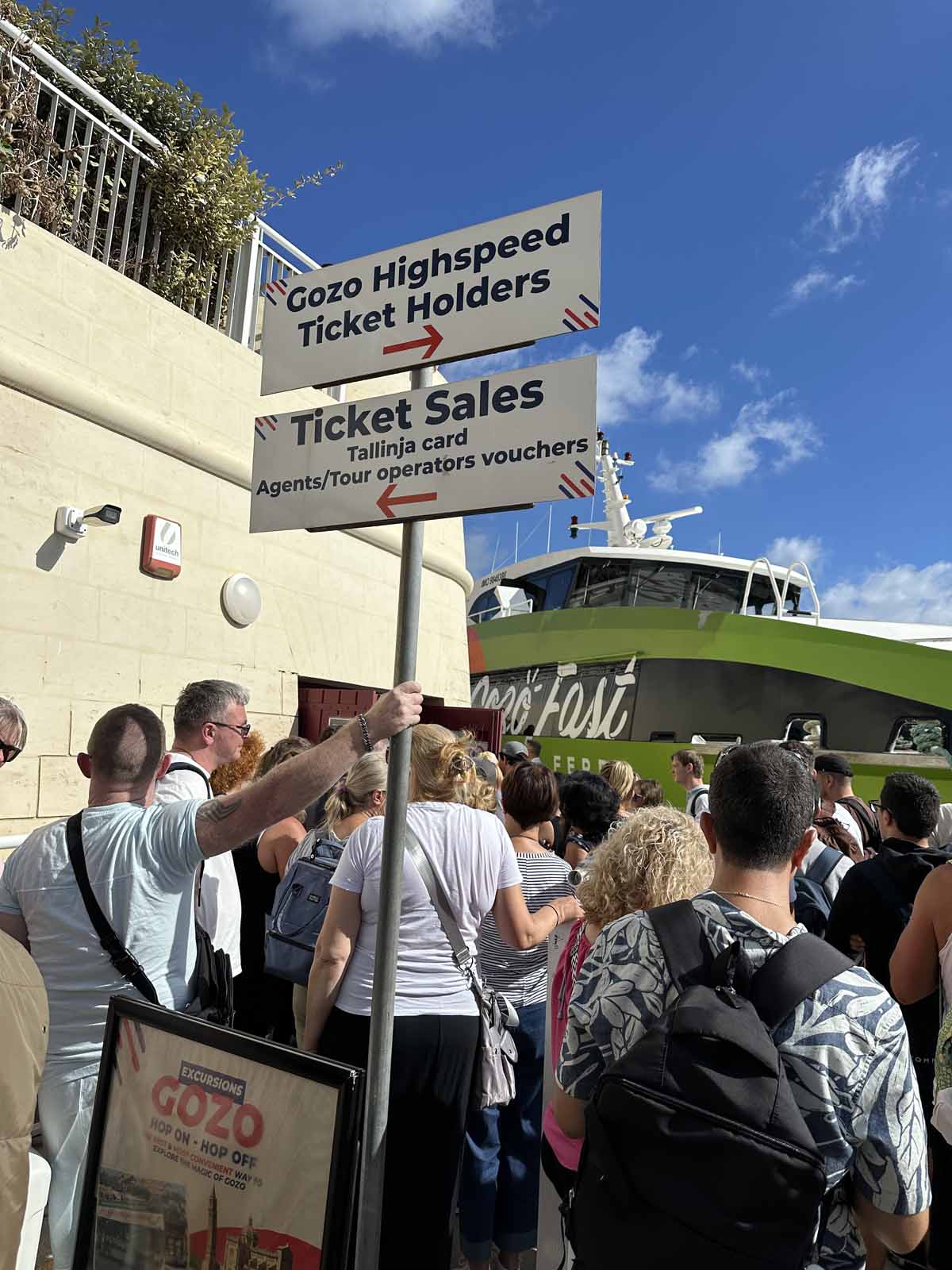
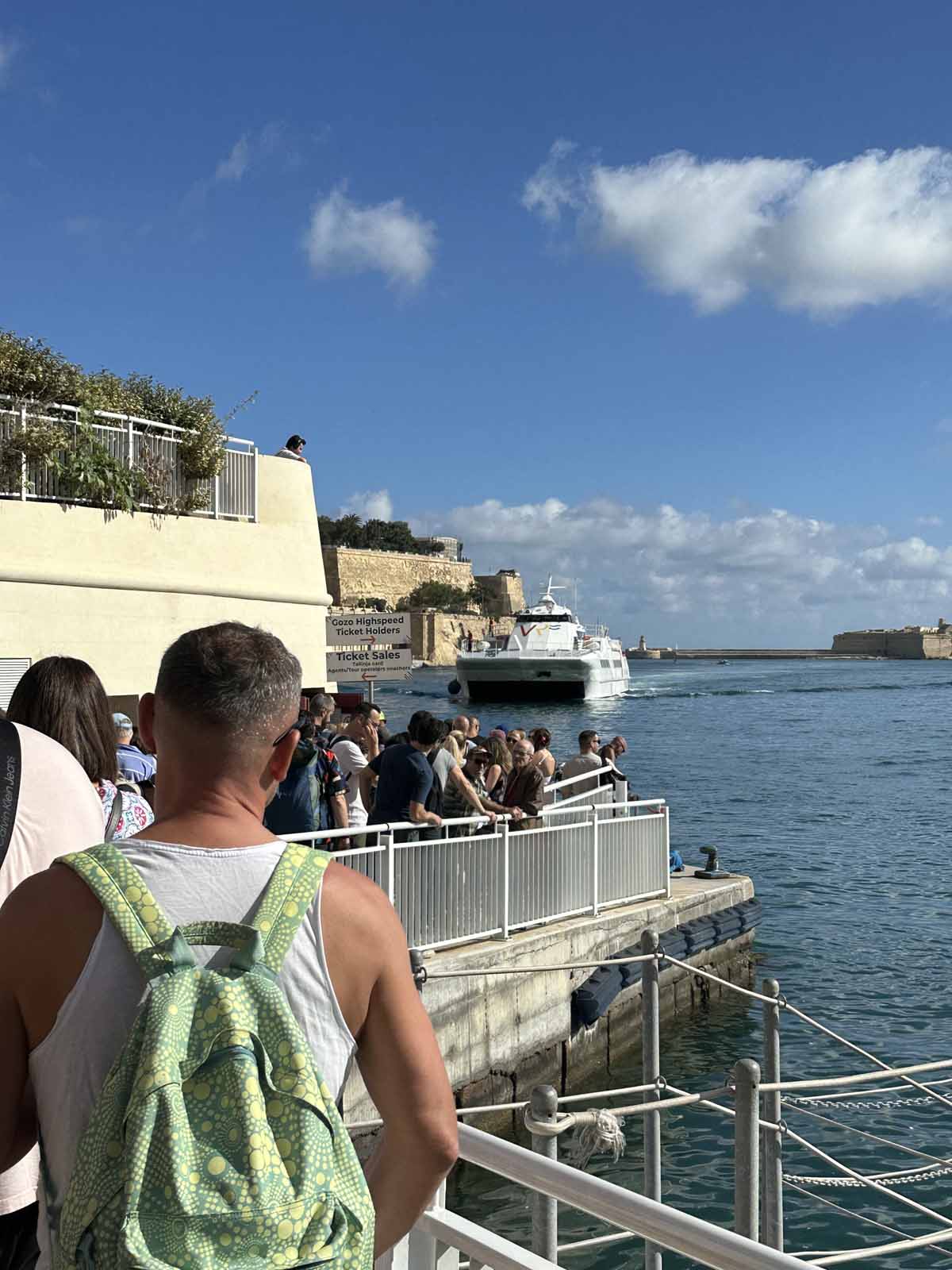
We did our Gozo & Victoria trip on a Friday. I bought our tickets online the night before for the 11am ferry sailing, which was a smart move! There were long lines when we arrived at the main ferry landing in Valletta that next morning – some of us with tickets and many others hoping to buy tickets.
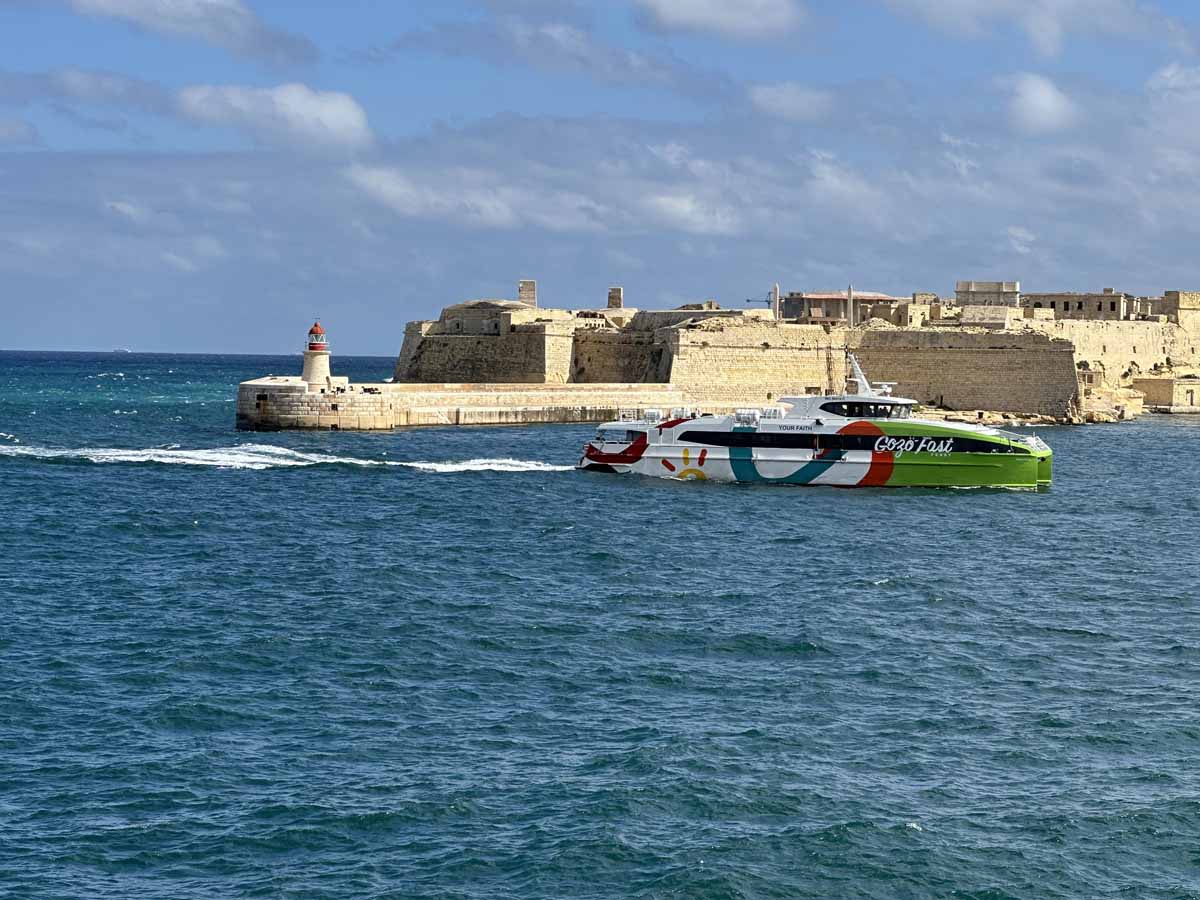
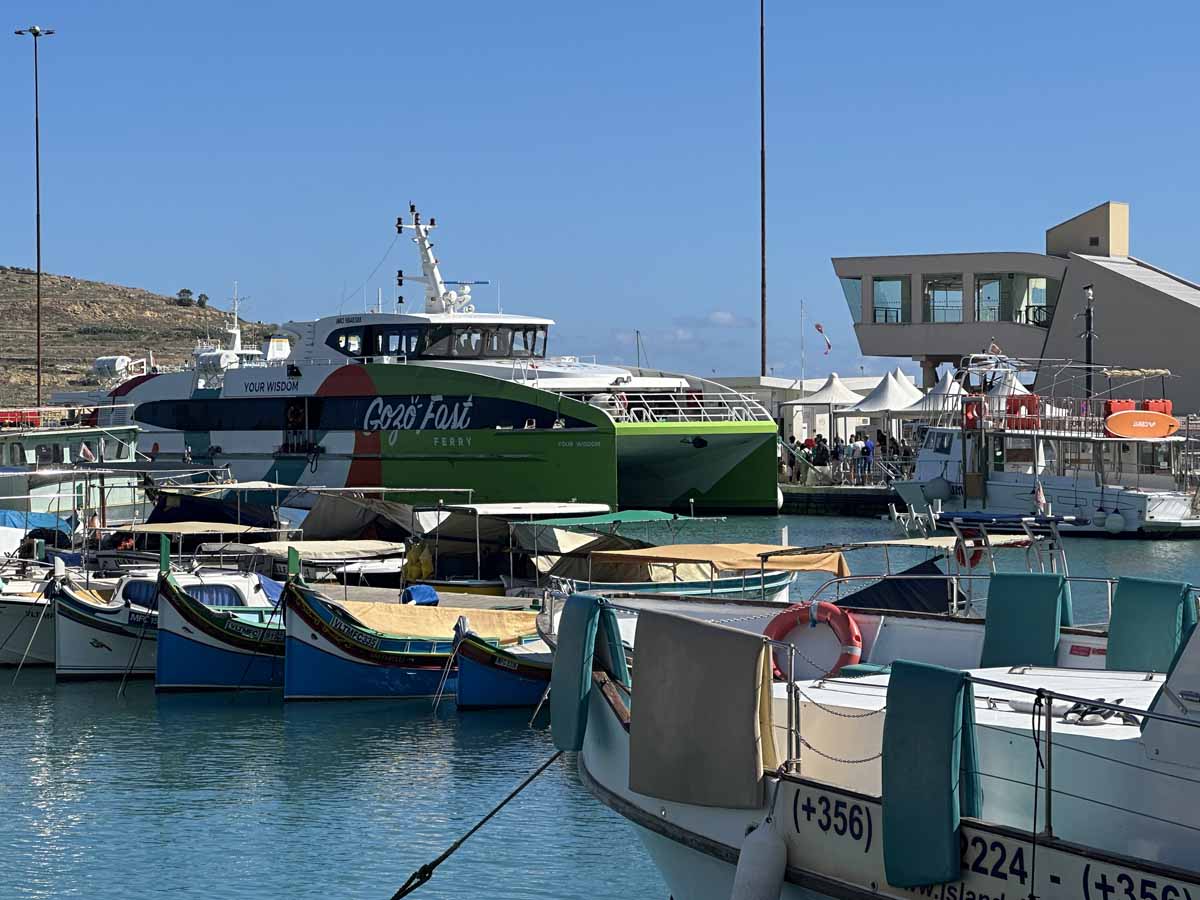
The Gozo ferry arrived at 11:45am at the Mgarr Harbor (above right), which is on the island’s southern coast. Gozo’s Ferry Terminal has a Tourist Info (TI) desk inside. From Mgarr, it was easy to catch a bus for the 20-minute ride to Victoria’s bus terminal, located right in the city.
Visiting Victoria
From the bus, it was only a two-block walk to the main street – Republic Street – which led up the hill to the main square. This is where all the good sightseeing begins. Victoria is popular among international tourists (anytime) and the Maltese who like to visit Gozo for weekend breaks.
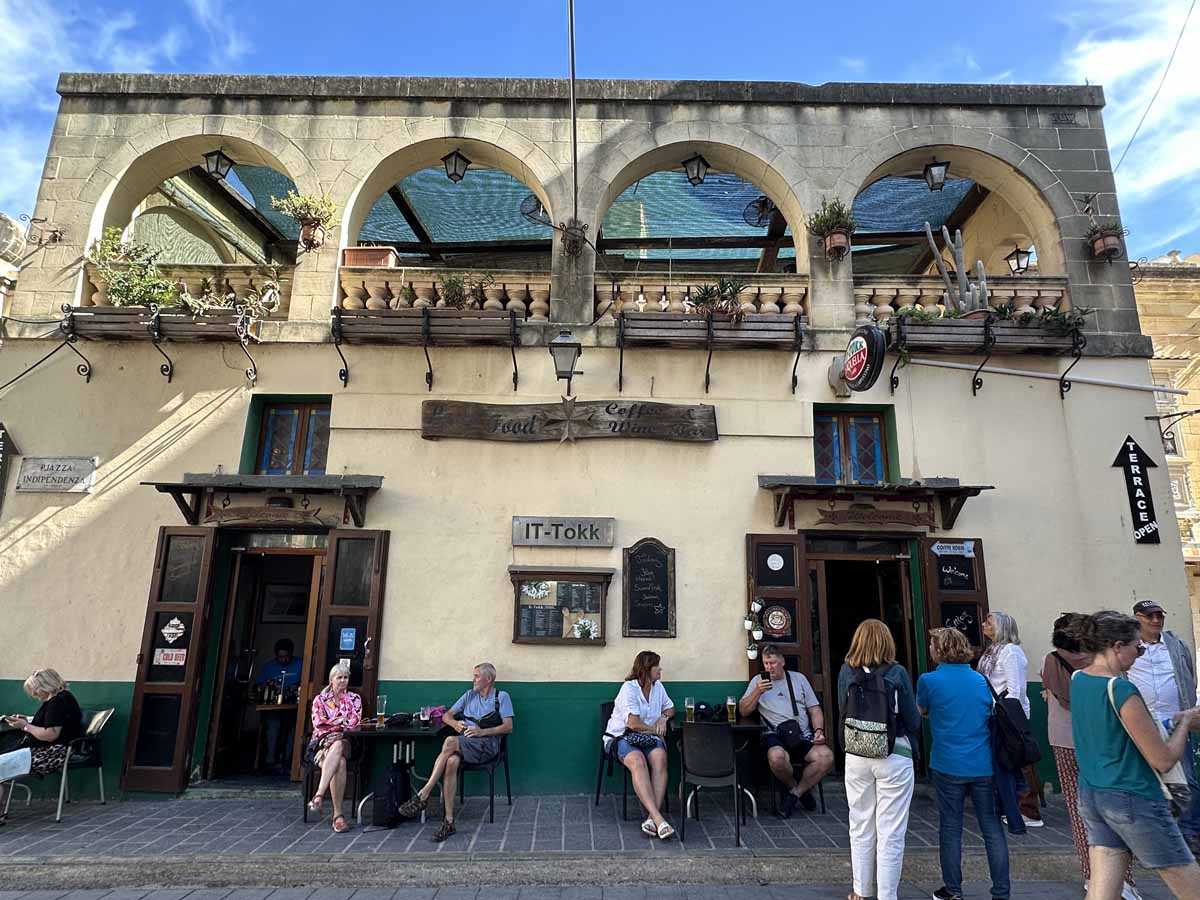
Independence Square (It-Tokk) is the lively center of Victoria. (below) It’s filled with local shops and outdoor cafes and is surrounded by historic buildings. It’s a great place to sit and people watch while grabbing a coffee or a quick meal.
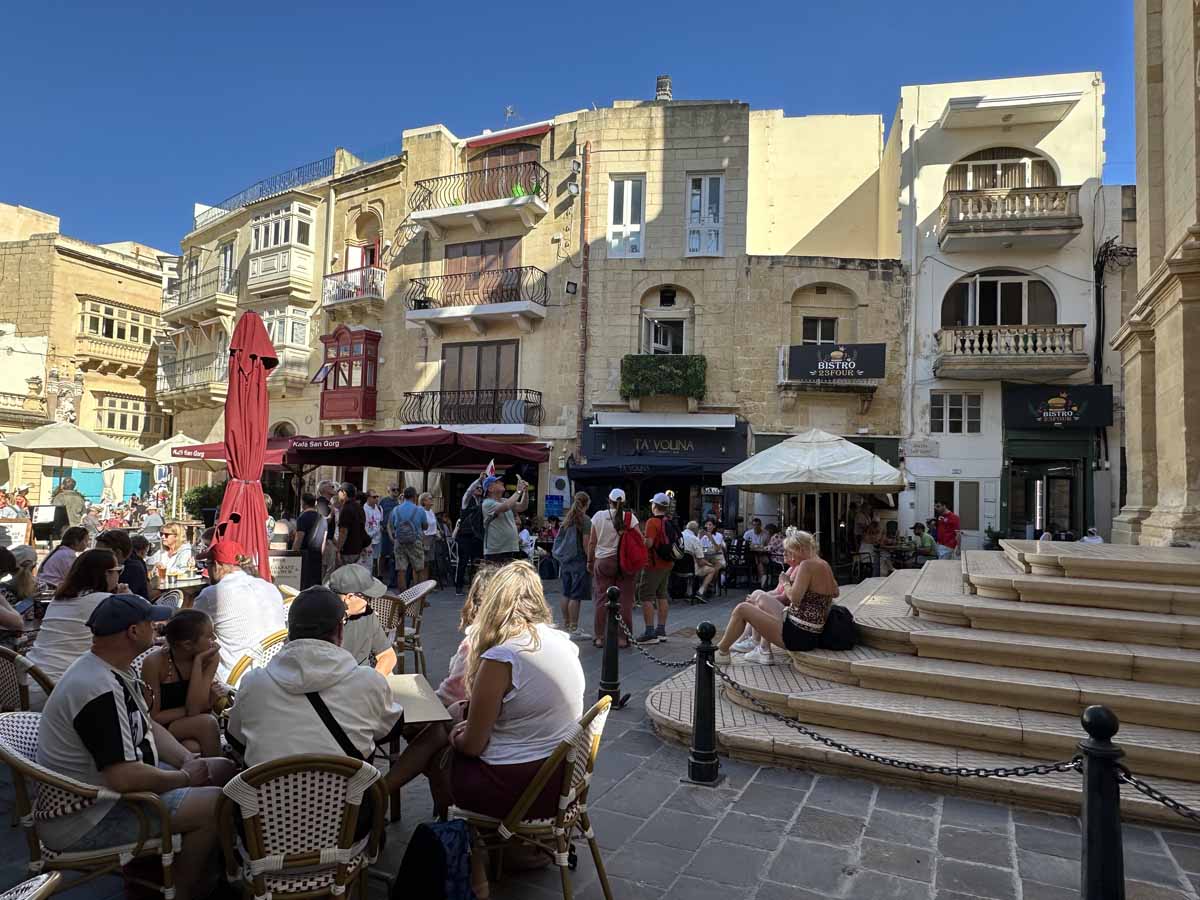
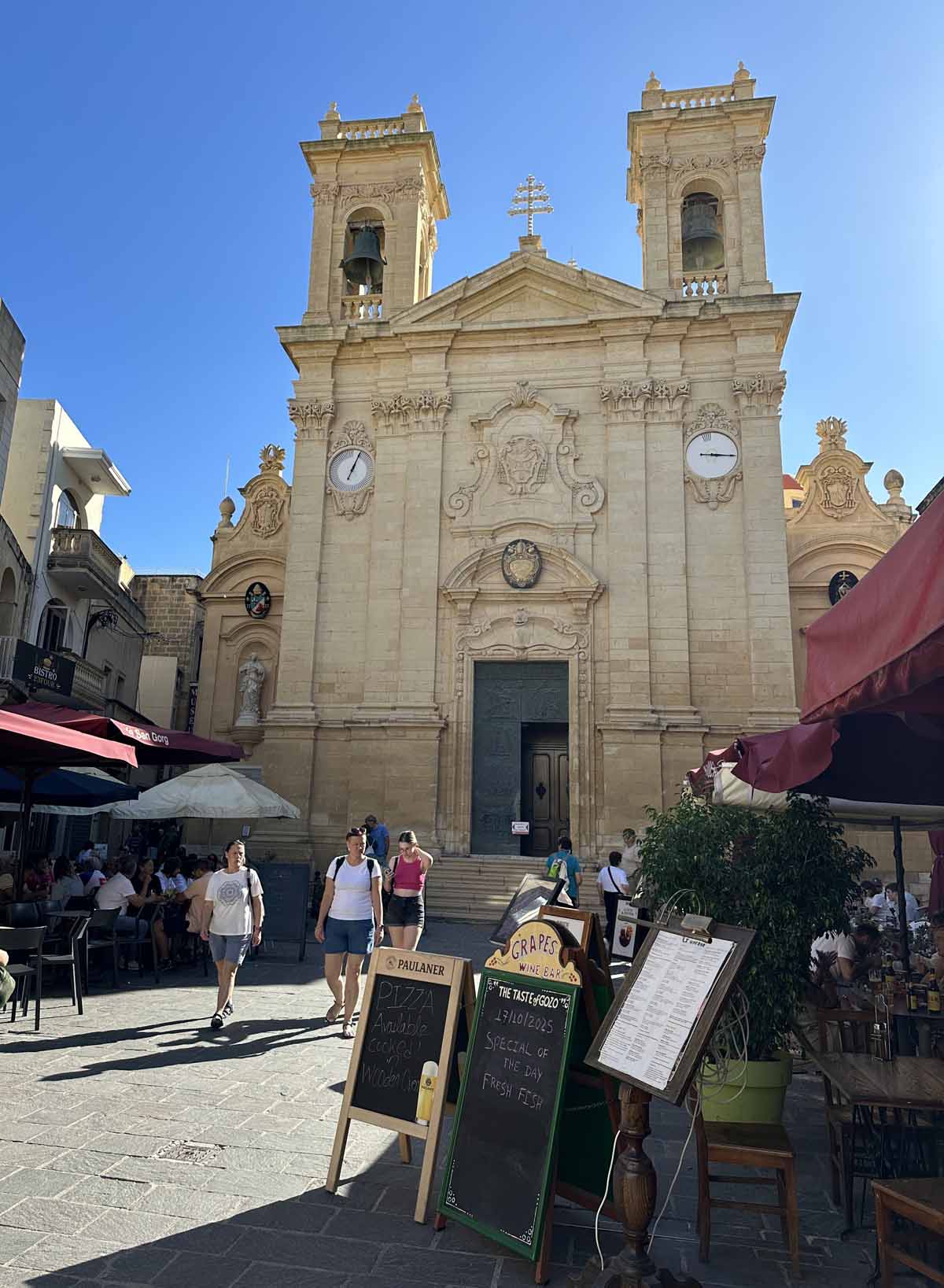
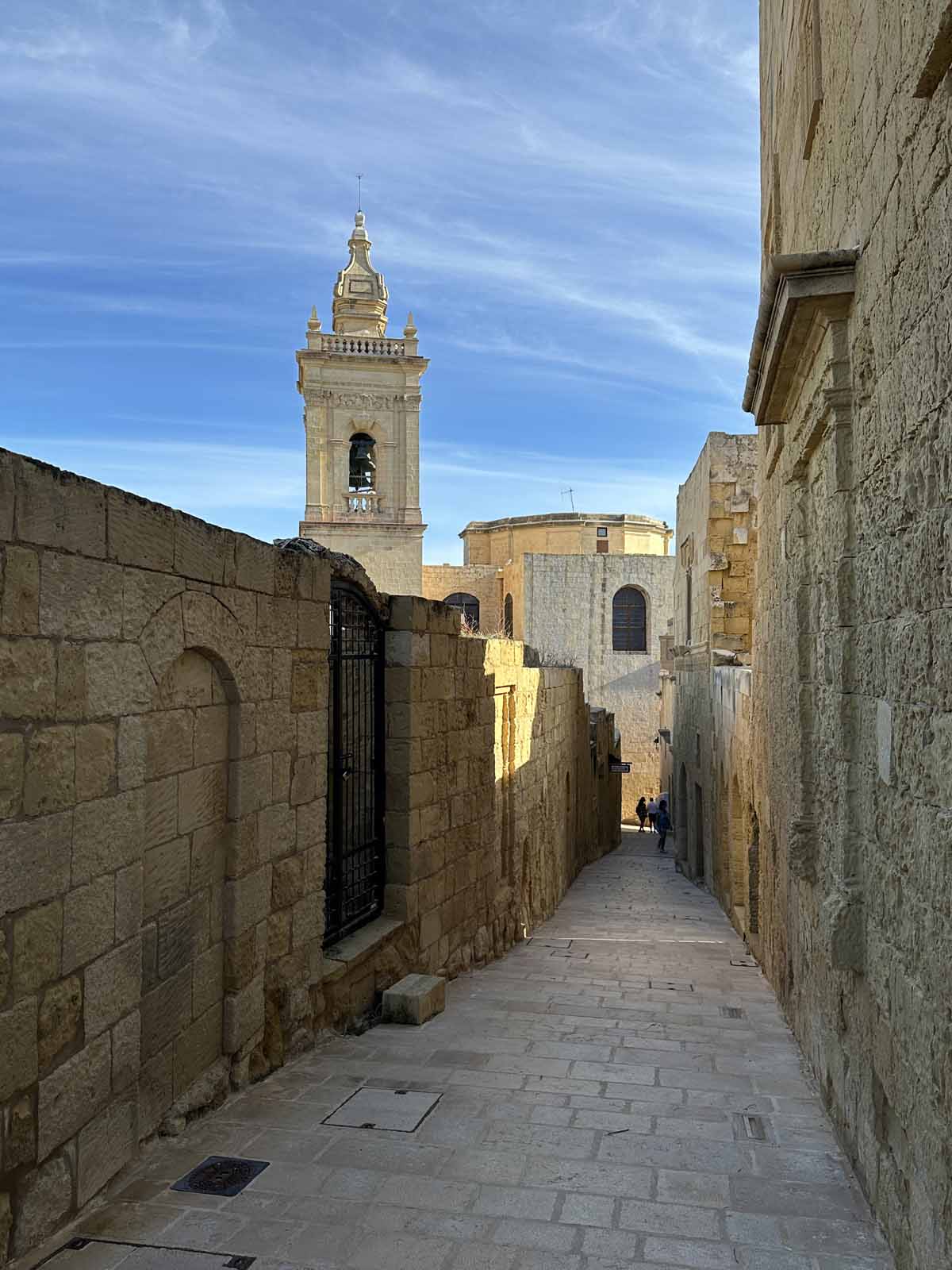
We first did a short walk through the old neighborhood area just behind the church. I found that these quiet, medieval pedestrian-only lanes felt similar to those we had seen in Mdina.
St. George’s Basilica
This beautiful & ornate Baroque-style church is certainly worth a visit. With a rich gold interior and elaborate ceiling artwork, it’s one of the most stunning churches in Malta. And it’s often called a “marble masterpiece.”
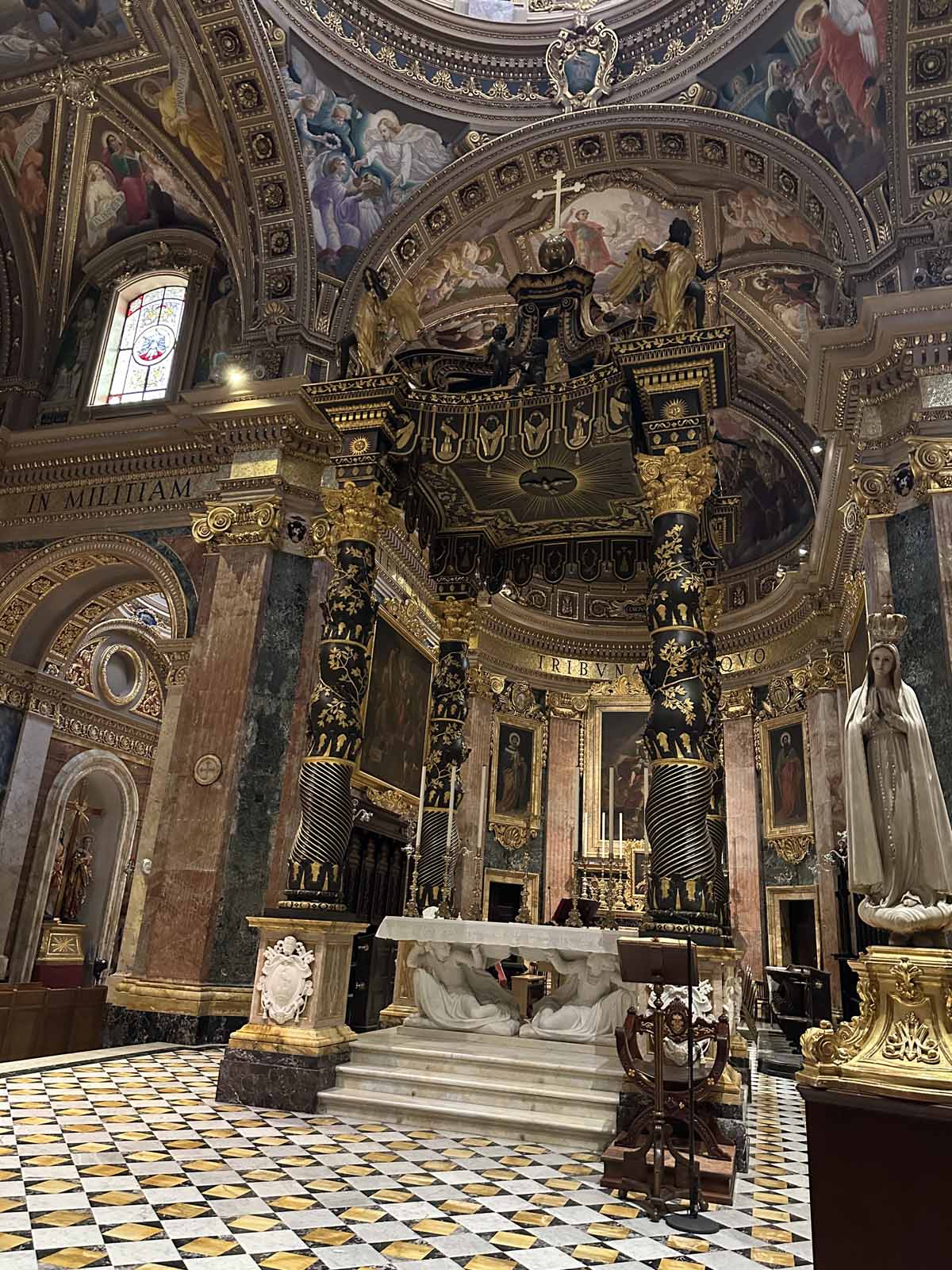
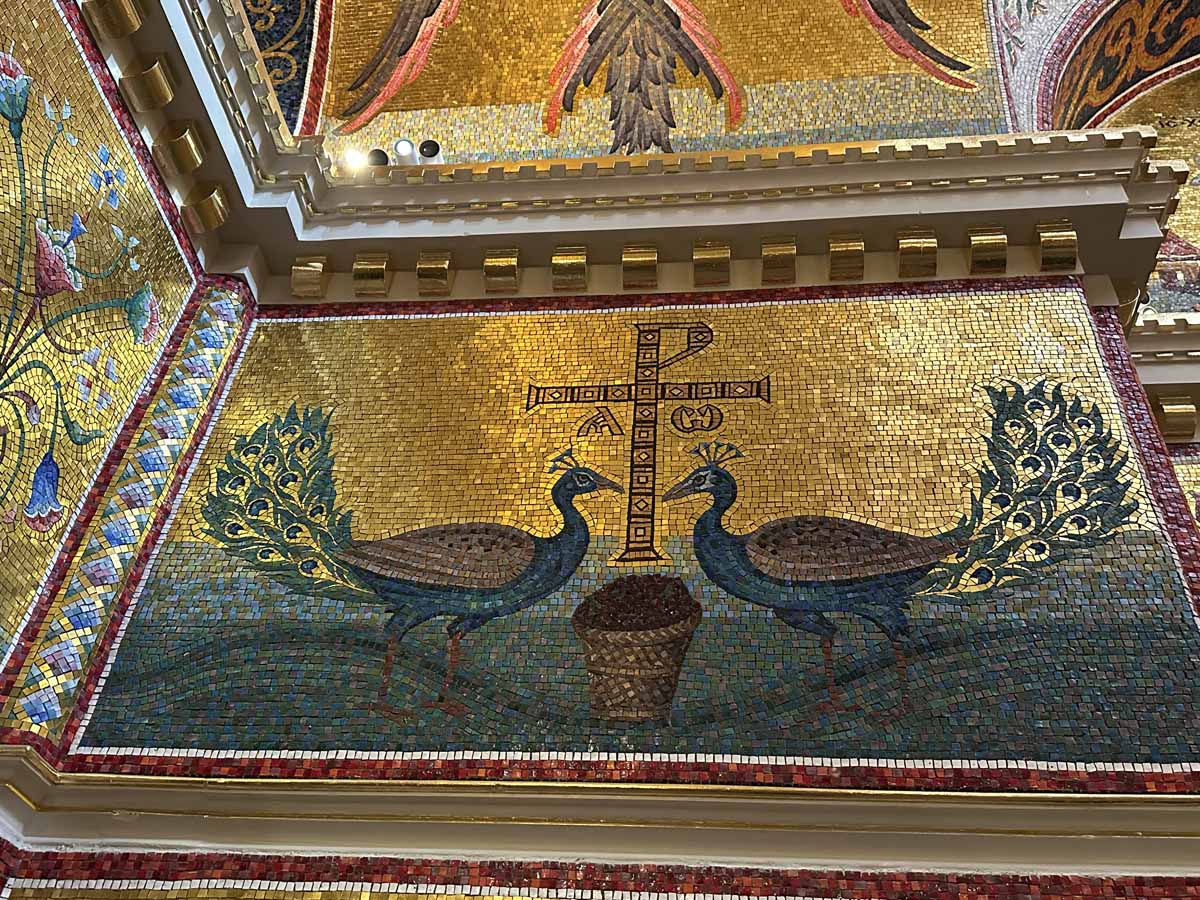
However, it was the rich, shimmering Byzantine-style mosaics in the back chapel that most intrigued me. I later learned that they were installed mainly in the 20th century, so they’re relatively modern additions. Visions of Istanbul!

Visit to Gozo Cittadella (The Citadel)
It was now time to explore the main highlight of Victoria & one of the most impressive sights in all of Malta. The Cittadella (Citadel) is a fortified hilltop castle which sits on a ridge that overlooks Victoria. In fact, the Citadel is on the path to becoming a UNESCO World Heritage site.
The roots of the Citadel go back to ancient times (c. 1500 BC) where its prominent hill location was likely used by the Neolithic people for basic shelter. It evolved into a major administrative hub under Phoenician and Roman rule before medieval engineers constructed the fortified town visible today. The Citadel walls themselves date from the 16th to 18th centuries.
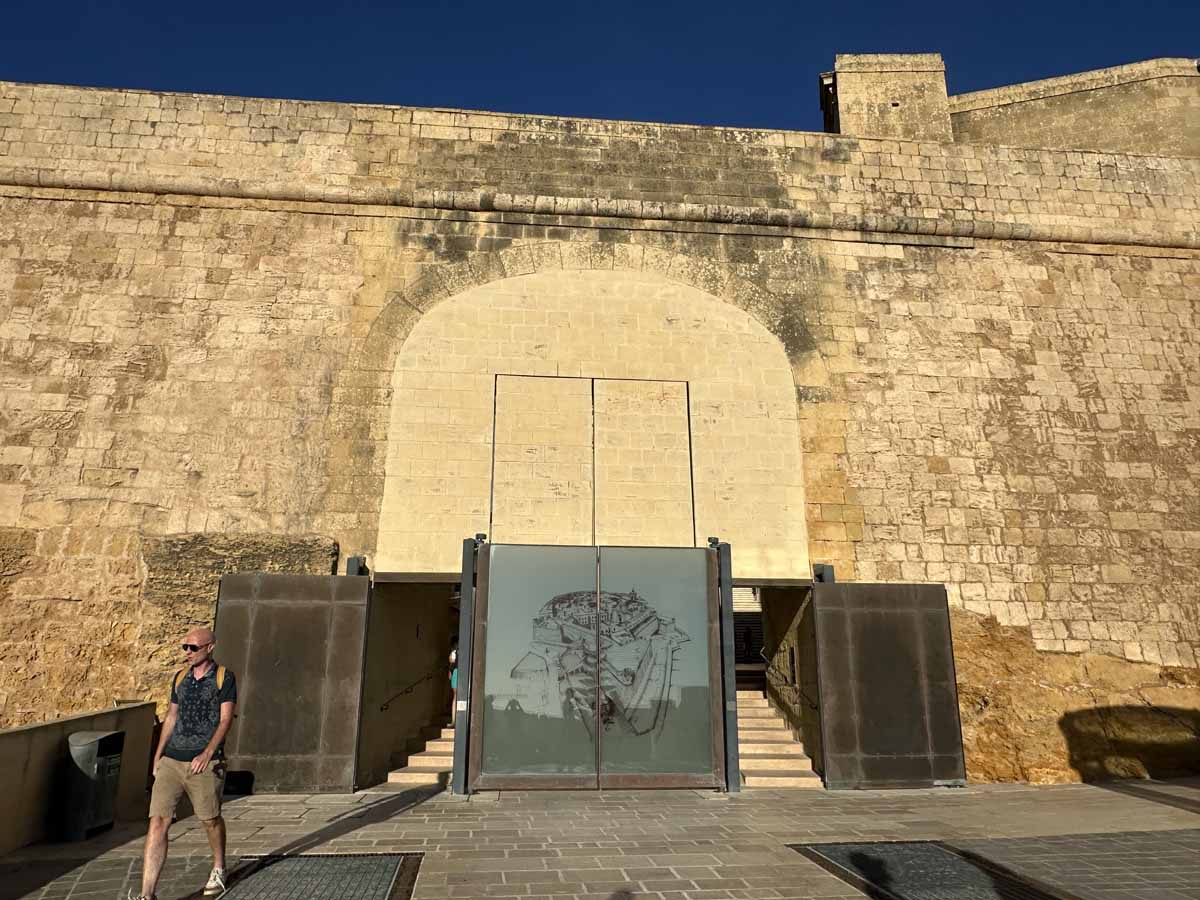
-

- Upper Entrance to the Citadel – Illustration of the Castle Complex / Click all photos to enlarge
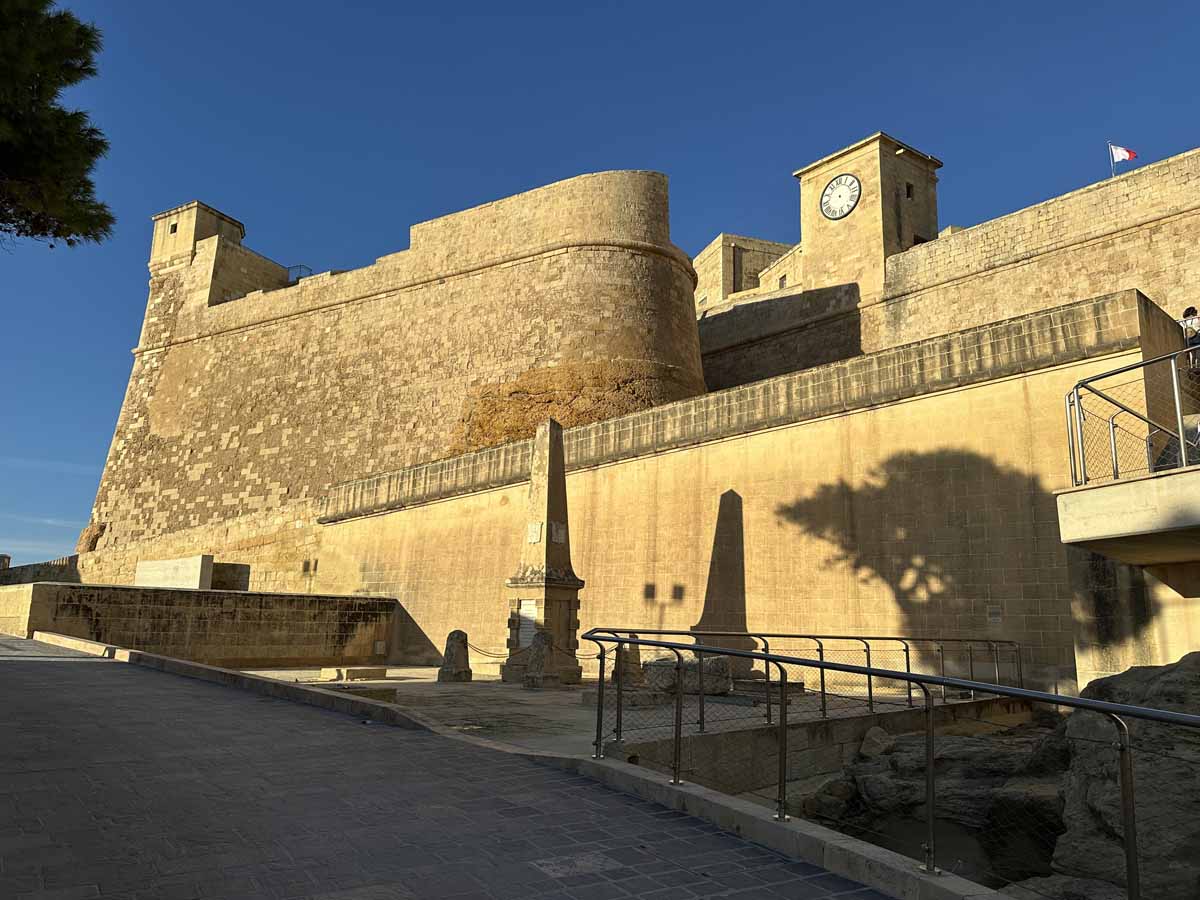
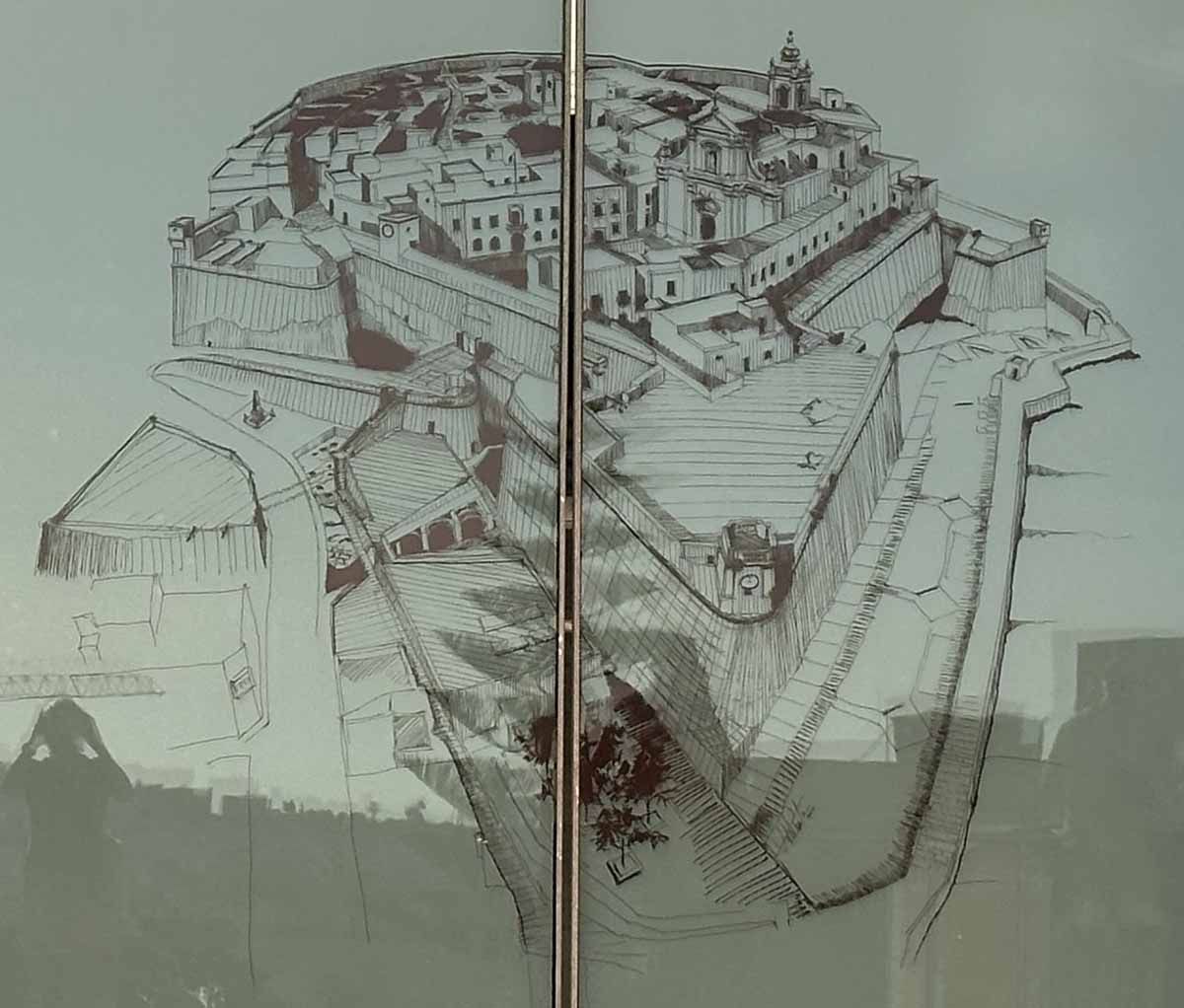
When the Knights of St. John arrived in Malta in 1530, over 5,000 people were living in the Citadel. For roughly two centuries (until 1637), the entire population of Gozo was required to take shelter within these walls after sunset for their own protection from the constant threat of pirate & Ottoman raids.
Gozo Citadel / The Visitor Center
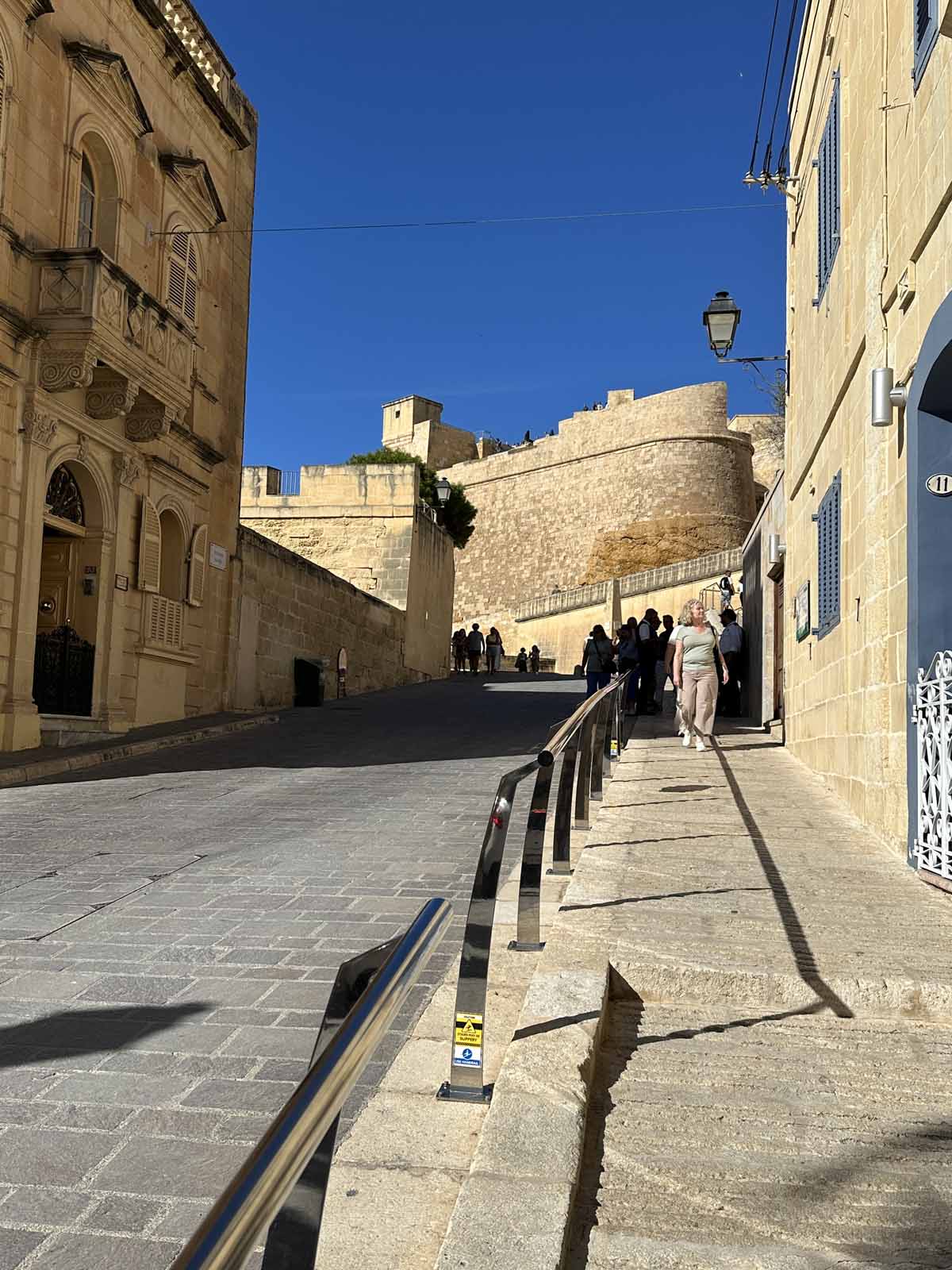
From Victoria’s main square, it was a short walk up the steep Castle Hill street to the entrance of the Citadel Visitor Center – where Jack & I started our visit. This very cool modern center is built inside two 19th-century water reservoirs (cisterns) at the base of the citadel’s fortress walls. Click here for the Visit Gozo – Cittadella webpage.
-

- Castle Hill Street up to Citadel
-
- Jack at entrance down the steps to Visitor Center
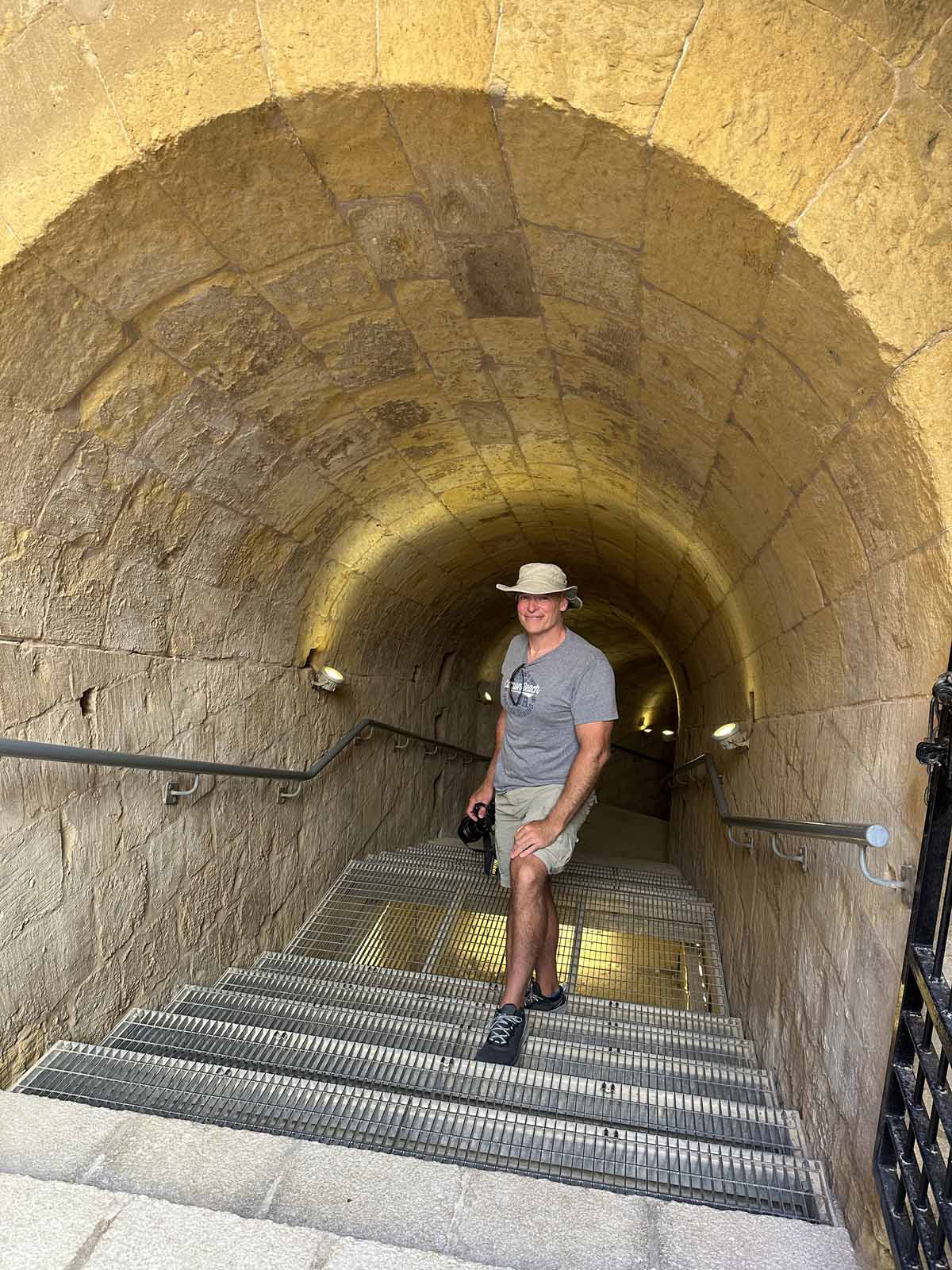
We bought the Citadel Combo Ticket (aprox. €5) which allowed us entry to the Visitor Center’s interactive exhibits along with five Heritage Malta sites within the castle walls. This included watching a 360-degree historical documentary film (9 minutes long) that our guidebook had recommended.
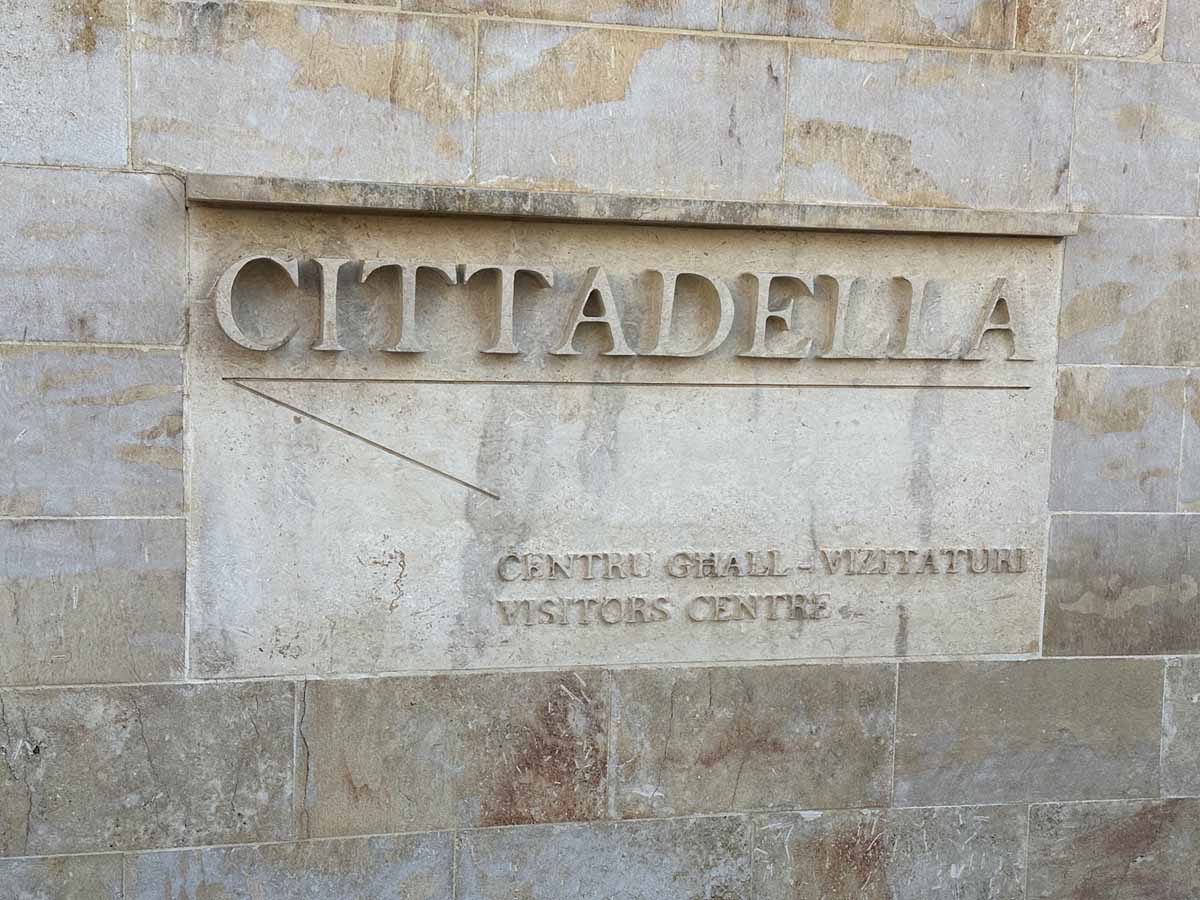 The Visitor Center also features an elevator that transports visitors smoothly from the lower street level straight up & into the main square of the Citadel. This is a great option for avoiding the steep uphill walk to the other, upper entrance of the castle. Of course, we took the elevator, already being there.
It was incredible to learn that visiting the outdoor portion of the Gozo Citadel is both free and open 24/7. That’s because the Citadel functions as a public neighborhood with no gates or turnstiles blocking access to the open-air grounds. Thus, entering the fortress complex is free. However, visiting individual historic landmarks requires paid tickets (like the Citadel Combo Ticket).
The Gozo Cathedral
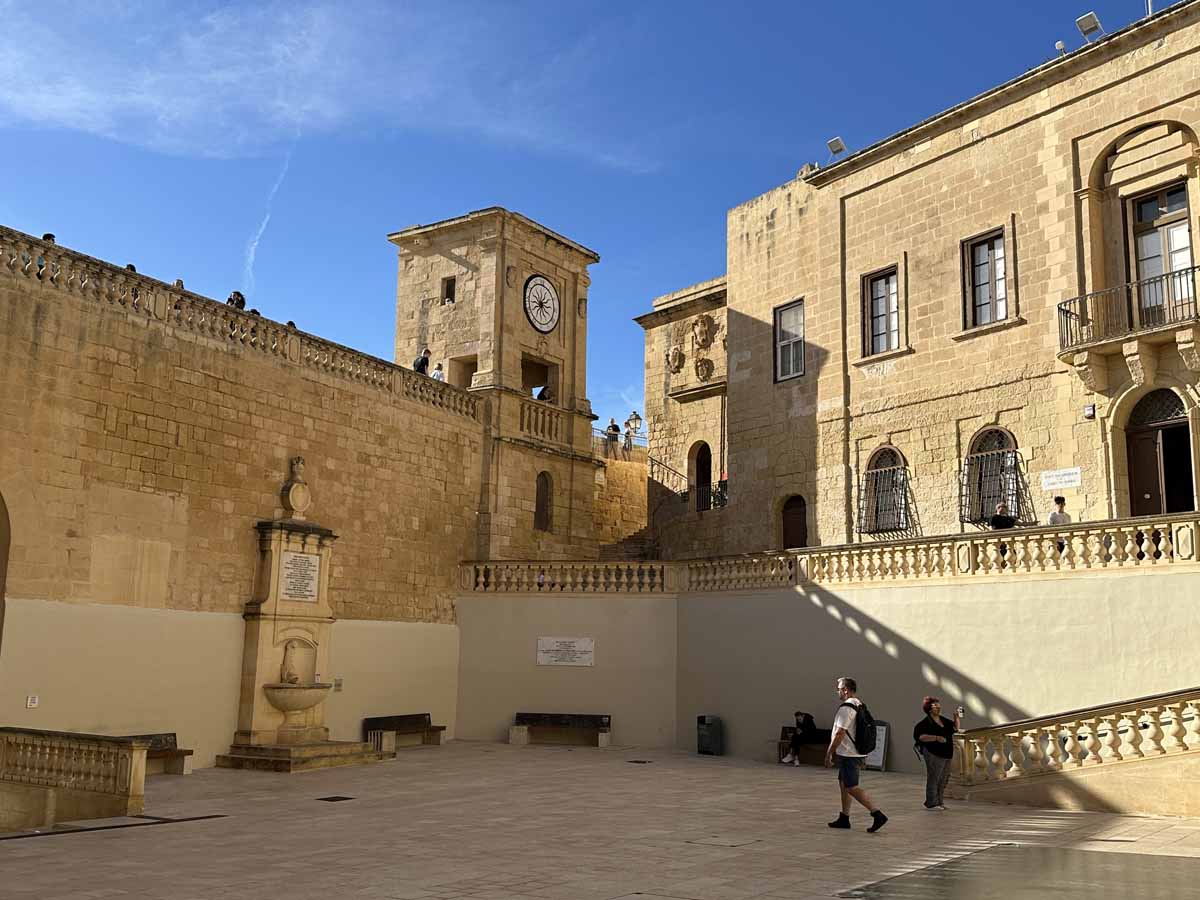
Located right on the main square, the Gozo Cathedral (formally the Cathedral of the Assumption) is the centerpiece of the Citadel. We started our visit here after paying a small admission fee of €3 (it’s managed separately by the church parish).
-
- View of opposite side of Cathedral Square
-
- Entrance to the Gozo Cathedral
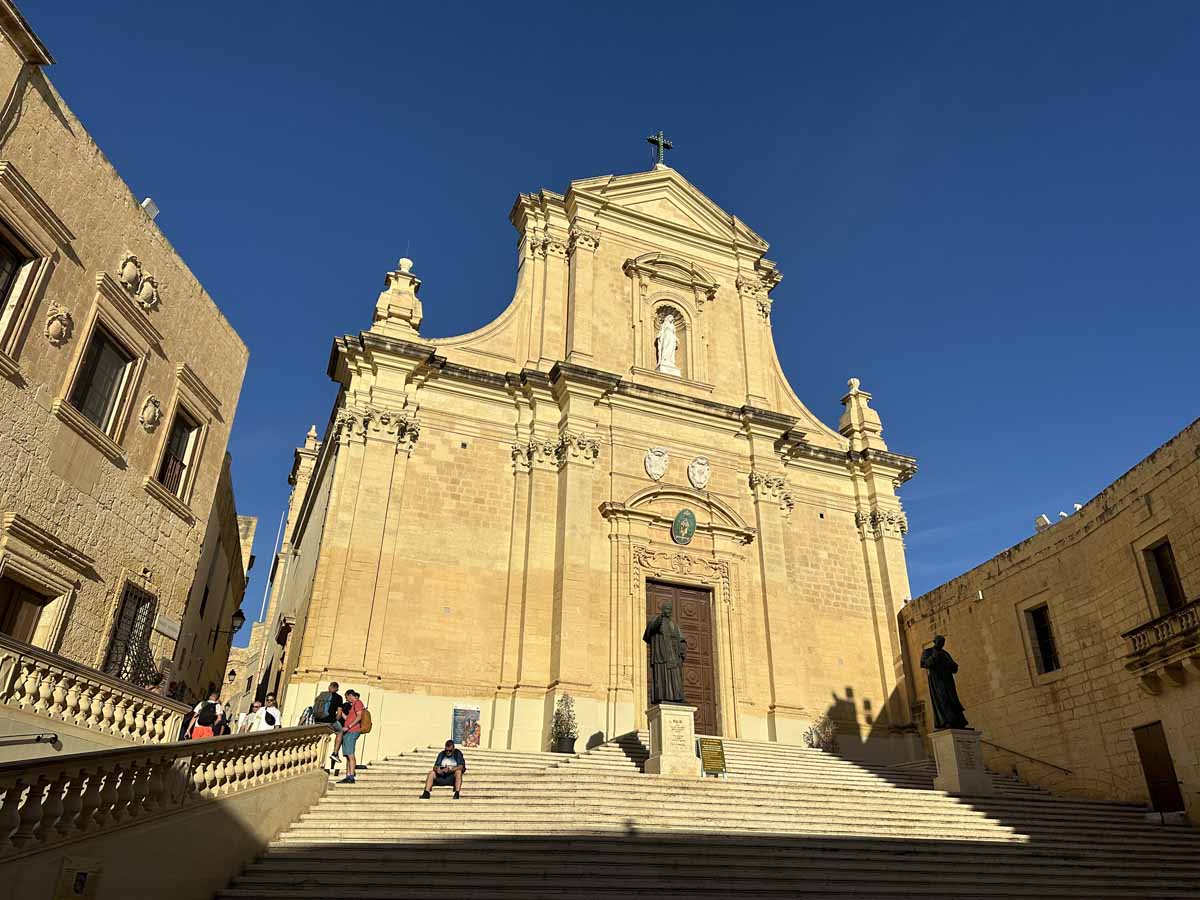
The Cathedral was rebuilt in the late 1600s after the 1693 earthquake destroyed the earlier church. Like all the beautiful churches in Malta, its ornate interior is built in classic Baroque style.
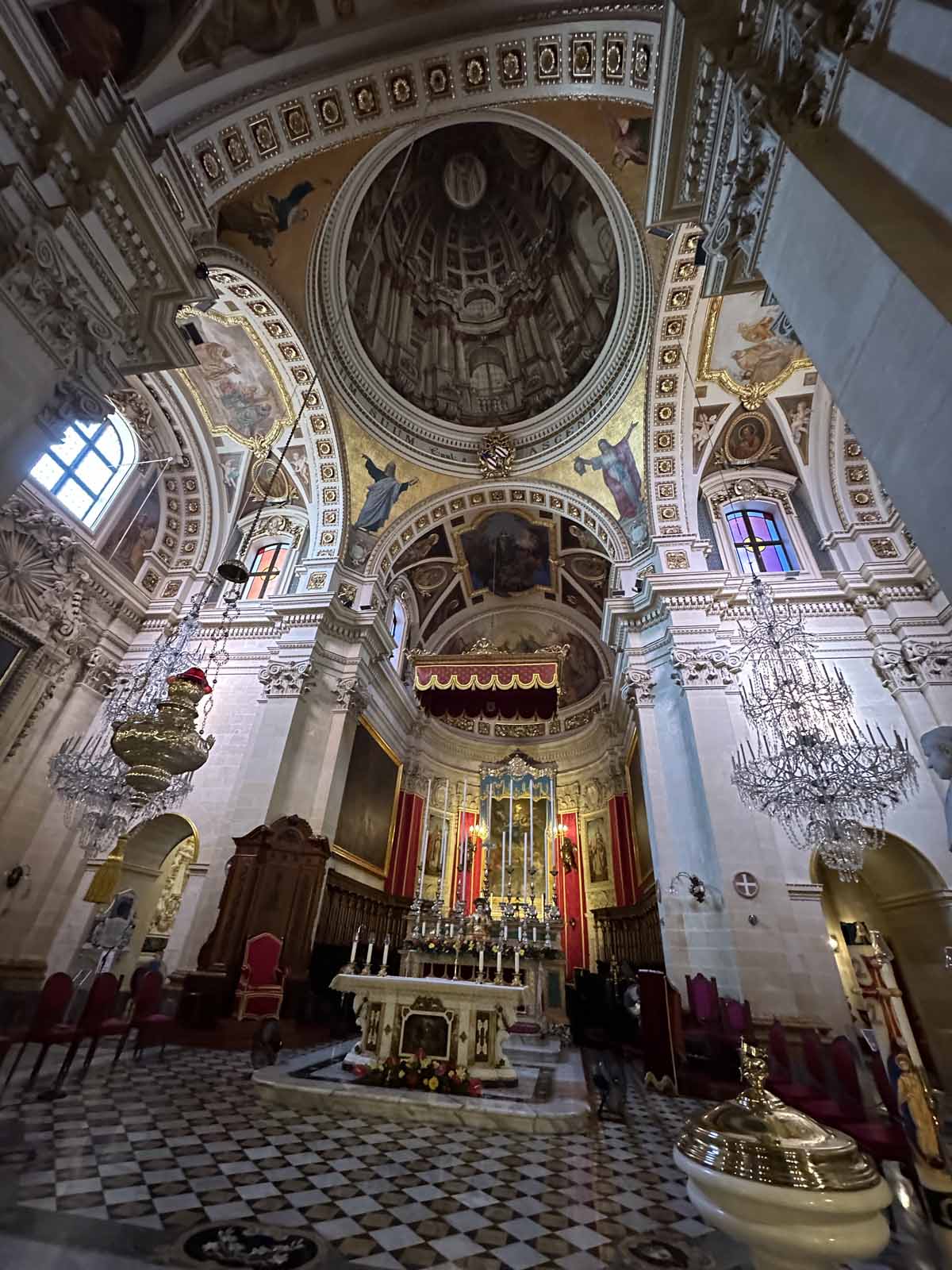
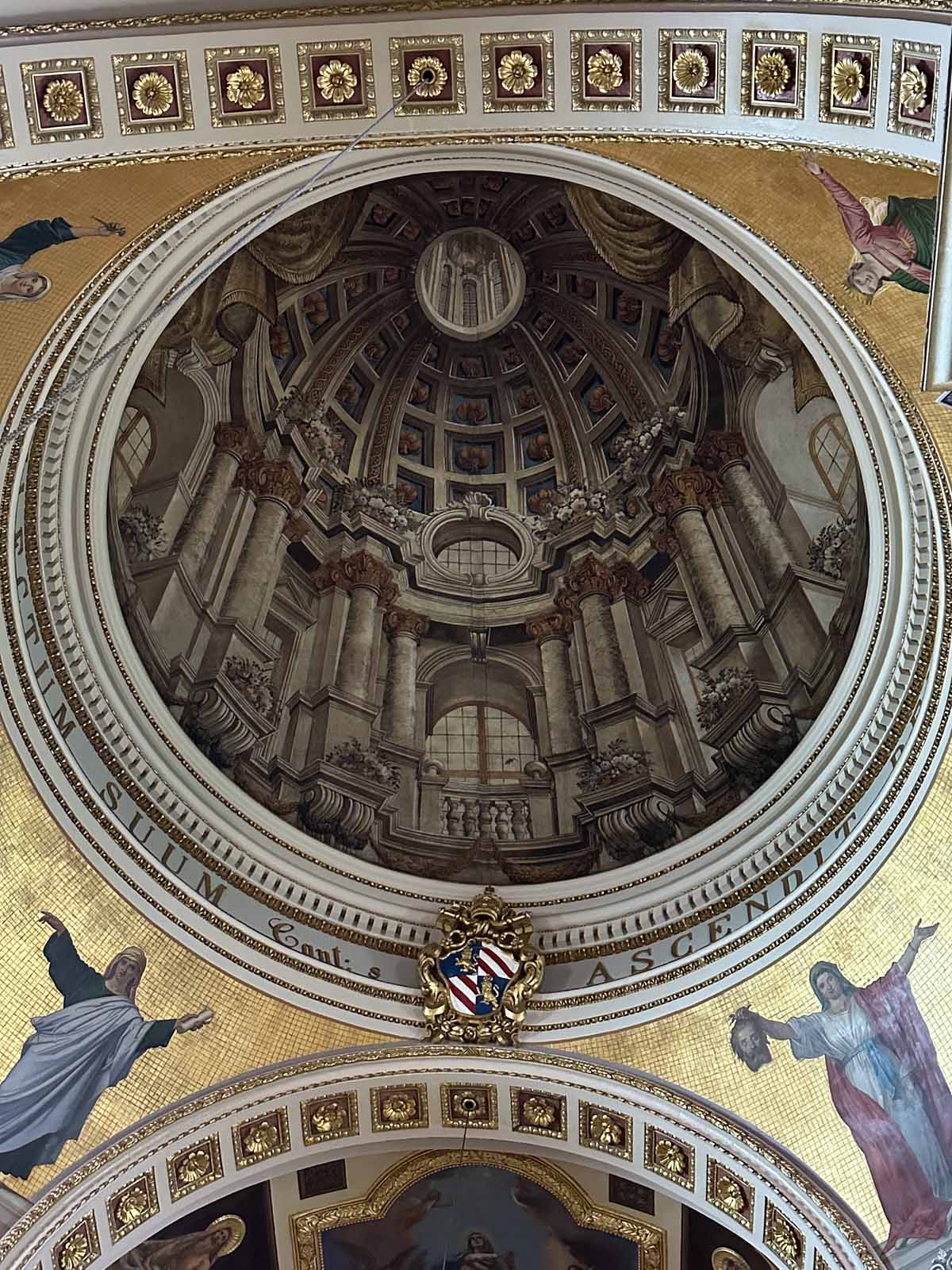
However, what makes this church unique is its “flat dome” and painted dome illusion. Turns out, church funds ran out before the cathedral’s dome was built. So, they got creative. The dome’s interior features a magnificent trompe l’oeil painting of a false dome which looks like the real thing! (above right)
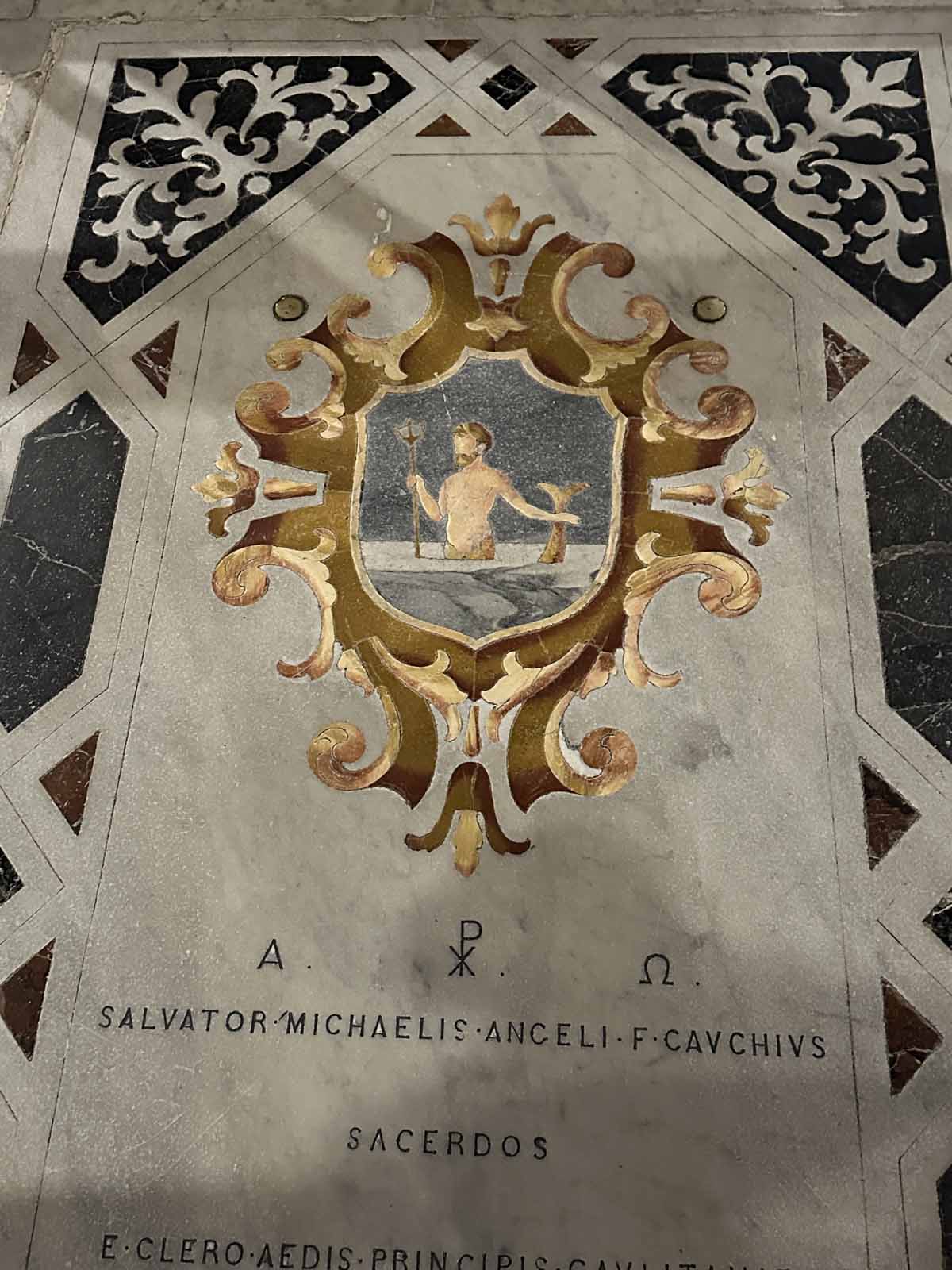
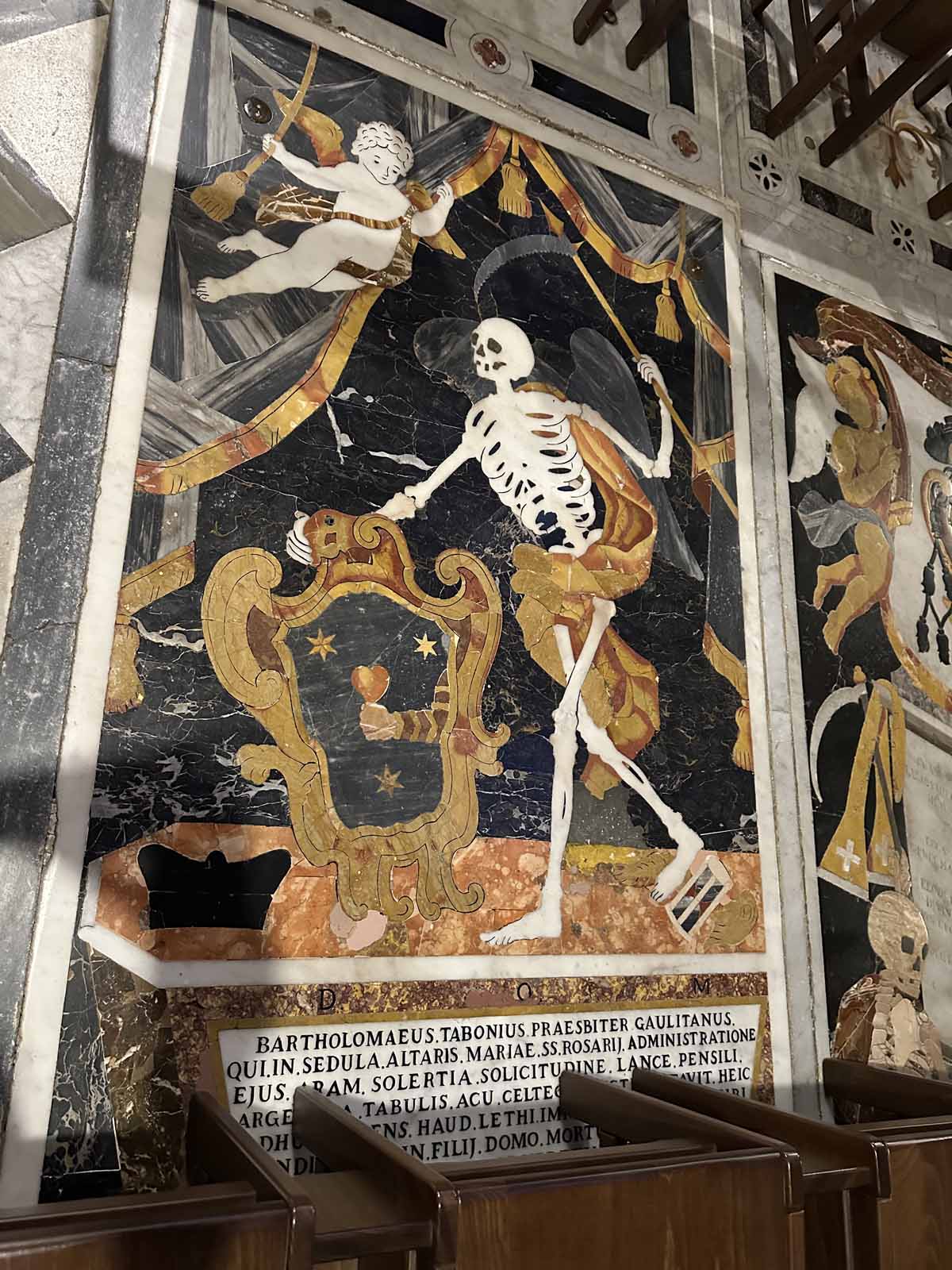
The Cathedral’s other fascinating feature are the many large, inlaid marble slabs on the floor, marking the burial place of a bishop, canon, or other important church figure. These marble tombstones were very similar to those in Mdina’s Cathedral – both of which I loved!
Exploring the Citadel’s Upper Area & Ramparts
After departing the church, we headed along narrow streets & stone walls toward the ramparts at the top of the castle fortress. The northern part of the Citadel lies in ruins while the southern section (where the Cathedral is located) is intact.
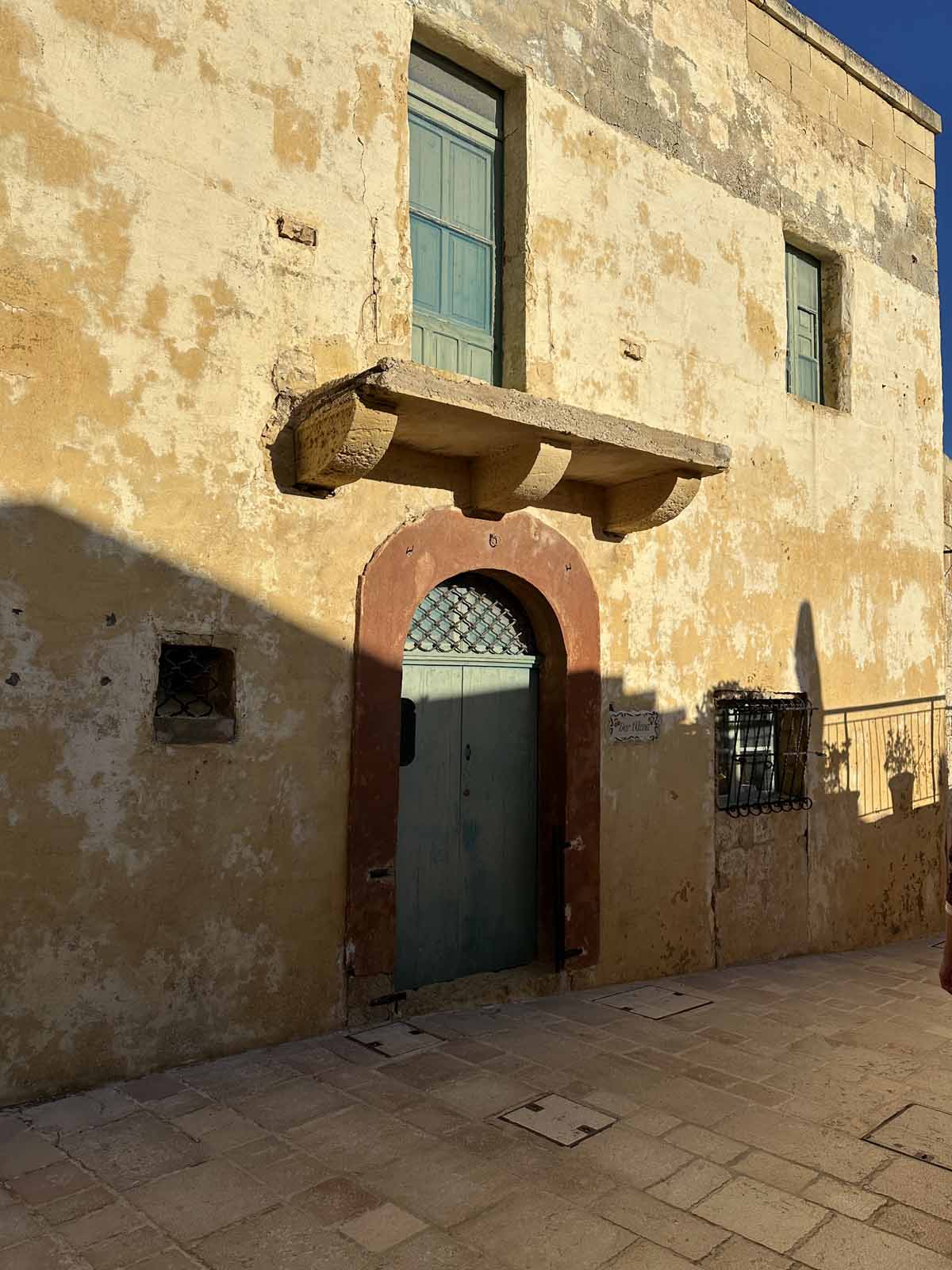
In the upper Citadel area, we saw green areas (reclaimed natural space) with the ruins of roofless stone houses, broken walls, and empty shells of buildings. This gives you a sense of what a fortified medieval town would look like after being partially abandoned.
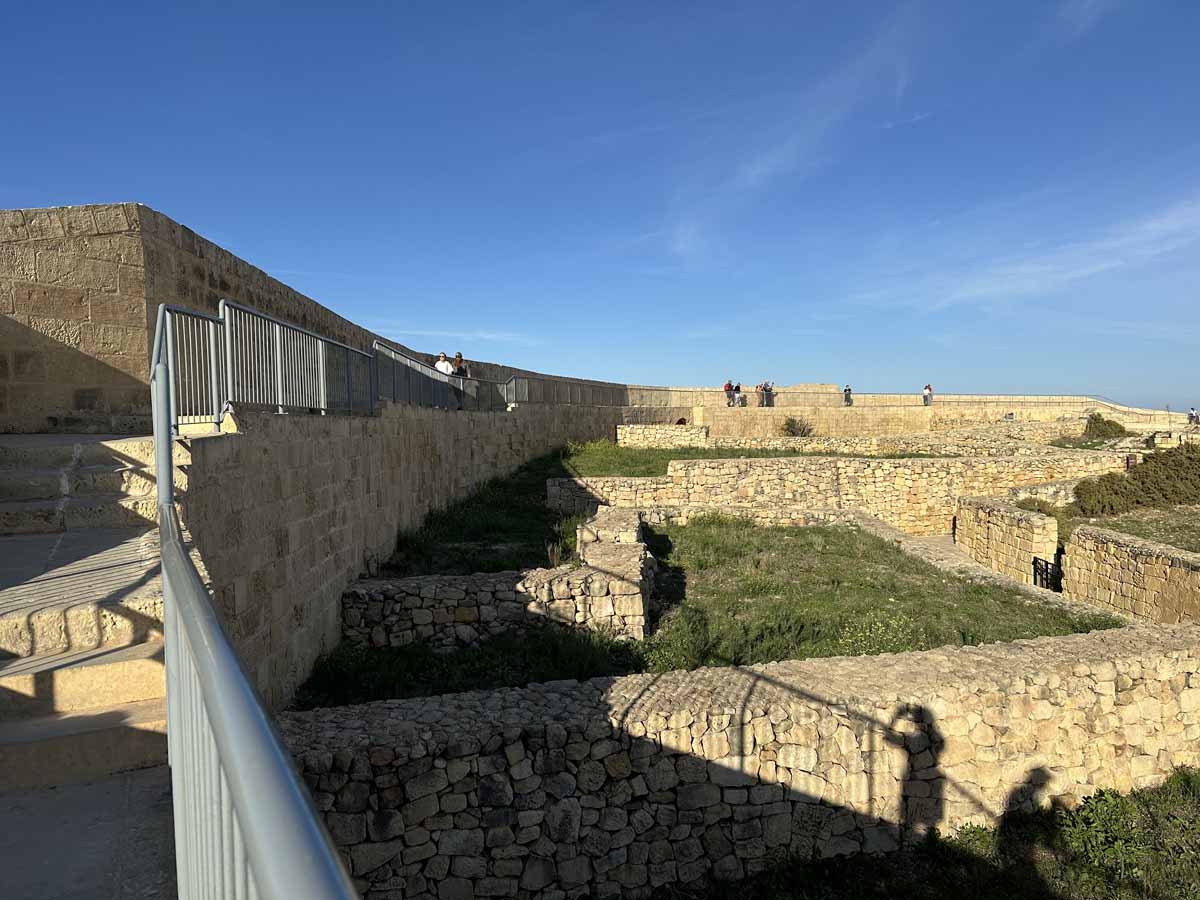
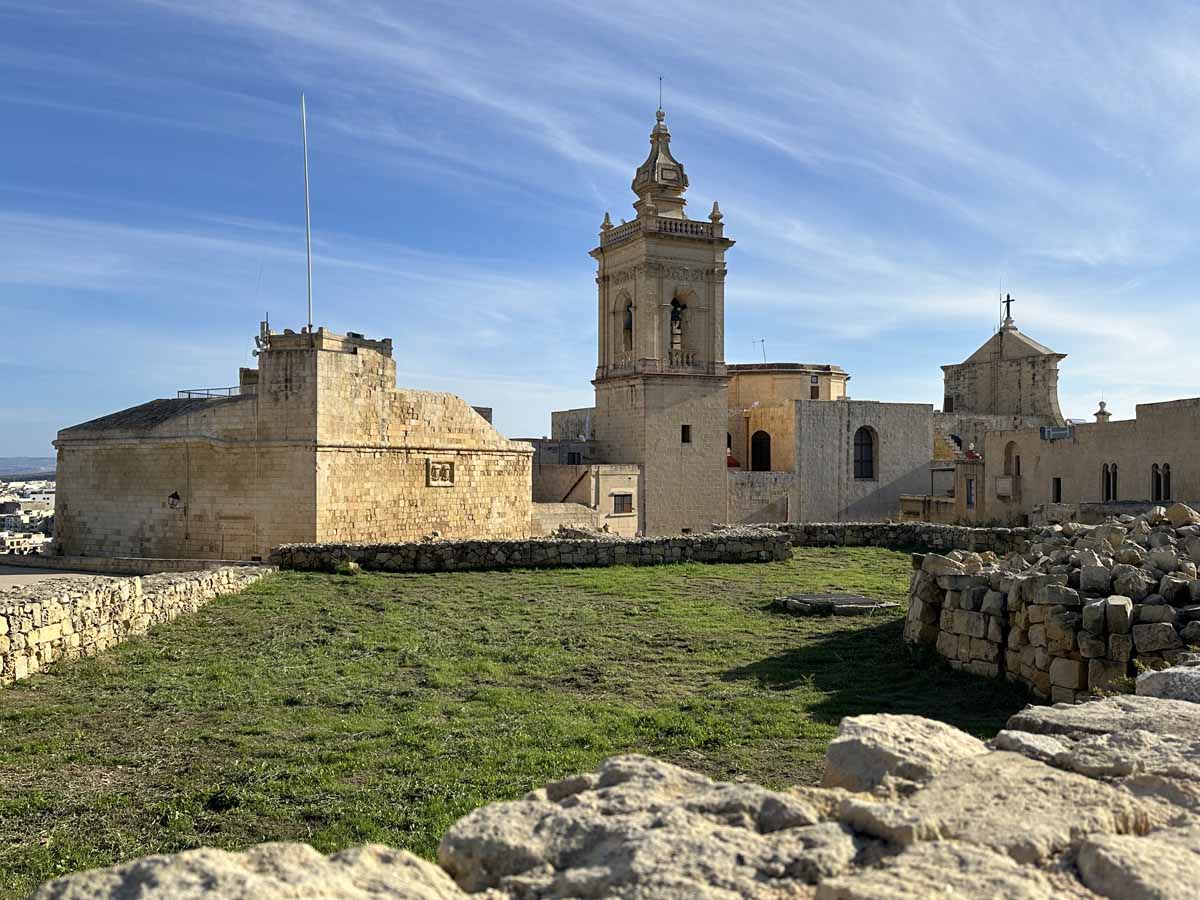
Besides the Cathedral, the other Citadel highlight is walking the cool ramparts with 360-degree views of Gozo. From high up, you get great views of the surrounding countryside (villages & farmland), the sea, and the town of Victoria. (below)
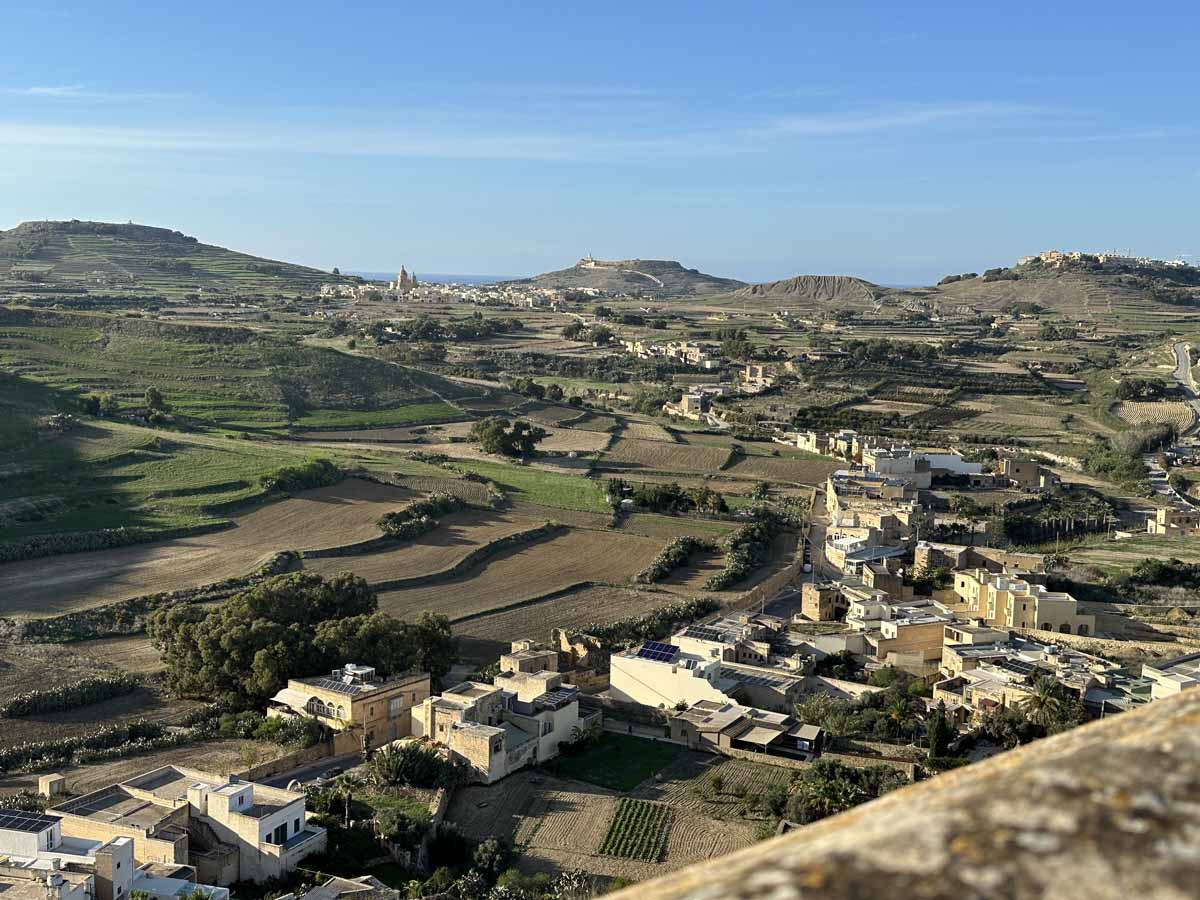
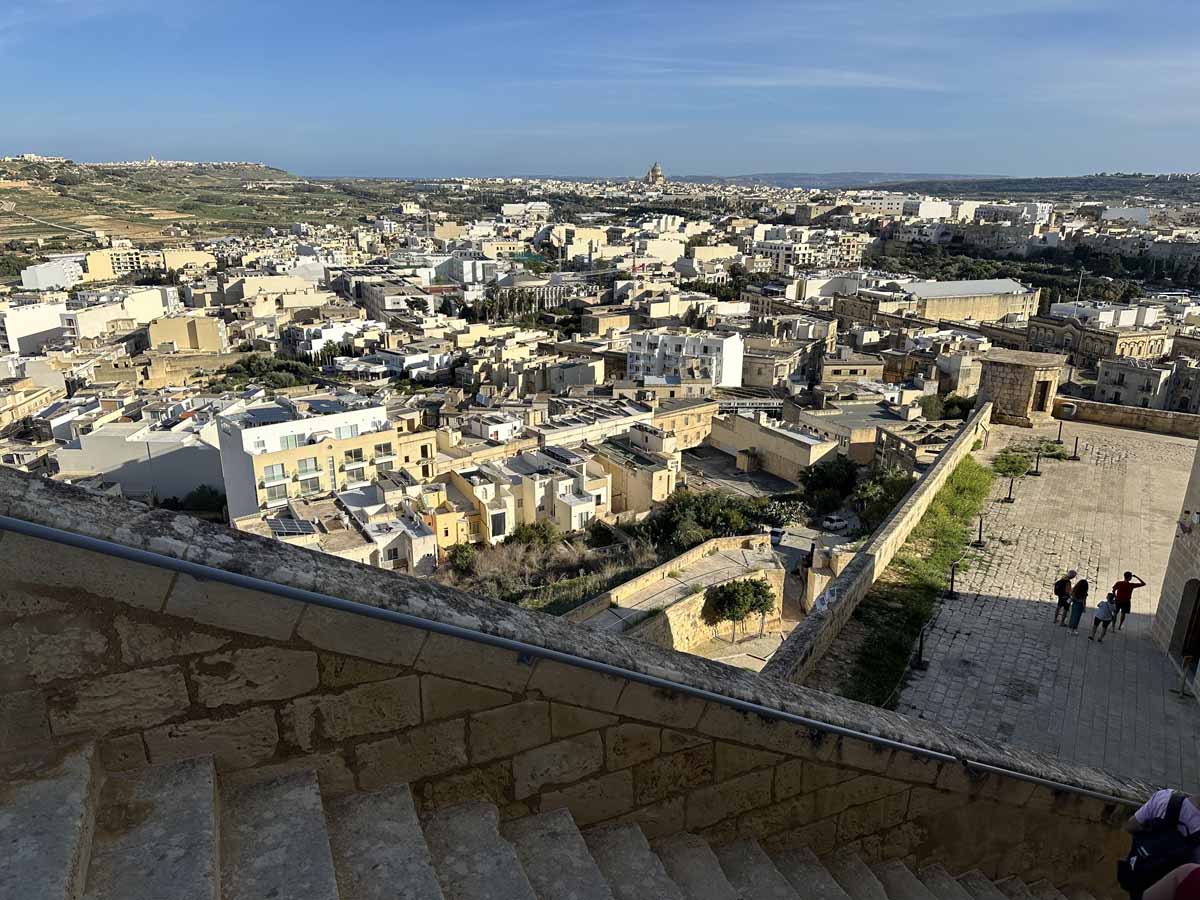
These impressive bastions and defensive walls were built or reinforced by the Knights of St. John (who ruled Malta from 1530 to 1798). These walls were recently restored to their former glory, so we made sure to walk along all of the different sections.
Cathedral Plaza / Citadel’s Museums
After the ramparts walk, we returned to the main area of the Cathedral Plaza. It was now around 5pm. That meant we needed to leave shortly to catch the Victoria bus back to Mgarr Harbor for our 6:45pm return ferry to Valletta.
We had spent a little under 2 delightful hours here at the Citadel. Unfortunately, we didn’t have time to visit any of the Citadel museums. My guidebook said two of the four museums were worth checking out – listing the Archeology Museum & the 16th century Old Prison (which I would have liked!).
-
- The Citadel upper entrance & exit
-
- Exit from Cathedral Square
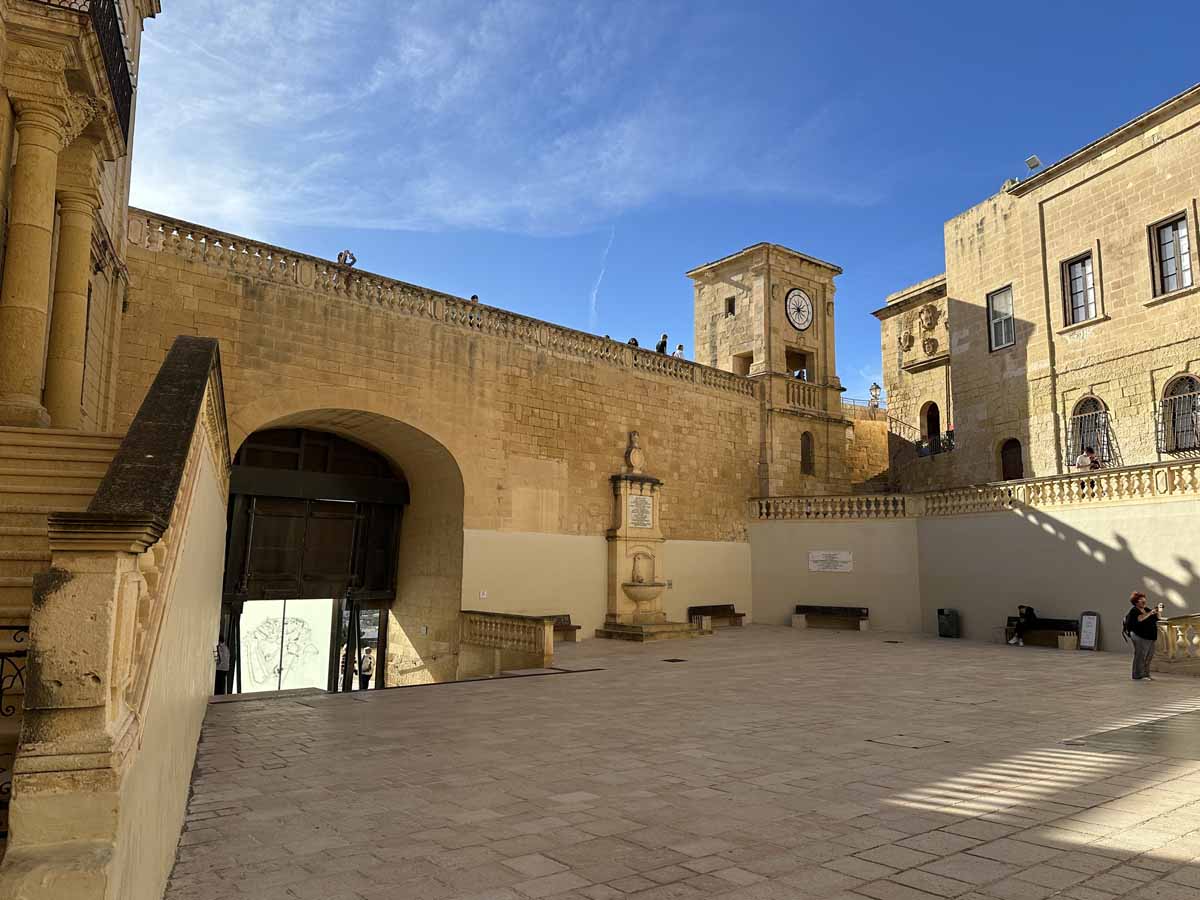
 We departed through the upper entrance of the Citadel (above) and headed back down to Victoria’s main square. There, we made sure to treat ourselves to a delicious gelato before making the return trip by bus and ferry to Valletta.
It had been a great visit to Gozo & Victoria – again, one that I definitely recommend.
FINAL REMARKS
I hope you have enjoyed this visit to Malta’s other great sights around the two islands. Perhaps, you’ve been inspired to plan your own visit to Malta.
As you can see by both my blog posts, there are many wonderful things to see & do in Malta. We spent 7 nights / 6 full days in Malta – and could have used more days! So my advice is to make sure to give yourself enough time for touring Malta.
RESOURCES:
Read My 1st Malta Blog Post – Touring Malta & Its Capital Valletta – A Mediterranean Charmer. It not only covers Valletta, but will give you additional information on Malta – like its history, language, and logistics on getting there.
Good Website: Visit Malta – Click here
Heritage Malta Home page – Click here
Heritage Malta Hypogeum page – Click here
Visit Gozo Website – Click here
Comments: Have you visited Malta? Which parts? Was it on a land tour or part of a cruise stop? What did you think?

Post a Comment