

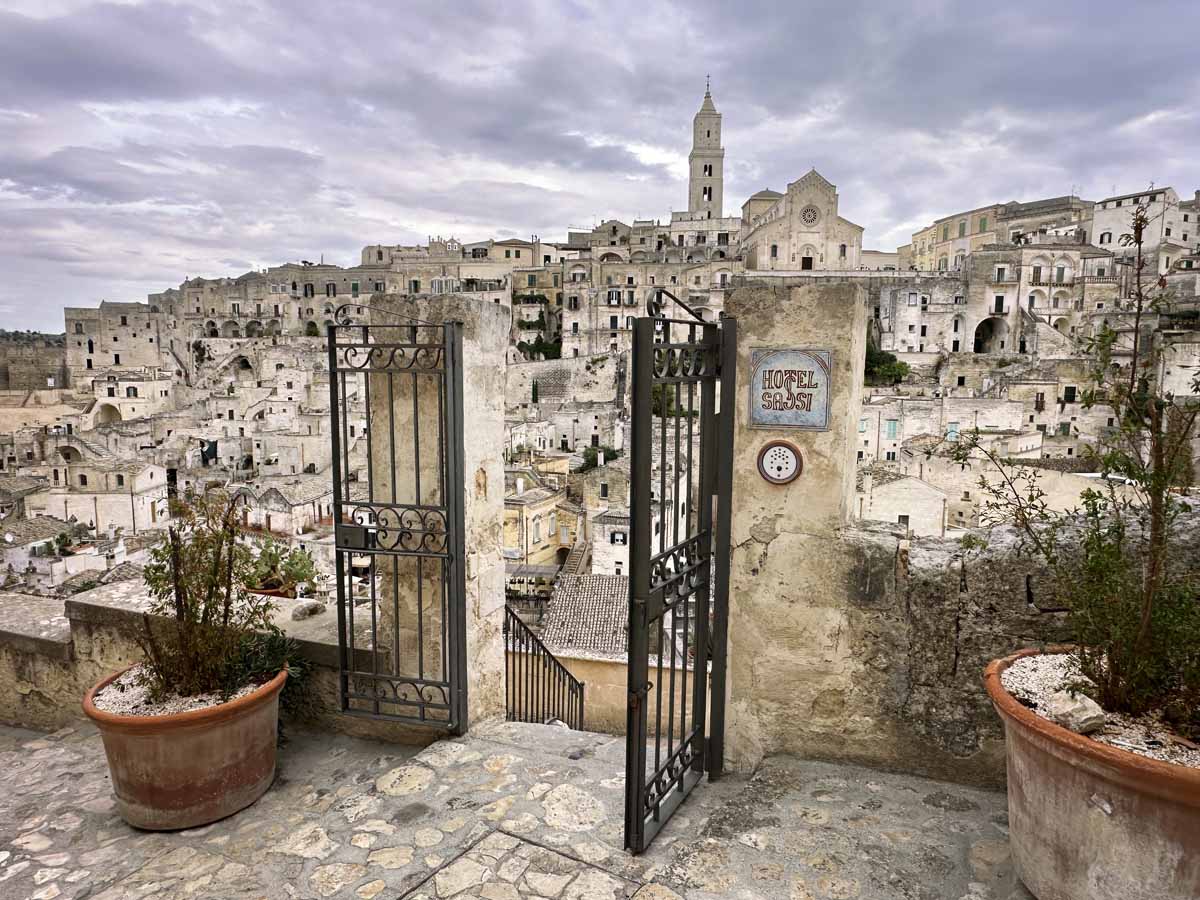
Matera is one of southern Italy’s best travel gems. The town is known for its many medieval rock churches & ancient cave homes (where people lived up until the 1950s!) It’s considered among the oldest continuously inhabited settlements in the world.
Matera’s famous Sassi (which means “stones”) are cave dwellings carved into the soft limestone (tufo) of a ravine. This picturesque tangle of rock cave homes are stacked vertically upon each other, with some dating back thousands of years.
-

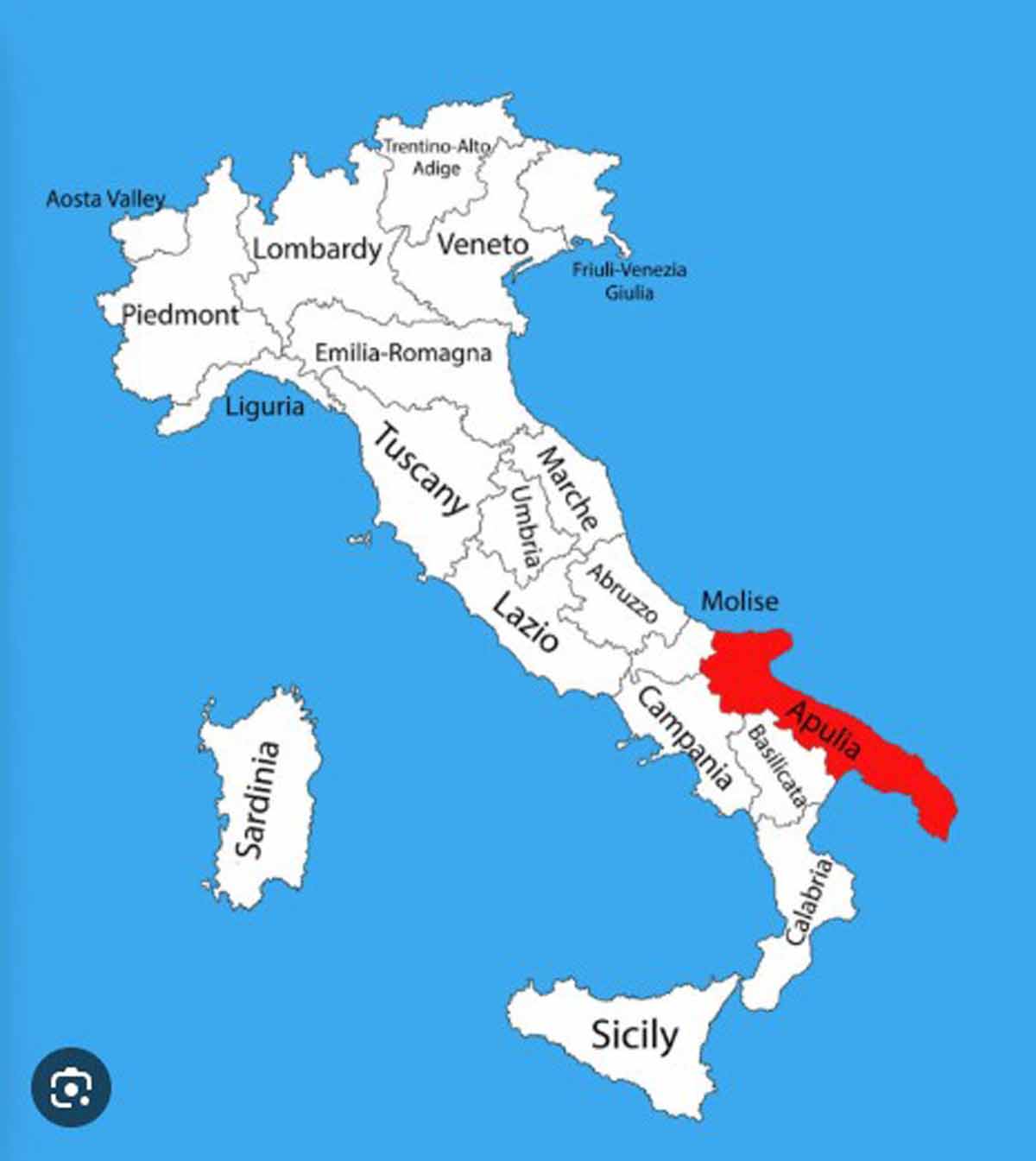
- Map of Italy’s Regions (Puglia in red) / Photo Credit: ZoeBakes Newsletter / Click to enlarge
-

- Map of Southern Italy Regions / Credit: Smithsonian Magazine
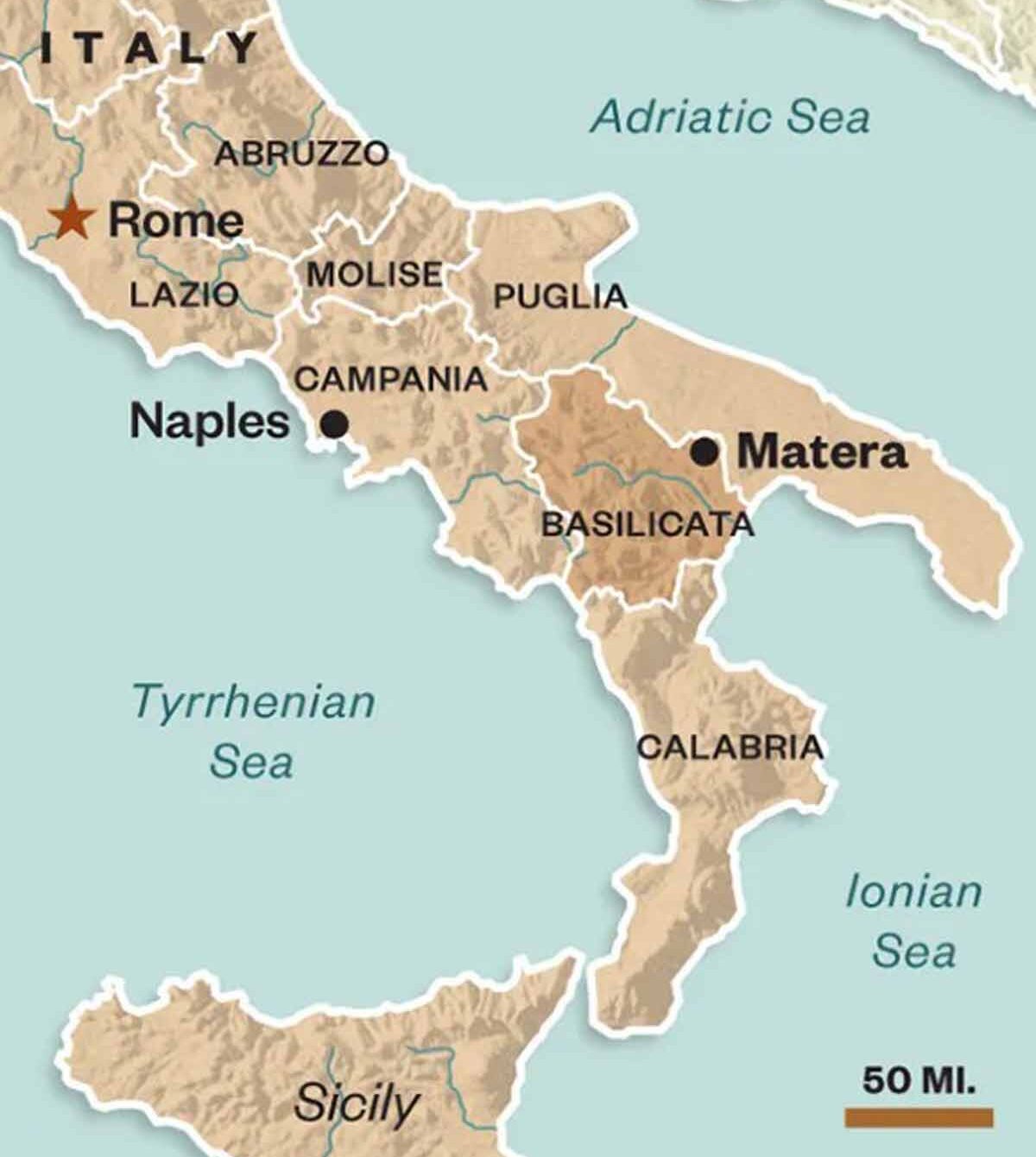
Matera is located in the heel of Italy’s boot – in the region of Basilicata just across the border from Puglia. Matera was named a UNESCO World Heritage site in 1993 & was the first southern Italian city to be recognized as European Capital of Culture (in 2019).
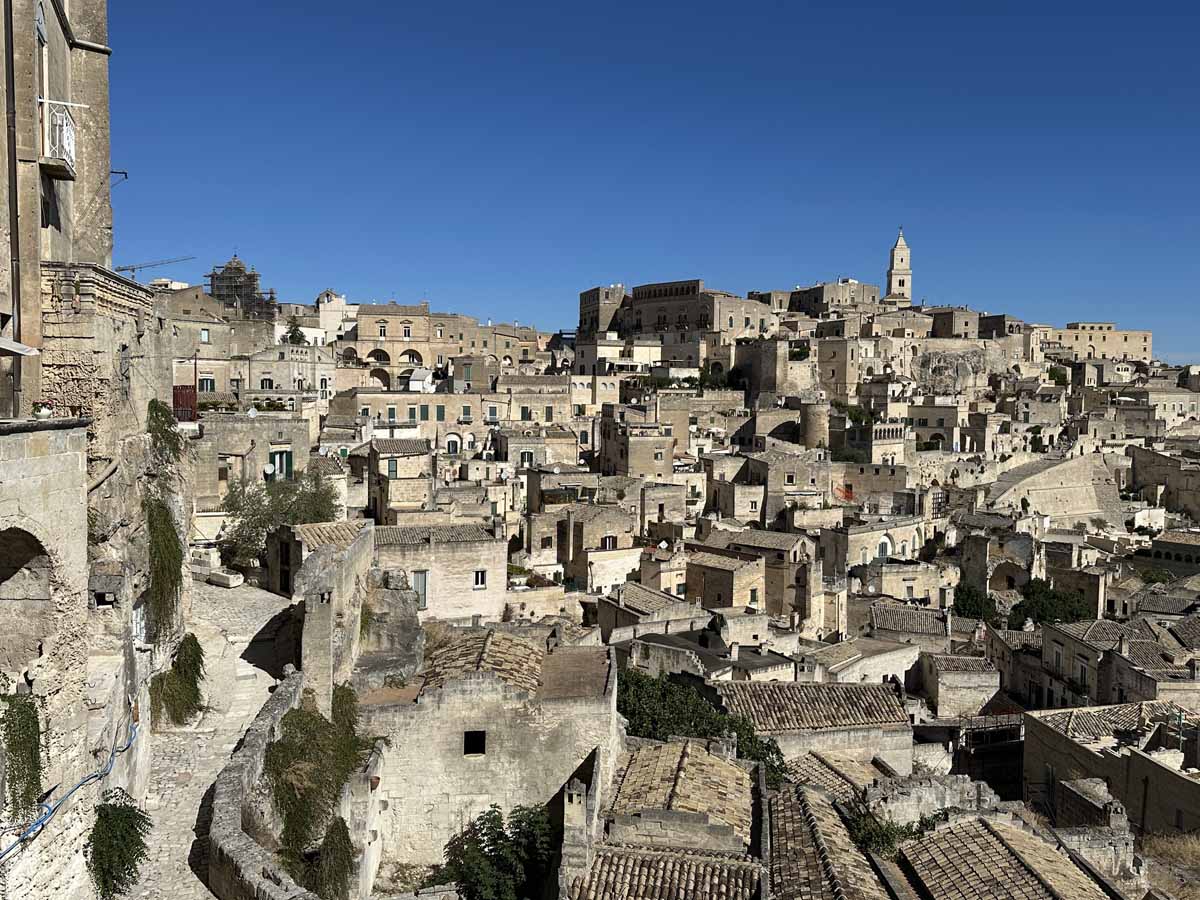
Click all photos to enlarge
UNESCO recognized Matera as the “most outstanding, intact example of a troglodyte settlement in the Mediterranean region.” (Troglodyte just means dwellings carved directly out of rock rather than constructed from bricks or timber.)
In addition, Matera’s biblical, timeless look has made it a favorite film location. Most famously, it doubled as Jerusalem in Mel Gibson’s “The Passion of the Christ” (2004) and later appeared in the James Bond film “No Time to Die” (2021).
My Visit to Matera / This Blog Post
I visited Matera in September 2025, as part of an Overseas Adventure Travel (OAT) tour of Sicily. I took OAT’s 5-day pre-trip to Puglia, which included 3 nights/ 2 full days in Matera.
My group of 7 pre-trip travelers was led by Nicola (Nic), a delightful Italian OAT Trip Leader. We all loved Matera & exploring its old town (Sassi) district. Wandering the ancient, uber-picturesque, maze-like stone lanes of the Sassi was a pure delight.
In this blog post, I will share what we did in Matera, all of which I highly recommend. Along with the photos, this should give you a good taste of what makes Matera so special & unique. I hope to inspire you to put the Puglia region – and Matera specifically – on your travel list for a future visit.
Quick History: Matera’s Turnaround from Italy’s “City of Shame”
By the 1950s, the Sassi’s honeycomb of houses & caves had become a national scandal – due to extreme poverty, disease, and overcrowding of its peasant residents. They lived in appalling conditions with an average of six children in a single room, along with their animals. There was no running water, electricity or sewage management.
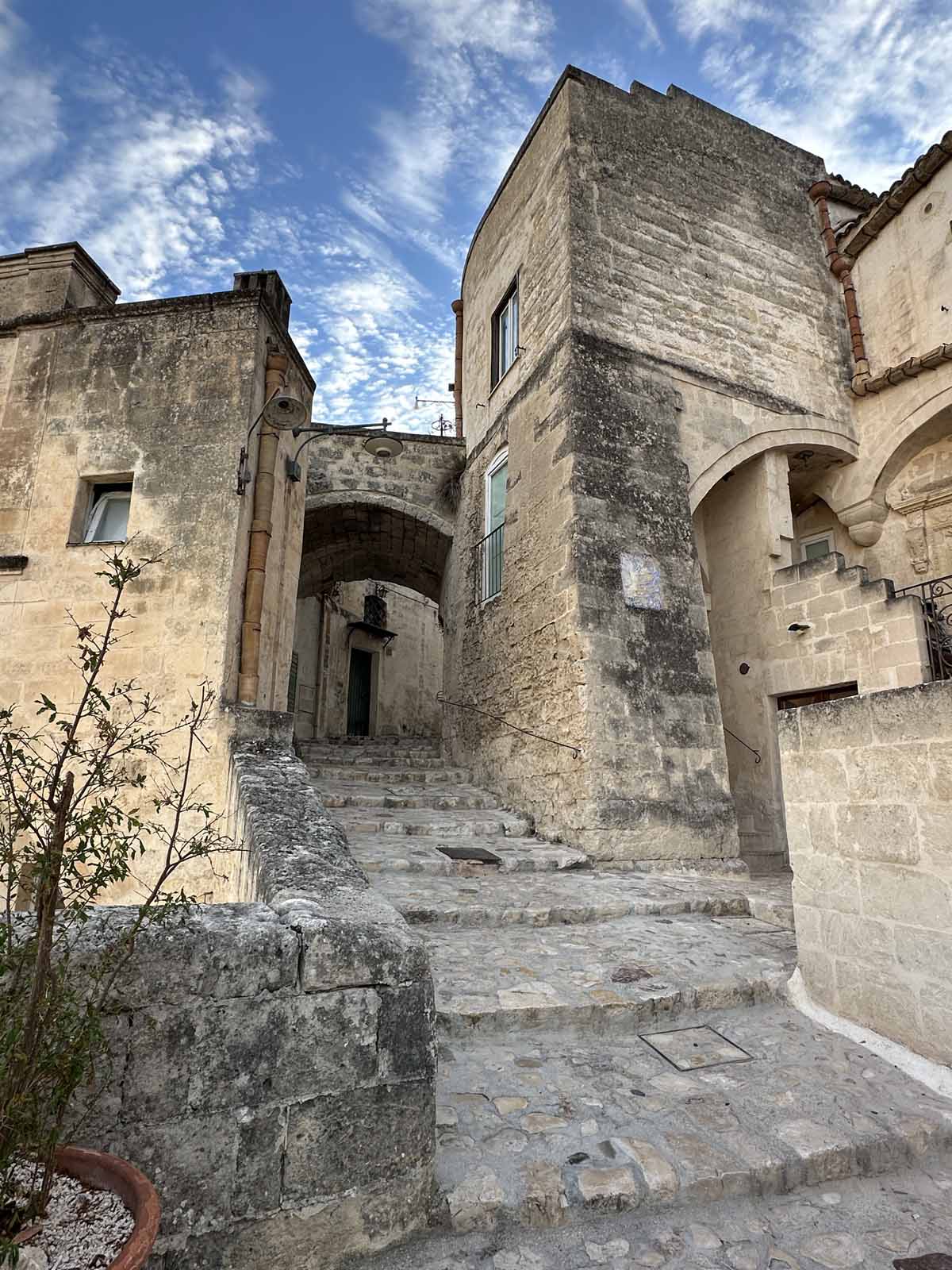
Typical Sassi lane – Click to enlarge
Publicly embarrassed, this led Italy’s government to brand Matera “The Shame of Italy!” So, in 1952, they began to relocate (often forcibly!) roughly 15,000 residents to newly built housing on the plateau above.
For decades afterward, the Sassi caves sat empty and stigmatized. However, in the 1980s, a number of intrepid Materani started to return, thanks to government incentives to renovate the cave dwellings. However, gaining UNESCO status in 1993 really flipped the narrative from national embarrassment to protected treasure.
Today, Matera is often cited as one of the best examples of “adaptive reuse” in Europe. Many of its caves have been restored & converted into homes, boutique hotels, restaurants, wine cellars, and shops. What a dramatic turnaround!
Matera’s Sassi (Old District) Today
Sassi di Matera consists of two original districts in the valley – Sasso Caveoso & Sasso Barisano. In the past, homes, stables, churches, and workshops were all layered into the ravine, often stacked on top of each other, with one family’s roof serving as another’s terrace.
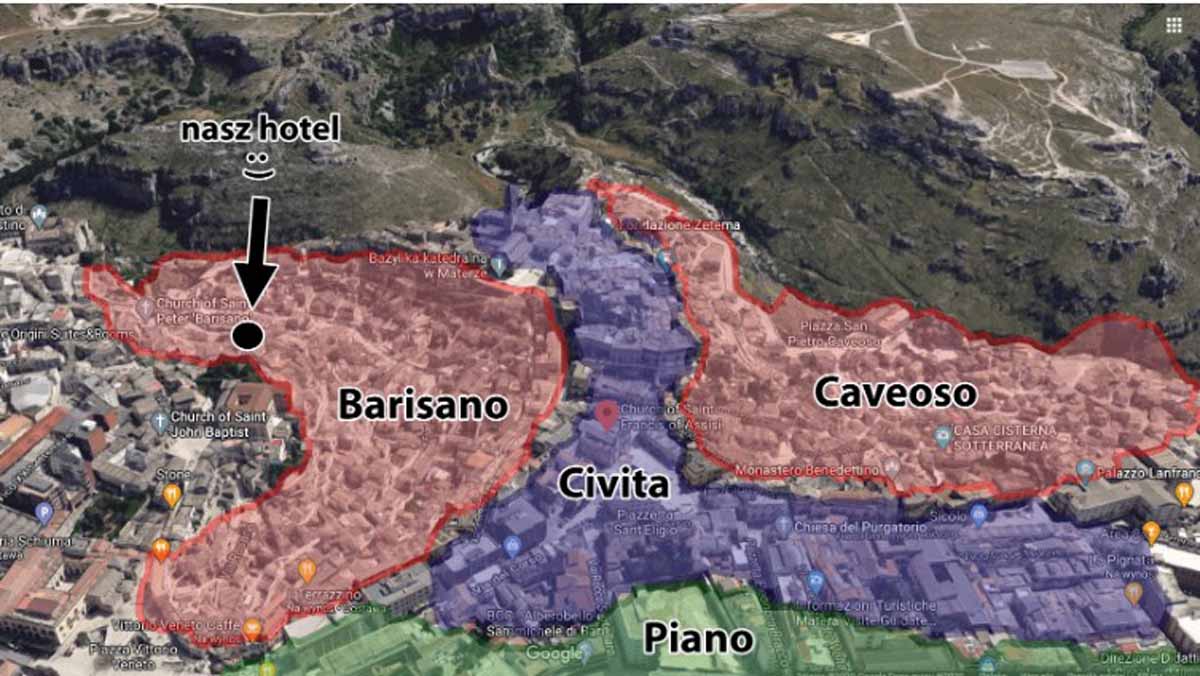
Map of Matera’s Sassi districts / Credit: Gancarczyk.com / Click to enlarge
Today, both Sasso are a labyrinth of renovated cave dwellings, alleys, stone stairways, and tiny courtyards. [Note: Sassi is the plural of Sasso – so it refers to both Sasso districts.]
The modern, newer town is built on the plateau just above the Sassi. The total population of Matera is around 60,000, with most residents living in the modern town.
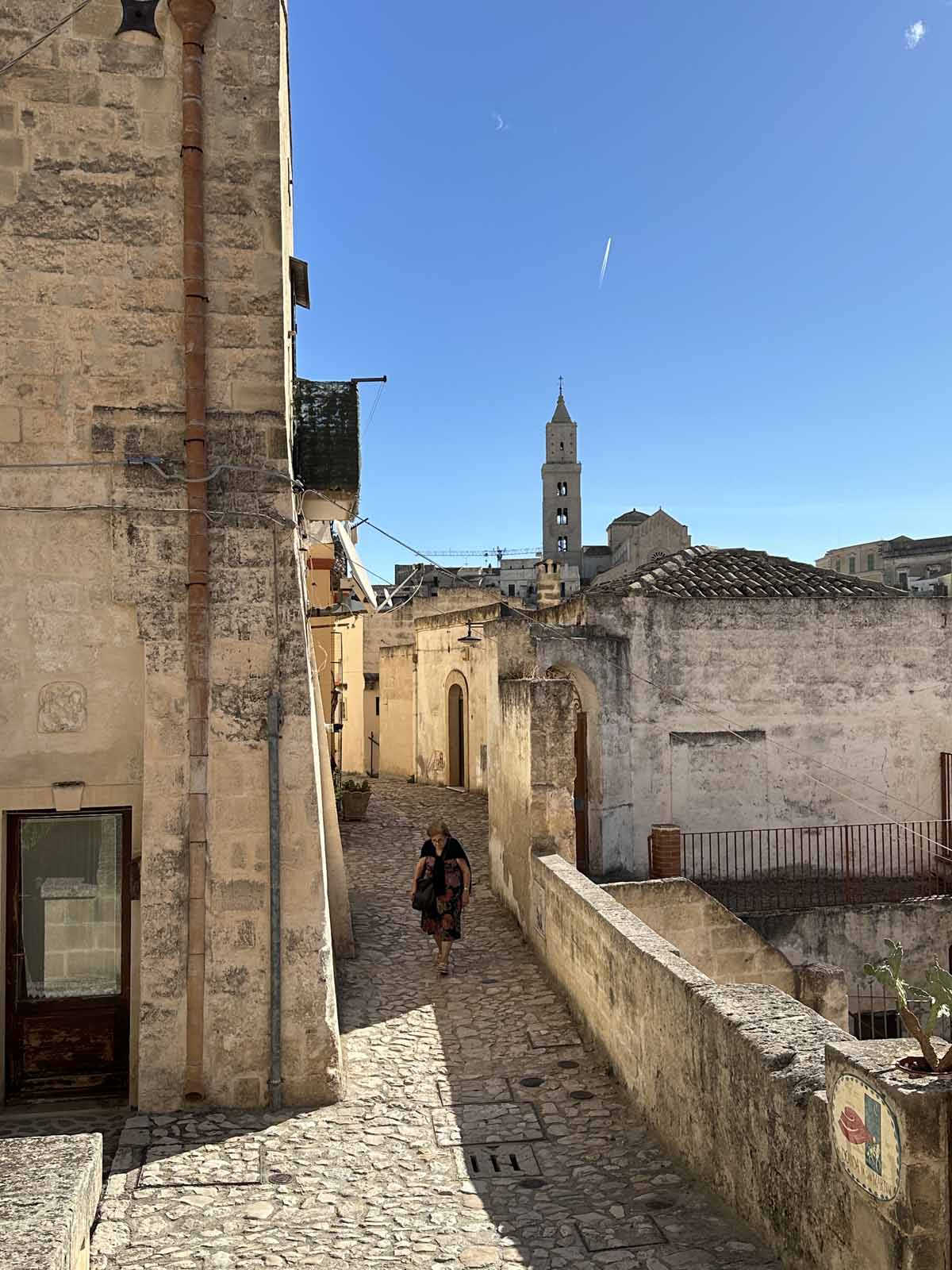
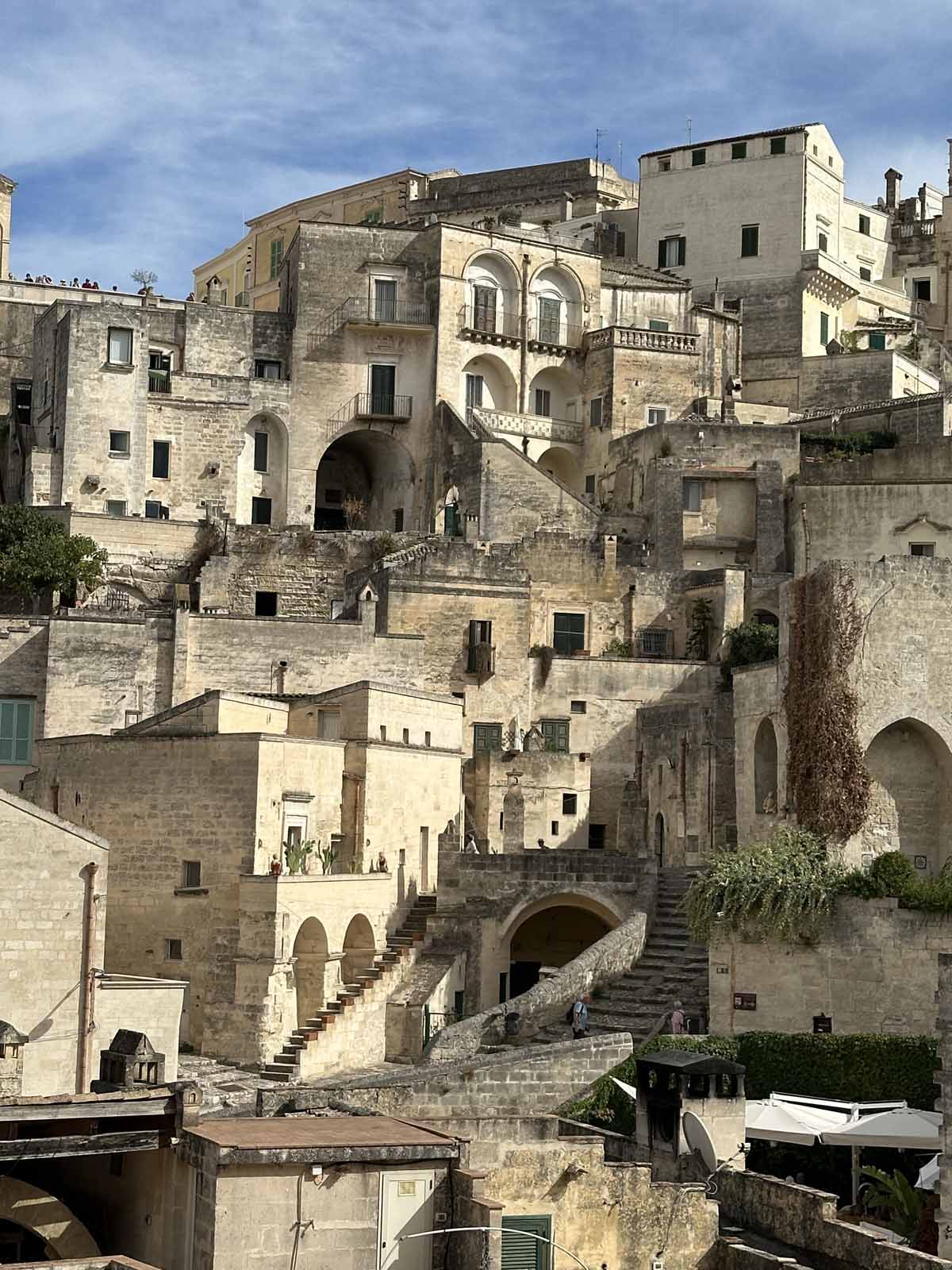
Of course, it’s the “old town” Sassi core that attracts us visitors. Population in the Sassi is very roughly estimated at 1,500, which includes a mix of long-time holdouts and newer arrivals running hotels and restaurants.
Hotel Sassi – My Boutique Cave Hotel
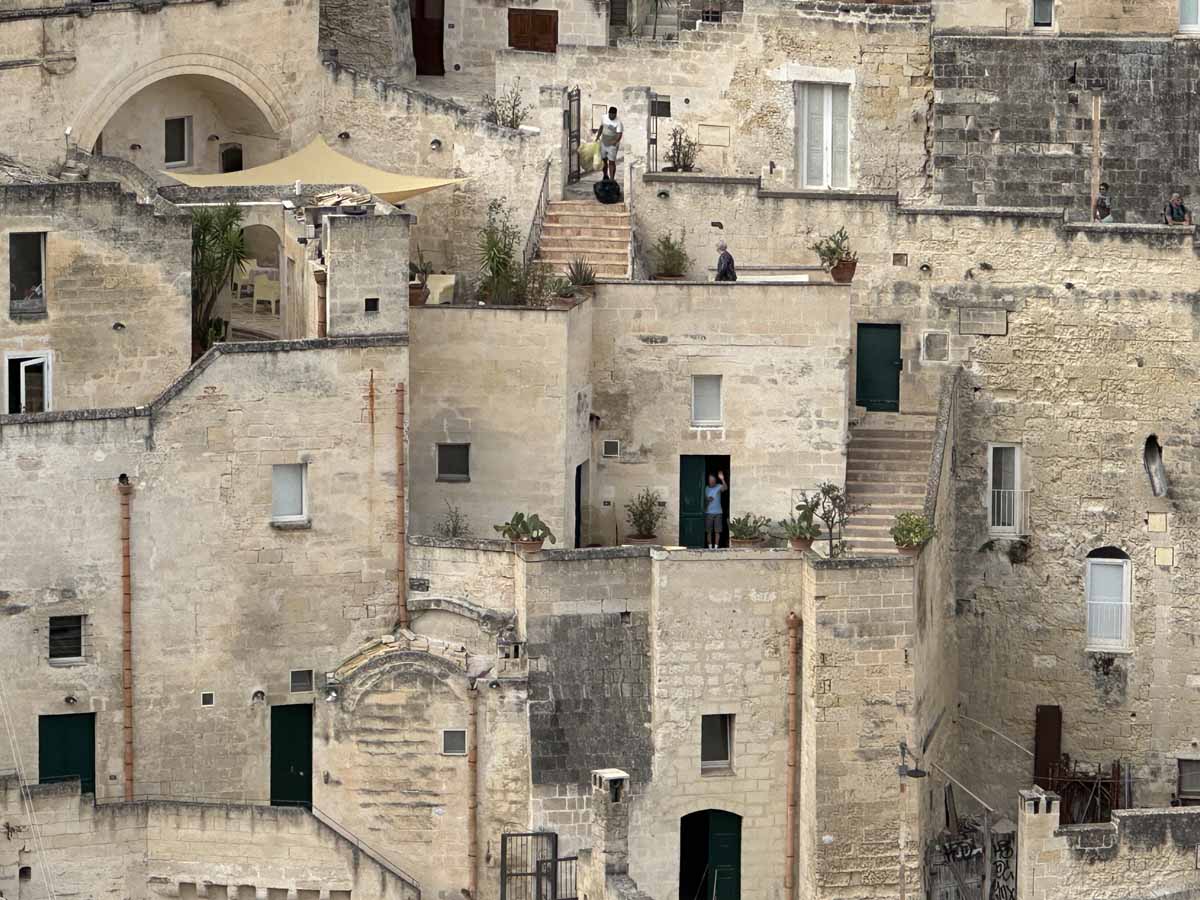
Hotel Sassi – View of its many levels / Note my friend Eddie in blue shirt in doorway of his room (middle of photo)
After a long flight from the States last September, I arrived in Matera around 7pm. I would be staying three nights at the very nice Hotel Sassi, located in the old city in the Sasso Barisano district.
The hotel is situated on a pedestrian only street, so our van dropped Terre & me at a nearby plaza in front of a big church. Two hotel staff were there waiting so they could carry our luggage two blocks to the hotel, including down some winding stone step pathways. Very helpful!
-

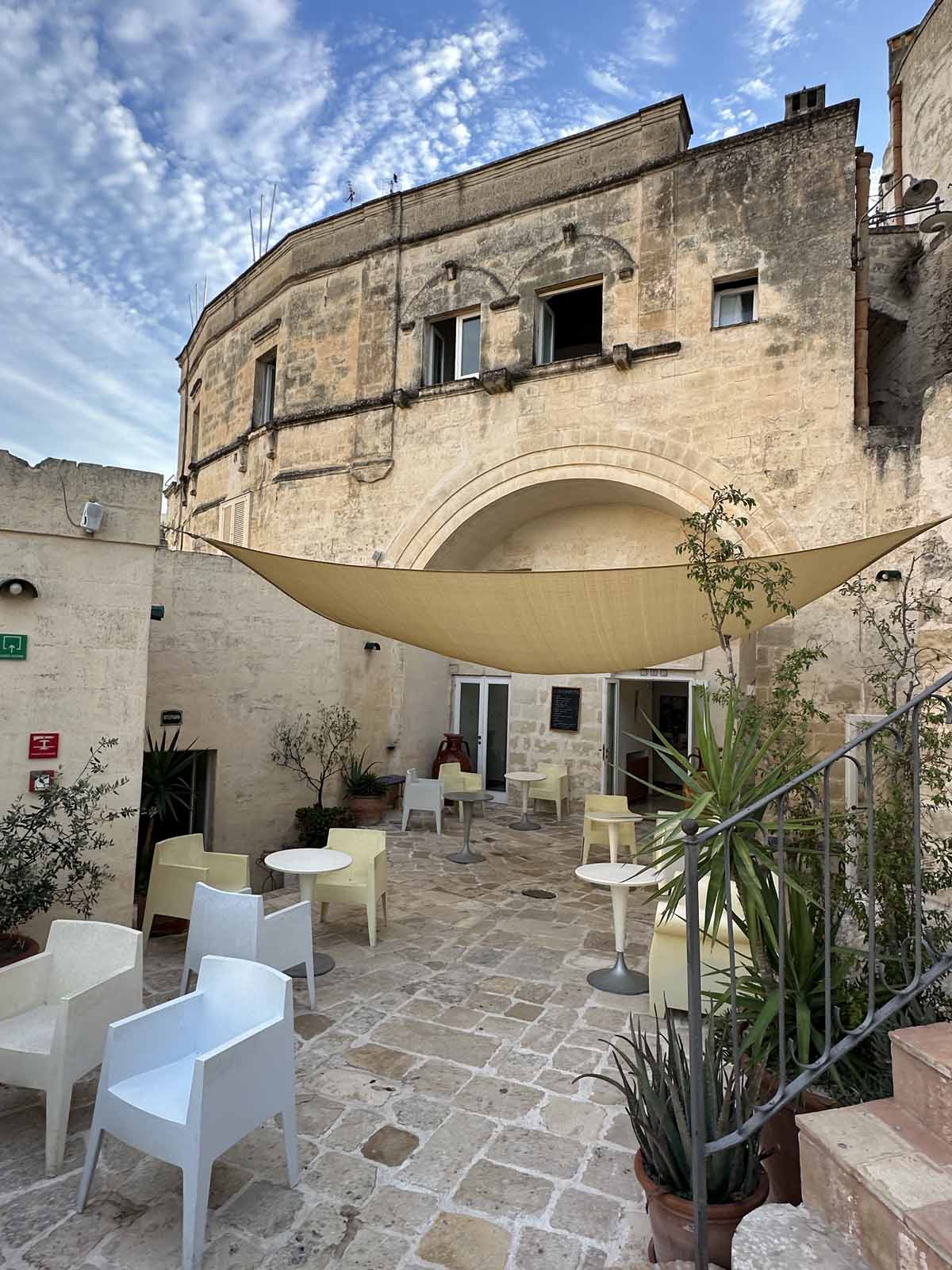
- Hotel Sassi – Entrance terrace
-
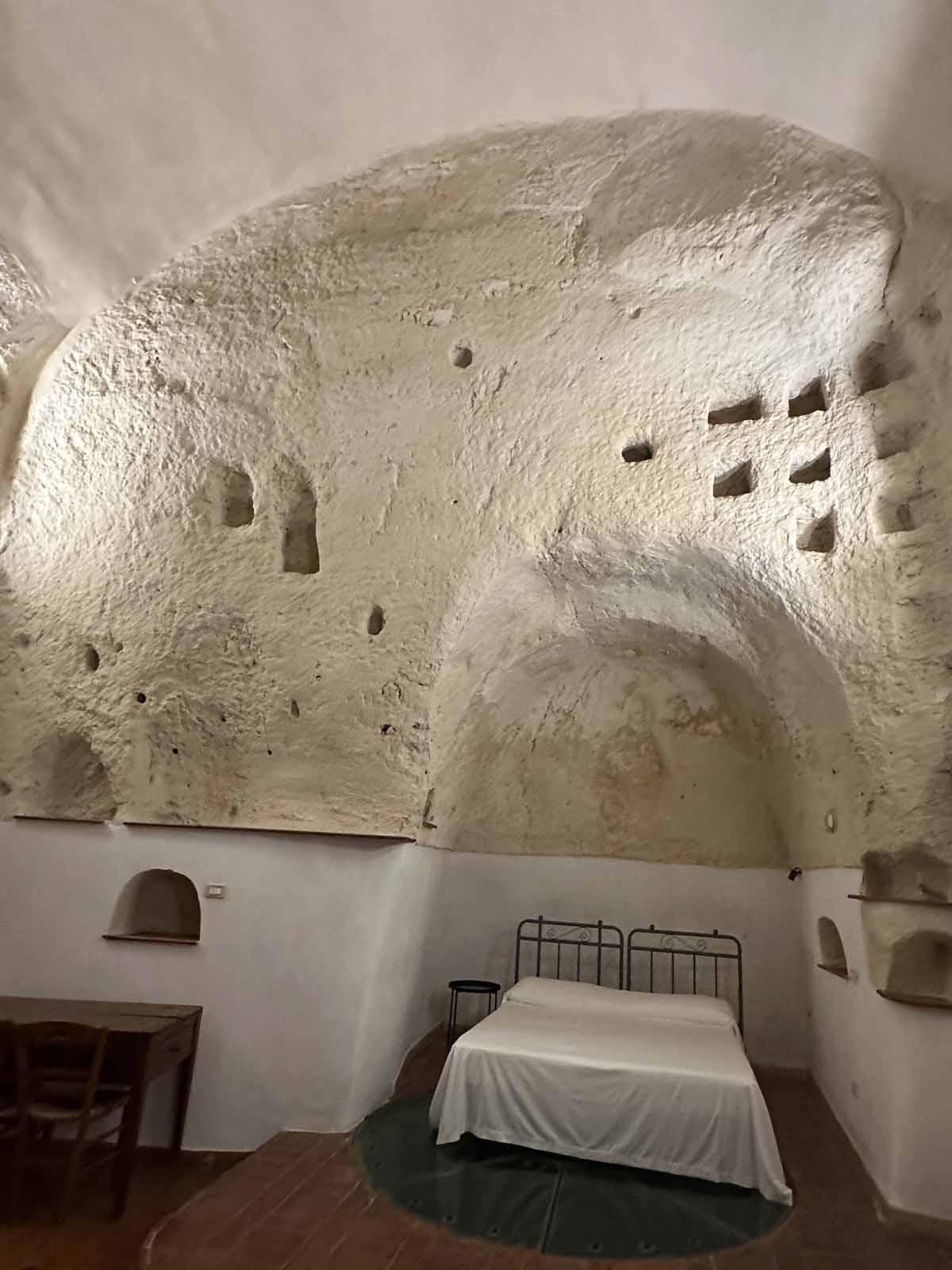
- My Cave Room
Hotel Sassi has a total of 33 rooms, located on multiple levels. Turns out, it was the first hotel to open in the Sassi district (in 1996), after renovating a series of cave dwellings – with some sections dating back to the 1500s! The hotel has a great location as well as breathtaking panoramic views over the Sassi & the Cathedral sitting atop a hill.
-

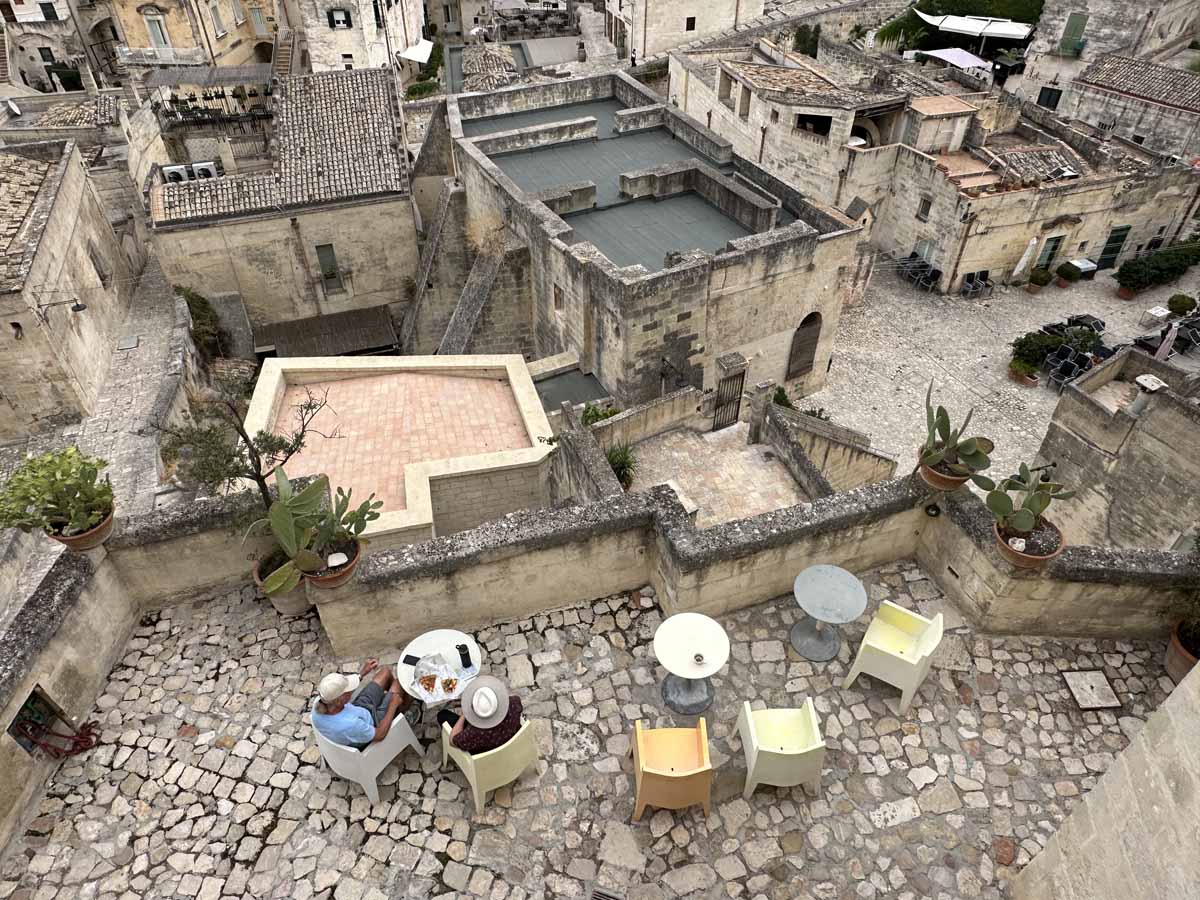
- Carol & Eddie sitting on one of the hotel’s terraces
-
- Similar view from the hotel of lower part of town
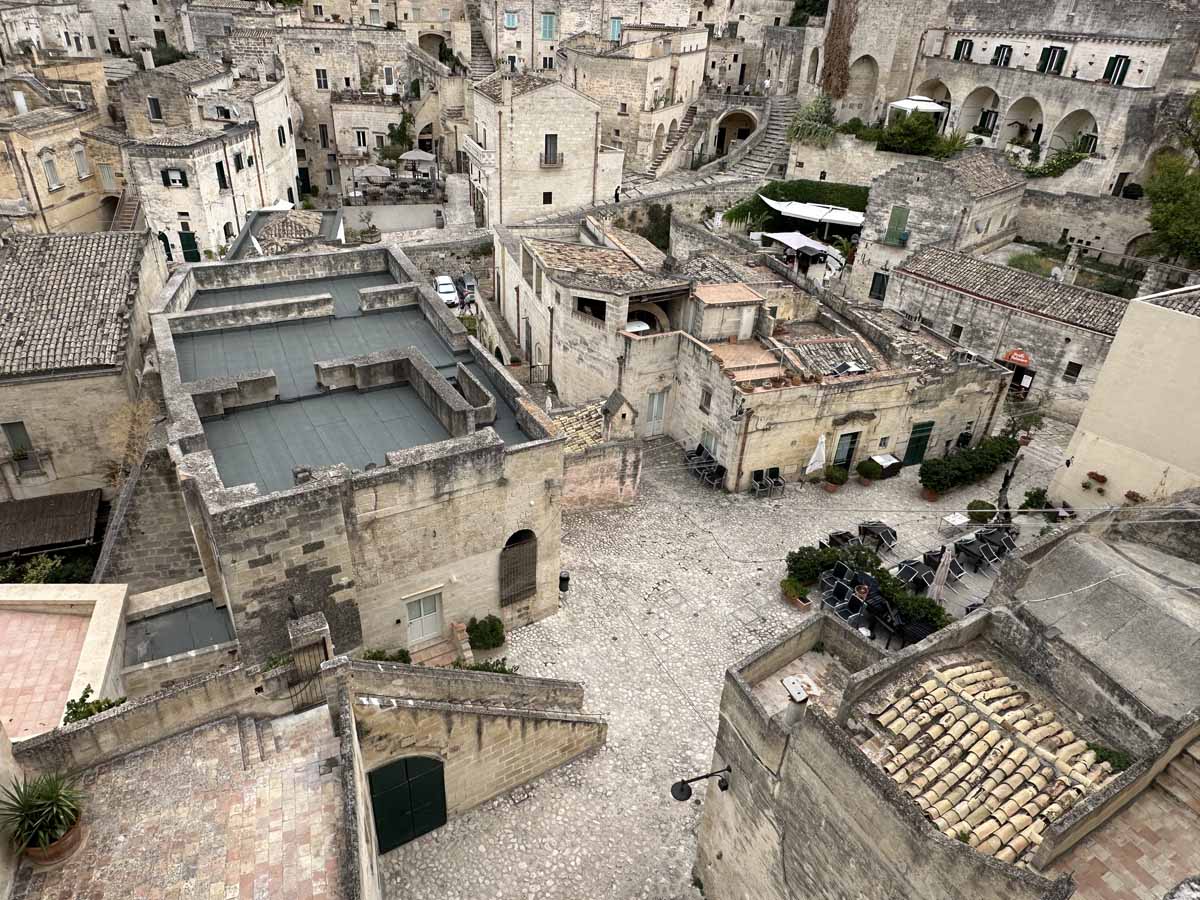
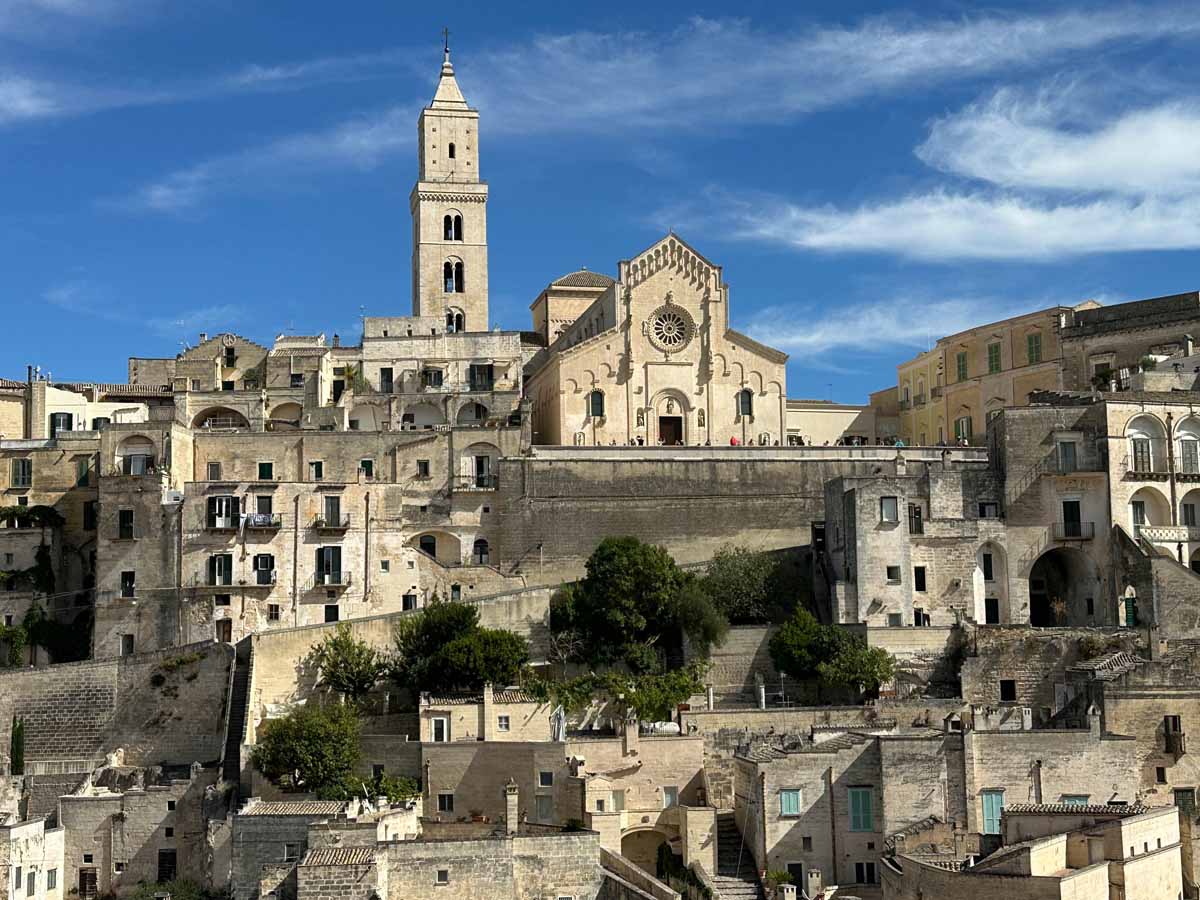
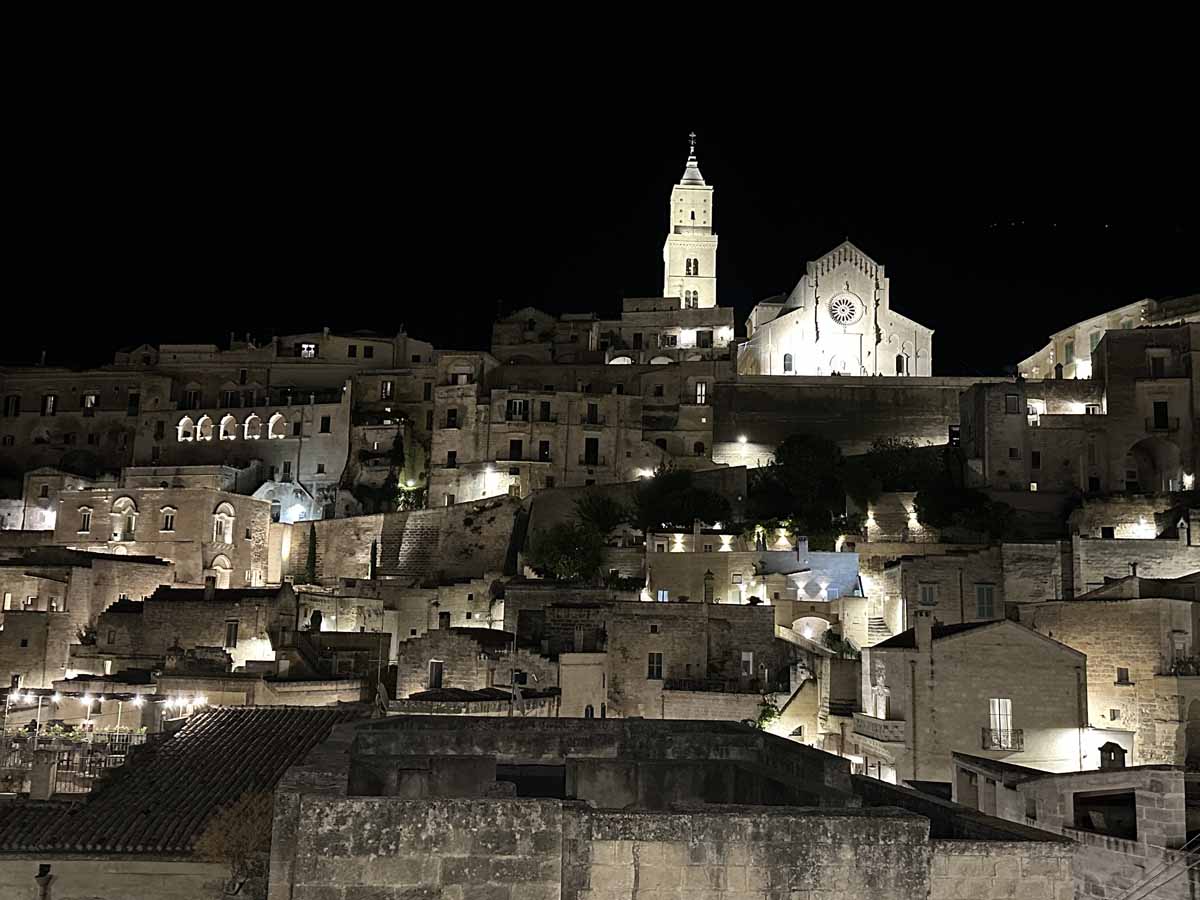
I was given a large room which showed that parts had been a prior cave dwelling. Very cool! But the best part was the amazing view just outside my front door. I loved checking out the Sassi views at different times of day – including at night with the twinkling lights. Magical! (see below)
-
- View from my room of the Sassi & Cathedral
-
- Night View from my room / Click photos to enlarge
1st Day Matera Sightseeing with Carol
I arrived in Matera one day before the official OAT pre-trip, but my friends Carol & Eddie arrived two days early. Carol had already walked all over Matera the day before. We met the next morning so Carol could give me a helpful introduction to the old town.
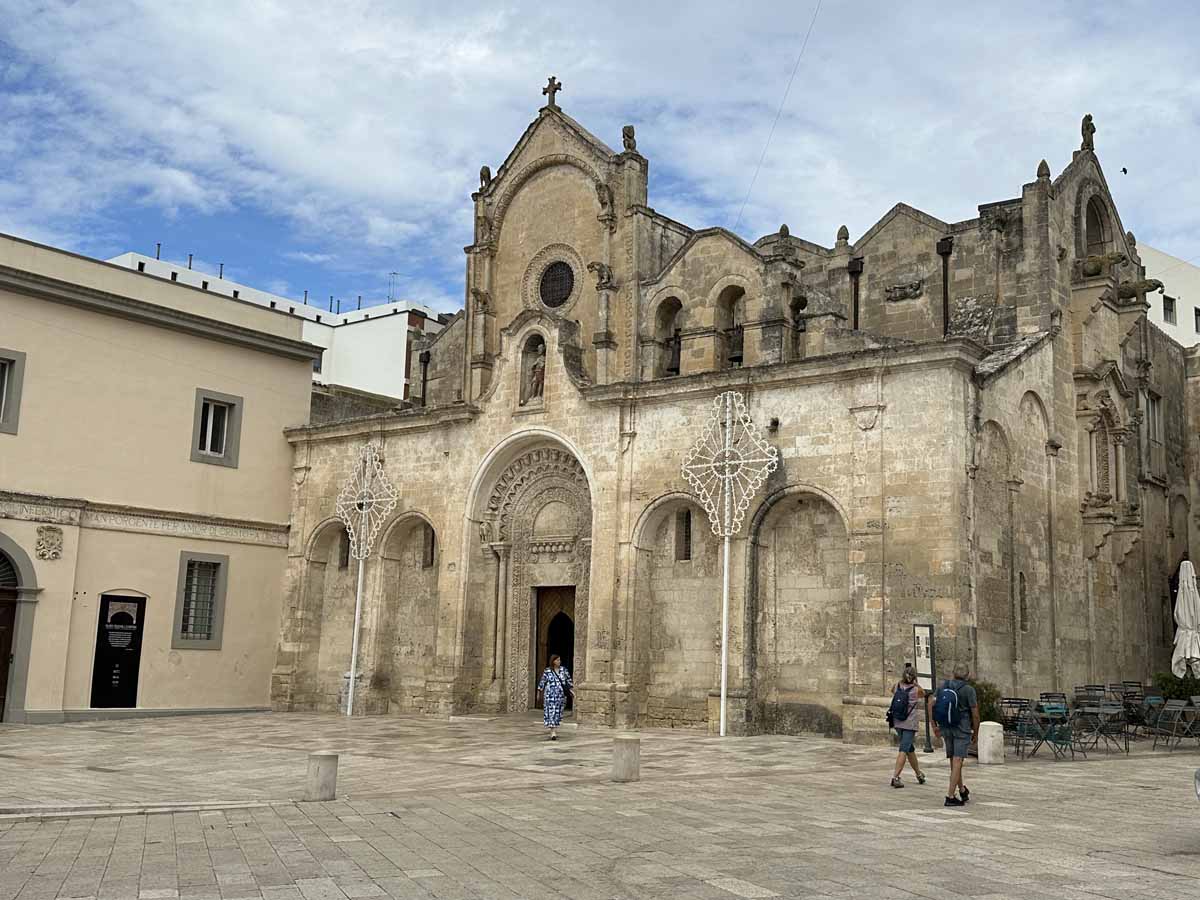
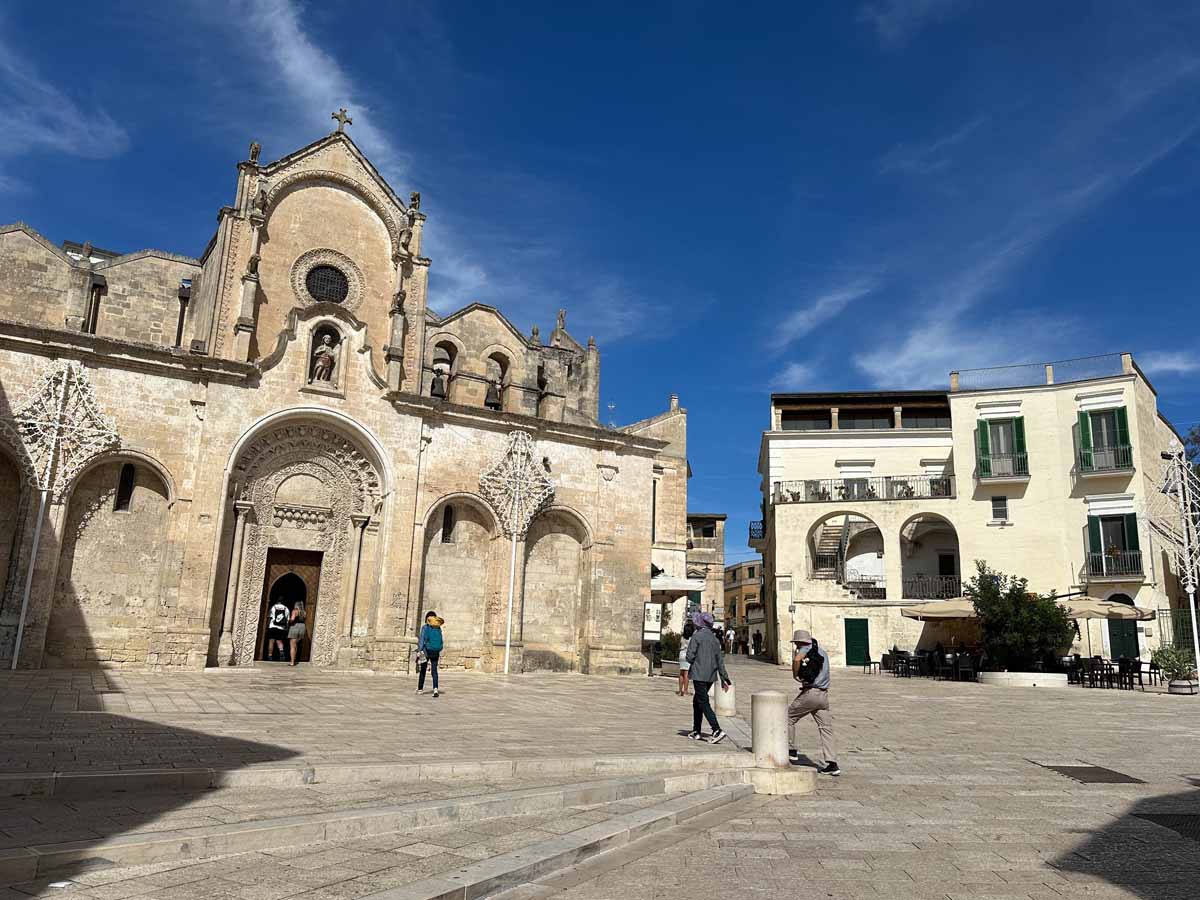
We spent three delightful hours wandering the streets and lanes of the Sassi. We started at the small plaza near the hotel. It was fronted by the beautiful Church of San Giovanni Battista which we visited inside. This 13th century church is one of Matera’s finest examples of Pugliese-Romanesque architecture. (photos above & below)
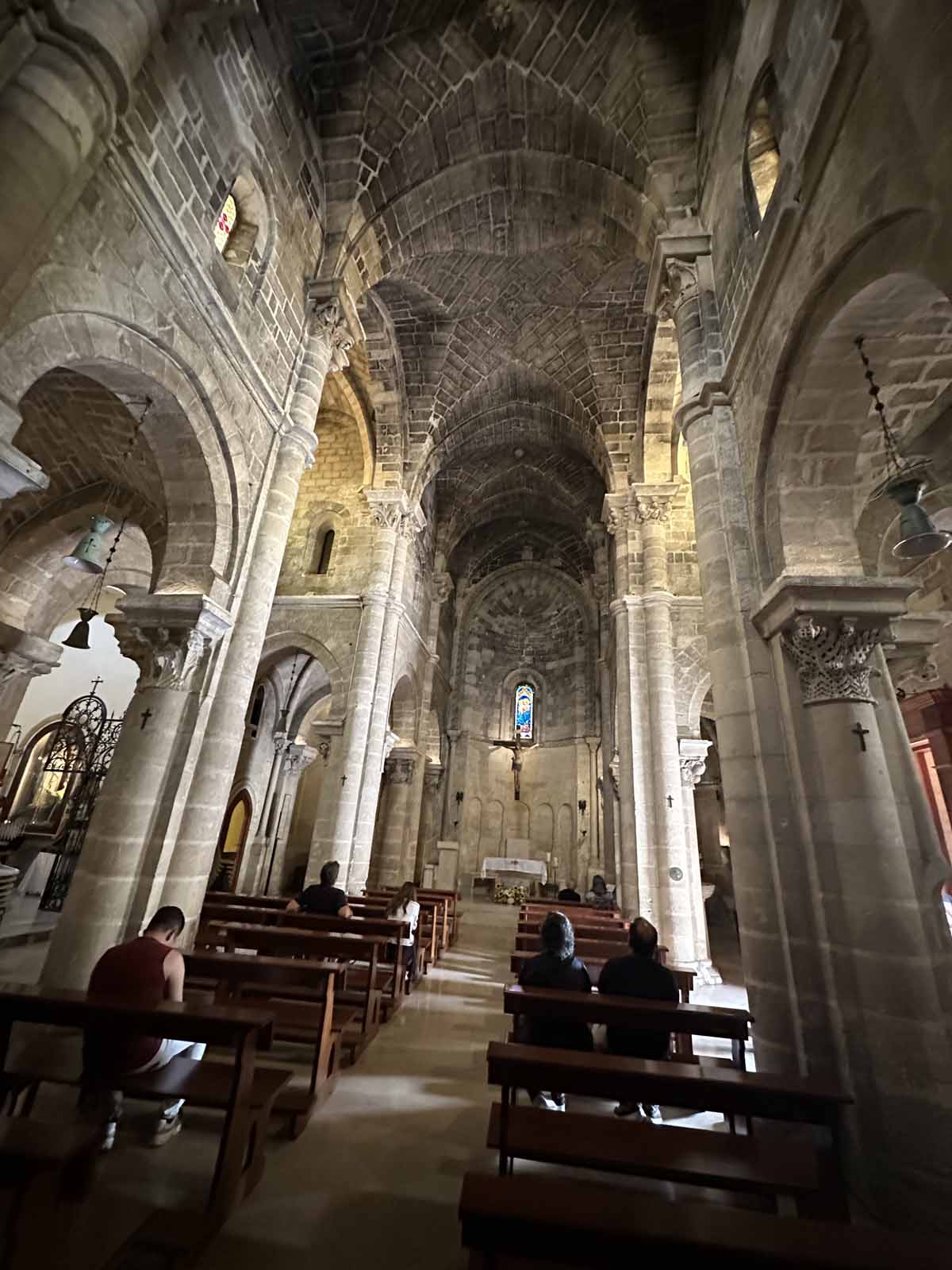
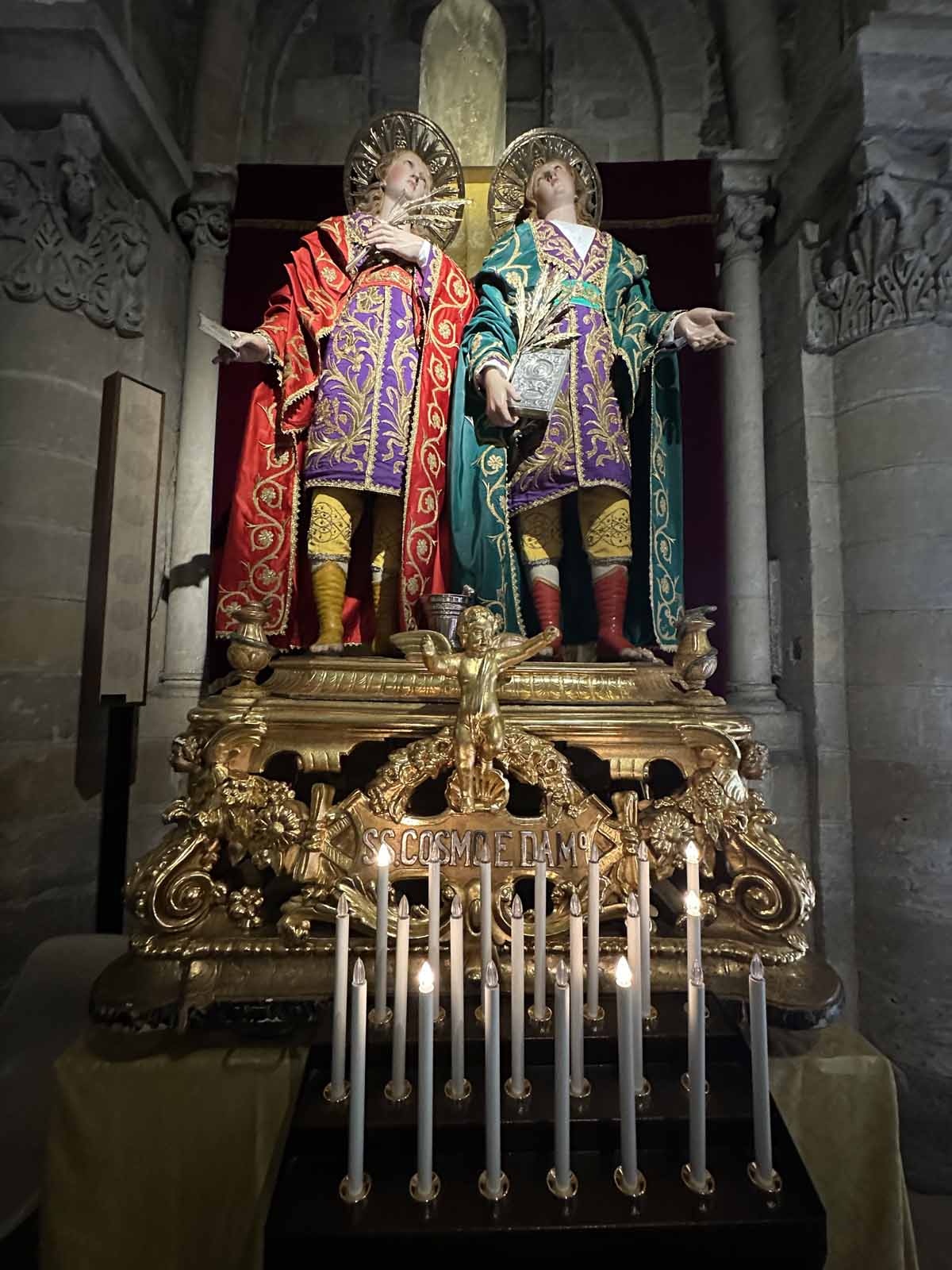
It was a short walk to Piazza Vittorio Veneto, a large vibrant & pedestrian-friendly square which serves as the heart of Matera’s new town. It sits at the crossroads of the city’s key streets, including the main entry point into Sasso Barisano.
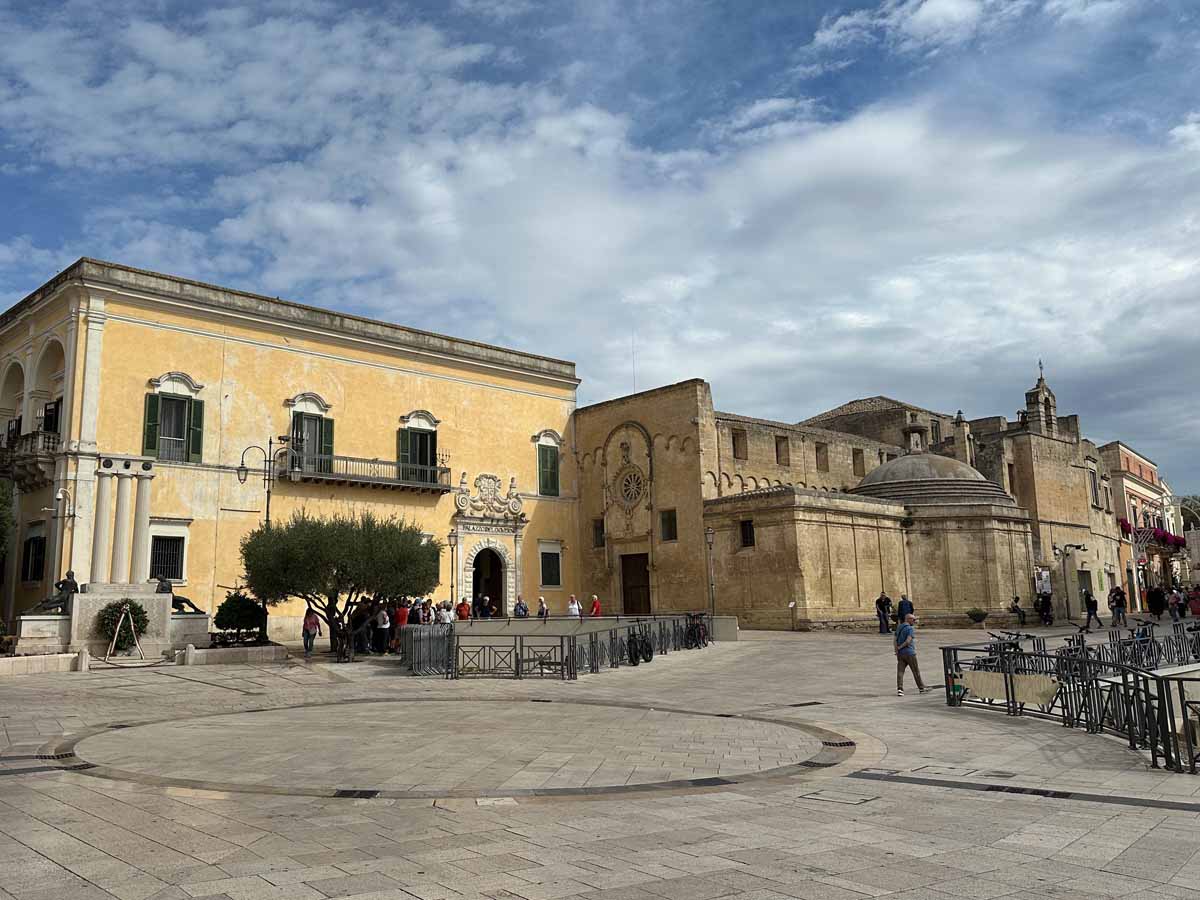
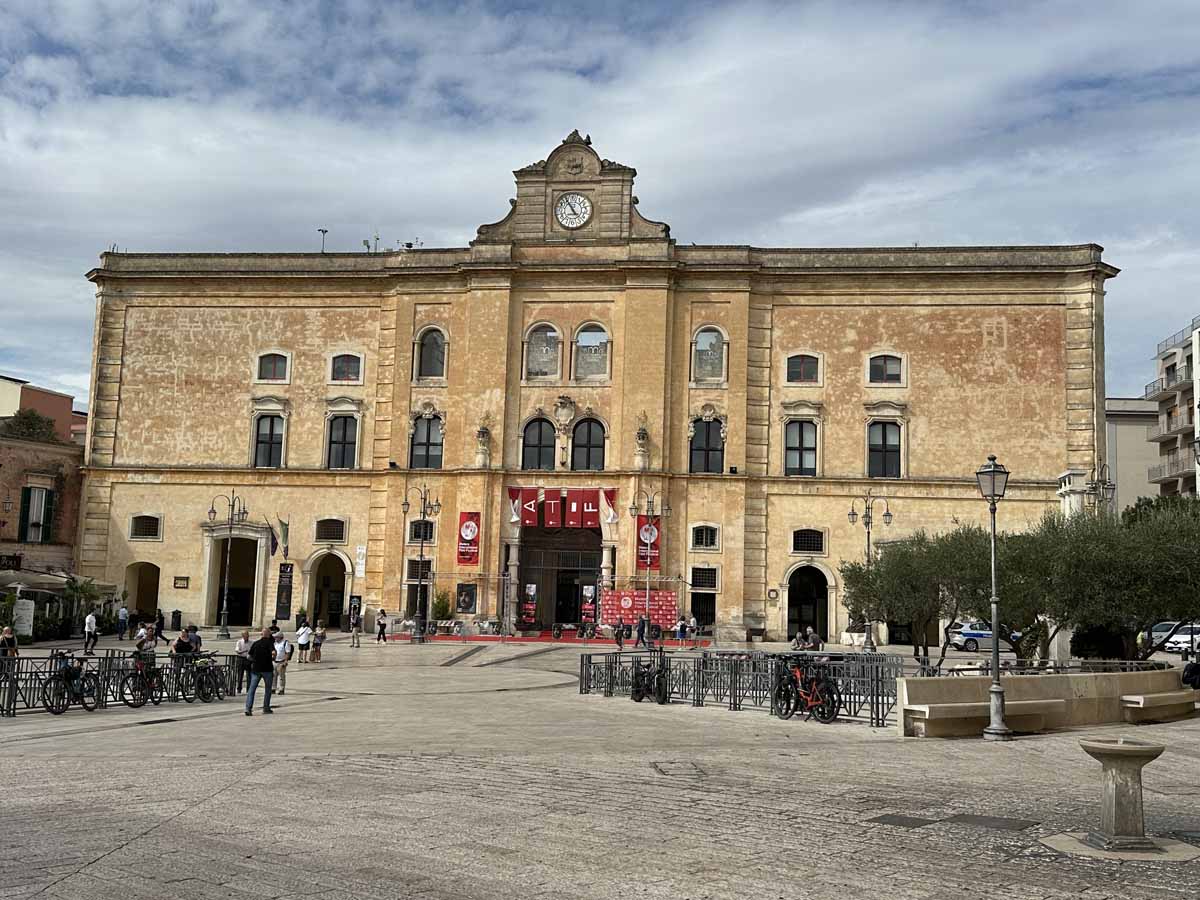
We were particularly struck by a beautiful building on the plaza – the CineTeatro Comunale Gerardo Guerrieri – displaying signs for Matera’s International Film Festival. (above right)
On the east side of the plaza is the Belvedere Luigi Guerricchio, nicknamed Tre Archi (Three Arches). It offers a dramatic view over the Sassi, so we stopped for a view & photos. (below)
-
- The Belvedere – Three Arches
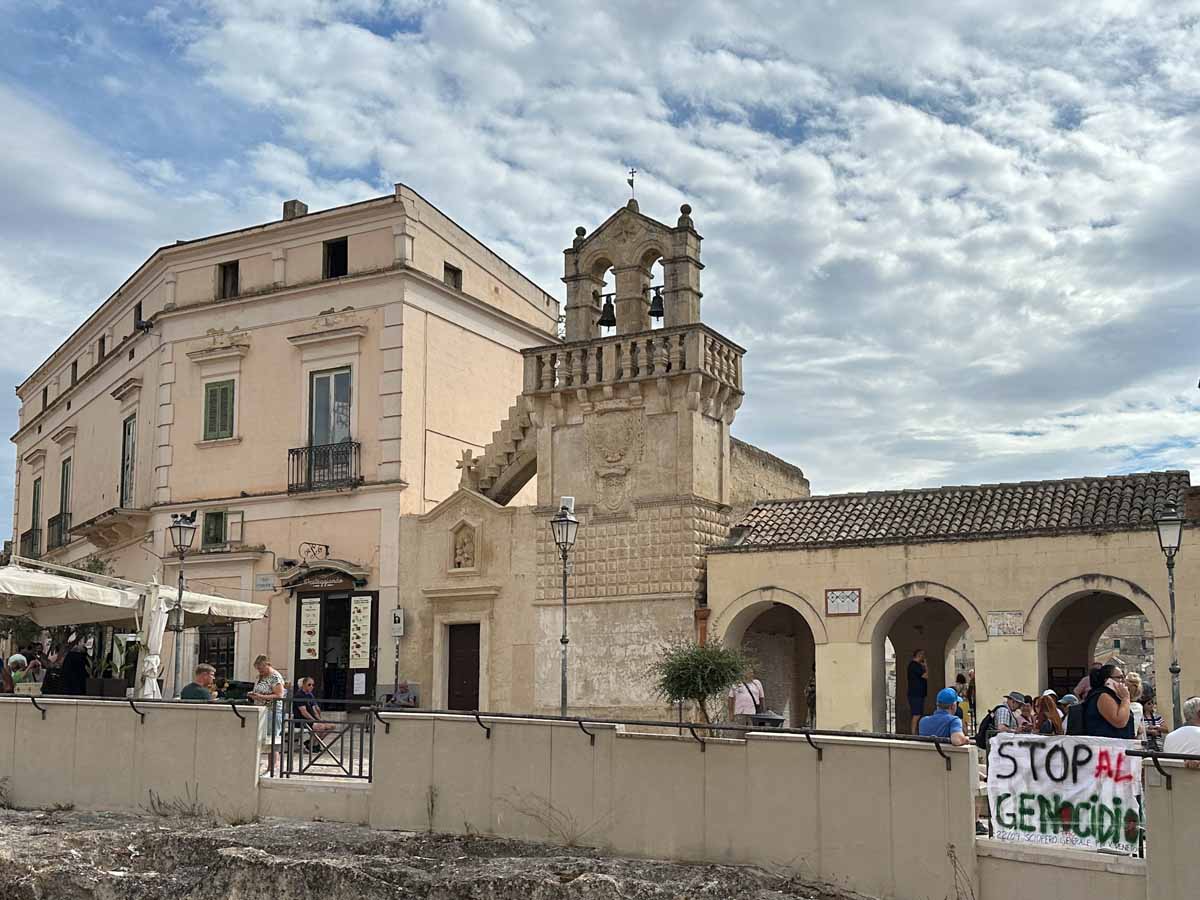
-
- View from the Belvedere – click to enlarge
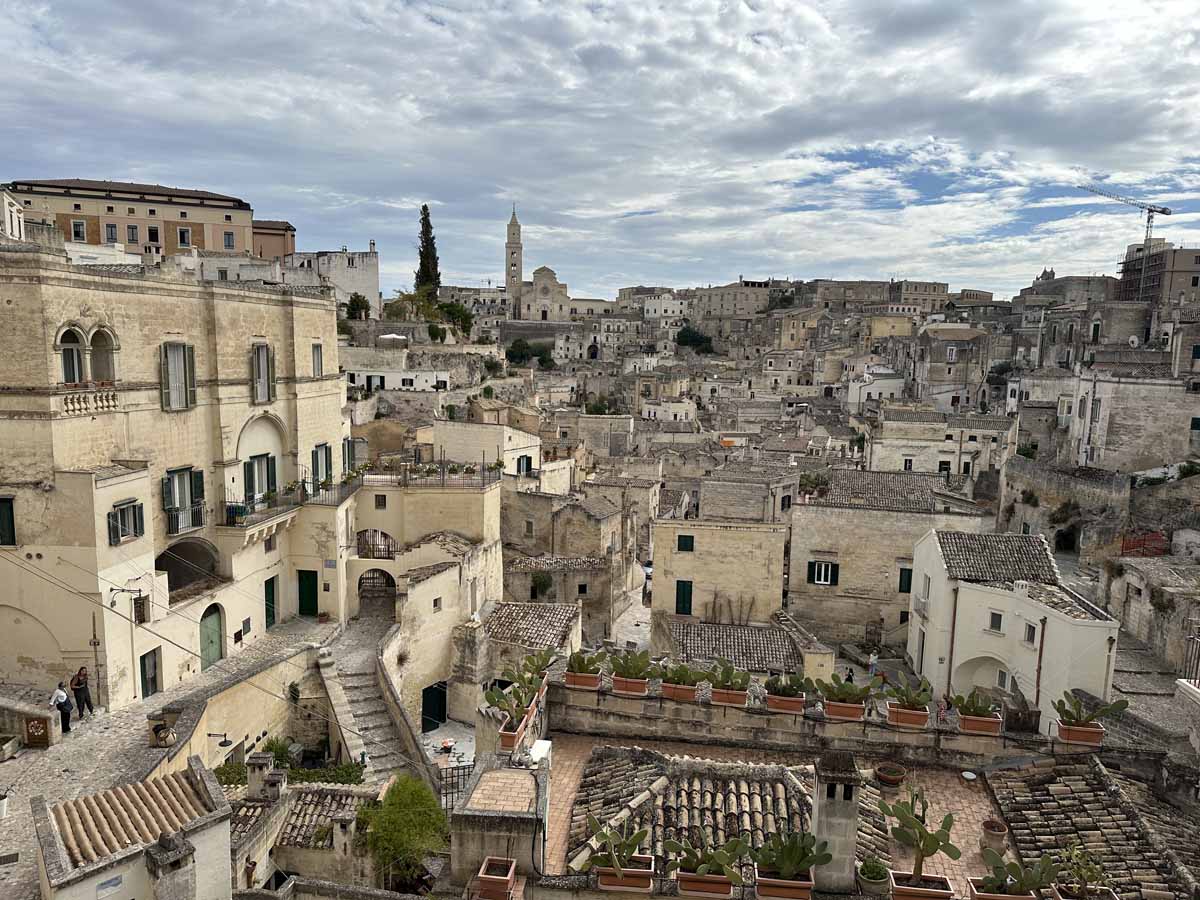
We eventually worked our way up to the Romanesque-style Cathedral, dramatically located on a ridge (the Civita) overlooking the Sassi. It also dates to the 13th century, with a large rose window. The interior was remodeled in elaborate Baroque style, but we never got the chance to go inside.
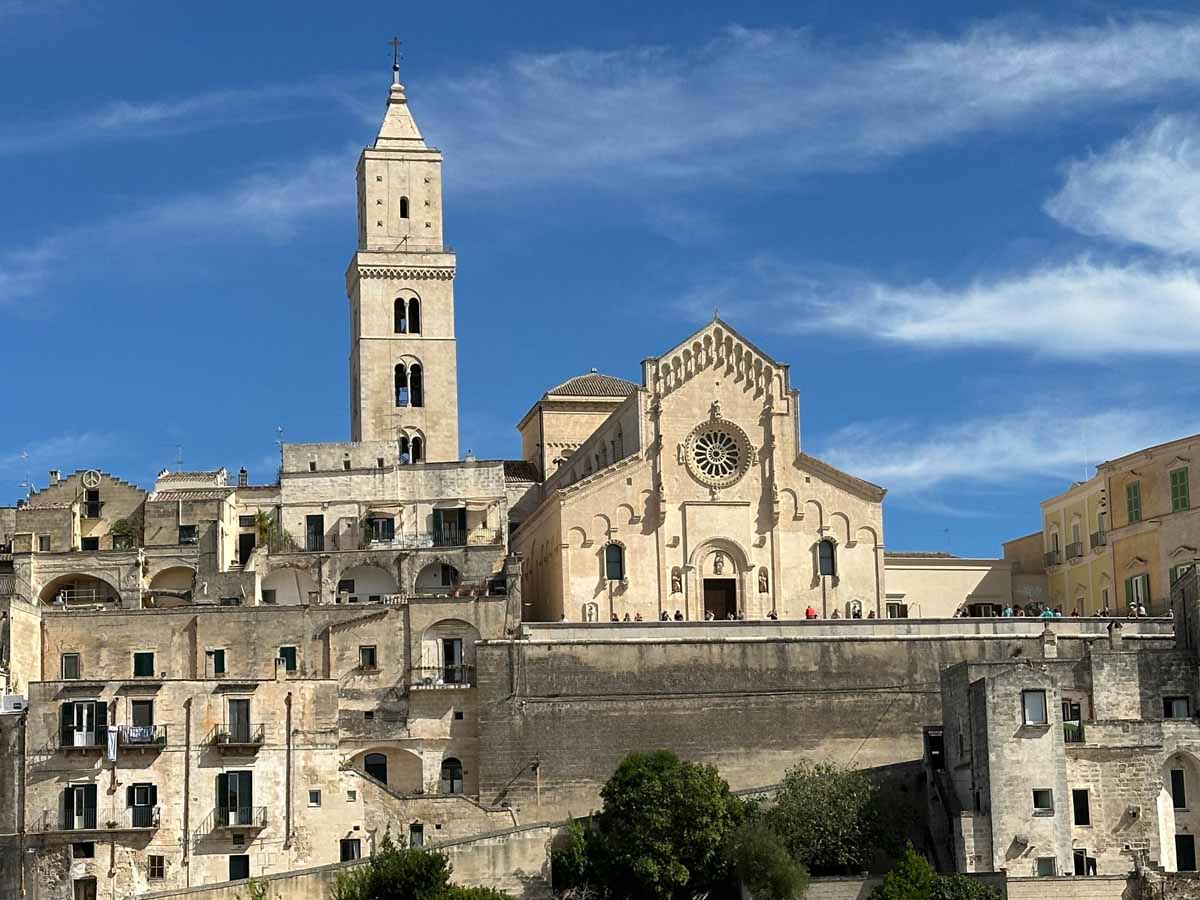
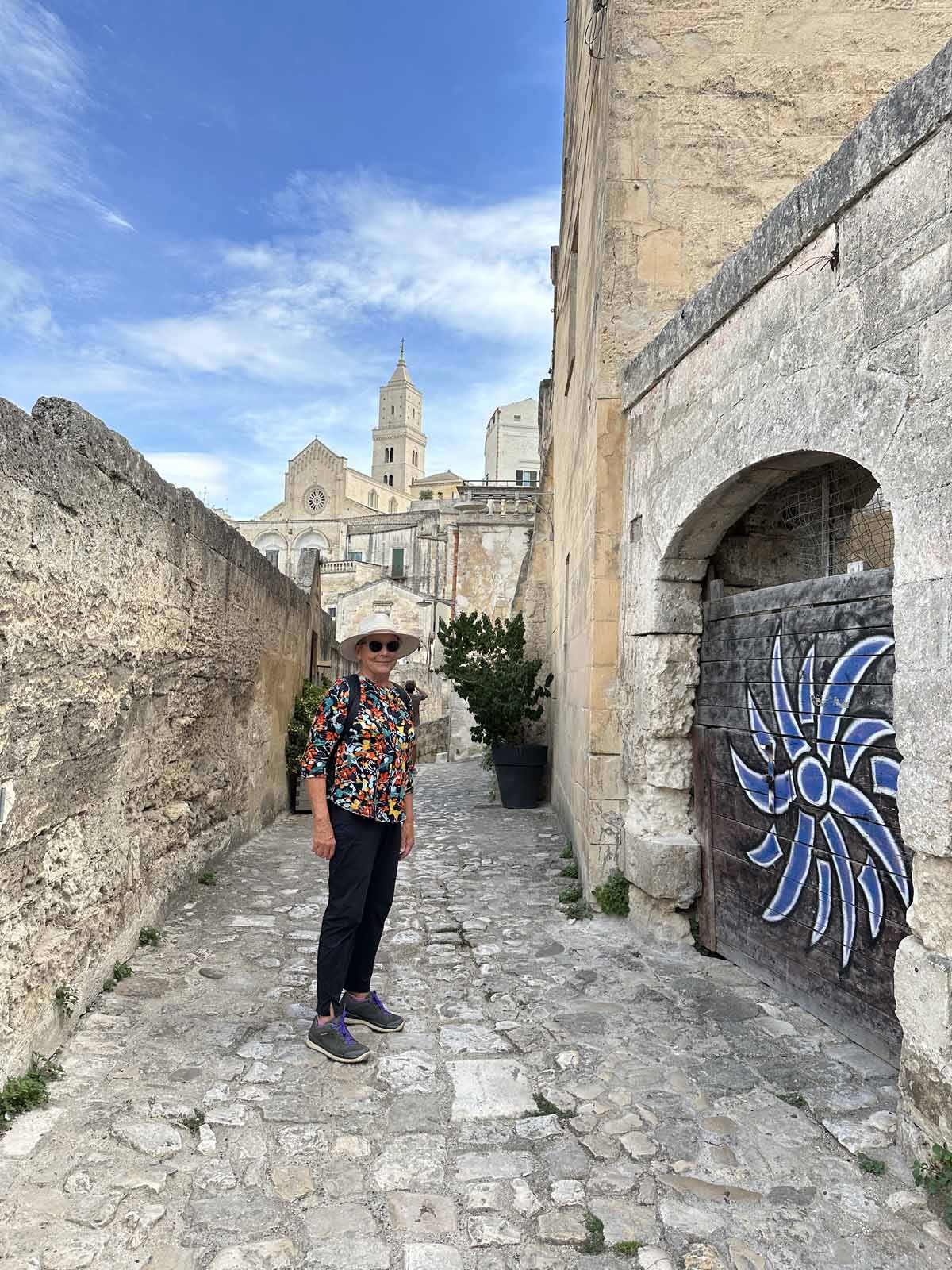
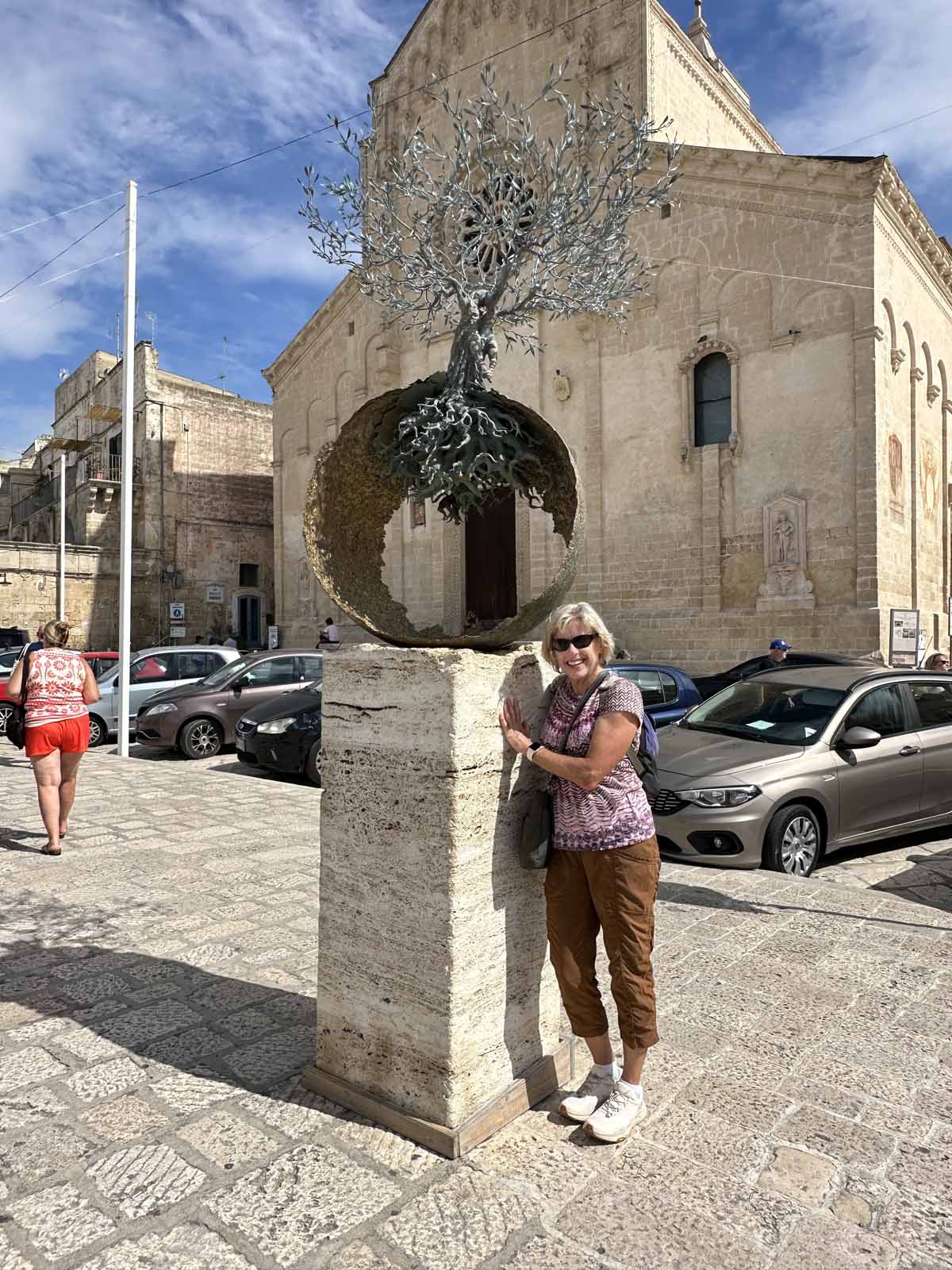
To Clarify: Civita is the rocky promontory that sits between & above both Sasso (Barisano & Caveoso). It literally divides the two districts. Essentially, it’s one hill with two neighborhoods draped down its sides. The Matera Cathedral sits at the highest point of the Civita ridge.
From the Cathedral, we headed down the backside of the Civita to return to the main plaza via a different route – with more great scenery along the way. (below)
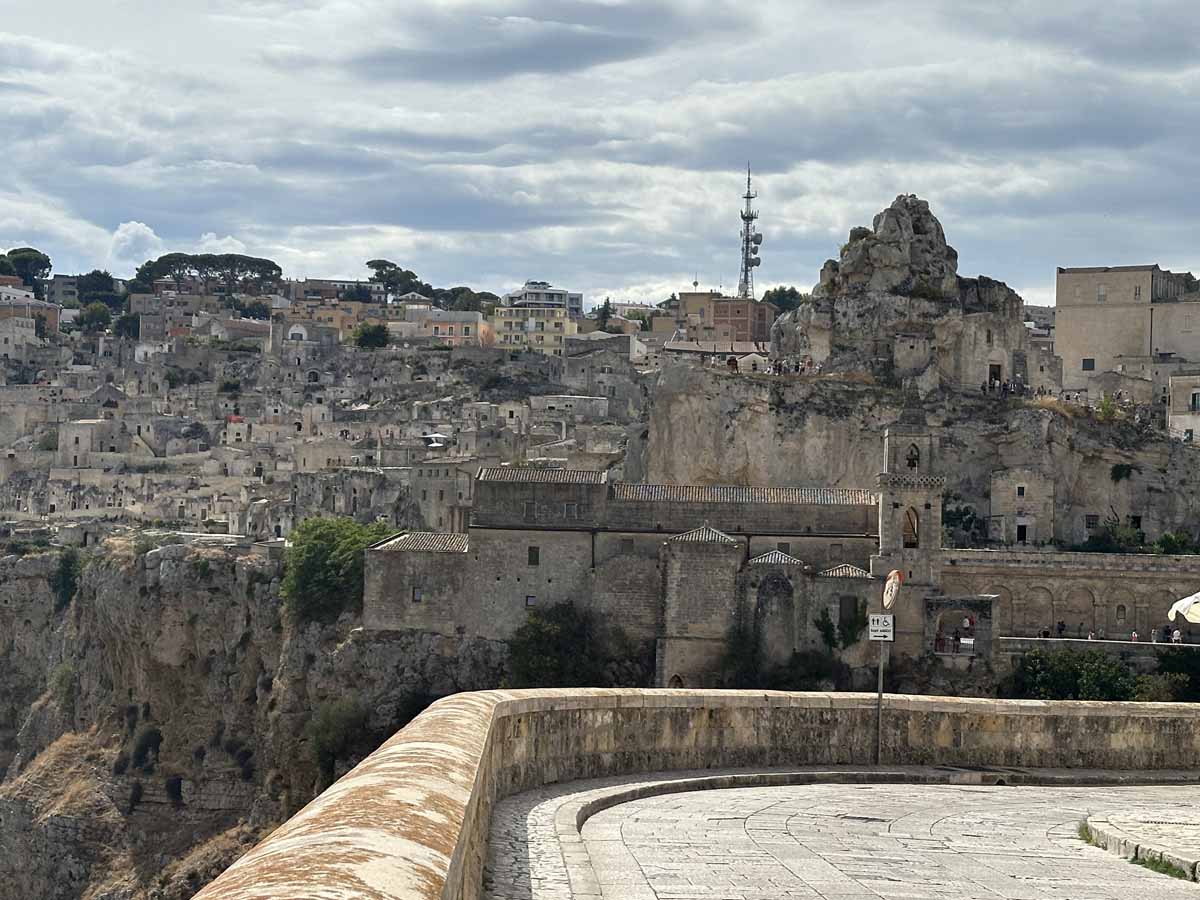
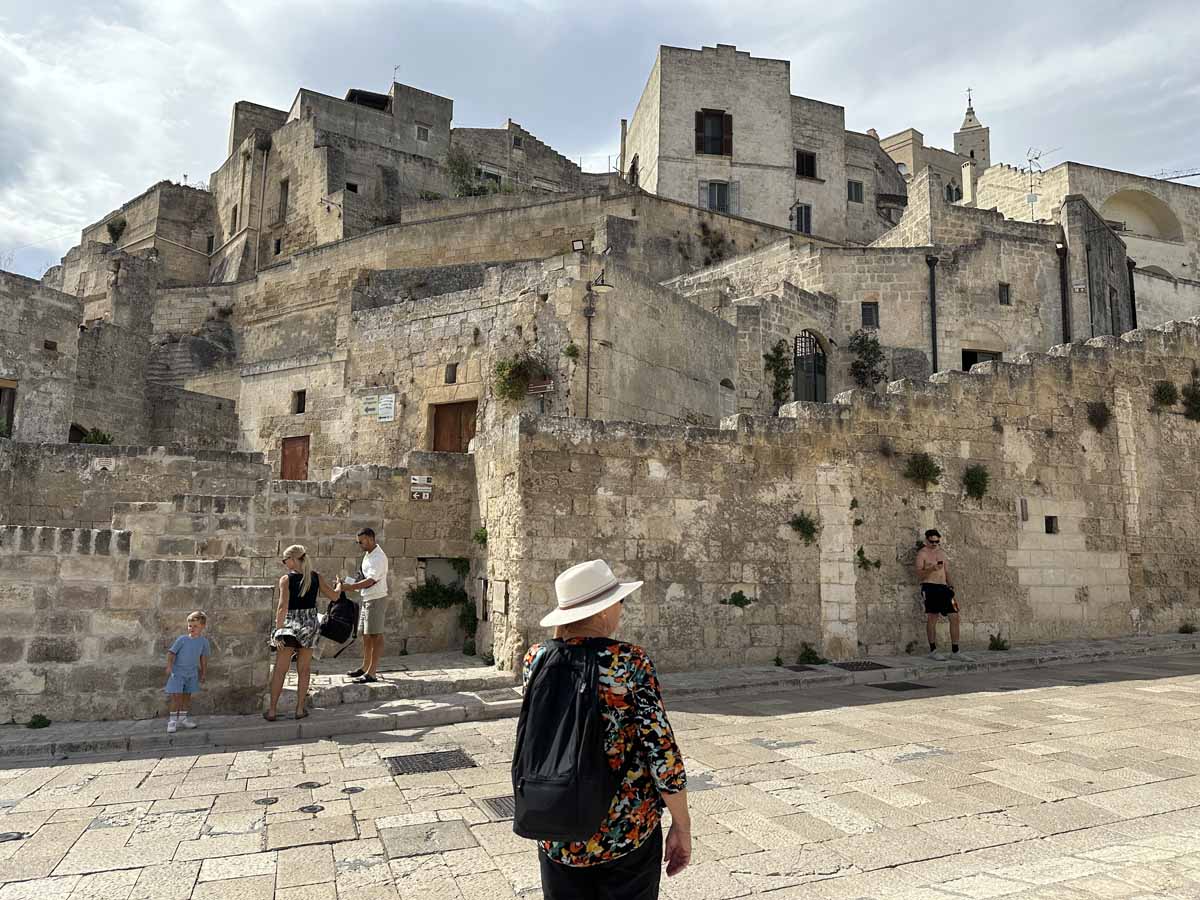
Our Tour of Matera with a Local Guide
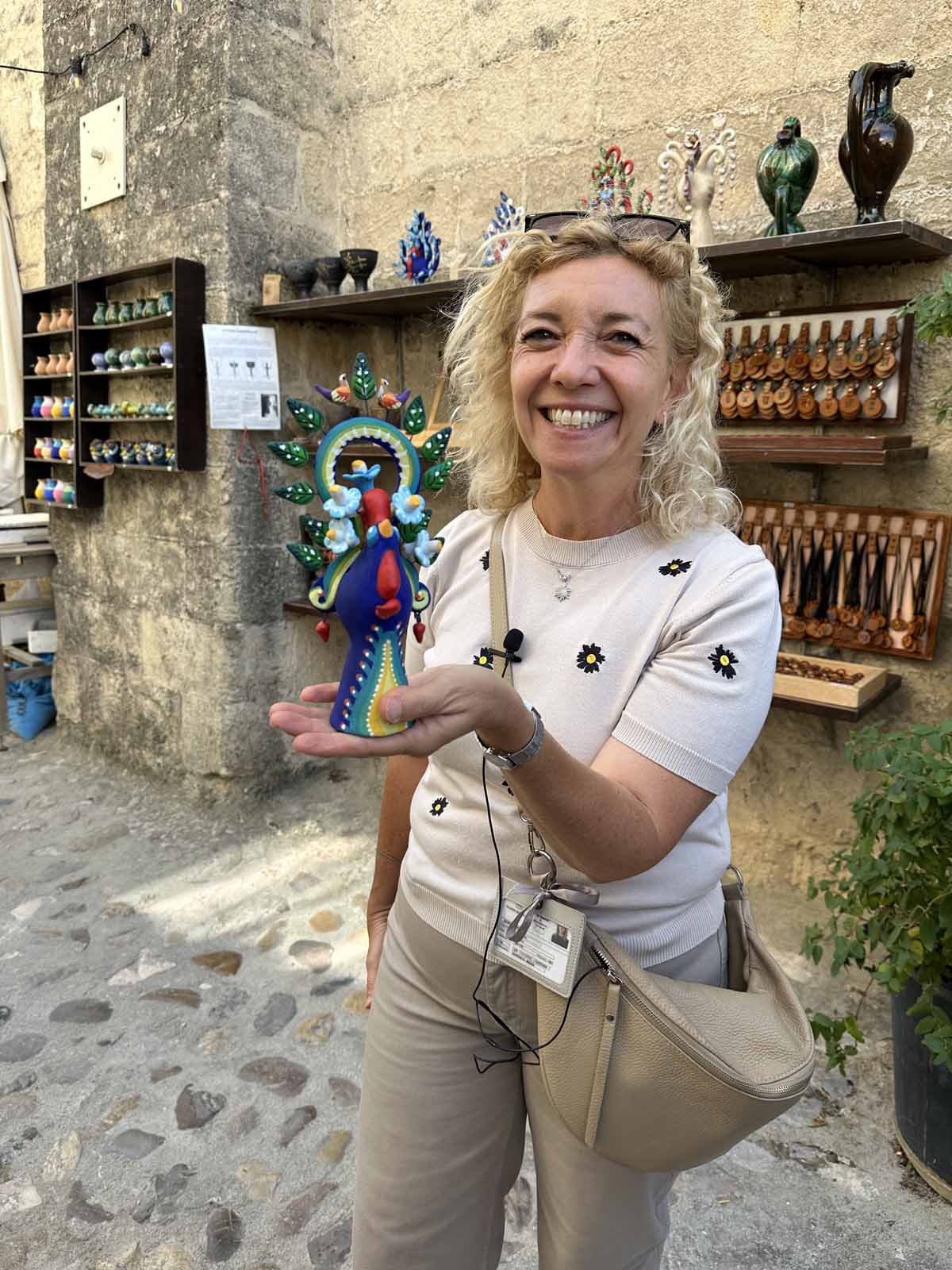
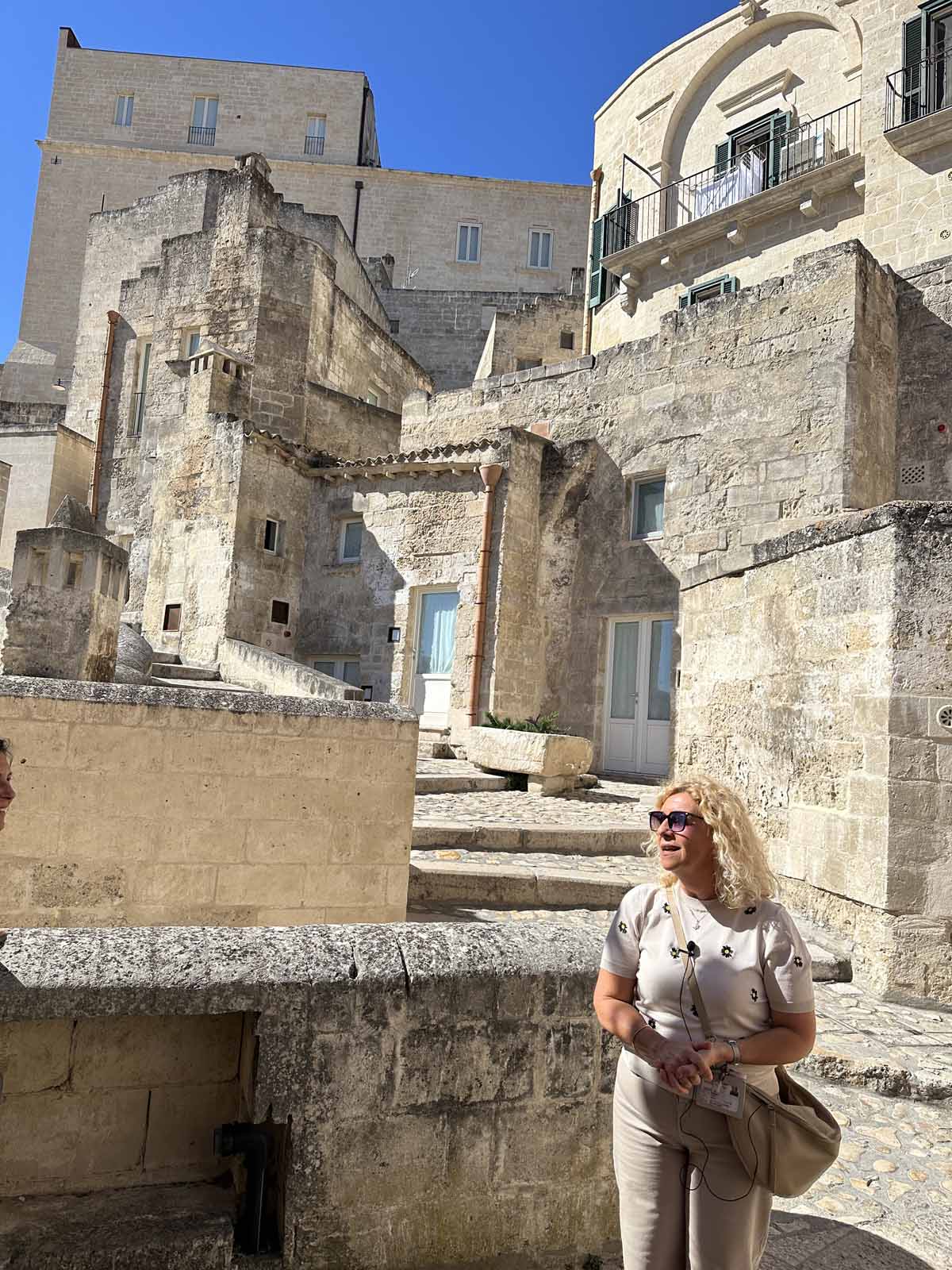
The next morning, our full OAT group had arrived, so we enjoyed a delightful 2.5 hour tour with Angela. She’s originally from Matera and has been a local guide for 10 years. She has a great love of her town & deep knowledge of its interesting history. (photos below)
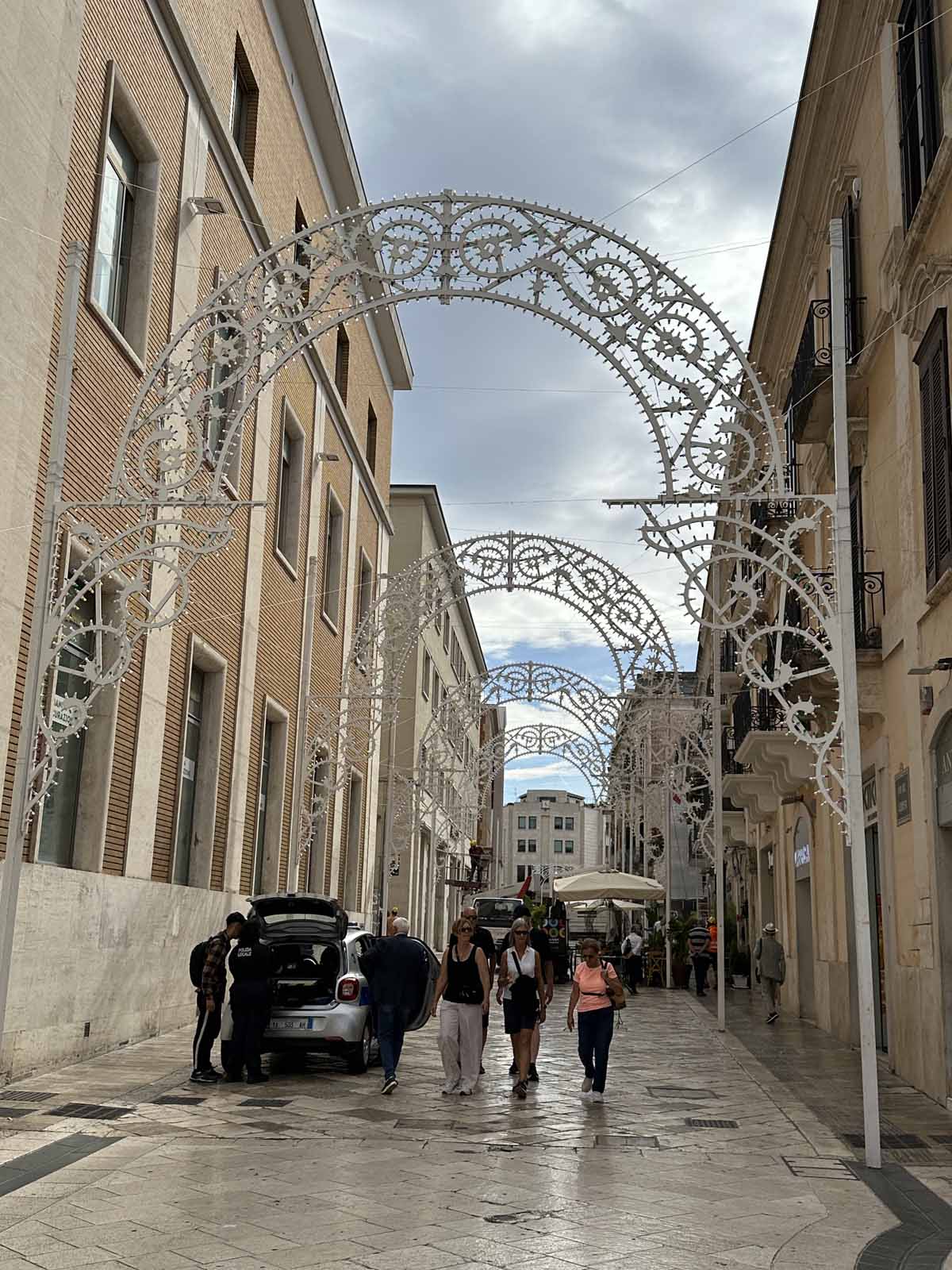
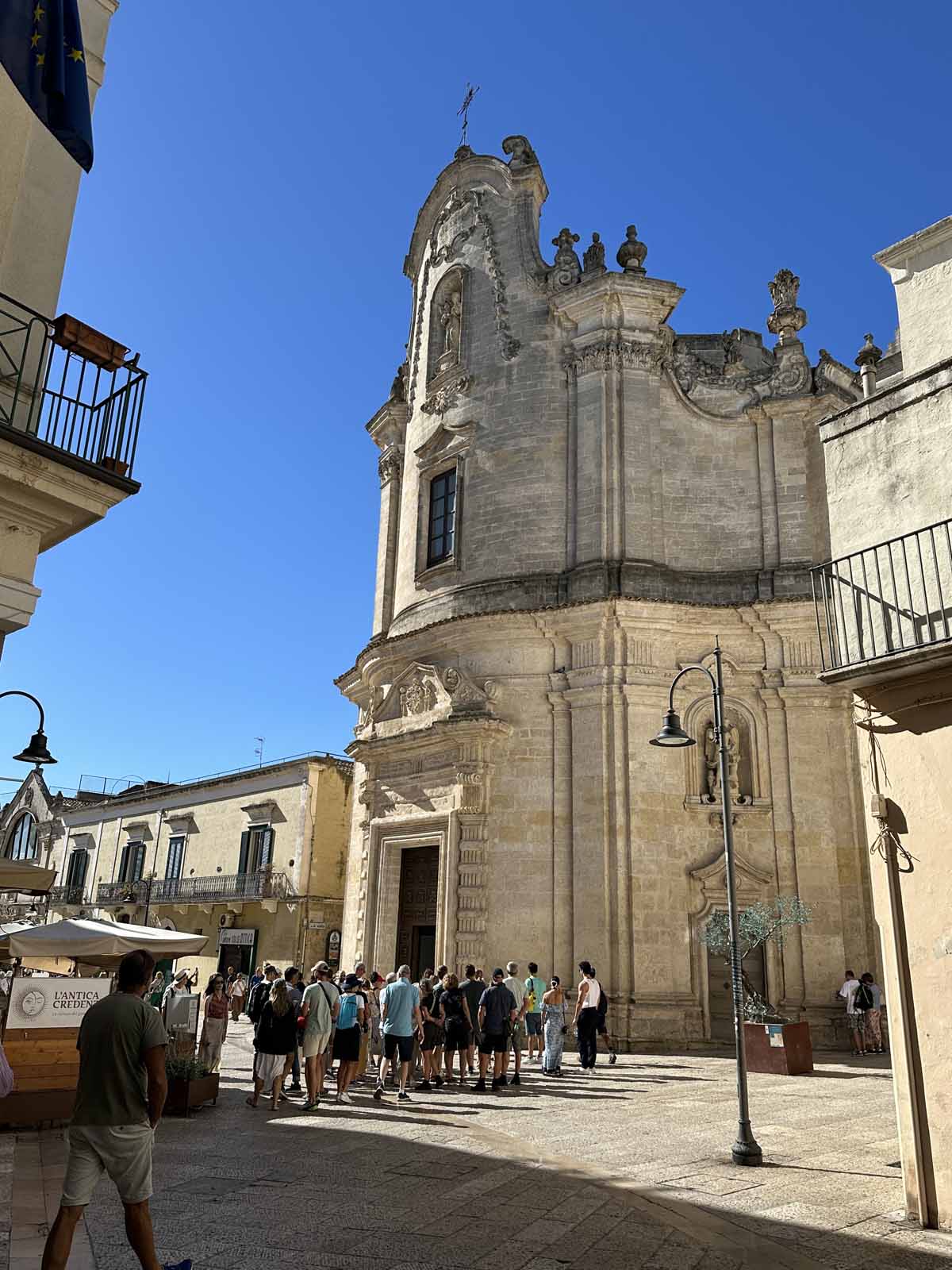
We walked back to the main plaza (Piazza Vittorio Veneto) & headed down the modern and elegant Via del Corso street with its shops and bistros. In addition, we passed some interesting churches, like the 18th century baroque Church of Purgatory (below right).
We stopped at the Piazza Pascoli fronted by Palazzo Lanfranchi, an art museum (below right) housed in a palazzo (from 1672). In front, on the square, is a 3-meter tall, bronze statue named “The Drop.” It was made by a Japanese sculptor symbolizing the element of water, which has been vitally important to this city over its thousands of years of history.
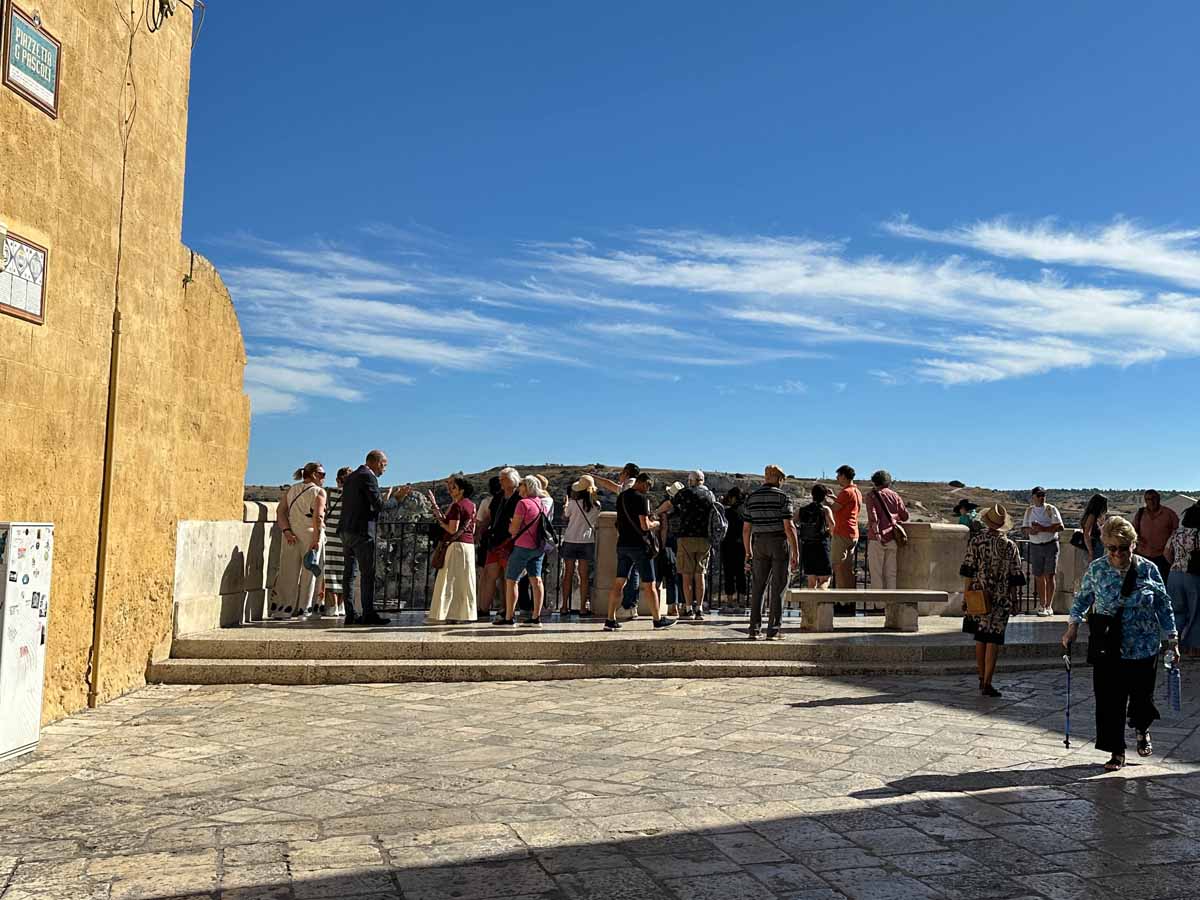
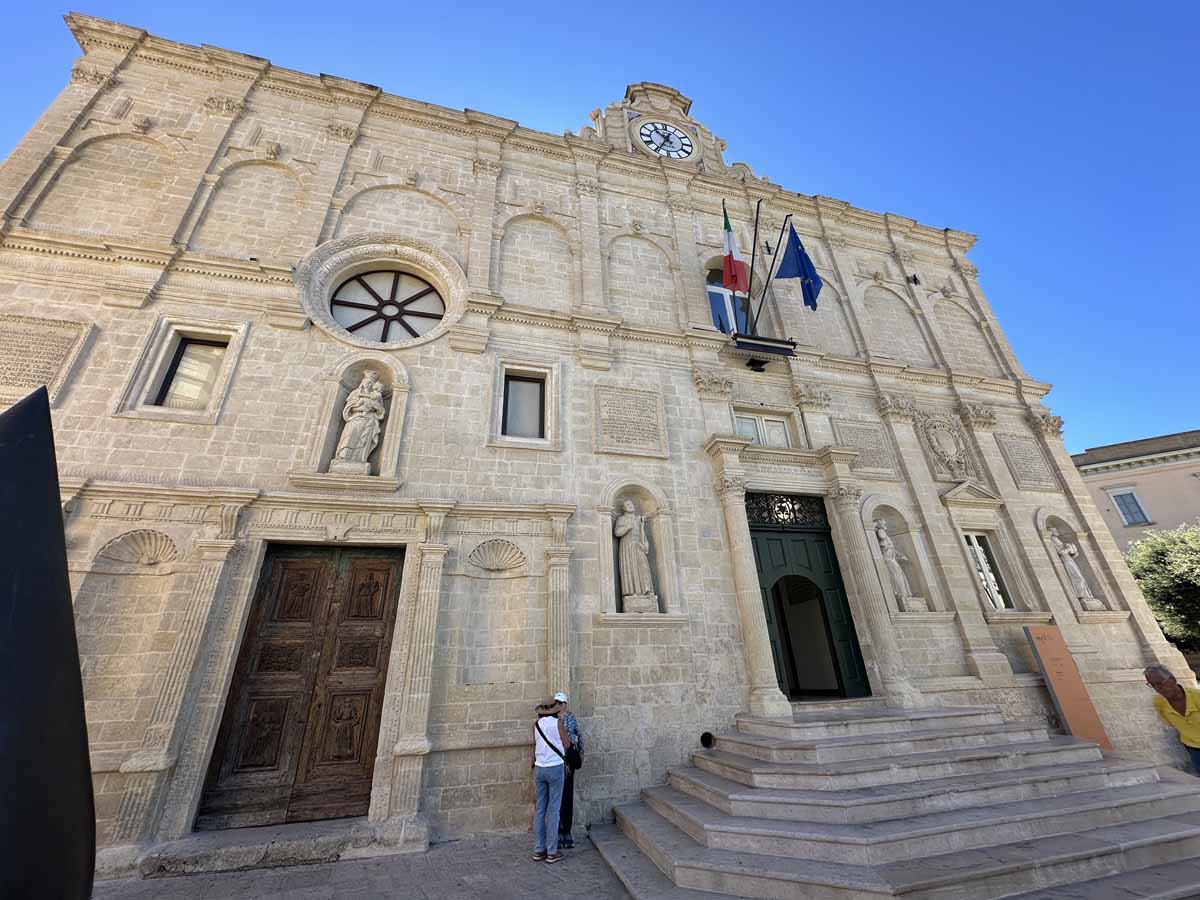
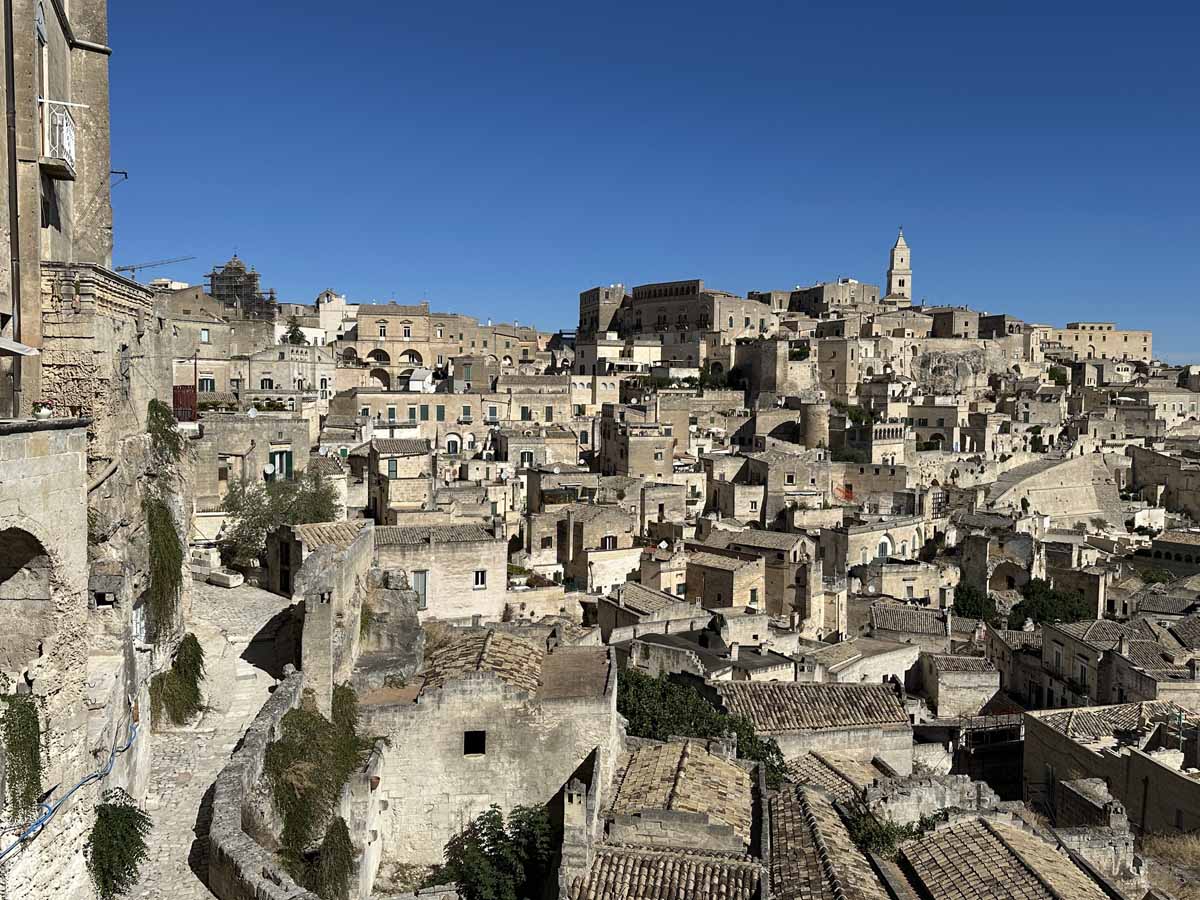
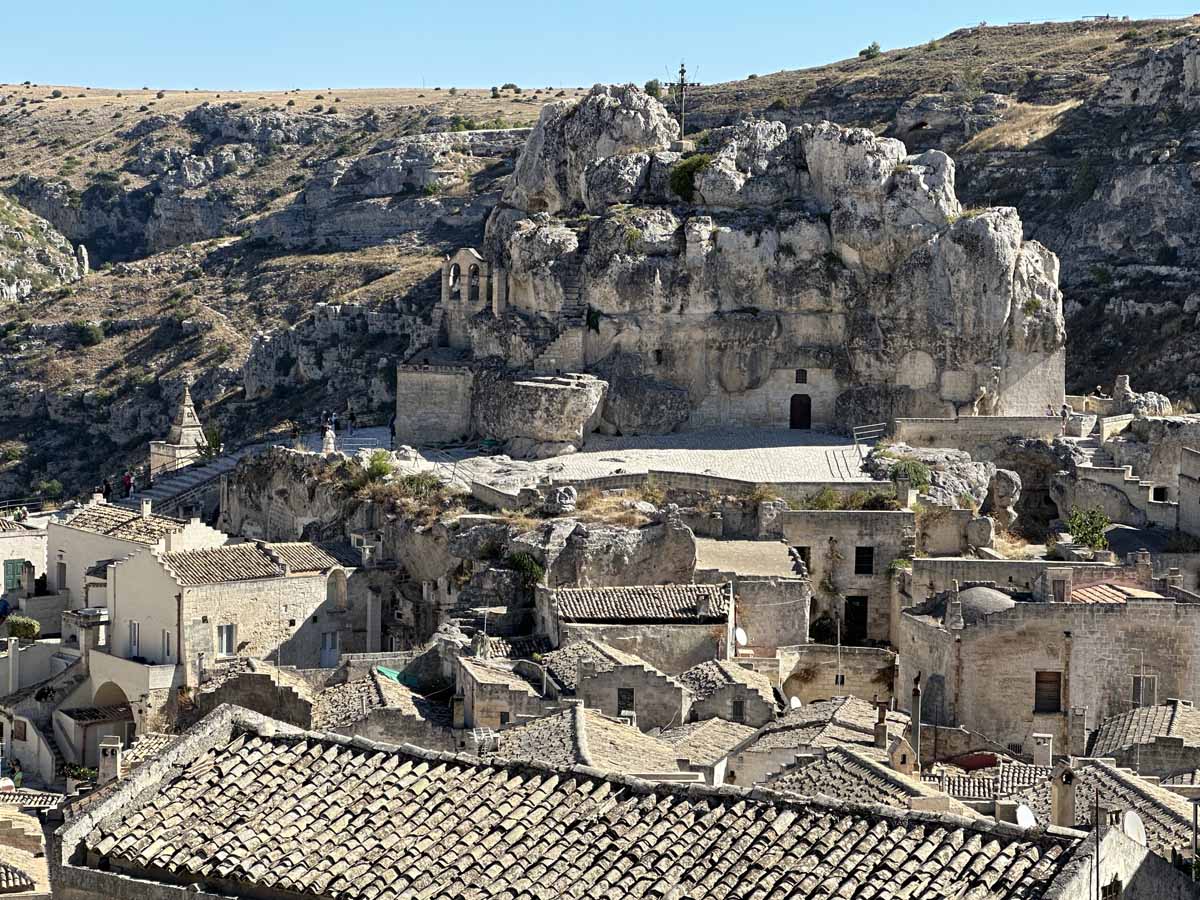
Also, here at the plaza is one of Matera’s best scenic viewpoints – affording grand views of the Civita & the Cathedral, the Sasso Caveoso district, and the Monterrone rock churches we would soon be visiting. (below)
-
- View from Pascoli terrace of the Sasso Caveoso
-
- View of Monterrone rock churches
Touring an Old Cave Home
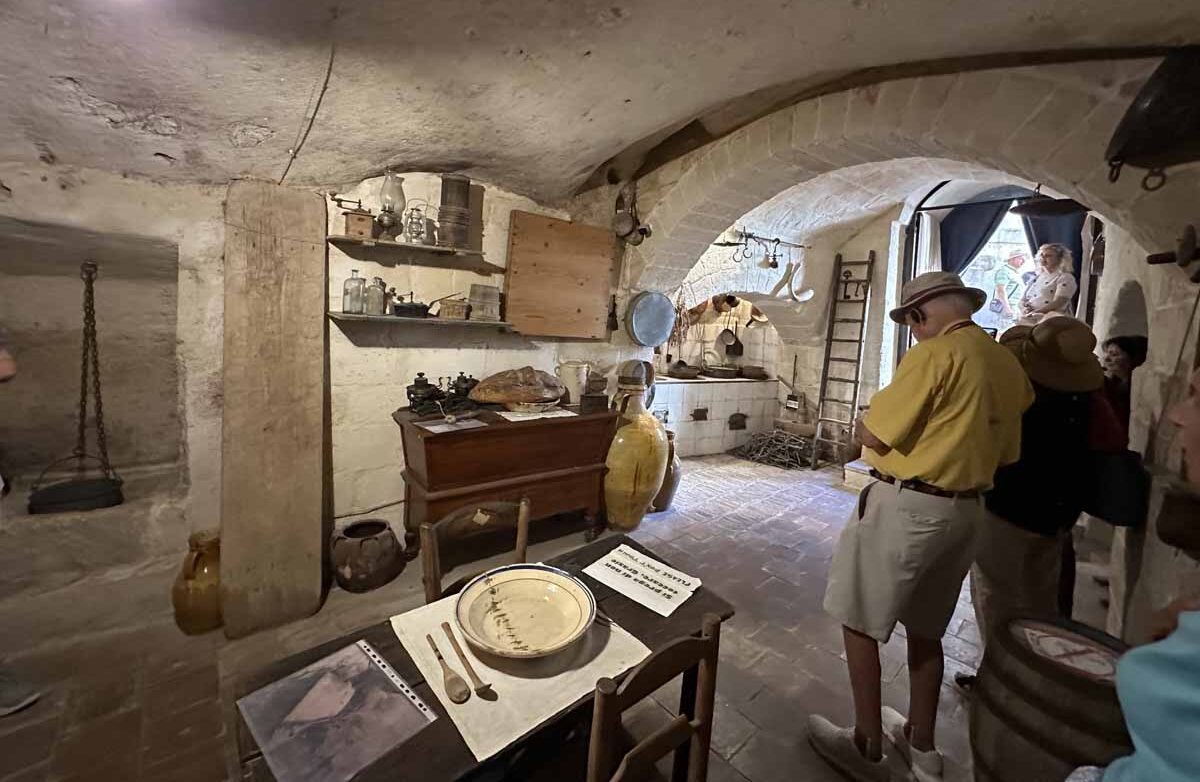
Visiting an old rock cave house is a fascinating way to gain insight into bygone life in Matera. These various “visitor cave dwellings” have been left relatively intact since they were inhabited in the 1940s.
Our guide took us to Casa Grotto Del Vicinato, a typical ancient cave-house in the heart of Sasso Caveoso. Realistically furnished, it features an entrance kitchen, a main multi-purpose living, eating & sleeping space, and an animal stable. It’s truly hard to imagine how a family of eight could live in such a small space.
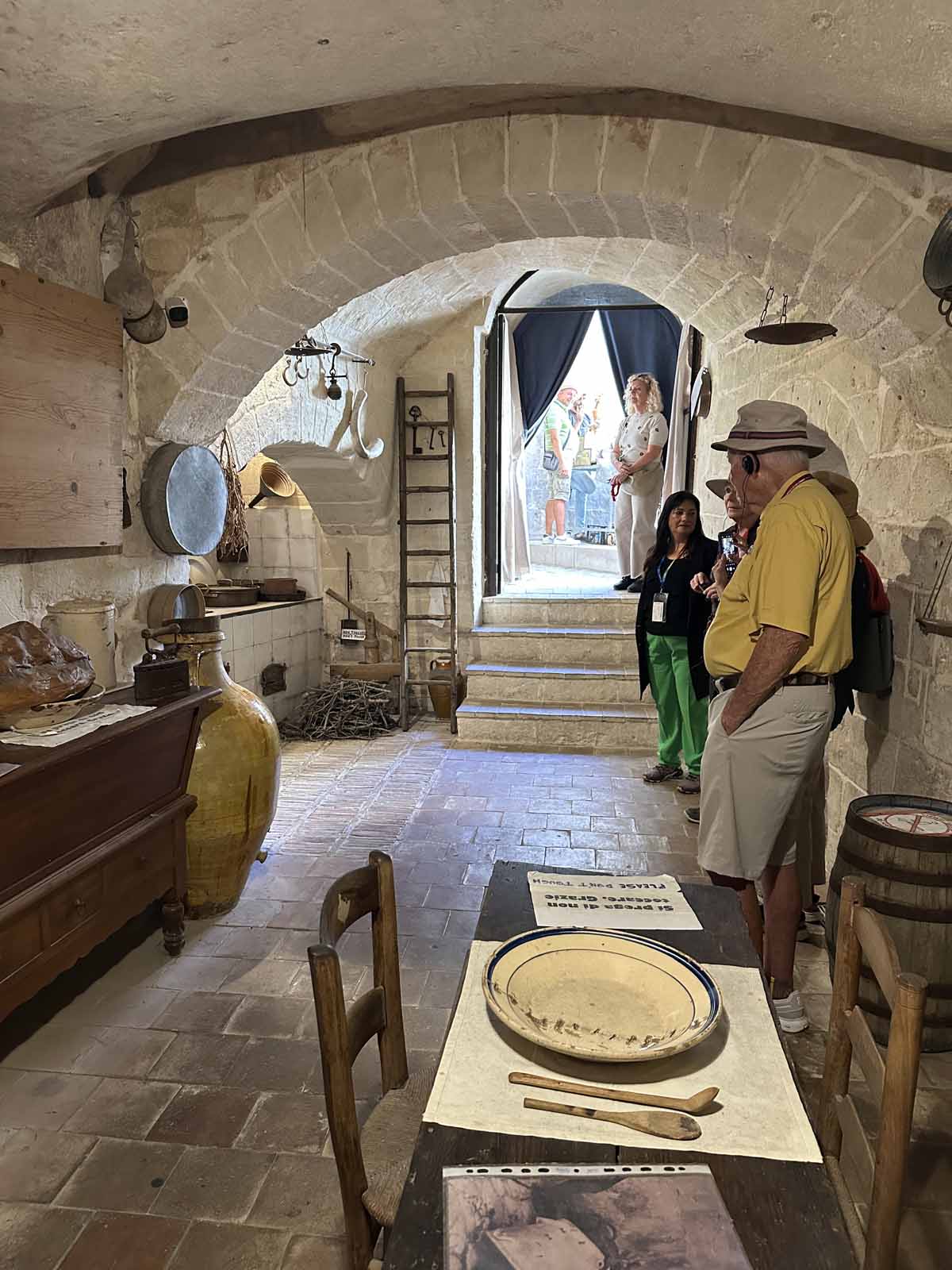
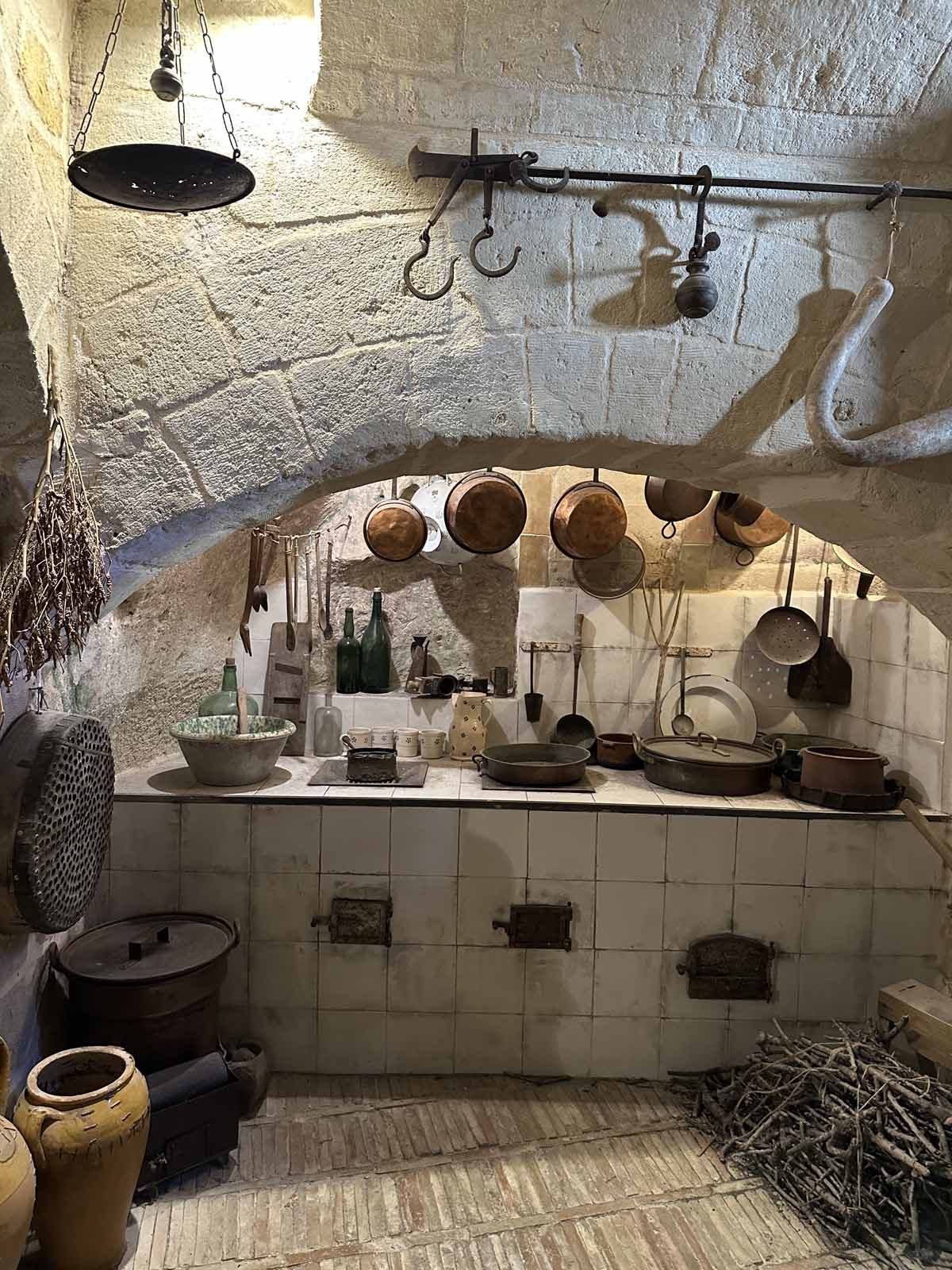
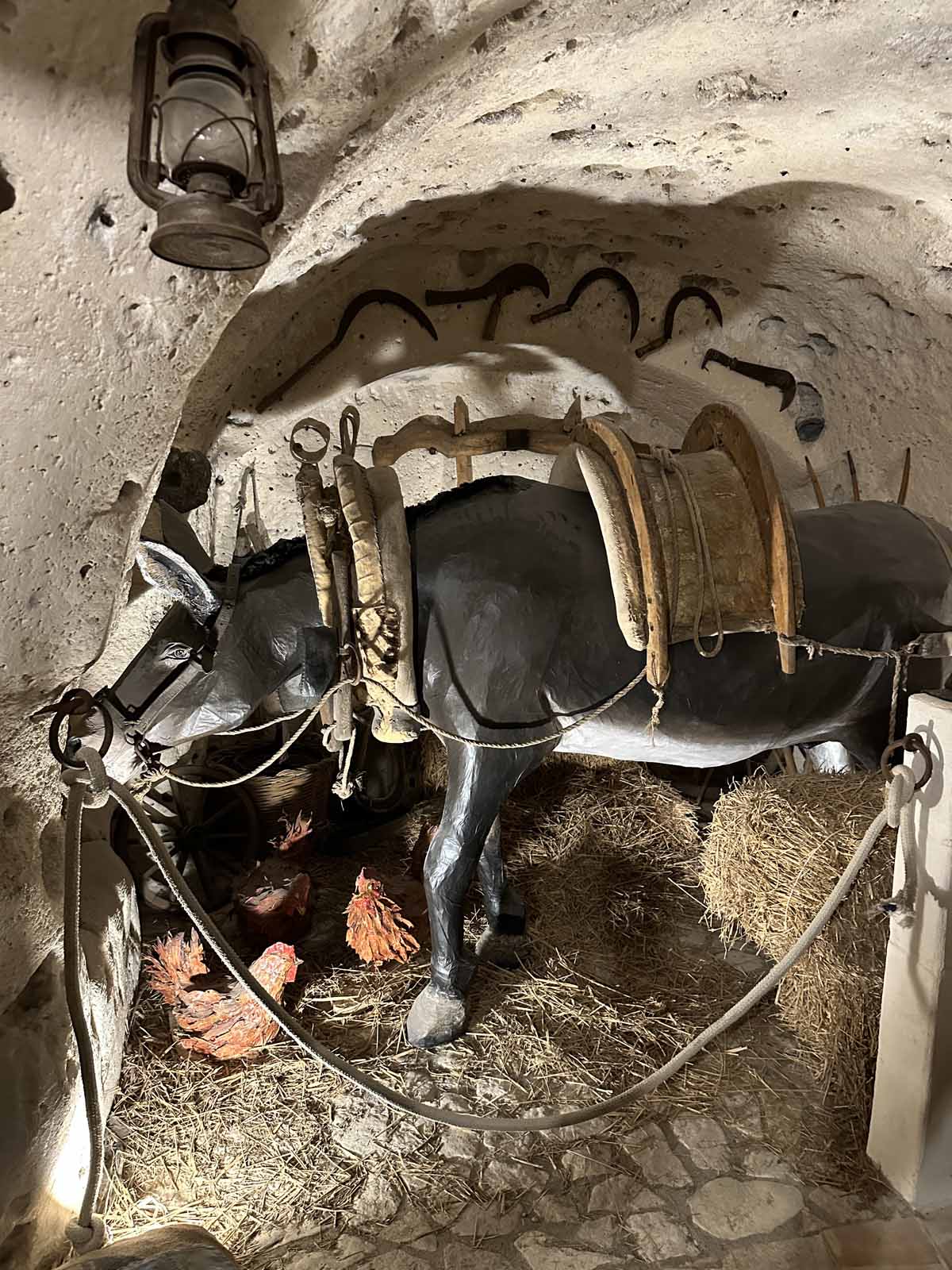
The stable area was carved into the back rock space to house the family’s animals (mostly chickens, pigs, and mules). The kitchen has a small cooking area with a wood-burning stove. The main area had wrought-iron beds and a cradle. Lighting was minimal, and ventilation was provided by small skylights.
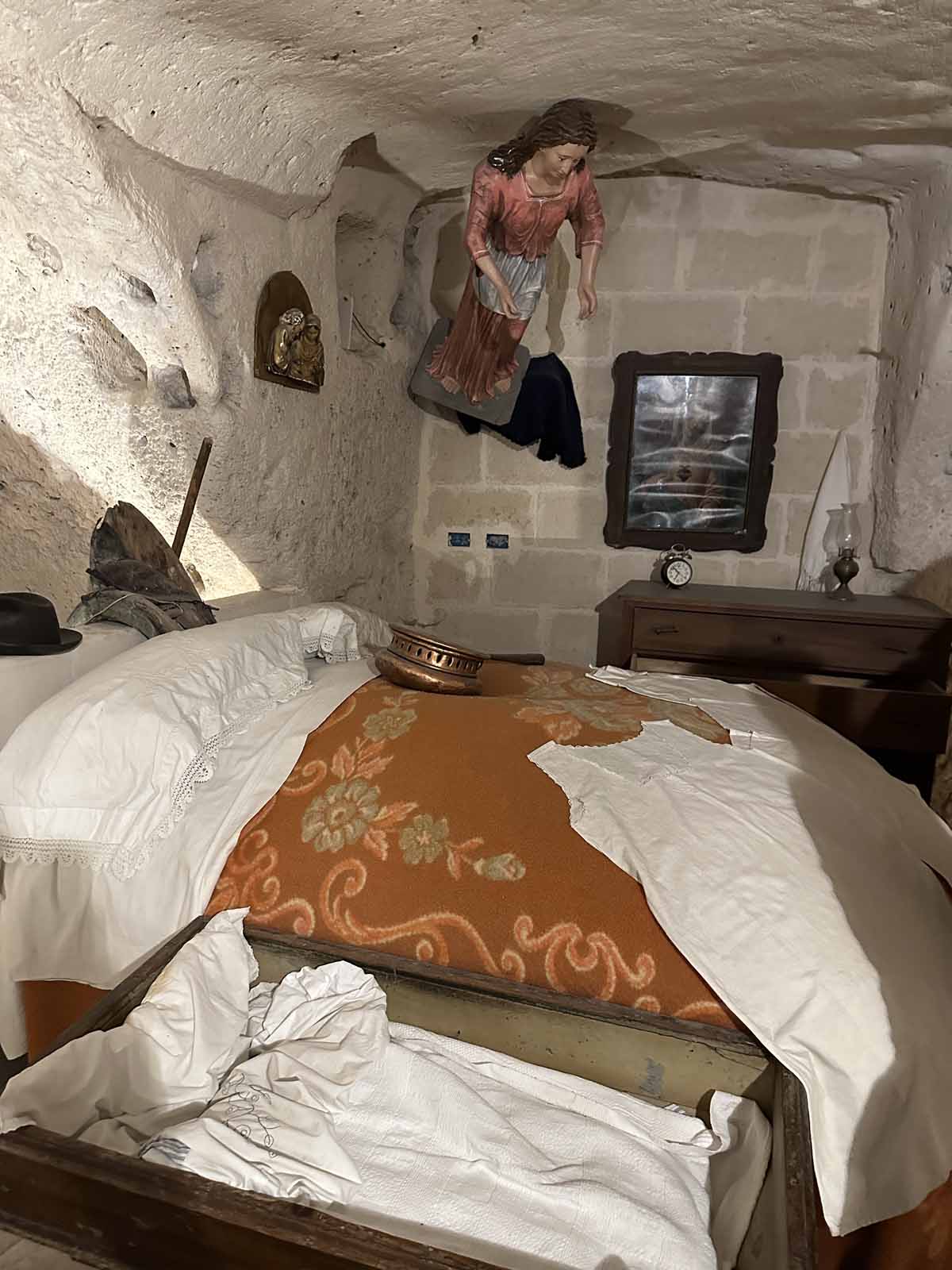
Each cave-house in the Sassi was equipped with at least one private cistern to meet the family’s own water needs. Thus, residents carved not just homes but entire water-management systems into the rock — cisterns, channels, and collection basins that captured and stored rainwater. This was done in a dry limestone landscape long before modern engineering. Impressive!
Visiting the Rock Churches of Monterrone
Matera is famous for its many rock churches, named chiese rupestre in Italian. These primitive cave churches were carved into the hillsides by monks in the 9th to the 15th centuries. There are over 150 rupestrian churches in the greater Matera area, many with faded Byzantine-style frescoes.
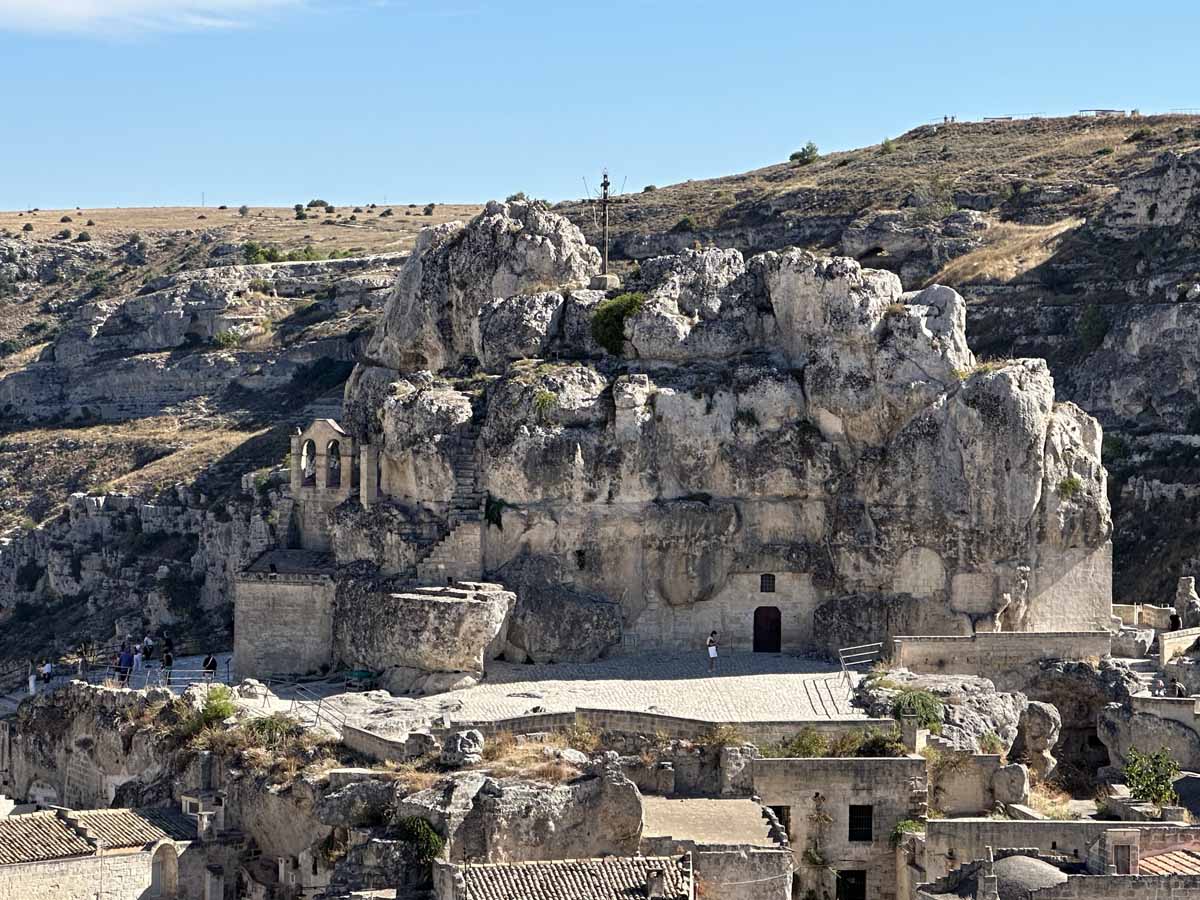
Within the Sassi district itself, the Monterrone complex contains two churches almost entirely carved out of rock. Located on a spur that rises from the Sasso Caveoso, they are one of Matera’s most photographed scenes.
-
- Final part of the walk to the Monterrone rock churches
-
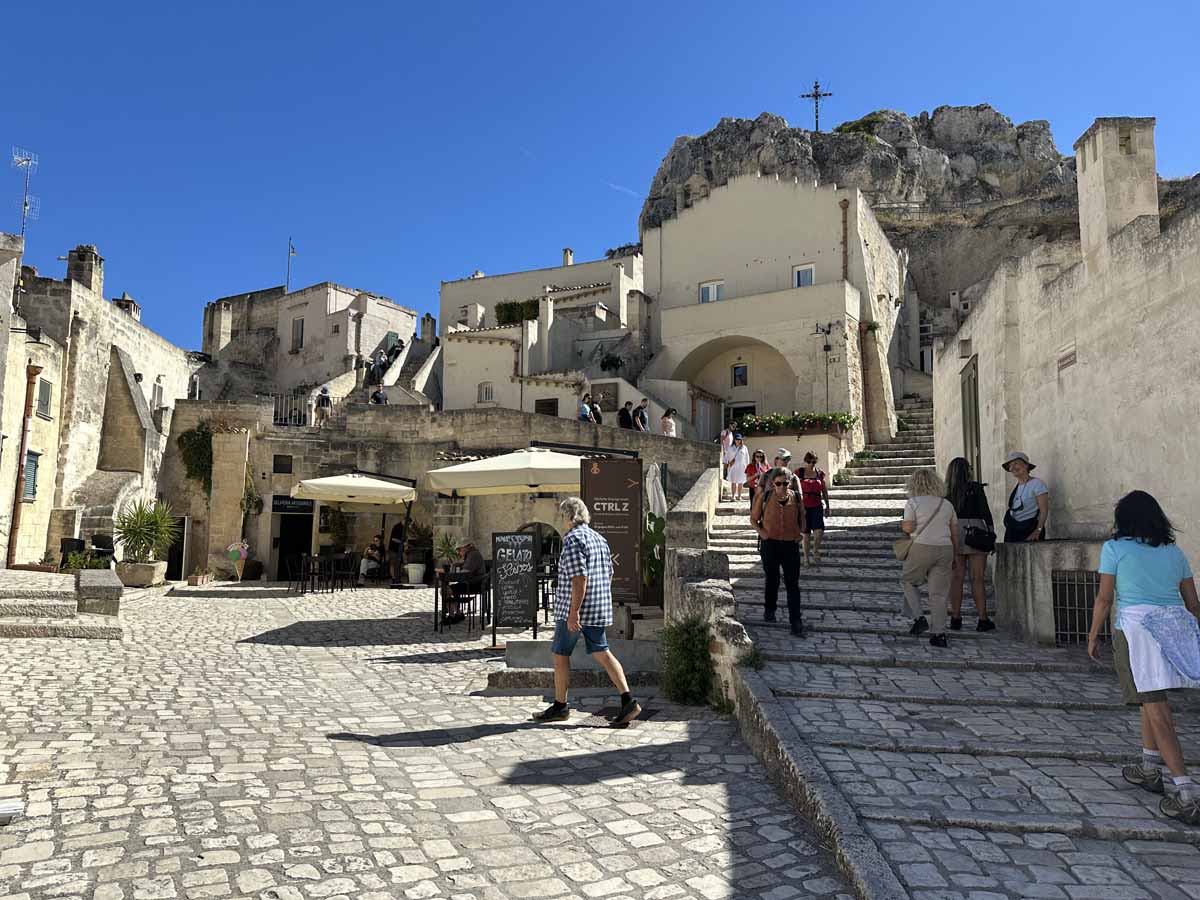
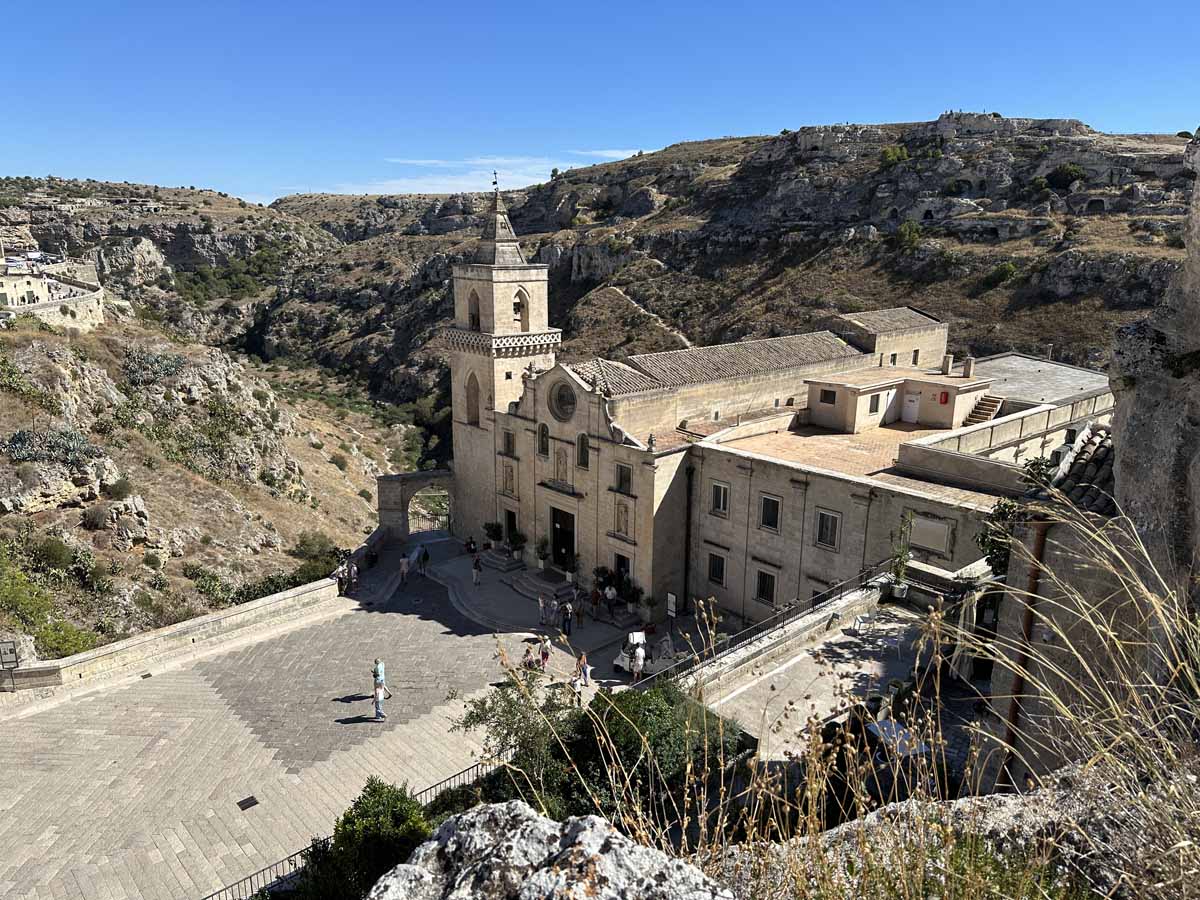
- View of San Pietro Caveoso church from our path
We followed Angela along the Sassi stone lanes as we climbed yet more steps to reach the entrance to the Monterrone churches. From the wide terrace in front, we enjoyed grand views back over the Sassi, along with a chance to catch our breath.
The larger church – Chiesa Santa Maria de Idris (from the 14th & 15th centuries) – is carved directly into the Monterrone rock spur. Only its bell-shaped façade & small bell tower is visible from outside. The rest is hollowed straight into the hill.
-

- The Rock Church / Credit: Rough Guide from Shutterstock
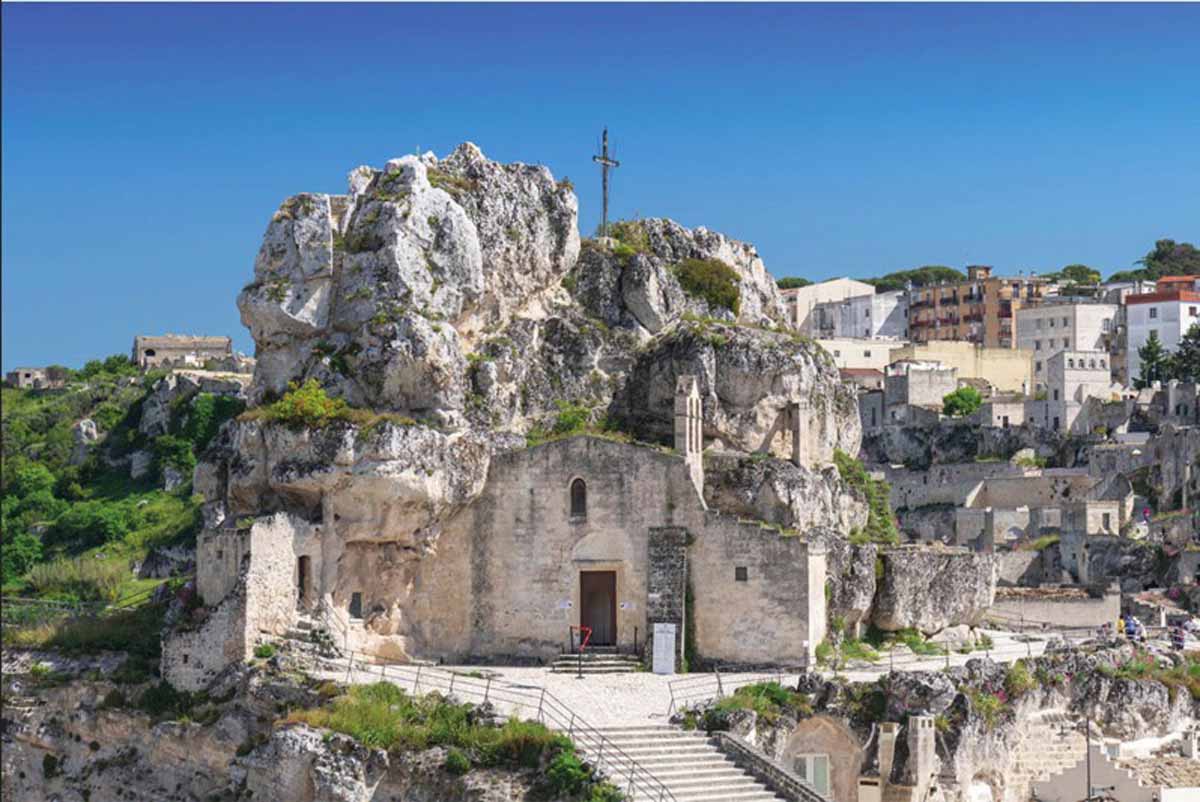
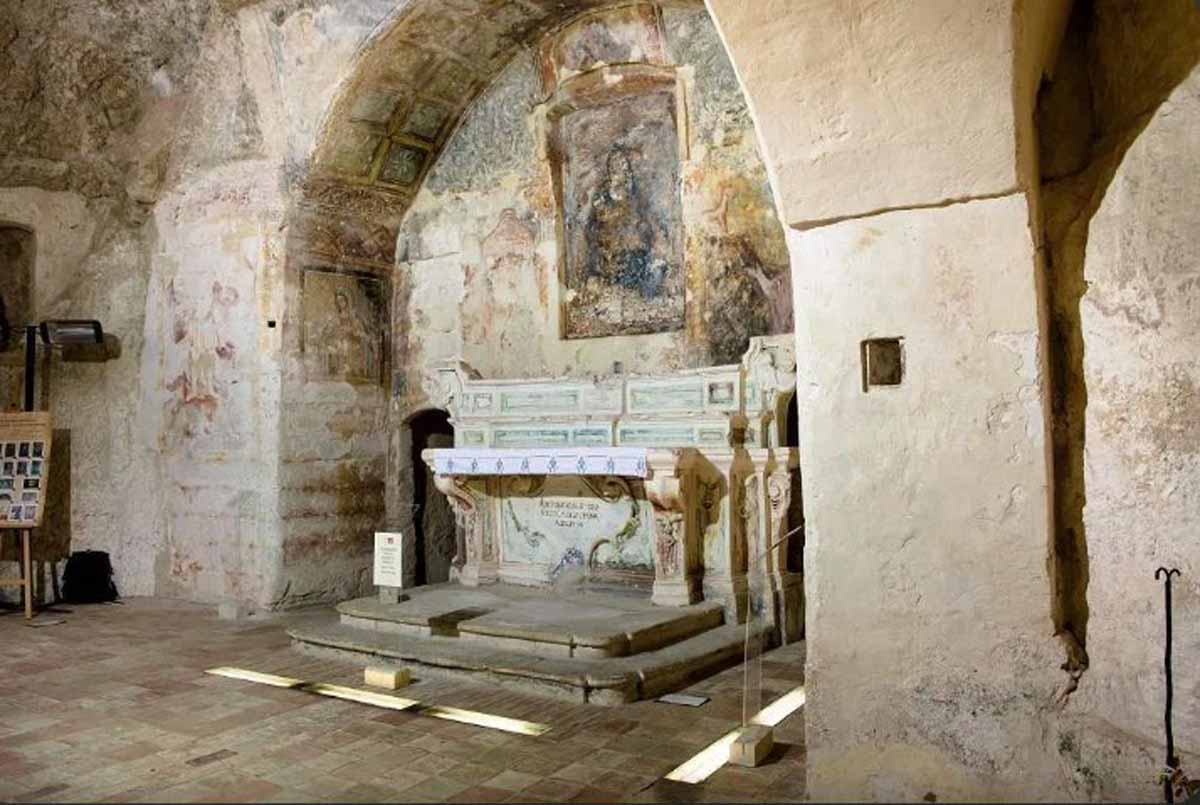
These churches were recently renovated with private donor funds. The churches don’t allow photography (to protect the fragile frescoes), so I don’t have photos of my own to share. We first toured inside Chiesa Santa Maria de Idris, before visiting the smaller & older cave chapel of San Giovanni (from the 12th & 13th centuries).
-

- Frescoes & Altar inside the Rock Church / Credit: Sassidimatera.net
-

- Frescoes inside the Rock Church / Credit: Sassidimatera.net
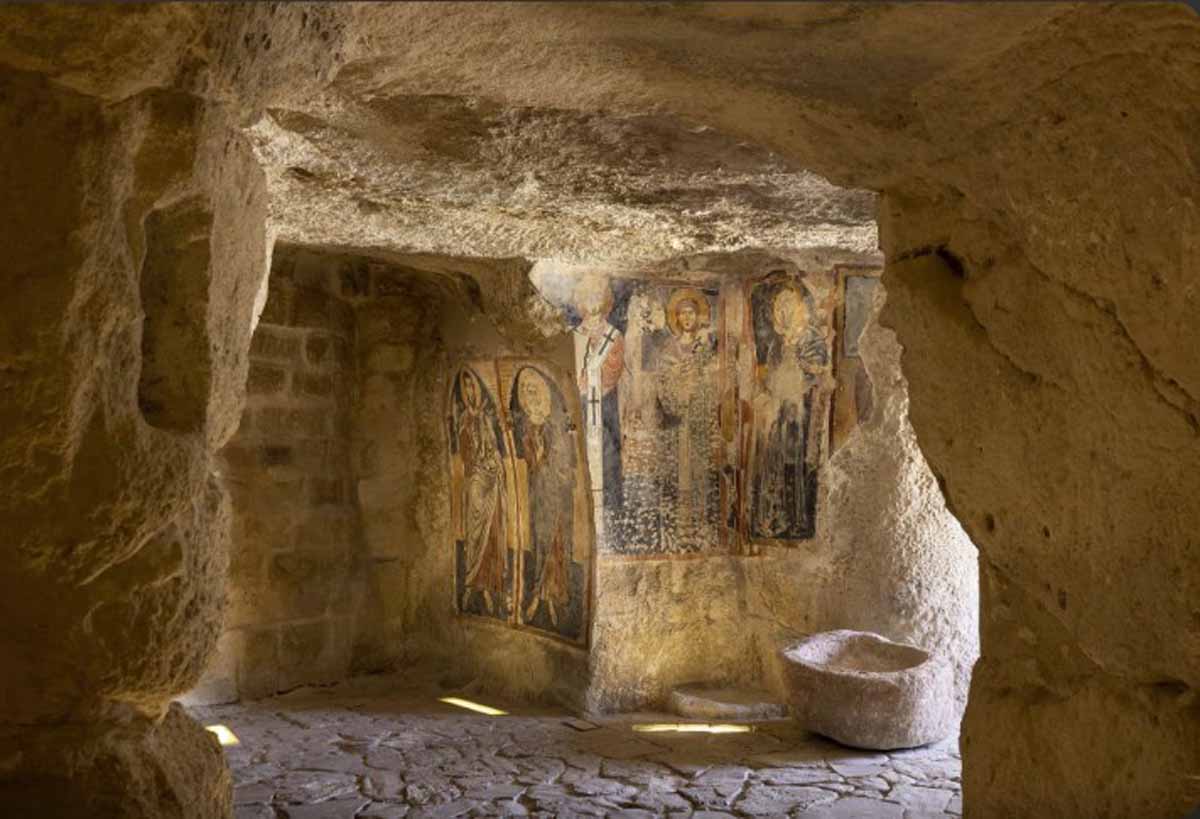
In the early 19th century, the churches were connected by a narrow rock-cut internal passage which, unfortunately, damaged some of San Giovanni’s best Byzantine-influenced frescoes. The chapel is still an evocative setting – with both churches worth a visit!
Parco Della Murgia Materana – Park of Rock Churches
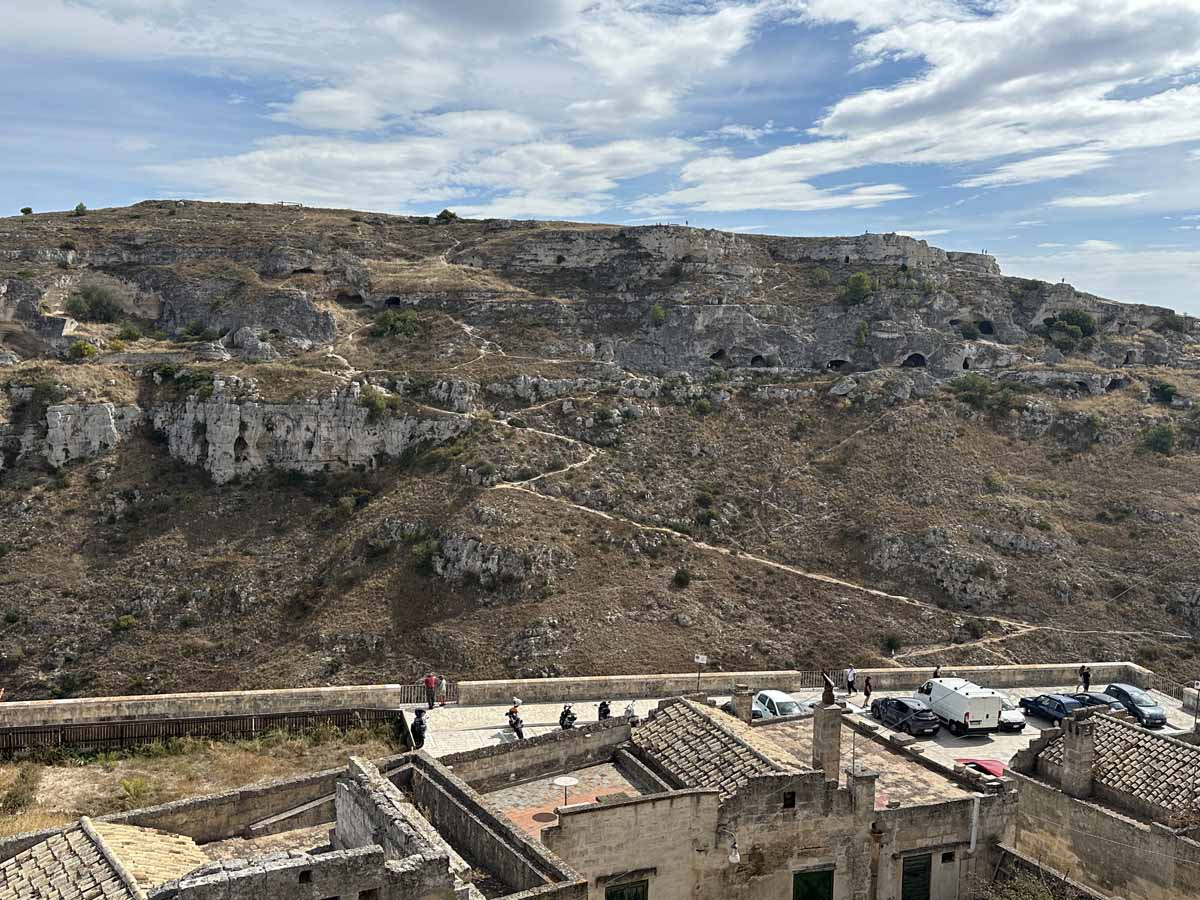
Located just across the Gravina River canyon, the rocky plateau landscape of the Parco della Murgia Materana (photo above) is home to many abandoned caves and rock-cut churches. It’s also the site of some of the very oldest cave-dwellings.
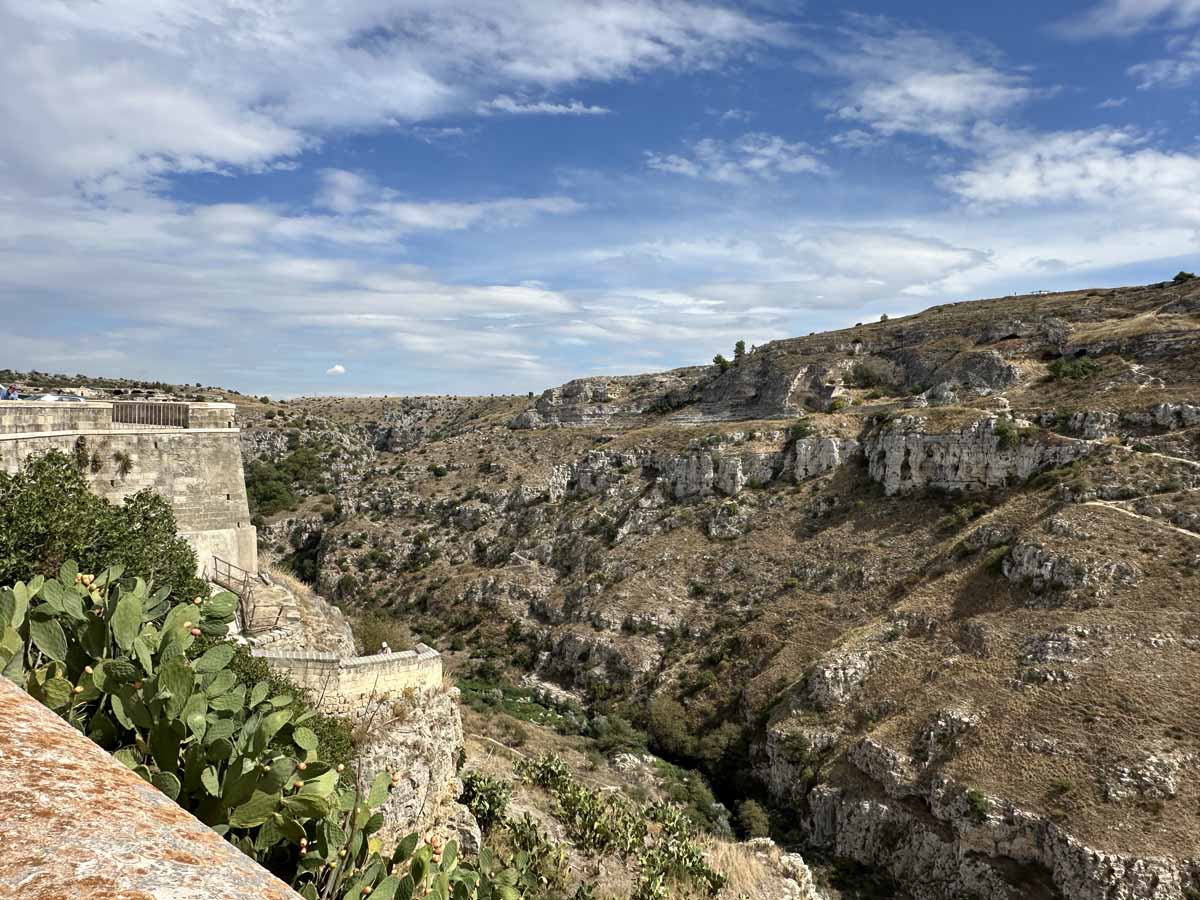
Good view of the Gravina River “gorge” between the Sassi of Materna and the Park / Click to enlarge
This nature & archeology “Park of the Rock Churches” spans roughly 8,000 hectares (31 square miles) and surrounds the Sassi de Matera. It’s also part of the UNESCO World Heritage designation.
We did not visit the Park, but I want to tell you about it. If you have enough time in Matera & enjoy light hiking, it might be something you’d like to do (best on a guided tour). Regardless, this large natural area is visible from many parts of the Sassi.
Of the many rock-hewn churches scattered throughout the park, most were built in the early Middle Ages (roughly 500-1000 AD). These were likely tied to the presence of Byzantine and Benedictine monks in the region during that period.
Access to the rock churches themselves isn’t generally permitted for safety reasons — visitors view them from marked paths with a guide rather than entering.
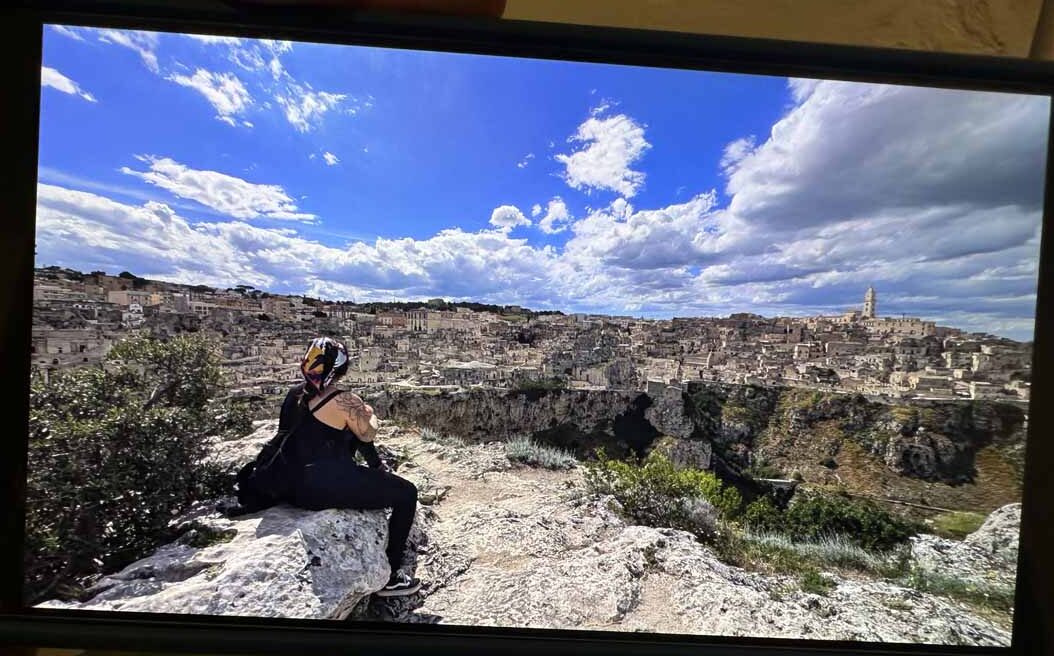
Photo showing a tourist inside the Park – looking at the view back toward the Sassi.
NOTE: The “over 150” number of rock churches in Matera refers to the whole UNESCO-protected complex — both the rock churches within the Sassi city districts (a smaller number) and those scattered across the Murgia plateau park on the other side of the ravine.
Eating Good Food in Matera
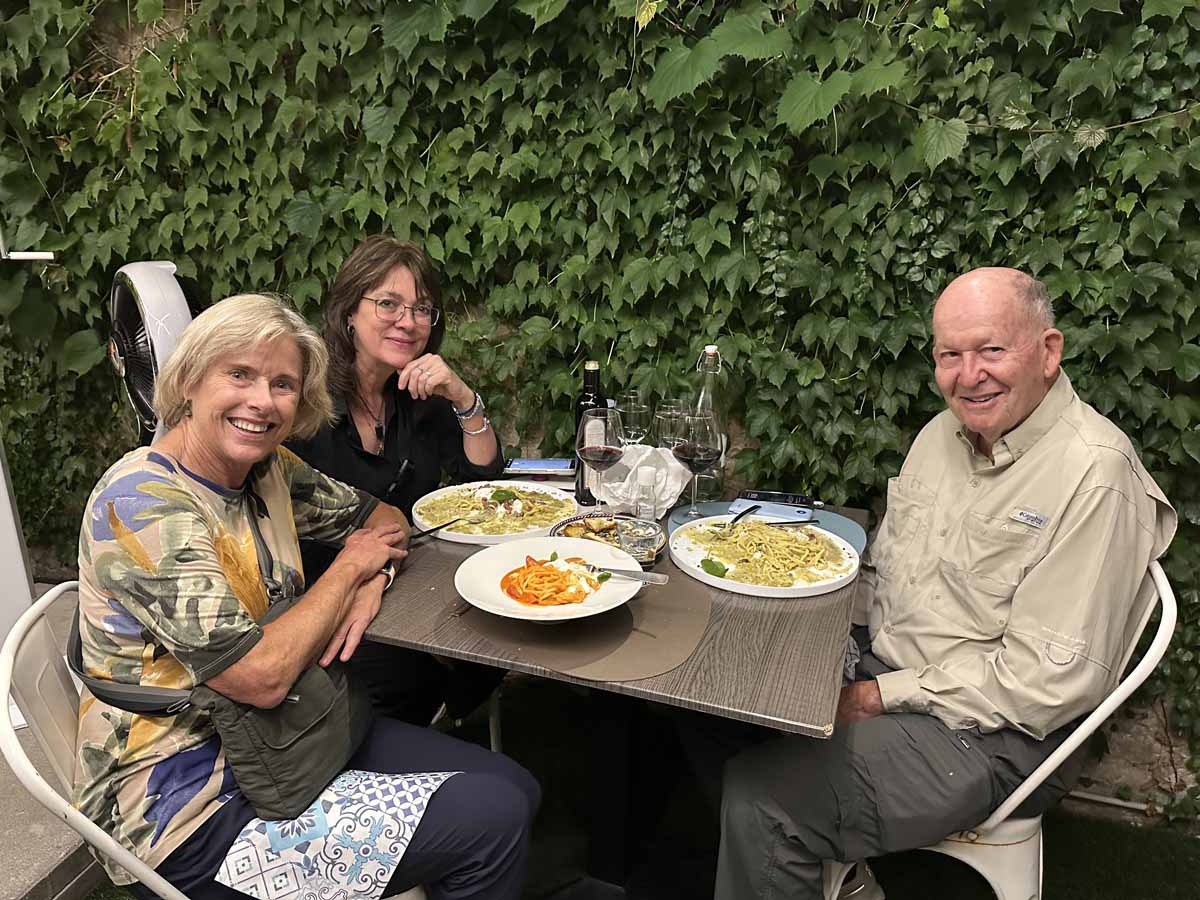 Of course, the meals we had in Matera were great. We were in Italy, after all! Just to give you a “flavor” (excuse the bad pun!)… I had a delicious pasta my first evening with Terre & George at Pasta Pomodoro, a restaurant near our hotel. (photo)
Our second evening, we had a group OAT dinner at La Nadi restaurant – which served us fava bean soup, orecchiette pasta (ear shaped, typical of Puglia), eggplant parmigiana, and fresh fruit salad.
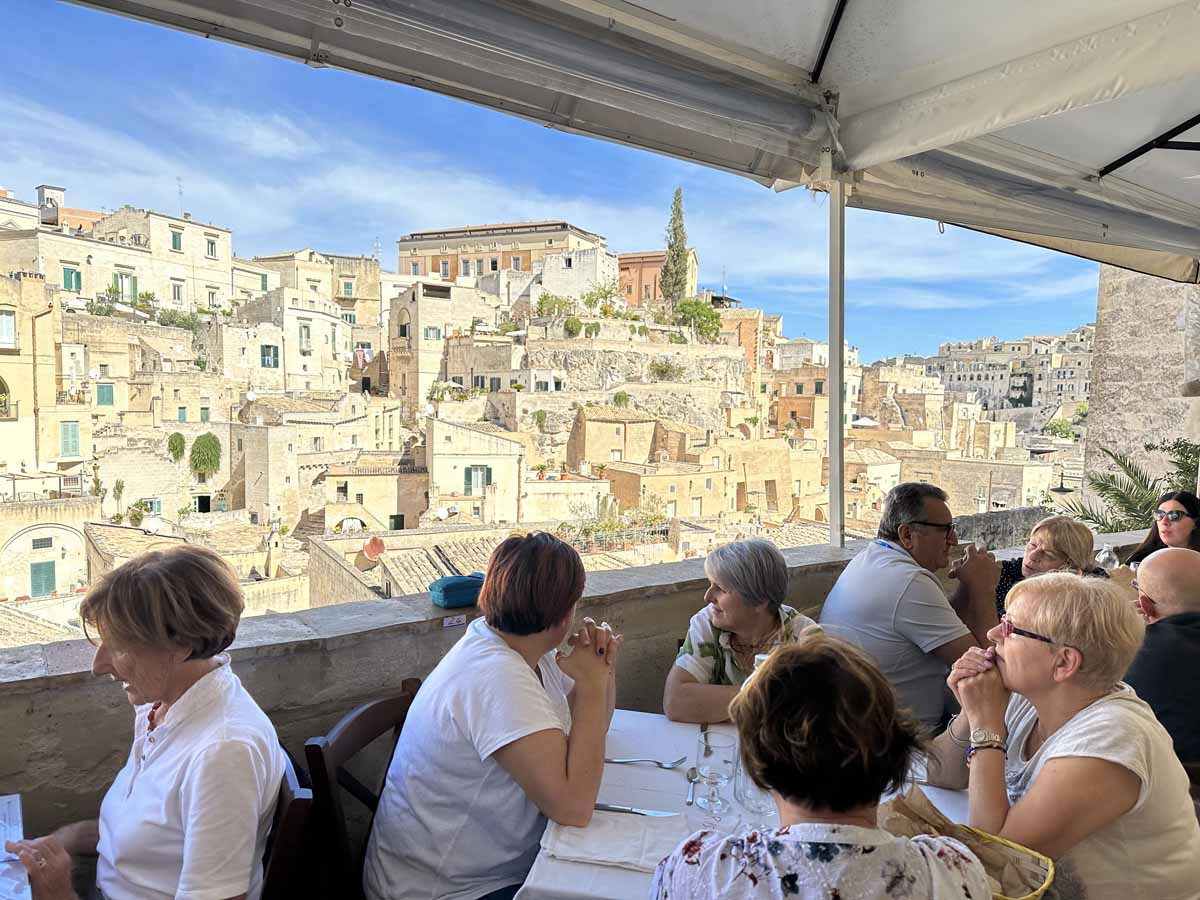
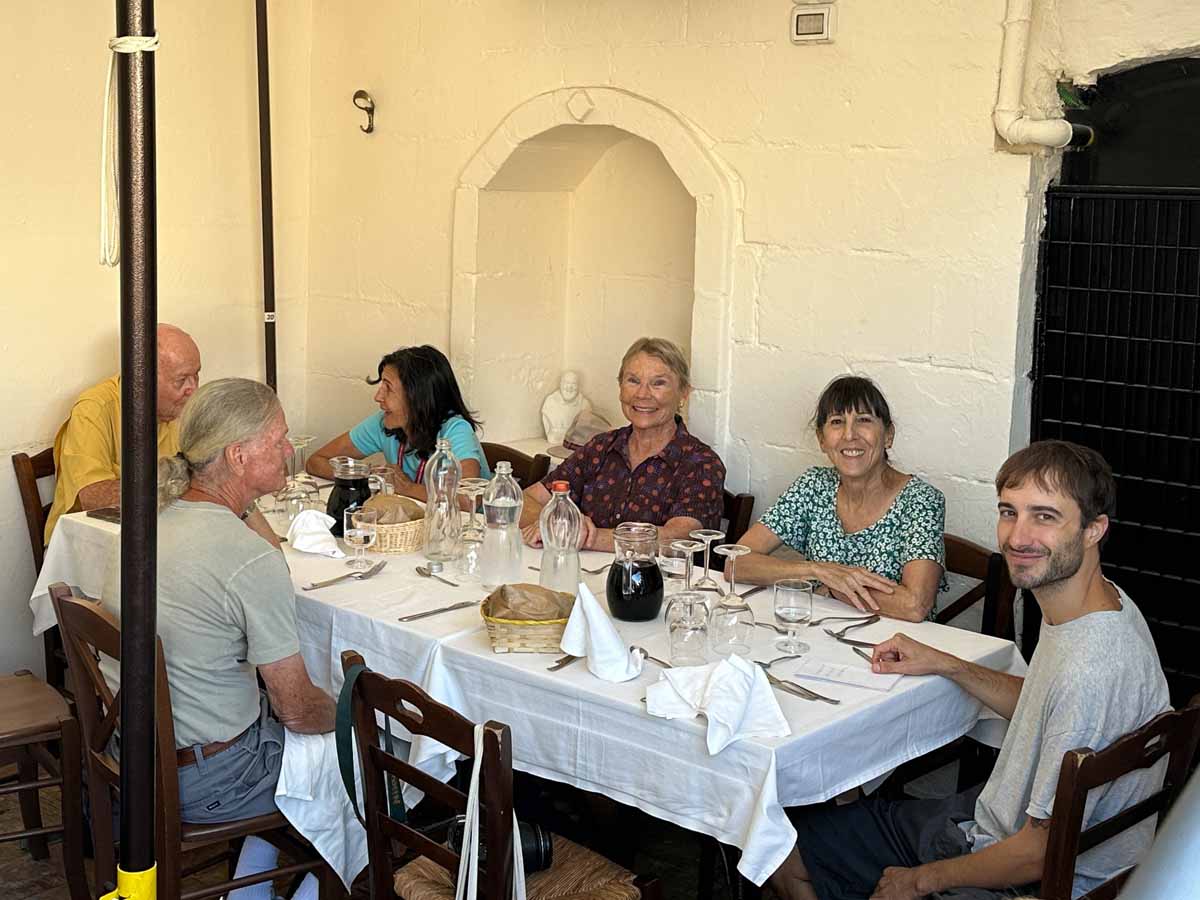
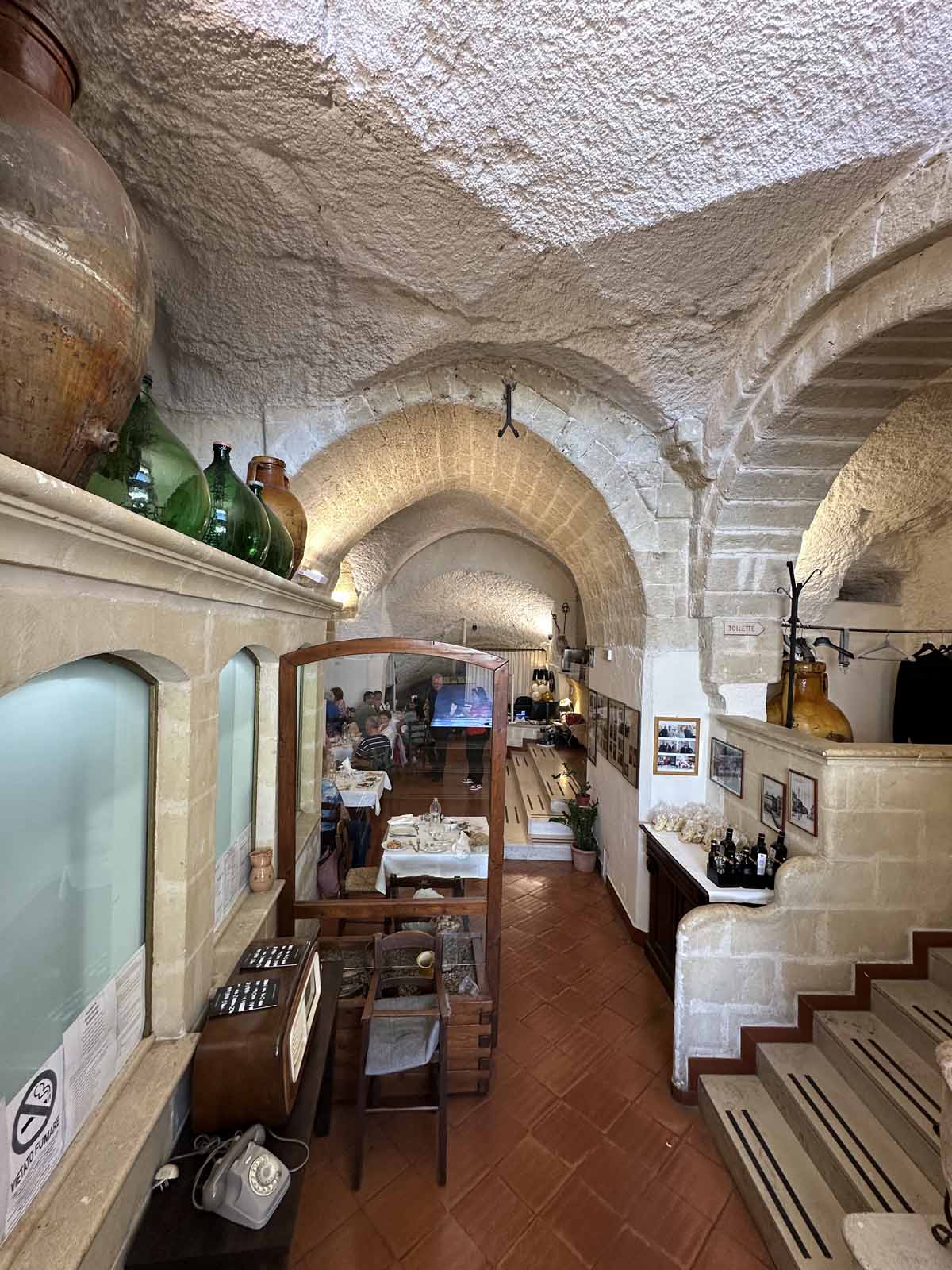
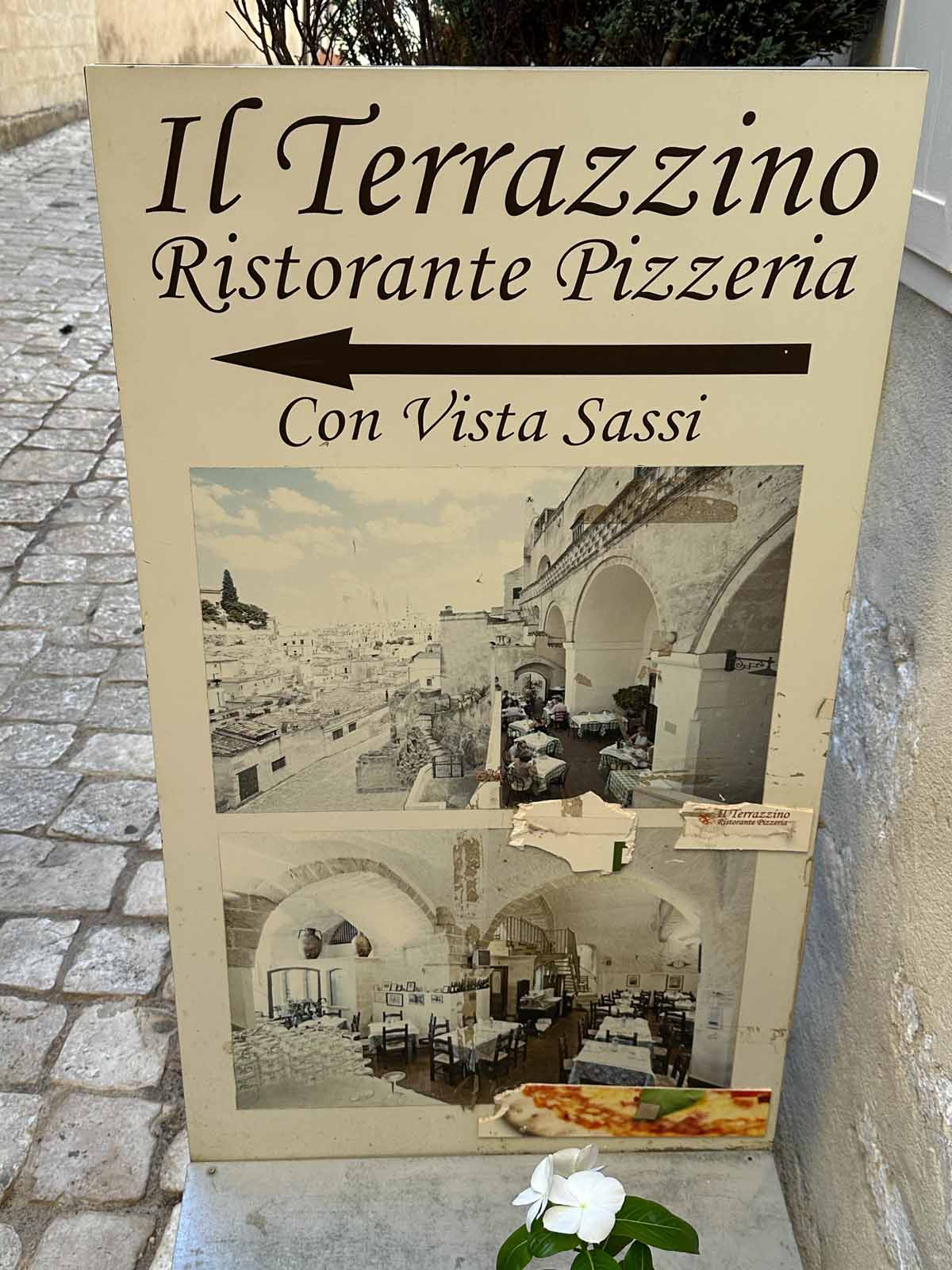
The next day, after the guided tour, we had a delicious group lunch at Il Terrazzino, with super views of the Sassi from its outside terrace. We were served a salad, a choice of bean soup or a terrine with baked pasta, cheese & meatballs. Desert was a big slice of cake made with three flavors of gelato. Yum! (photos below)
Night Time in Matera
One evening, I skipped the group dinner so I could finish working on a blog post. However, I went out for an hour to search for some takeout food (finding a tasty slice of focaccia!)
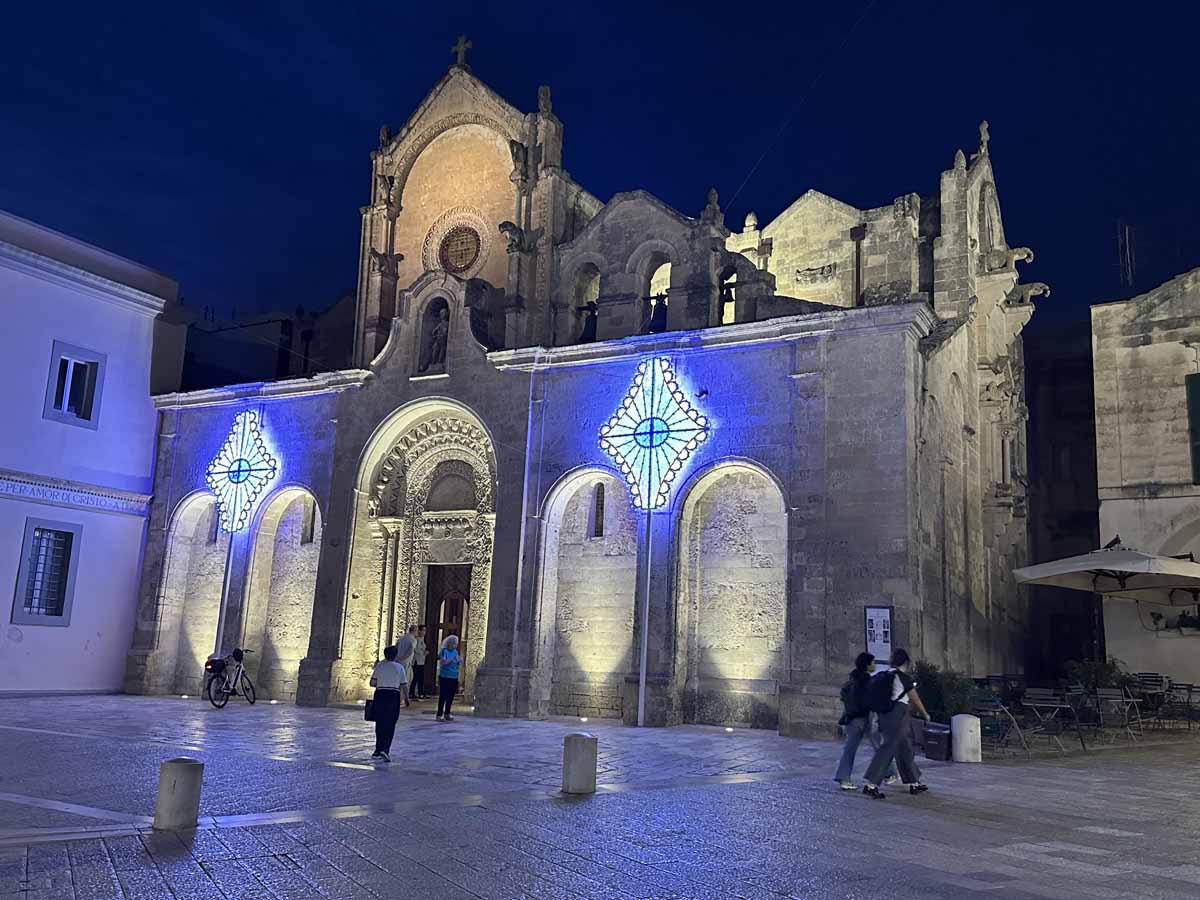
On my way to the main Piazza, I walked past the Church of San Giovanni which was lit up beautifully with some recent festival decorations still in place.
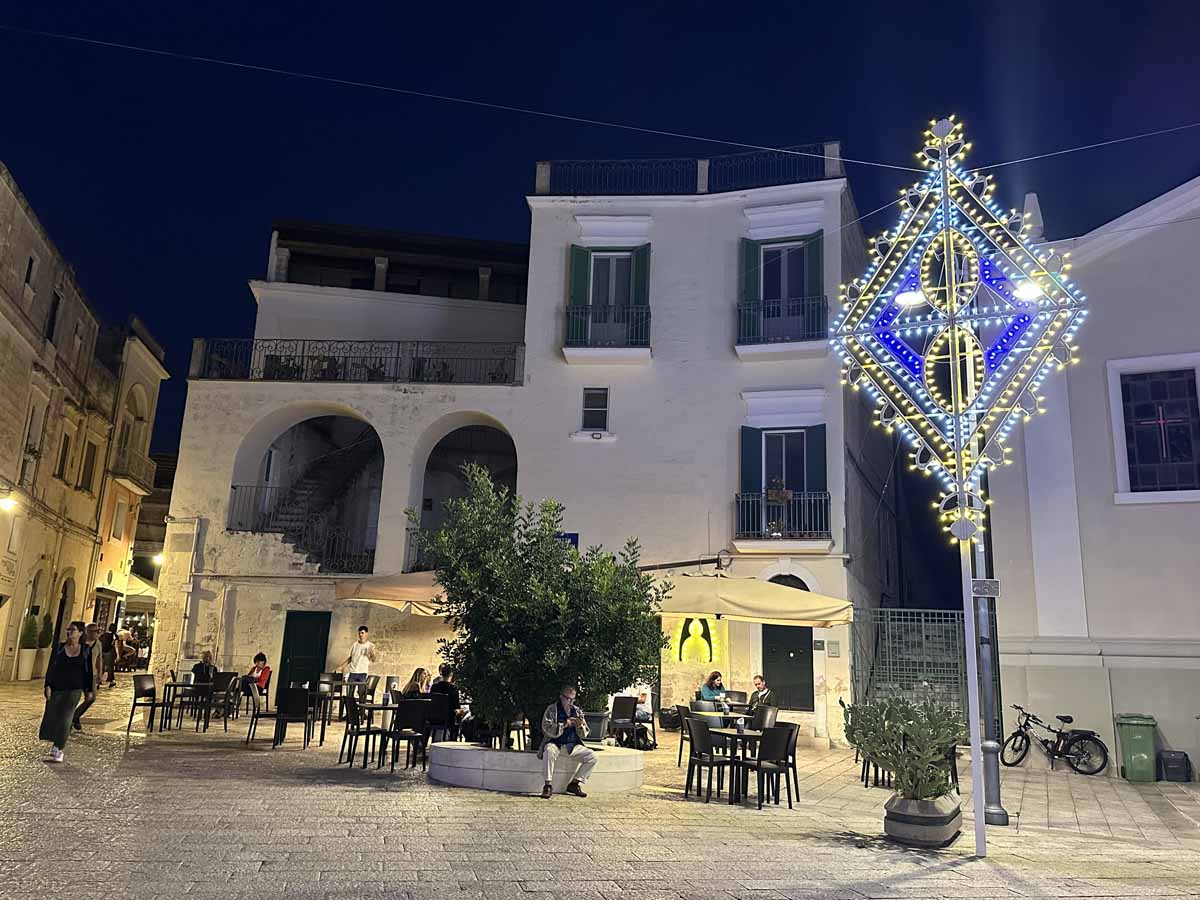
In the evenings, the main Piazza is where you’ll see the “passeggiata” – the Italian term for when locals come out for a leisurely stroll & social time with their friends and neighbors. (below)
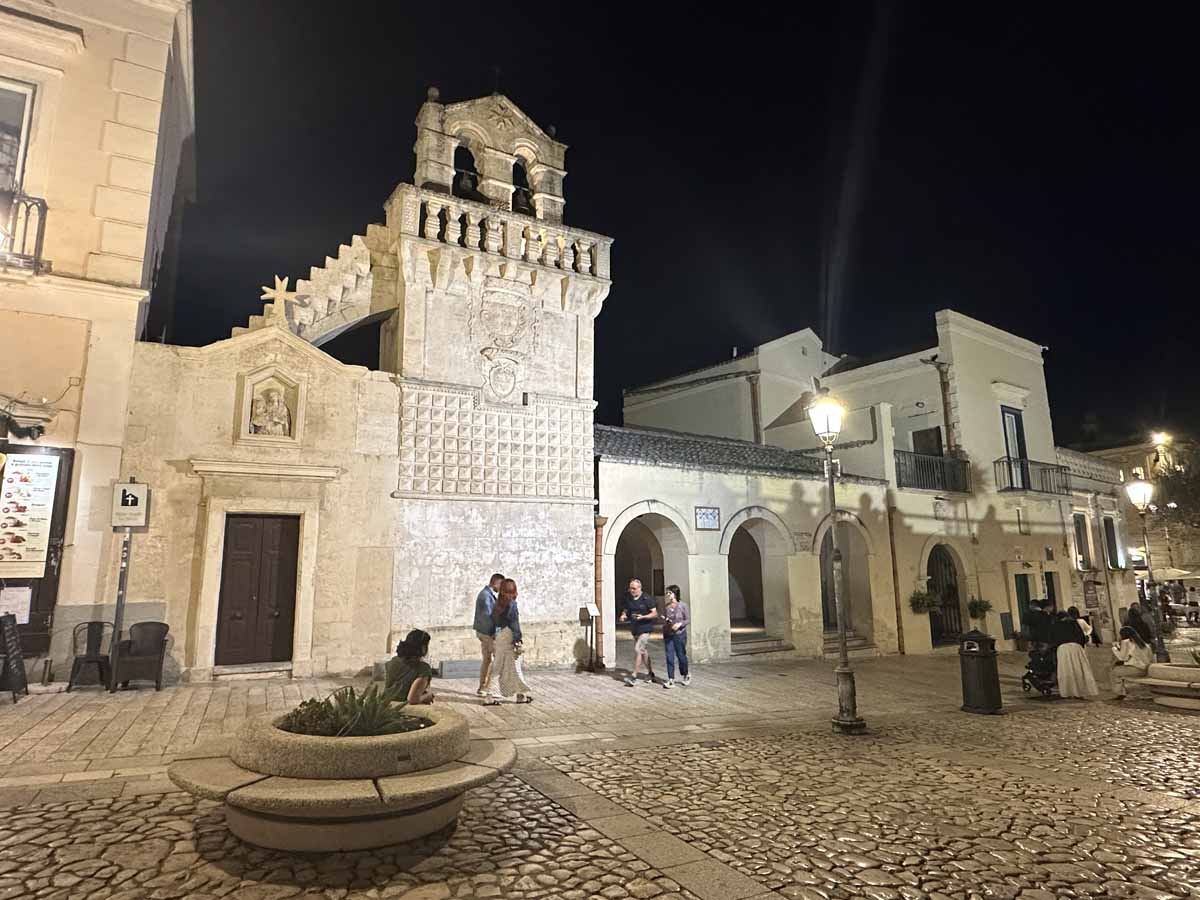
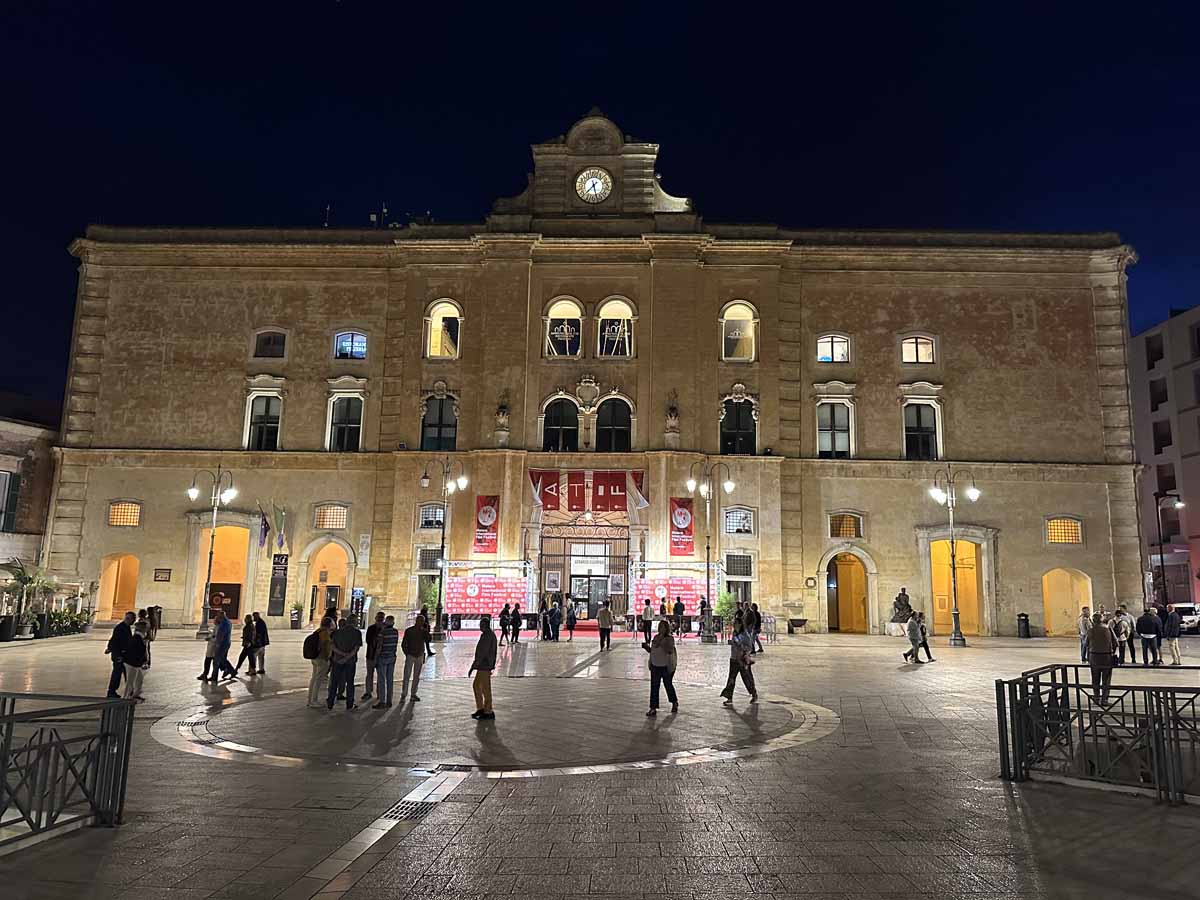
People were certainly out & about, but the atmosphere still felt calm and peaceful. My short “evening out” gave me a nice feel for the charm of Matera at night. That included lovely lighting on the streets and buildings.
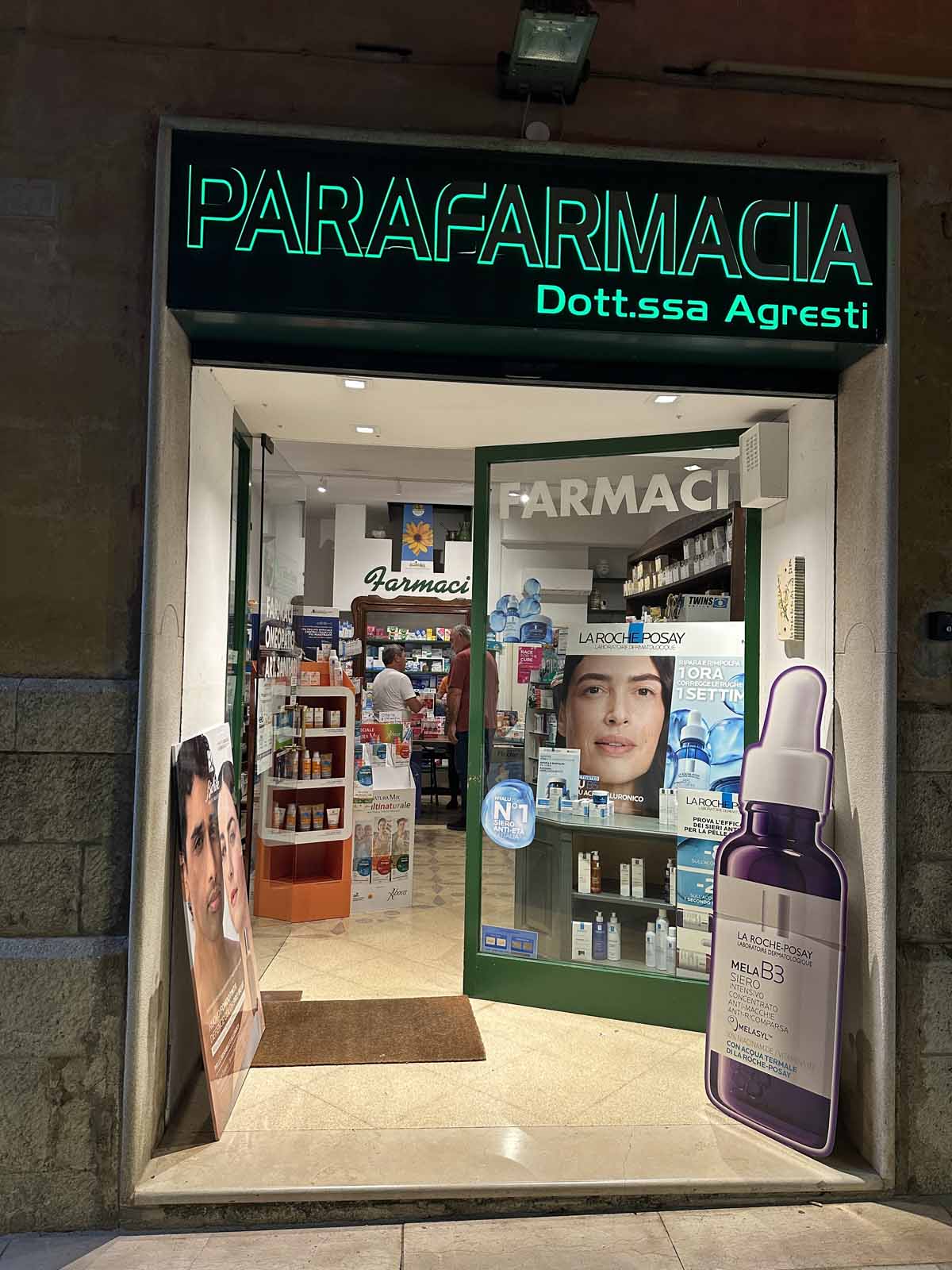
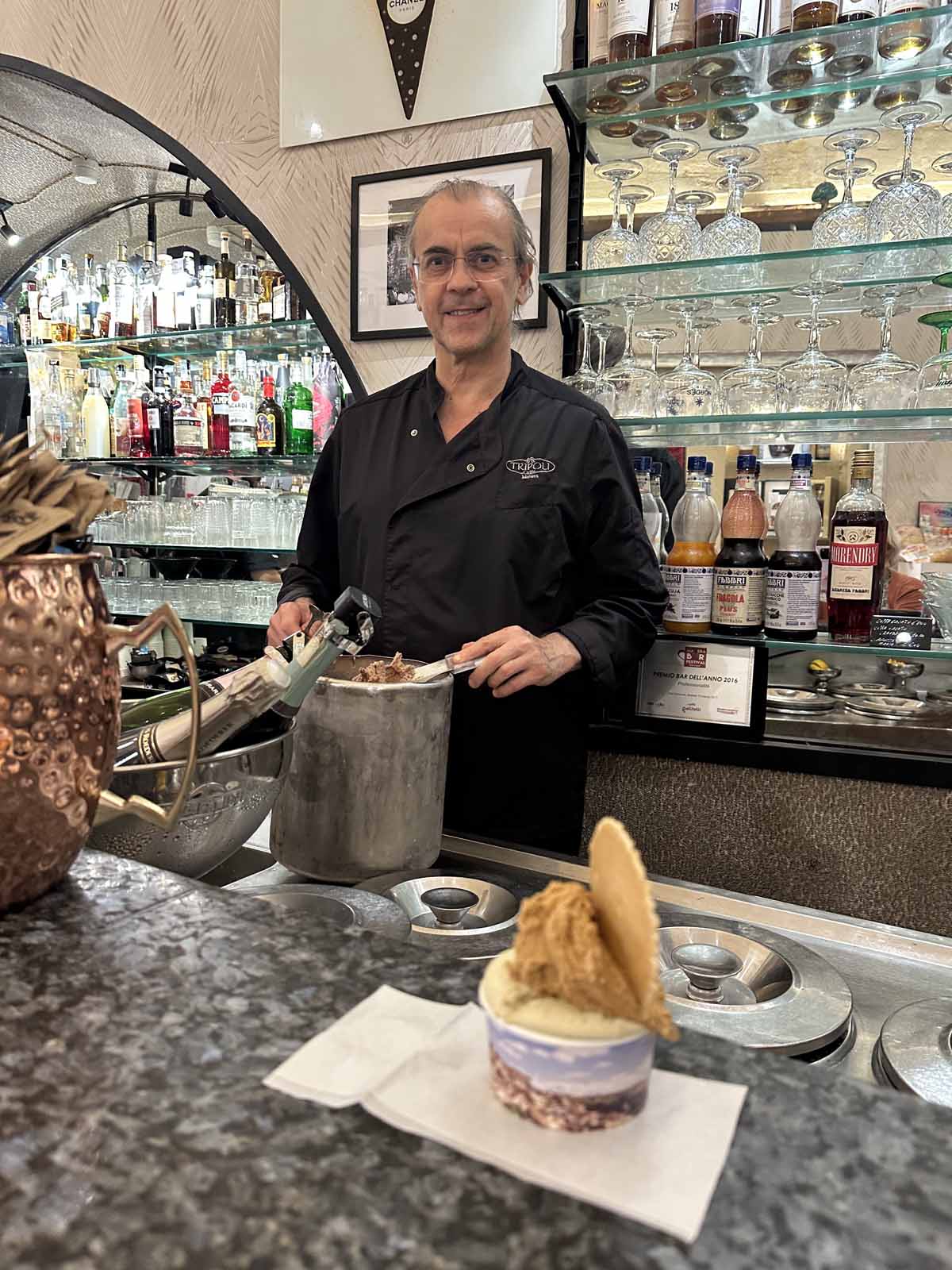
Plus, I made a visit to the local pharmacy (for my travel mates’ med needs!). And, of course, I got myself a delicious cup of gelato on the way home. There’s always room for gelato!
RESOURCES & TRAVEL TIPS FOR VISITING MATERA
As you can see, Matera has so much to offer its visitors. It’s a place I want to return to – this time I’ll take my photographer boyfriend Jack who will be in serious “Shutter Heaven” in this enchanting town!
Here’s more information about Matera to help you in your planning for a visit…
Tourism in Matera / When to Go
As mentioned, the 1993 UNESCO World Heritage designation is what began Matera’s journey toward becoming a popular tourist destination. However, the real tourism boom is more recent.
Per AI: The 2019 European Capital of Culture title & the 2021 “No Time to Die” filming location both accelerated things further. Case in point: Just 15 years ago, there were only 5 hotels in the Sassi district. That is a stark contrast to today’s hundreds of cave properties.
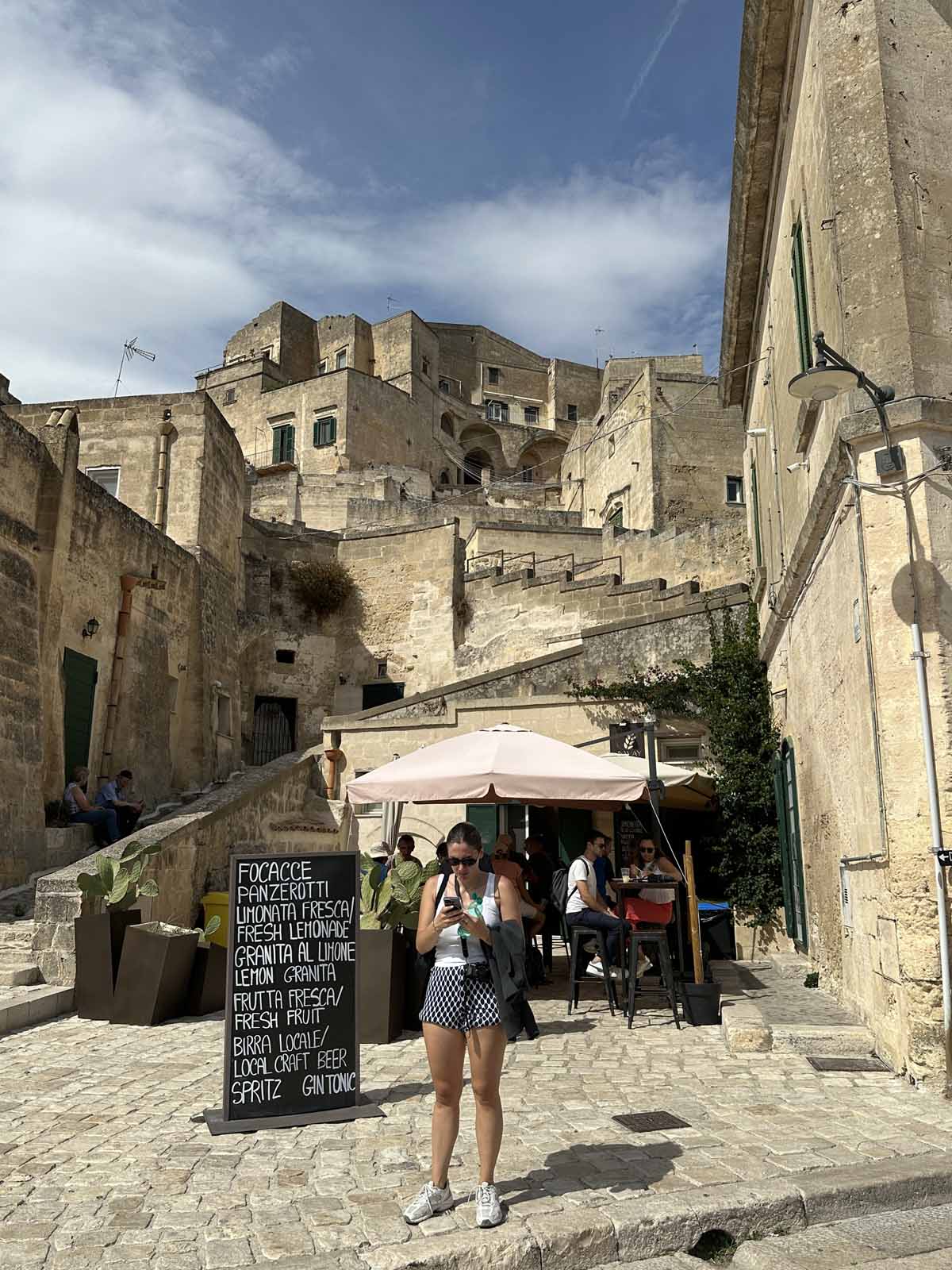
Certainly, Matera has been discovered but the tourist crowds are nothing compared to Italy’s big travel icons like Rome, Florence or the Amalfi coast. It also helps that Matera, located about 25 miles from the sea, isn’t on the way to anywhere in southern Italy. Thus, you don’t arrive in Matera by accident!
However, just like all parts of Europe, the summer season (June–August) can bring higher prices, crowding & issues with hotel availability, plus hot weather. So, the shoulder seasons (April–June, September–October) are a better time to visit. I can attest to that – I was there at the end of September & it was a great time!
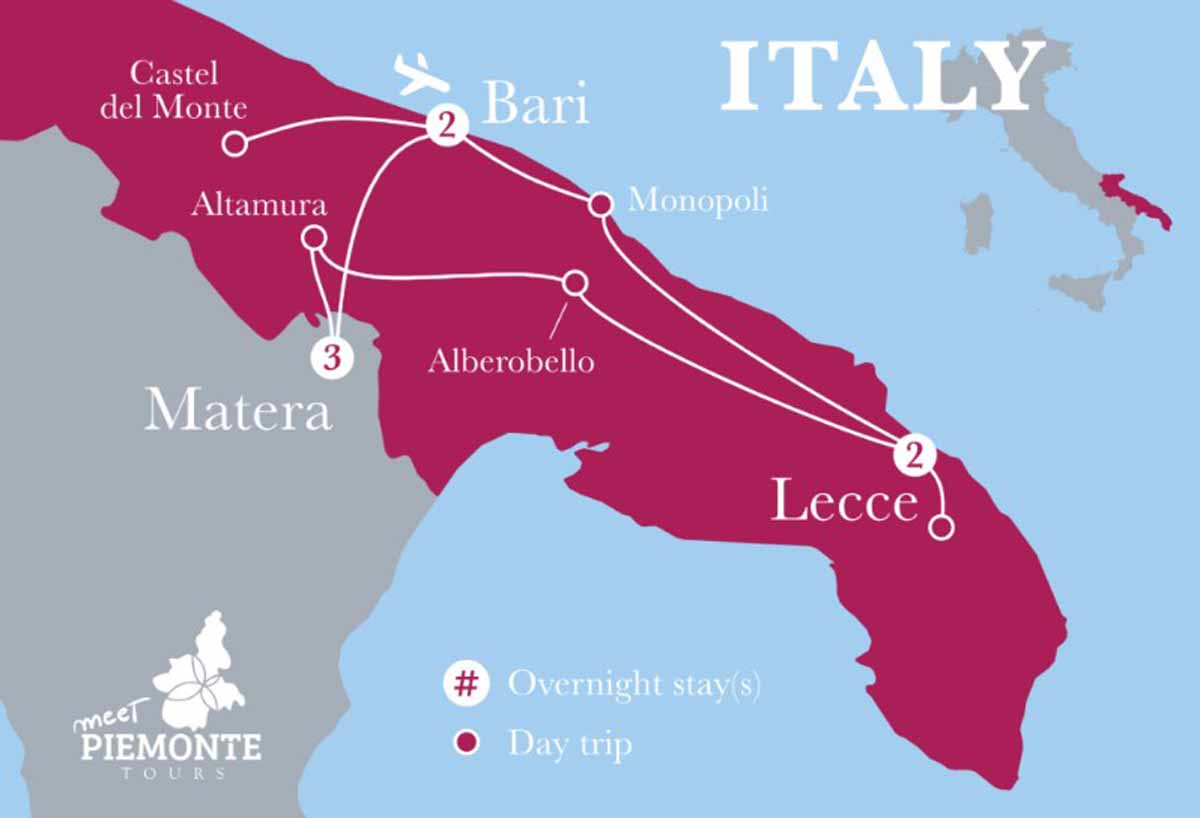
Map of Puglia Region (showing Bari, Matera & Lecce) / Credit: Meet Piedmonte Tours
How To Get to Matera
Matera doesn’t have its own airport, so Bari Airport (BRI) is the nearest & most convenient option. Bari is about a 1-hour drive (65 km/40 miles away). (see map) Brindisi is a solid alternative airport, about 1.5–2 hours from Matera by car.
Hotels / Staying in the Sassi
I recommend staying in the Sassi district. It’s really worth seeing Matera in the evening, when crowds have thinned and the buildings are bathed in a golden light. Not to mention seeing the twinkling lights of the town after dark. It’s enchanting!
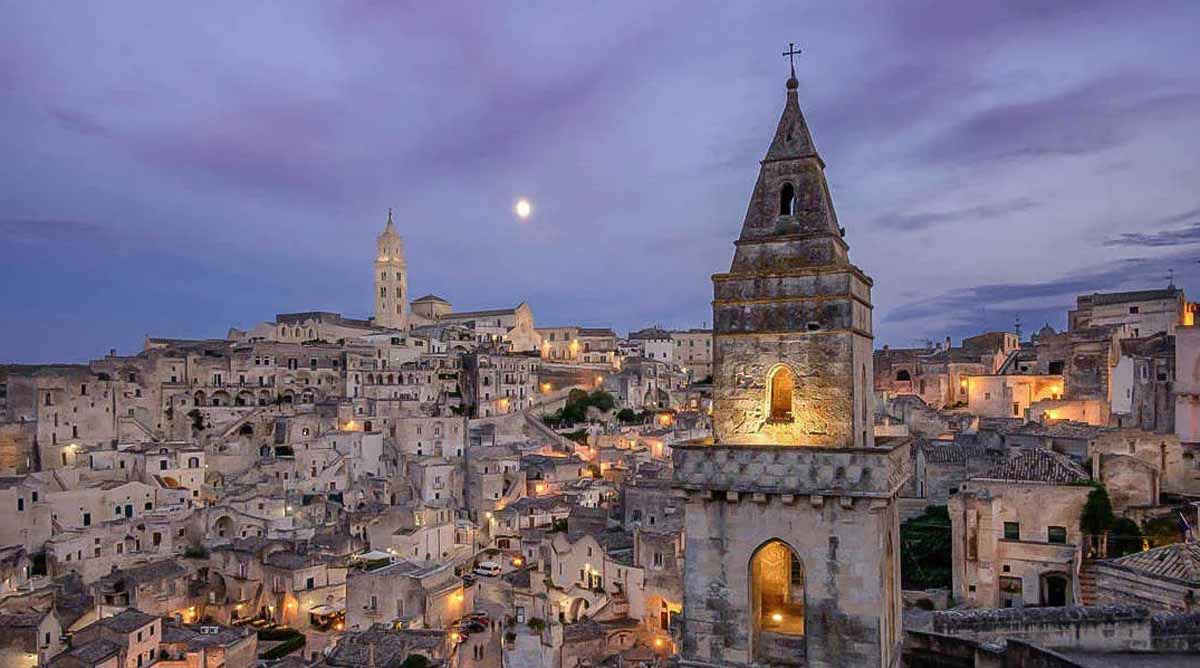
Magical Matera by Night / Photo Credit: Sassidimatera.net
As mentioned, we stayed at Hotel Sassi – one of the town’s good boutique cave hotels. My room was fine but a few of my travel mates found their “cave room” to be cool, damp & musty. Apparently, this is a common complaint of cave hotels, in general.
Finding Your Way Around the Sassi
Yep, it can be easy to get lost in the maze of Sassi’s multi-layered lanes and alleys, but that’s part of the fun! Many visitors opt for a guided tour which is a great way to get an orientation to the town. Then you’ll be able to ID some of the key landmarks like the Cathedral for any wandering on your own.
If you’re not part of a formal tour (like I was), you can check with the local Tourist Information (TI) office or local travel agency. Apparently, the TI provides a map of Matera with suggested itineraries. My hotel gave me an excellent map which was also helpful.
Caution: Lots of Walking & Slippery Stone Streets
Important Warning: Matera is not a destination for enjoying casual strolls on flat terrain but one with some serious walking (ie, “city hiking!”) You’re constantly going up and down, often on stone steps & lanes that are centuries old and have been worn smooth by millions of footsteps.
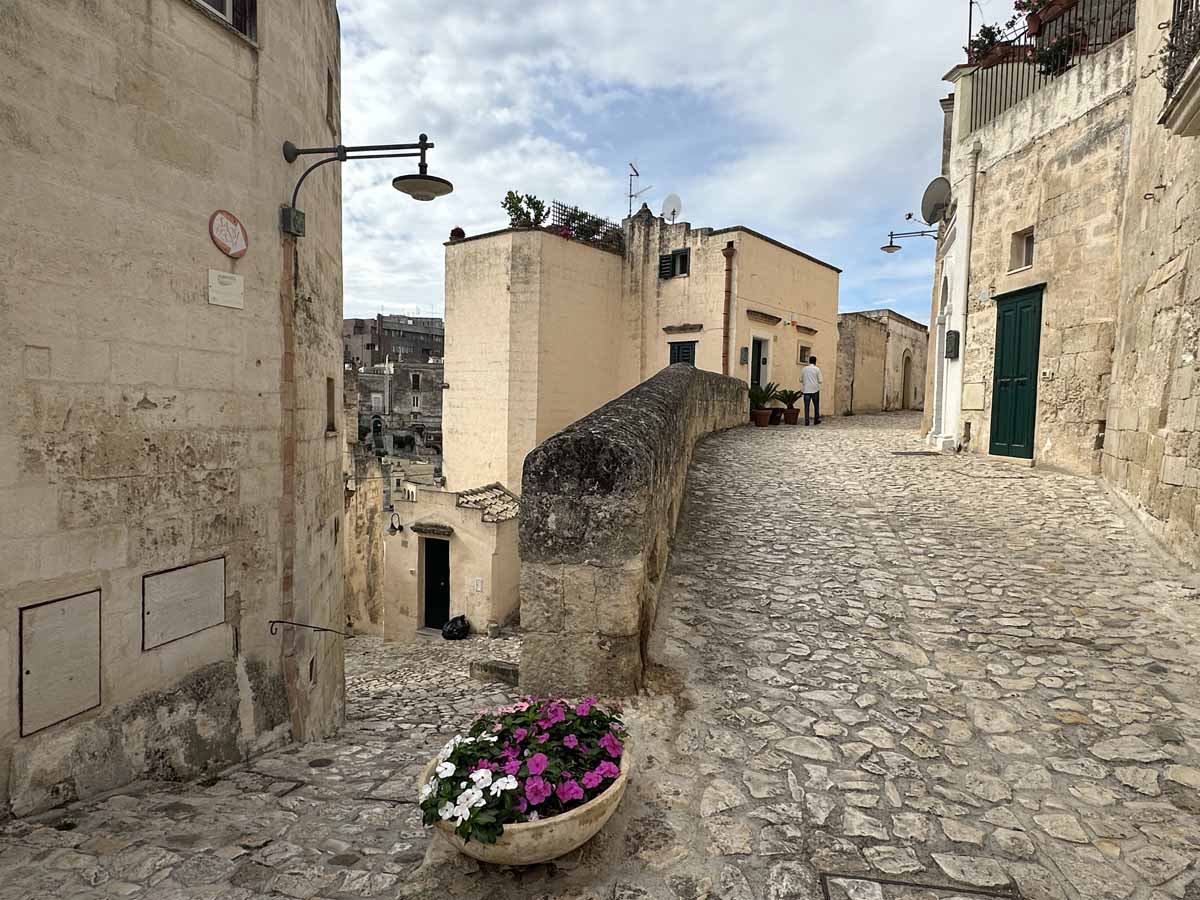
Slippery stones by Hotel Sassi / Click to enlarge
That smoothness of the stones is exactly what makes them slippery, especially if there’s any moisture (like rain or morning dew). Luckily, we had no rain during our time in Matera. However, I still found the smooth, dry stones slippery, especially on the downhills so I had to walk very carefully. I can’t even imagine a rainy day – shudder!
Here are some practical cautions (with thanks to AI Claude):
- Footwear is non-negotiable. Flat sandals, flip-flops, or anything with a smooth sole are genuinely risky here. Closed-toe shoes with real grip (hiking shoes, trail sneakers) make a big difference.
- Rain changes everything! Dry limestone is manageable; wet limestone gets treacherous fast, since the surface polish from centuries of foot traffic offers almost no traction when damp.
- Matera is not accessible-friendly. It’s particularly an issue for those with mobility concerns or knees that don’t love descents (like many of us these days!). Many of the town’s best viewpoints and church visits require serious stairs with no ramp alternative.
- Evening lighting is limited. Some of the older stone stairways aren’t well lit at night, so navigating after dark (even just walking back to a hotel) needs more caution than a typical Italian piazza stroll.
How Much Time To Spend in Matera
I spent 3 nights/2 full days in Matera and would have enjoyed another day to explore at leisure. At the very least, I’d recommend you spend two full days in Matera. There’s a lot to see & do.
But the real charm is wandering the streets, lanes and alleys of the Sassi in your “explorer mode” and seeing where you end up & what cool things you’ve discovered along the way!
In addition, there’s a lot to see in the region of Puglia, which is becoming a popular new destination for international travelers. From Matera, our OAT “Puglia Pre-Trip” group traveled by van with our Trip Leader Nic to the Baroque town of Lecce where we spent 3 nights. Along the way, we visited the “White City” of Ostuni and the unique conical-roofed homes of Alberobello. All were very good places to see!
 Casa Noha
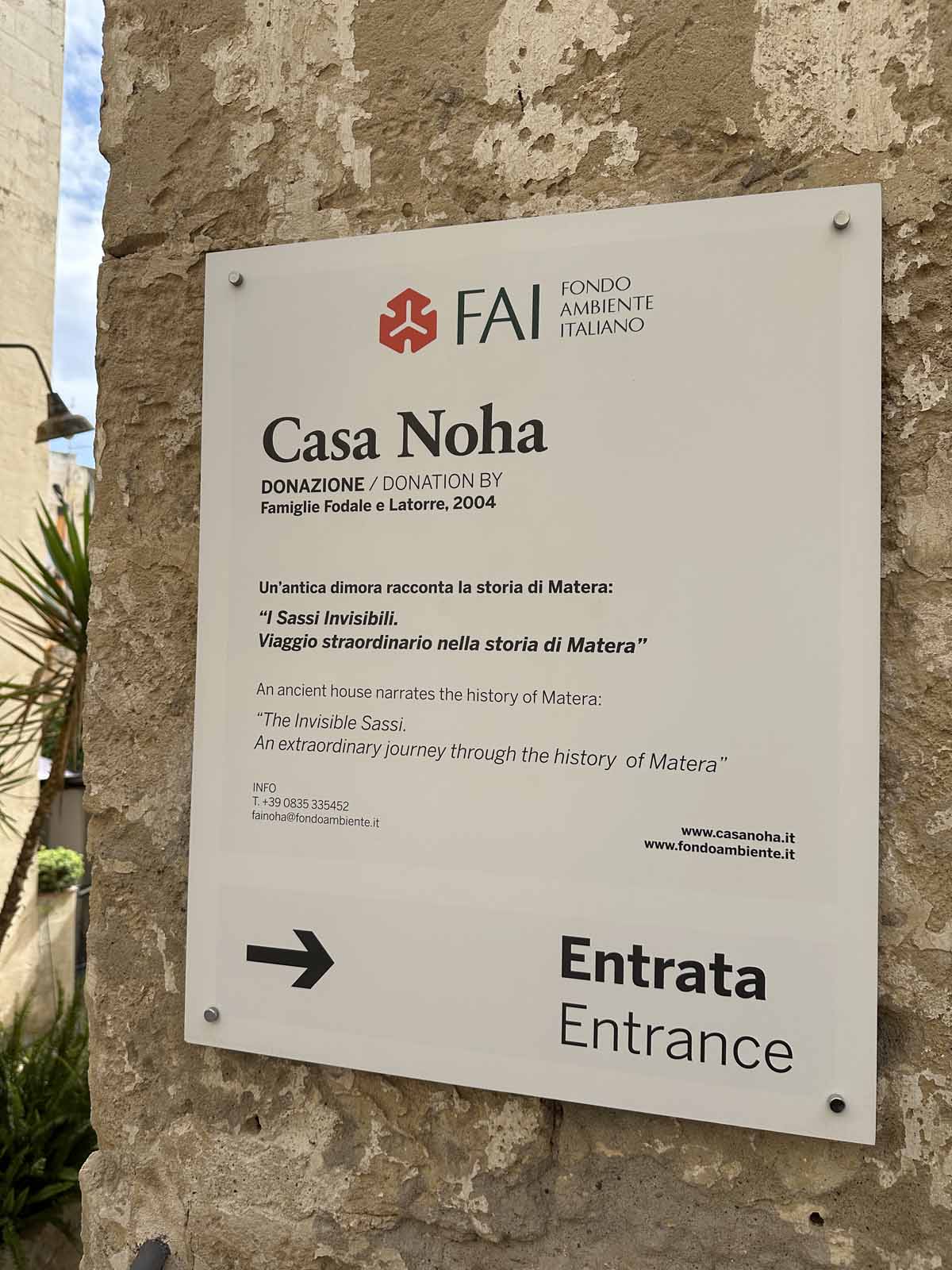
Casa Noha is a historical house located in the Civita near the Cathedral. Here you can immerse yourself in the history of Matera through an innovative video and multi-media project. Casa Noha is part of FAI (Fondo Ambiente Italiano), a nonprofit foundation.
Carol & I were excited to visit Casa Noha to learn more about Matera. We went there on my first day (a Wednesday!) only to find out they are closed on Wednesdays. Darn! Unfortunately, it was our only free day to visit but I want you to know about it.
Helpful Matera Websites
- Matera Welcome – the official tourist information site. Click here.
- Sassi di Matera.net – Click here for website.
- “The Road Reel” Guide to Matera & One Day Itinerary – detailed information from a travel blogger. Click here for blog post.
Final Comments: Have you visited Matera? Have you visited other parts of Puglia? What about Matera most appeals to you to make a visit?
Post a Comment